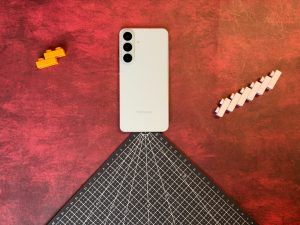
Compact phones have always had a way of winning me over, and no foldable has played to that weakness quite like Samsung’s Galaxy Z Flip. It turns a full-sized smartphone into a neat little square that slips easily into a pocket or small handbag. Even after several generations, that basic idea still feels special. Perhaps that makes me slightly biased, but I will probably continue looking at every new Flip with doe-eyed affection.
Samsung Galaxy Z Flip8
Rs124999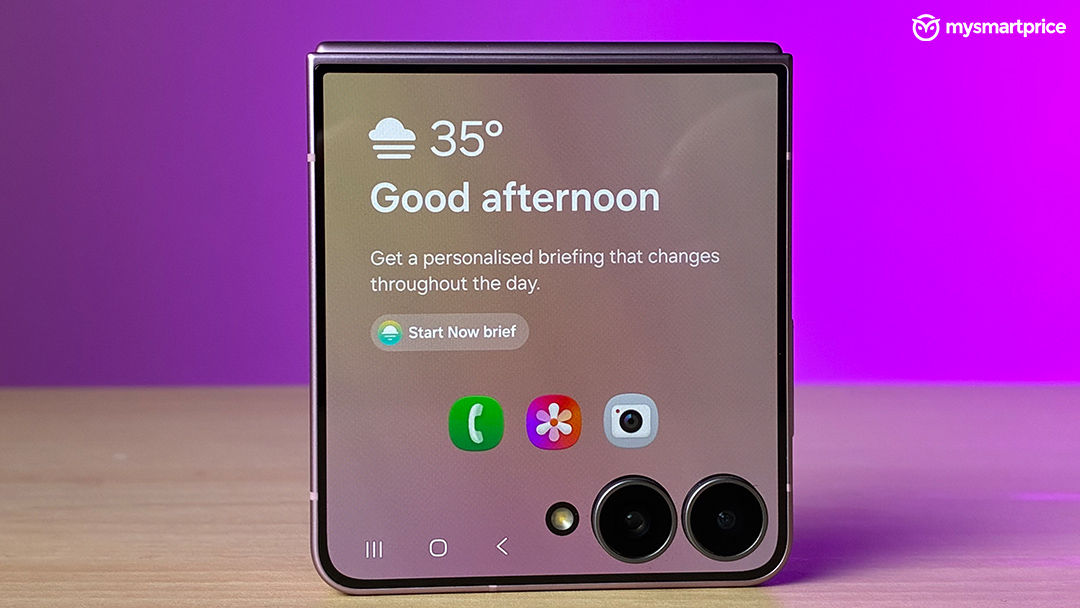
What Is Good?
- Slimmer and lighter design makes it even easier to carry.
- More capable FlexWindow with Gemini and Now Brief.
- Useful new shooting features and camera controls.
What Is Bad?
- Camera hardware remains unchanged from the Galaxy Z Flip7.
- Same 4,300mAh battery and 25W wired charging.
With the Galaxy Z Flip8, Samsung is leaning harder into content creation. The changes focus less on increasing camera specifications and more on using the folding form factor to make shooting easier. Recording videos became my favourite part of using the phone, but we will get into that in the camera section.
I used the Galaxy Z Flip8 as my primary phone for a brief period. It quickly became clear that this is an update centred on refinement rather than reinvention. Here is a complete review of the phone including things I liked and things I thought could be better.
The Galaxy Z Flip8 Is Lighter and Brighter
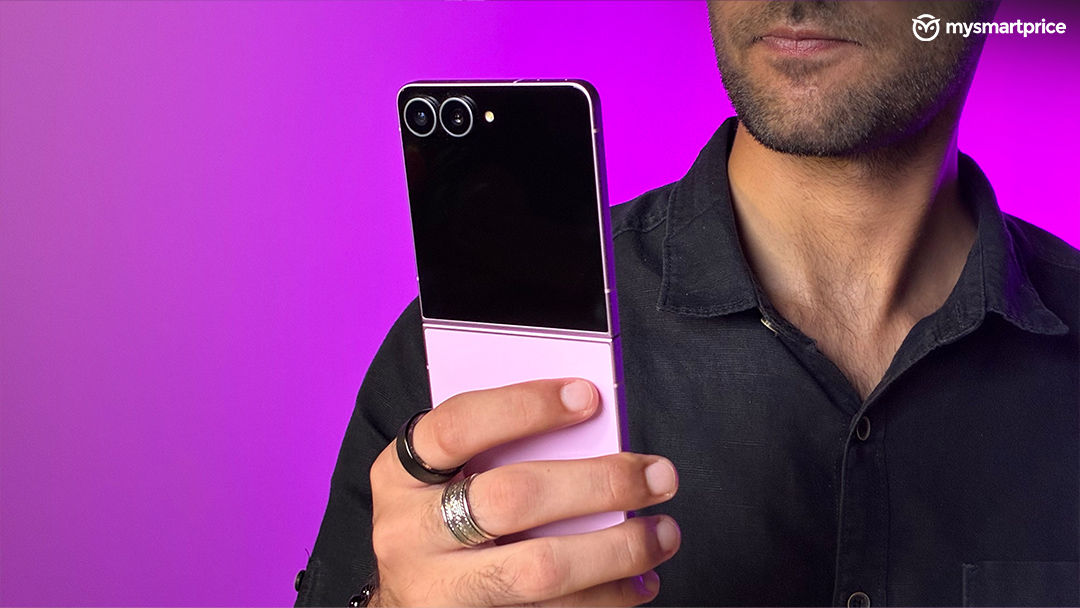
The Galaxy Z Flip8 retains Samsung’s familiar clamshell design, but it is now slimmer and lighter. It weighs 180g and measures 6.1mm when unfolded and 13.1mm when folded. In comparison, the Flip7 weighed 188g and measured 6.5mm when unfolded and 13.7mm when folded. Those differences may not look substantial on paper, but they reinforce the main reason for buying a Flip. The phone takes up less space when folded, feels comfortable to hold when open and is easy to carry in smaller pockets and handbags.
Samsung offers the phone in Pink, Graphite, Cream and Mint. Mint still has my heart, but the Pink review unit comes a close second. The shade initially felt a little too soft for my taste, but it gradually grew on me during the review period.
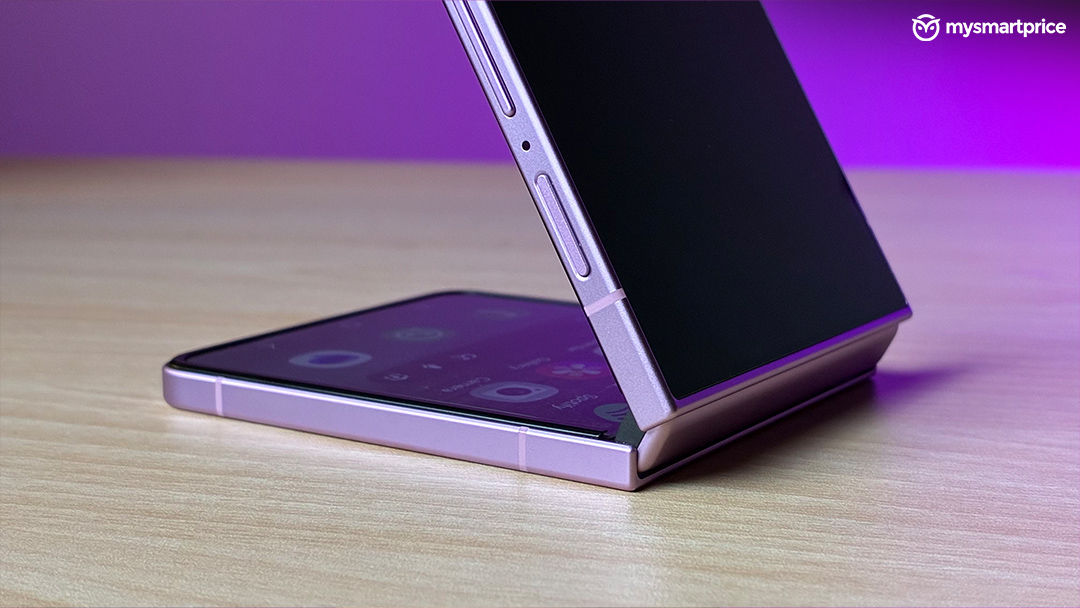
The hinge remains smooth and controlled, but the crease has not disappeared completely. Unlike the Galaxy Z Fold8 and Fold8 Ultra, the fold across the Flip8’s inner display remains noticeable. It does not ruin the experience, but the larger foldables clearly have the advantage when it comes to hiding the crease.
Neither display changes in size or resolution. You still get a 6.9-inch AMOLED main display and a 4.1-inch FlexWindow on the outside. Both performed particularly well in our testing. The inner screen reached 2,335 nits, while the outer display recorded 2,140 nits. The display received an excellent score of 9.5/10 in our lab assessment.
The outer display remained comfortably usable even under the Delhi sun. That matters because the FlexWindow is designed to reduce how often you need to open the phone, and poor outdoor visibility would have weakened its usefulness considerably.
The FlexWindow Handles Maps, Calls and Quick Replies, But Not Long Chats
Using apps such as Google Maps on the FlexWindow was surprisingly easy. The screen provided enough room to follow directions without repeatedly unfolding the phone. Answering calls and handling other quick interactions also felt natural.
Samsung offers template replies for responding to messages from the cover display. They work well when you need to send a quick acknowledgment, but a proper full-sentence conversation still requires opening the main screen. Unless your conversations run entirely on Gen Z abbreviations, the FlexWindow does not replace the larger display for typing, at least not for me.
Having said that, I will also reiterate that this limitation does not make the cover screen unsuccessful. It works best as a shortcut for navigation, calls, notifications, music controls, quick responses and camera previews. Trying to turn it into a miniature version of the main screen would defeat the purpose of the Flip.
The Cameras Feel Familiar, But The Flip8 Is Built for Video Creators
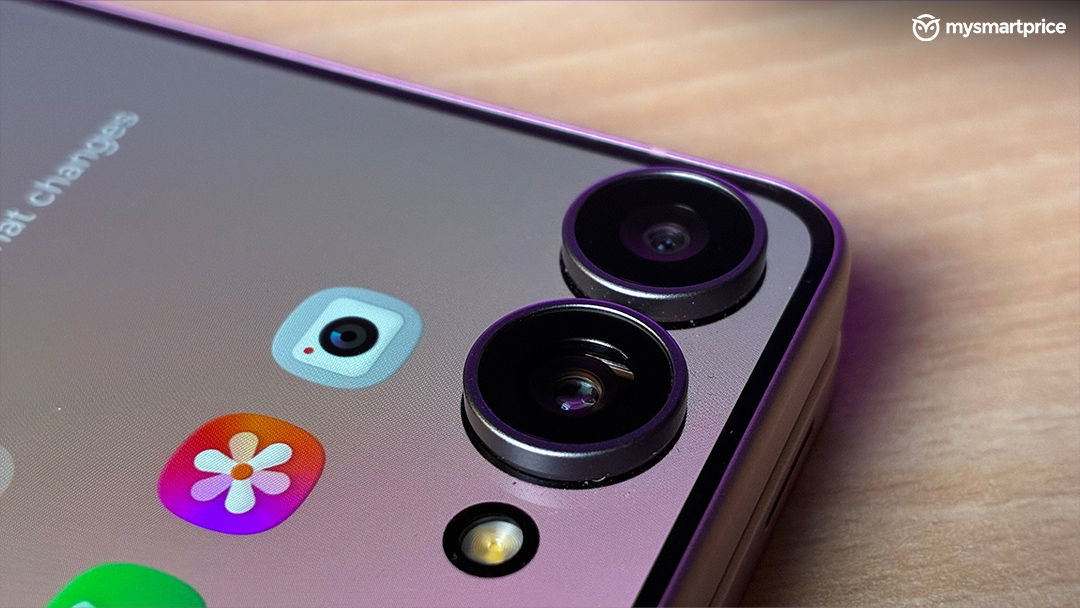
The Galaxy Z Flip8 features a 50MP main camera, a 12MP ultrawide and a 10MP camera on the inner display. The camera experience is less about the specifications and more about how the folding design can be used for selfies, hands-free photography and video recording.
The main camera produces good daylight detail, strong dynamic range and attractive colours. Samsung’s processing gives images a slightly punchy appearance, but the results remain easy on the eyes and generally ready to share without much editing.
Low-light photographs retain a decent amount of detail in darker areas, although flare, grain and some smudging can appear when the available light drops. The camera performs better in extremely dark scenes than expected, but it does not match the low-light consistency offered by similarly priced conventional flagships.
The ultrawide maintains broadly similar colours to the main camera during the day, which helps when switching between the two lenses. The drop in detail is noticeable, however, and the images become softer after sunset.
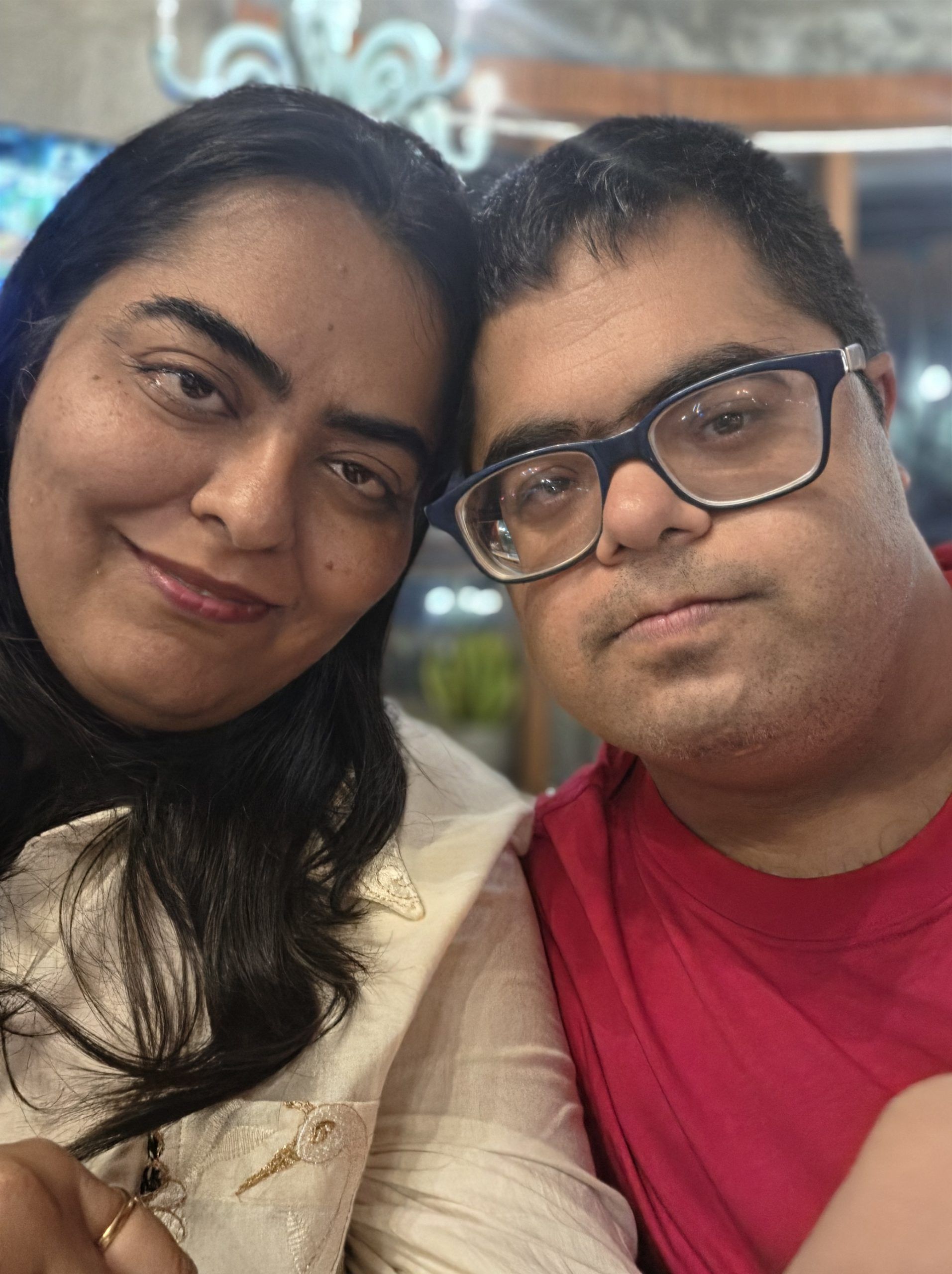
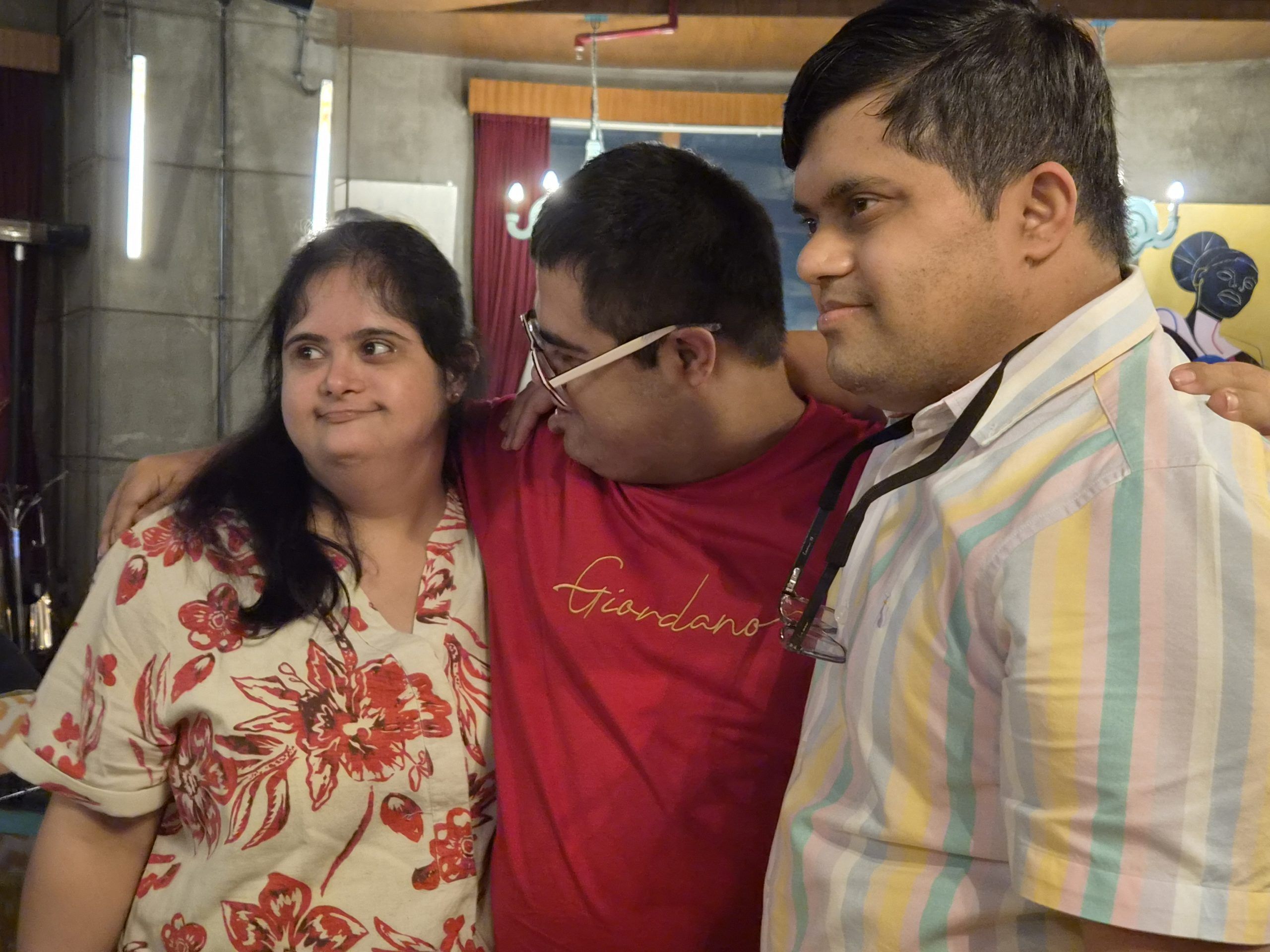
Portraits generally offer clean subject separation, while the FlexWindow makes selfies considerably more interesting. Instead of relying on the 10MP inner camera, you can use the superior 50MP rear camera and frame yourself using the outer display. The setup works particularly well for group selfies and hands-free pictures when the phone is placed partially folded on a surface.
The 2x zoom is usable for portraits and closer framing, but the lack of a dedicated telephoto camera is noticeable on a phone priced at ₹1,24,999. Pushing the camera to 10x can produce artificial-looking details as the processing tries to compensate for the absence of optical zoom.
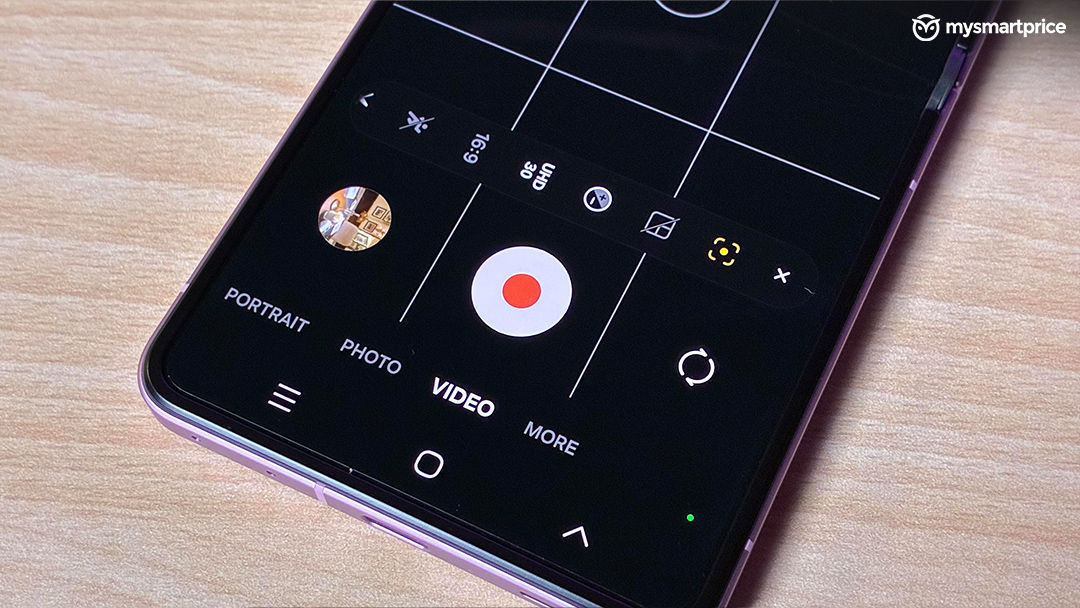
Video recording was my favourite part of using the Flip8. The folding design lets the phone act as its own stand, while the FlexWindow helps with framing when recording yourself. Holding it partially folded also gives it a compact camcorder-like grip, making one-handed recording feel more natural.





Samsung has included Horizontal Lock for keeping videos level during movement. I did not test the feature on the Flip8, so I cannot comment on its performance here. Its implementation appears similar to the feature available on the Galaxy S26 Ultra, but that experience should not be treated as a verdict on the Flip8.
The Galaxy Z Flip8’s camera appeal lies in how its folding design makes shooting selfies, group photographs and videos easier. Creators who value flexible framing and hands-free recording will find more here than buyers seeking the most versatile camera hardware at this price.
The Exynos 2600 Is Fast in Daily Use, But Sustained Performance Drops
The Indian version of the Galaxy Z Flip8 is powered by Samsung’s Exynos 2600 rather than a Snapdragon processor. It is paired with 12GB of RAM, with 256GB and 512GB storage options.
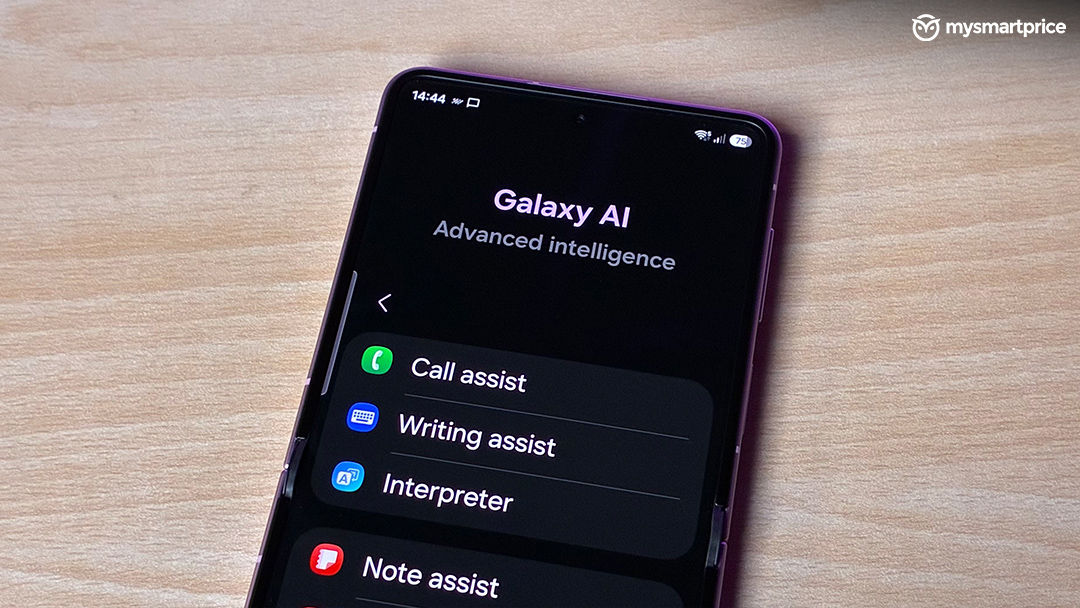
Everyday performance was smooth during my time with the phone. Apps opened quickly, multitasking felt responsive and switching between the main display and FlexWindow did not introduce any noticeable stutters. I also did not encounter heating issues during regular use or while recording videos.
The benchmark results demonstrate plenty of raw performance. The Flip8 recorded an AnTuTu score of 2,524,056, along with Geekbench 6 single-core and multi-core scores of 2,993 and 10,523, respectively. It also achieved 19,875 in PCMark Work 3.0.
Storage performance was strong as well, earning 8.5/10 in our assessment. Sequential read and write speeds reached 3,951MB/s and 3,396.7MB/s, respectively, which helps explain the phone’s responsiveness during regular use.
Sustained performance is where the results become less reassuring. The CPU throttling test returned 41%, while 3DMark stability stood at 41.7%. These figures point to a substantial performance drop during prolonged intensive workloads, even though the phone remained comfortable during my shorter real-world usage.
Overall, performance received 8.2/10 in our testing, with the CPU and GPU categories scoring 8/10 each. You can find every benchmark and storage result in our dedicated Galaxy Z Flip8 performance test.
Battery Life Is Decent, But 25W Charging Remains Slow
The Galaxy Z Flip8 carries a 4,300mAh battery. Battery life was decent during my time with the phone, and I did not find myself constantly looking for a charger during regular usage.
In our PCMark battery test, the Flip8 lasted 14 hours and 50 minutes. Our time with the review unit was limited, so it would be unfair to make sweeping claims about long-term endurance based on only a few days of primary-phone usage. Battery life can also vary considerably depending on how frequently the cover display, navigation, camera and video-recording features are used. However, we did not get to see the full impact of the optimisation kicking in to be able to know how it performs.
Charging remains limited to 25W wired and 15W wireless speeds. Those figures feel conservative for a phone costing ₹1,24,999, especially when several conventional flagship phones offer considerably faster charging. Battery life is not a serious weakness, but neither endurance nor charging is among the Flip8’s standout qualities.
Samsung Galaxy Z Flip8 Verdict: Easy to Love, But Not Without Compromises
Even after several generations, the novelty of folding a full-sized smartphone into a compact square has not worn off. The Galaxy Z Flip8 strengthens that appeal with its slimmer and lighter design, bright displays, practical FlexWindow and flexible video-recording options. It is particularly well suited to buyers who value compactness and creators who regularly shoot themselves.
However, the ₹1,24,999 price also brings compromises. Battery life is only decent, charging is slow, sustained performance drops under heavy workloads and the lack of a telephoto camera limits its versatility. It is a compelling first Flip or an upgrade from an older model, but Flip7 users will find little here that demands an immediate switch.