The soundbar category has quickly evolved into a space where design and integration matter just as much as sound. LG, with its long legacy in premium TVs, is now ensuring that its audio solutions are purpose-built to complement its displays. The LG SC9S is one such effort, a 3.1.3 channel soundbar designed specifically to match the brand’s C-series OLED range in both style and performance. With a custom Synergy Bracket, WOW Orchestra, and Dolby Atmos support, LG is positioning this as more than just a soundbar. It becomes a natural extension of its TV ecosystem. Priced in the premium mid-segment, the SC9S aims to bridge the gap between standalone bars and full-scale theatre systems, giving LG users a tailor-made upgrade path.
LG SC9S Soundbar
What Is Good?
- Elegant design and build
- Deep customisation with presets, room calibration and EQ
- Clear dialogue reproduction from dual center channels
What Is Bad?
- Surround content is often downmixed
Design & Build
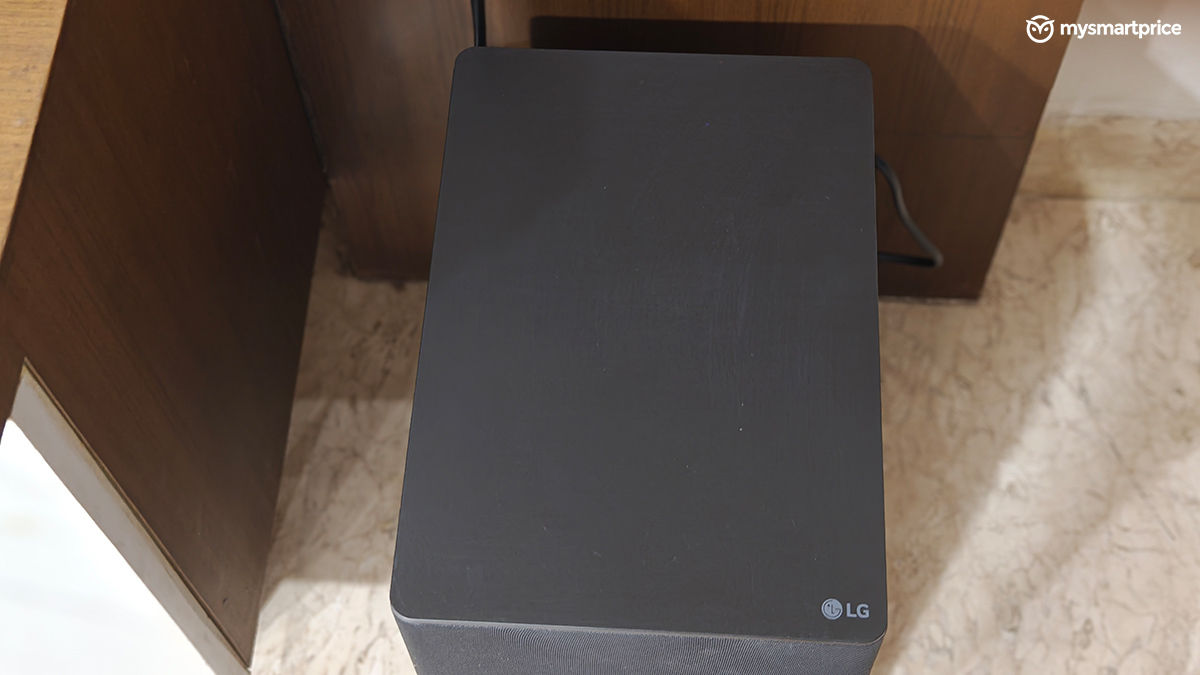
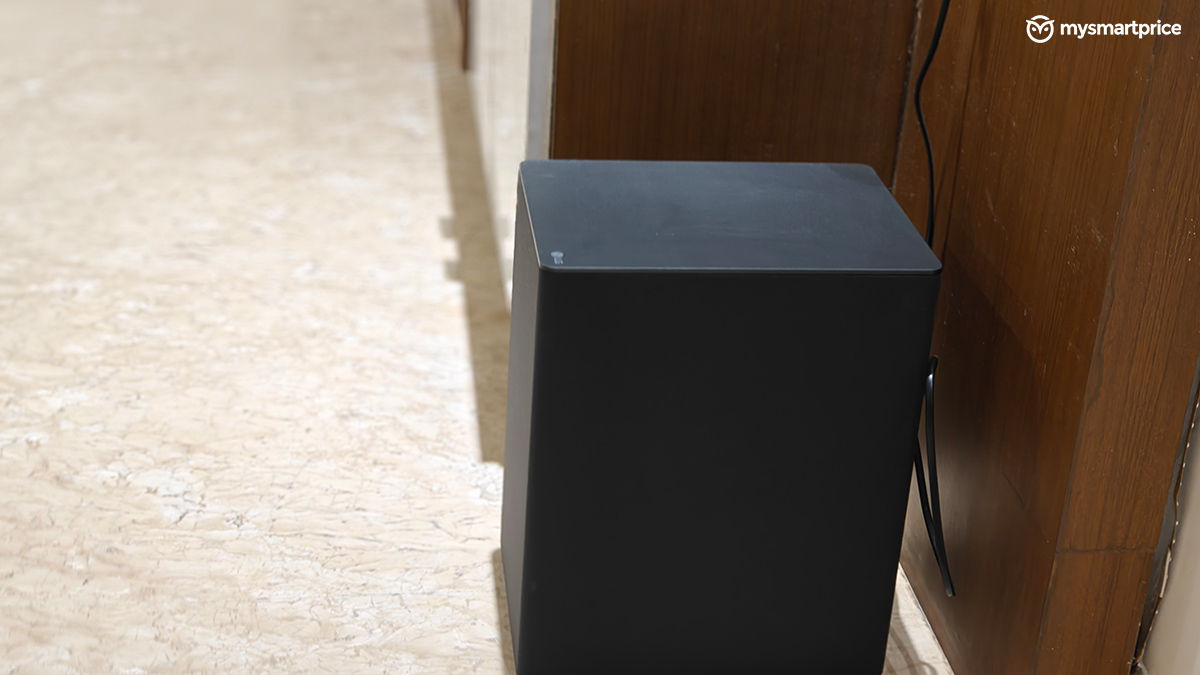
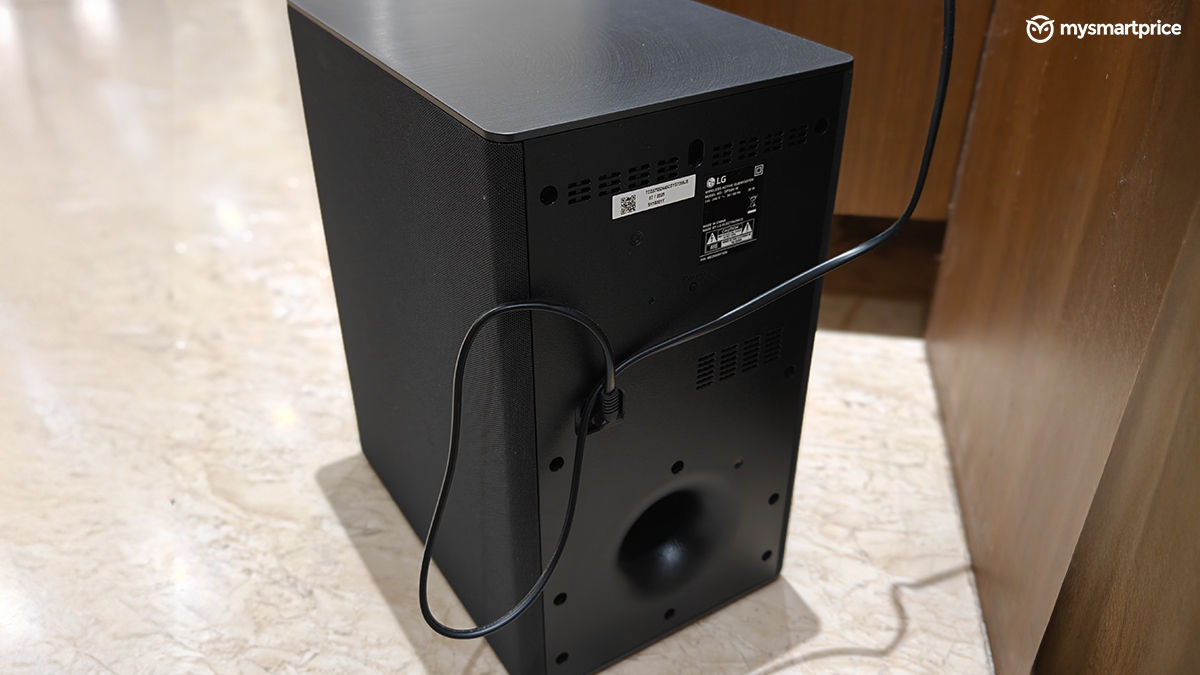
The LG SC9S is built as a natural partner for LG’s higher-end TVs. It carries a sleek design that blends into the C-series OLED lineup, with a grille front that hides the drivers and a finish that feels premium without being flashy. The wireless subwoofer is well-sized and adds a substantial low-end presence.

The included Synergy Bracket is the highlight of the design. It lets the soundbar sit flush under compatible LG OLEDs, creating a unified look and reducing visible cabling. For buyers using non-LG TVs, the bracket offers less advantage and the bar will likely sit on a console or wall mount separately.
All key ports, including HDMI eARC, HDMI 2.1 input, optical and USB, sit on the rear panel. The HDMI passthrough makes the SC9S practical for gamers who want to connect a console directly.
Setup & Ease of Use
Mounting the soundbar under an LG OLED is straightforward and visually appealing. I had paired the SC9S to a 65-inch LG C-series OLED, the experience was clearly more polished than with other TVs. The Synergy Bracket allowed the soundbar to sit flush beneath the panel, creating a seamless look. Once connected via HDMI eARC, the TV automatically detected the bar and unlocked extra features such as WOW Orchestra and on-screen soundbar settings. Controlling modes and levels through the TV’s own interface made the system feel less like two separate products and more like a single integrated setup.
I had also paired it with the recently released Sony Bravia 2 II, and even in that case, the installation was straightforward but lacked the same ecosystem synergy. Even with Xiaomi’s X-series, the experience was similar, outputting sound over ARC but without the fine-tuned control or dual-speaker blending that LG enables. In both these cases, the SC9S was still easy to use and seamless to install. However, there are certain features that you get only by pairing it to an LG TV.
Sound Quality & Performance
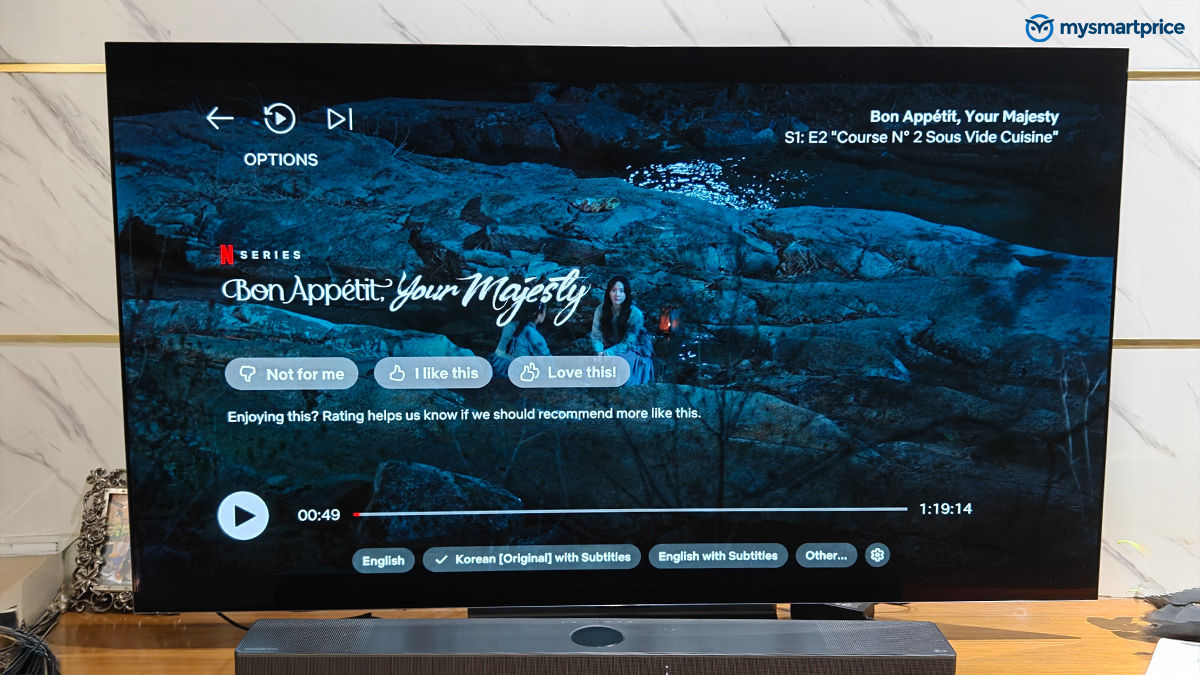
In movie playback, the SC9S delivers strong results. The upward-firing drivers create an authentic sense of height with Dolby Atmos tracks, giving rain and aerial effects a convincing overhead presence. The bass is powerful and room-filling, driven by the wireless subwoofer. However, it does not provide the same level of bass as the Sony Bravia Theatre System 6 that I recently reviewed. So if you like an extra thump, you might want to check that out.
However, if you are looking more for a cinema experience and OTT viewing, then this is a good value fit. Dialogue remains clear even during heavy action scenes thanks to the dual centre channel configuration.
The limitation comes in the lack of side-firing drivers. The soundstage feels front-focused and vertical, rather than fully immersive. Surround sound formats often get downmixed. Again, this was something that was available on the Sony Bravia Theatre System 6; however, this soundbar had a long line of wires to tackle and thus aesthetically was not as pleasing.
For music, the soundbar performs well with pop, electronic and rock tracks, offering energy and weight. Acoustic and classical tracks are less precise, with imaging that feels narrower compared to dedicated stereo systems.
Gaming performance is decent, thanks to HDMI 2.1 passthrough; the bar supports 4K at 120 Hz with VRR, making it a good fit for modern consoles.
When connected to other TVs like Sony or Xiaomi, the core performance of the SC9S remained consistent: the subwoofer delivered strong bass, the height channels added impact in Atmos tracks, and dialogue stayed clear. What was missing was the sense of integration. Without WOW Orchestra and the TV-linked controls, the soundbar felt like a powerful standalone unit rather than part of a unified system. For many buyers, that will still be enough, but LG OLED owners will get an extra layer of refinement that just is not available elsewhere.
Ports & Connectivity

Connectivity options are strong. The bar offers HDMI eARC, an additional HDMI 2.1 input, optical audio, Bluetooth, Wi-Fi and USB. These options ensure compatibility with modern consoles, streaming devices and TVs. Room calibration and EQ through the app add flexibility.
Day-to-Day Usage
The SC9S is easy to live with. Switching between modes is quick and useful, particularly the dialogue setting for news and talk shows. The subwoofer remains stable, and wireless connectivity is reliable. The integration with LG TVs makes volume and mode changes smoother, while on other TVs, it works best through the remote and app.

Some users report that switching between formats, such as Atmos and stereo, occasionally requires manual mode changes for best results. Once installed, the soundbar is consistent and reliable for everyday use.
Value for Money
Positioned in the premium mid-segment, the SC9S is not inexpensive, but it offers a strong balance of design, performance and features. It is best viewed as a solution for LG TV owners who want a seamless match with their display.

Compared to rivals such as the Sony Bravia Theatre System 6, the LG holds an advantage in integration and elegance, particularly for LG OLED users. Sony counters with real rear speakers that provide stronger surround immersion. Buyers must choose between LG’s cleaner, more integrated setup and Sony’s wider, more traditional home theatre approach.
Verdict
The LG SC9S soundbar is a polished and capable performer that shines brightest when paired with an LG OLED. It delivers convincing Atmos effects, strong bass and good dialogue clarity while offering future-ready connectivity. The absence of side-firing speakers limits its immersion, and the premium price may not suit every buyer, but for those within the LG ecosystem, it feels like a natural extension of the TV rather than an add-on.