At Google I/O 2026, Sundar Pichai’s keynote was less about one big hardware launch or standalone AI product and more about how Google wants Gemini AI to slowly become part of almost every Google experience people already use daily.
From Search and Android to Chrome, Workspace, and even YouTube, Google’s message was clear: Gemini is no longer just a chatbot sitting inside an app. The company now wants it to function more like an intelligent assistant layer that can understand context, help complete tasks, and work across products without users constantly switching between apps.
Google Search Is Turning Into More of an AI Assistant
One of the biggest takeaways from the keynote was how aggressively Google is evolving Search around AI.
The company expanded AI Mode in Search with support for conversational follow-ups, longer queries, live camera interactions, and task-oriented assistance. Instead of typing a few keywords and opening multiple links, Google wants users to increasingly interact with Search naturally and let AI handle more of the work.
Google also introduced features like Deep Search for more detailed research queries and Search Live, where users can point their phone camera at objects and ask contextual questions in real time.
Google separately detailed many of these Search-focused AI announcements in another I/O blog post, including the broader rollout of AI Mode and deeper agentic capabilities inside Search. You can read more about that here
Gemini Is Also Coming to YouTube and Chrome
Google also highlighted how Gemini integrations are expanding into products users spend hours on every day. One notable addition is “Ask YouTube,” which allows users to ask questions about videos while watching them. Google says the feature can help explain concepts, summarise content, or answer contextual questions related to what is happening in the video itself.
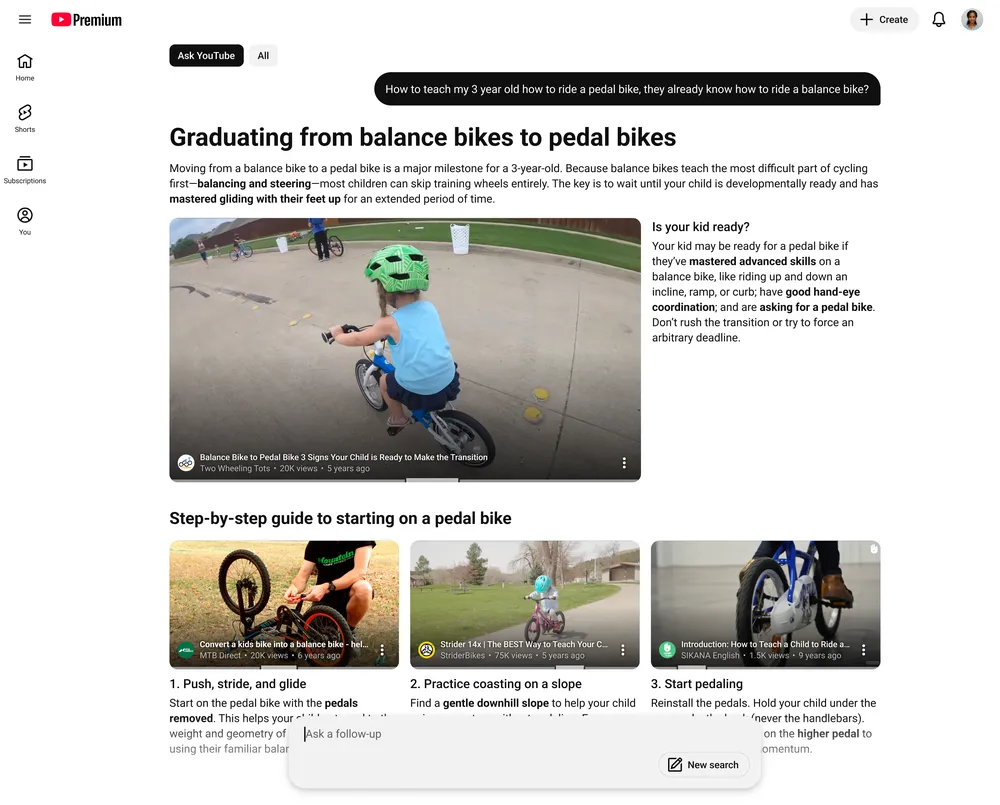
The feature reflects a broader direction Google repeatedly showcased during the keynote: AI experiences that stay inside apps instead of forcing users to leave and search elsewhere.
Chrome is also getting deeper Gemini integration. Google demonstrated AI-assisted browsing experiences where Gemini can help users summarise webpages, understand information faster, and complete tasks while browsing.
Android and Workspace Are Becoming More AI-Centric
Android is also moving toward more contextual AI interactions powered by Gemini.
Google showed examples where Gemini can understand what users are doing across apps and provide assistance more naturally. The company’s demos focused heavily on reducing friction around planning, organising information, and completing actions across devices.
Workspace apps are similarly receiving more AI-powered features for writing, summarising, and productivity workflows.
Across all these announcements, Google repeatedly positioned Gemini as something that should feel embedded into existing workflows instead of behaving like a separate AI destination.
Google’s Focus Has Shifted From AI Demos to Everyday Use
Compared to earlier AI-focused events, Google I/O 2026 felt far more consumer-facing.
Instead of spending most of the keynote on futuristic AI concepts, Google focused heavily on practical usage scenarios tied to products billions of people already use daily.
The larger takeaway from Pichai’s keynote is that Google no longer sees Gemini as just another chatbot competing in the AI race. The company is now trying to turn Gemini into the operating layer behind Search, YouTube, Android, Chrome, and productivity tools that users already interact with every day