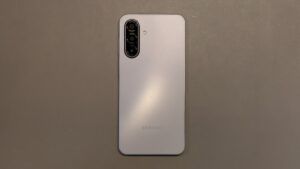
The foldable smartphone market in India is heating up, with more brands entering the space and experimenting with aggressive pricing to win early adopters. While the category is still far from mainstream, it has become a key battleground for brands looking to showcase innovation and lock in premium users. Samsung may have had a head start with its Galaxy Z Fold series, but challengers are no longer sitting idle.
Vivo's latest salvo comes in the form of the X Fold5, launched alongside the X200 FE. Clearly aimed at taking the fight to its Korean rival, the new foldable tries to strike the right balance between sleekness, power and practicality. From its ultra-slim 4.3mm profile and reinforced durability to the largest battery ever seen on a foldable in India, Vivo is leaving little to chance in its attempt to make the X Fold5 a compelling package for 2025.
What's New: A Mix of Big and Small Upgrades
Developed in collaboration with ZEISS, the camera system now features a 50MP telephoto lens with up to 3x optical zoom and 100x digital zoom, a 50MP main sensor with improved clarity and colour accuracy, and a 50MP ultra-wide camera with a 120 degree field of view.
Powered by the Snapdragon 8 Gen 3 SoC, it promises solid flagship level performance. While the chipset is the same as on the X Fold3 Pro, Vivo indicated at launch that they have worked on deeper software optimisation to extract more from the Snapdragon 8 Gen 3 this time around, which is expected to make everyday use smoother. Tools like Origin Workbench and DocMaster add a productivity angle to the foldable experience.
The X Fold5 features a slimmer and lighter build, a second generation armour architecture, and a carbon fibre hinge system for strength. It is IPX8, IPX9, and IPX9+ rated and even tested to withstand extreme cold up to minus 20 degrees Celsius. All of this is aimed at strengthening build quality in a segment where the biggest challenge is winning buyers' confidence in a foldable's ability to withstand daily wear and accidental drops. A single drop can render a phone unusable and result in a repair bill that costs more than half the price of the device.
Powering the device is a 6,000mAh battery, the largest ever on a foldable phone in India, and a 300mAh jump from its predecessor. Vivo has paired this with 80W Dual-Cell FlashCharge, allowing for quicker top-ups while maintaining long-lasting endurance. Despite its ultra-slim 4.3mm profile, the X Fold5 claims to deliver all-day battery life, addressing a key concern for foldable buyers who expect both power and portability.
While the X Fold5 looks similar to its predecessor at first glance, these refinements in the camera setup, battery, and build quality make it feel more future-ready.
How Well Is It Priced?
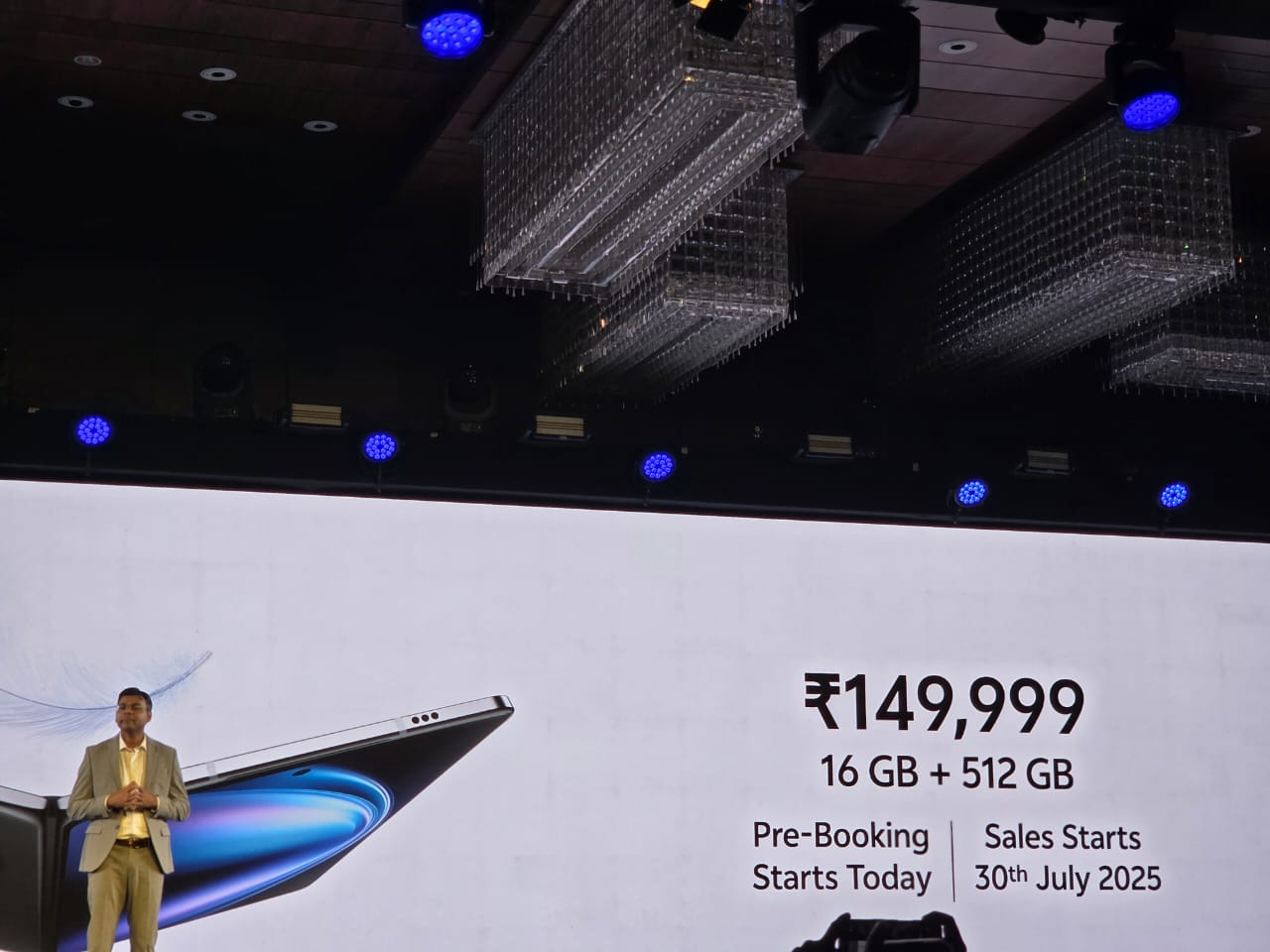
The Vivo X Fold5 comes in at ₹1,49,999 for the 16GB RAM and 512GB storage variant, which is ₹10,000 lower than the price of the X Fold3 Pro at launch.
This lower price tag, combined with a slimmer design, better cameras, and smarter software, makes the new foldable a more appealing package for 2025. That said, while Vivo has managed to price the Fold5 competitively, it still feels like there was room to be more aggressive. With the slightly older Snapdragon 8 Gen 3 platform instead of Qualcomm's latest Elite chip, a launch price closer to ₹1,20,000 would have really shaken up the premium foldable space. At the moment, you are paying less because you are getting a little less, and it looks like Vivo might be saving the top-tier Snapdragon Elite for a future Fold5 Pro aimed directly at its rivals.
How Does It Stack Up Against the Competition?
The Samsung Galaxy Z Fold7 remains the benchmark for book-style foldables in India, and it is the phone that Vivo has clearly set its sights on with the Fold5. Where Samsung focuses on a slim and ultra-light design, Vivo's Fold5 takes a different route, prioritising endurance and practicality. It’s a 6000mAh battery with 80W fast charging that easily powers through a full day of travel, work, and entertainment, an advantage over Samsung's slimmer 8.8 mm 215 g frame that is built for pocketability.
The Vivo also leans into media and productivity with an 8.03-inch 4500 nit display that stays visible outdoors, while Samsung counters with a smoother 1 to 120 Hz adaptive panel that saves power when idle. Samsung's newer Snapdragon 8 Elite chip and Galaxy AI bring features like live translation and summarisation, whereas Vivo's Snapdragon 8 Gen 3 and 16 GB RAM promise some headroom for multitasking and gaming. Having said that, the weakest link in the overall vivo X Fold5 package has to be the older generation processor, especially for a phone that costs 1.5 lakh Indian rupees!
Camera preferences remain subjective: Vivo's Zeiss-tuned triple 50 MP setup excels at natural colours and versatile zoom, while Samsung holds the edge in AI-driven photo processing and software convenience. In the end, Samsung caters more to professionals who prioritise sleek design and smart AI tools, while Vivo appeals to buyers who value battery life, a bigger display for content and creative flexibility with the camera.
However, how much of the bigger battery on paper translates into real world endurance, or whether the faster chipset in the Galaxy Z Fold 7 makes a noticeable difference in daily use, is something only detailed testing will reveal. Stay tuned for our deep dive comparison video coming soon on our YouTube channel.