Vivo has had a strong start to 2025. CMR data places the brand at a 20 percent share of the Indian smartphone market in the first quarter, with 18 percent year-on-year growth. Building on that momentum, the company has launched the X200 FE, a device positioned in the premium compact phone segment. This is a category that has seen relatively few serious contenders, as most manufacturers tend to focus on larger, more expensive flagships.
The X200 FE is aimed at users who prefer a smaller device but do not want to lose out on key features such as high-resolution cameras, a capable processor, and long battery life.
Compact Form Factor, Premium Design
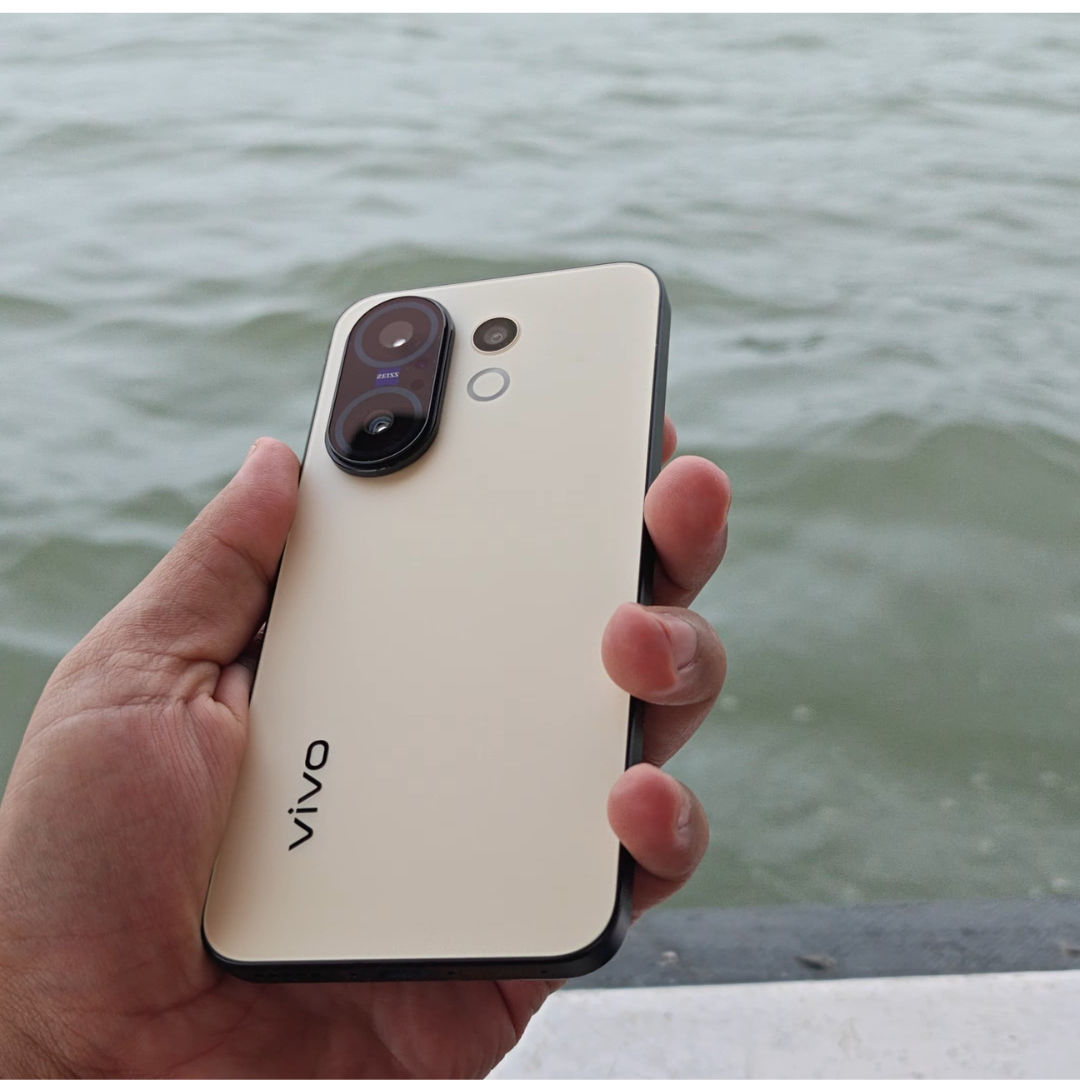
The phone features a 6.31-inch AMOLED display and weighs 186 grams. At 7.99 mm thick, it is designed to sit comfortably in the hand and is easier to manage than the larger flagships that dominate the market. The rear houses a large camera island, and the device is available in three colours: Luxe Grey, Amber Yellow, and Frost Blue. It also includes IP68 and IP69 ratings, offering protection against dust, water splashes, and high-pressure water jets, a specification that is uncommon in this size and price range. Ruggedness and water resistance in a compact phone at this price point is unusual, making the X200 FE stand out among its peers.
Camera and Hardware Priorities
The X200 FE uses a triple-camera arrangement on the rear: a 50 megapixel Zeiss main sensor, a 50 megapixel Zeiss telephoto lens with 3x optical zoom, and an 8 megapixel ultra-wide camera. A 50 megapixel autofocus camera on the front handles selfies and video calls. The inclusion of three 50 MP sensors, particularly in a smaller phone, shows that imaging has been given high priority and continues the X200 series' focus on camera capabilities.

Powering the phone is the MediaTek Dimensity 9300+ processor and a 6,500 mAh battery. While this chipset is not the most powerful on the market, it is expected to handle everyday workloads comfortably. The large battery, combined with 90 W wired fast charging, is likely to be one of the phone's key strengths, particularly for users who value long runtimes on a compact device. The phone ships with Funtouch OS 15 based on Android 15.
Can It Compete With The OnePlus 13s?
At its price point, the closest competitor to the X200 FE is the OnePlus 13s. Both devices target users who want a smaller phone without compromising on essentials.
Vivo has focused on cameras, battery life and ruggedness, whereas OnePlus has gone in a different direction. The 13s offers a dual-camera setup with a 50 MP Sony LYT 700 primary sensor and a 2x telephoto lens, but omits an ultra-wide camera. It also has a smaller 5,850 mAh battery with 80 W fast charging. Durability is another area where the two phones differ. The X200 FE comes with IP68 and IP69 ratings, giving it resistance to both dust and high-pressure water jets, while the OnePlus 13s only carries an IP65 rating. For anyone who needs a compact phone that can withstand harsher conditions, this gives Vivo an edge.
Performance is expected to be stronger on the OnePlus 13s thanks to the Snapdragon 8 Elite chipset, which should deliver better results in demanding workloads and gaming compared to the Dimensity 9300+.
Premium Compacts Are Playing the Value Card Without Saying It
The X200 FE is priced at ₹54,999 for the 12 GB + 256 GB version and ₹59,999 for the 16 GB + 512 GB model, with sales starting July 23 across Flipkart, Vivo's own store, and retail outlets. The OnePlus 13s is already available at the same price points.
Both phones fall short of the absolute top-tier hardware found in compact flagships such as Samsung's Galaxy S25 or Apple's iPhone 16 Pro. The OnePlus 13s compromises on camera versatility, while the X200 FE does so on processor performance.
Where these two devices stand out is in areas where true compact flagships usually struggle. Larger batteries, faster charging, and more rugged build quality make them practical everyday choices. And importantly, they do this at a significantly lower price point in comparison to Apple and Samsung's compact flagships.
In effect, these premium compacts are quietly playing the value card. They deliver high-quality cameras, solid performance, and battery life without the ₹1 lakh-plus price tags of true flagships. For anyone who likes the idea of a smaller phone but doesn't want to pay flagship-level money, this emerging category offers an appealing middle ground. How much traction that value-focused positioning gains in the market will become clear in the months ahead.