With every Nord release, OnePlus walks the tightrope between affordability and premium experience, and the Nord 5 is no exception. It carries forward the brand’s core promise, but this time with a few noteworthy shifts.
OnePlus Nord 5
Rs 31,999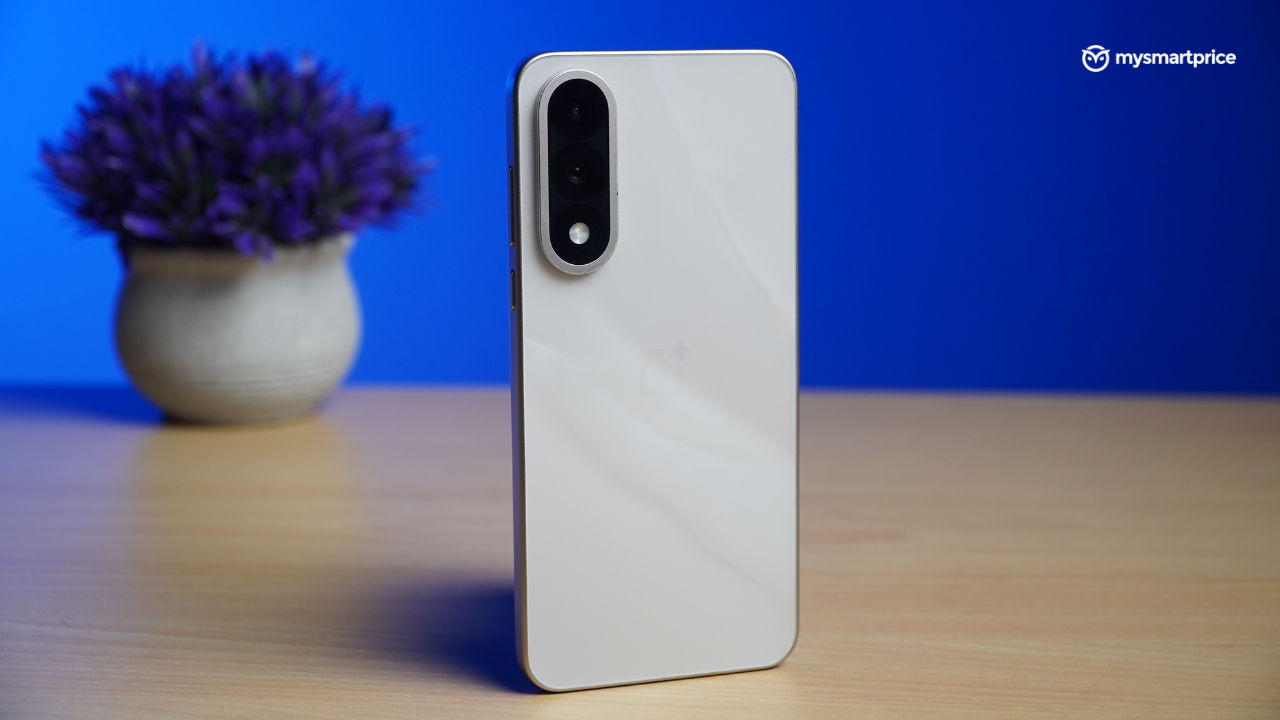
What Is Good?
- Premium glass design
- Everyday performance is smooth
- The addition of 144Hz refresh rate makes the overall usage much better
- Primary camera clicks great pictures
- Snappy software experience
What Is Bad?
- Qualcomm Snapdragon 8s Gen 3 is a slightly outdated processor in 2025
- Edge detection needs improvement
- The glass back panel is very slippery
- Pre-installed apps
Gone is the metal build we appreciated in the Nord 4; in its place is a glass back panel surrounded by metallic frames, which might not feel as refined. That said, the design isn’t a simple rehash—the camera island, in particular, has seen a bold redesign that gives the phone a more modern edge. Internally, the changes are more reassuring. There’s a bigger battery, a more powerful processor, and a continuation of last year’s camera setup, a mix of progress and familiarity.
I’ve been using the Nord 5 as my daily driver for a while now, and if you’re wondering whether it’s worth your money, here’s what you need to know.
Design and Display
OnePlus has taken quite a design detour with the Nord 5, moving away from the aesthetics that defined the Nord 4. While last year’s model leaned into a sleek, premium visual identity, the Nord 5 feels noticeably more experimental. I expected the design to carry forward some familiar elements, but that didn’t turn out to be the case. What’s more shocking is that the premium metal body from last year has been swapped out for glass this time, and to be honest, this body feels just as premium. But the metal unibody structure had a different aura of its own.

I’ve been using the Marble Sands variant, and I have to admit—it makes a statement. It fits surprisingly well with my more expressive, sometimes gaudy, fashion choices. The rear panel has a wave-like texture that catches the light beautifully, giving the phone a bit of character. The redesigned camera module, too, feels like a deliberate shift rather than a subtle update.
At 211 grams, the Nord 5 isn’t exactly light, and I could feel that from the first moment I picked it up. The weight distribution is fairly well handled, but there’s no getting around the fact that this is a hefty device. Every time I tried slipping it into my smaller pockets, I was reminded of just how present it is; not uncomfortable, but definitely noticeable.
- Weight: 211 grams
- Thickness: 8.1mm
- Colours: Marble Sands, Phantom Grey and Dry Ice
- Ports and Button Placements: Bottom: Primary microphone, USB port, Speaker grille, SIM tray, Top: Secondary microphone, secondary speakers, Left Side: Plus Key, Right Side: Volume buttons and power button
The back panel on this phone is ridiculously slippery. While I was walking around Ho Chi Minh City, it slipped out of my hands more times than I’d like to admit. Each time it hit the ground, I had that split-second panic before picking it up, expecting the worst. It did pick up a few scuffs along the way, but to my surprise, it held up pretty well.
This phone carries an IP65 rating, which is the same as what I saw on the recently launched OnePlus 13s. But honestly, at this price point, I was expecting at least an IP68 or IP69 rating. A bit more protection would’ve gone a long way, especially for someone like me who tends to test the limits of their devices unintentionally.
The Nord 5’s display stands out the moment you turn it on. It’s a sprawling 6.83-inch AMOLED panel with barely-there bezels that give it a clean, immersive look. The symmetry across the edges is impressive, and the 144Hz refresh rate adds a layer of polish I didn’t realise I needed. I used to be perfectly content with 120Hz, but this bump makes everything feel just a bit snappier; whether I was scrolling through social feeds or switching between apps.
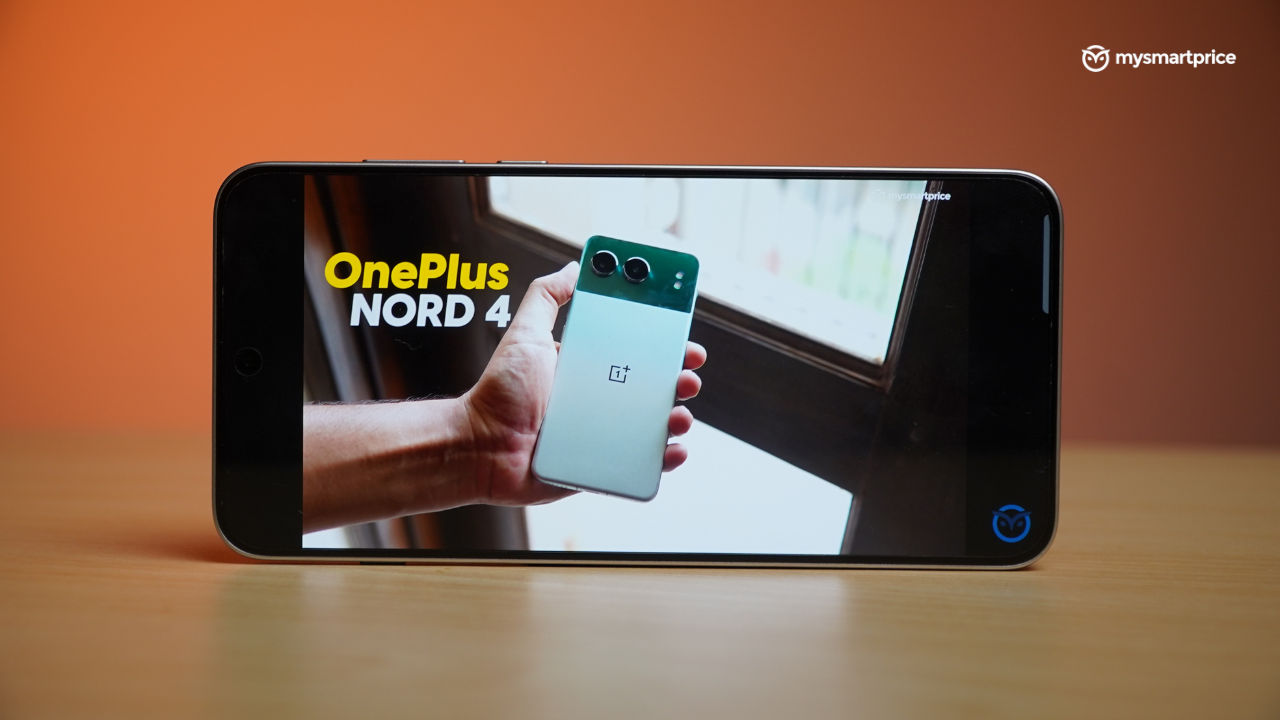
What really impressed me, though, was how well the display held up outdoors. I spent a good chunk of time walking under the scorching sun, and not once did I find myself squinting or angling the screen awkwardly.
During long rides across the city, I binged Ginny & Georgia on Netflix, and the screen delivered beautifully. The contrast, the depth in colours, and the overall clarity made the visuals pop. It genuinely felt like I was watching on a high-end streaming device.
Hardware and Software
Powering the OnePlus Nord 5 is the Snapdragon 8s Gen 3—yes, the same chipset that was essentially everywhere in 2024. From the POCO F6 to the Xiaomi 14 CIVI and Realme GT 6, this SoC was the go-to choice for many upper mid-range devices last year. So, to see OnePlus carry it forward into 2025 does feel a bit conservative. It’s not a bad processor by any means, but it doesn’t bring anything new to the table. Still, considering the Nord 4 used older hardware, this is technically a step forward.

In the AnTuTu benchmark test, the Nord 5 came close to hitting 1.5 million points, which is solid for this class. When I stacked it up against the competition, it nudged ahead of both the POCO F6 and the Xiaomi 14 CIVI. That said, the Realme GT 6 still leads the pack, comfortably crossing the 1.5 million mark. You can check the graph below to see how it all played out.
- AnTuTu score: 1,485,777 points
- CPU Throttling Test: 78% of its maximum performance
The Nord 5 surprised me in the best way. Day-to-day performance felt tight and responsive, not once did I find myself waiting on the phone to catch up. The 144Hz refresh rate genuinely elevated how fluid everything felt, whether I was flicking through chats, uploading stories, or bouncing between apps during a long day of travel.

Gaming didn’t let me down either. I spent a good chunk of my evenings playing Call of Duty: Mobile, and the Nord 5 held even during chaotic Team Death Matches. Frames stayed steady, touch response was sharp, and there was no sign of thermal throttling.
The software experience, too, felt thoughtfully refined. OxygenOS 15 brings a few meaningful upgrades, particularly in the AI department. I didn’t expect to rely on AI Search as much as I did, but it quickly became part of my workflow. This feature cut through the mess instantly for me.
Then there’s the new Plus Key, which replaces the classic Alert Slider. But with features like Plus Mind, which neatly organises all my screen-captured content in one space, I warmed up to it quickly.

That said, it’s not a spotless experience. The Nord 5 comes with its fair share of pre-installed apps, some useful, some not so much. But thankfully, everything unwanted was easy to uninstall, and once I did that, the software felt clean and easy to navigate. In the end, it’s the consistency that stood out to me.
Cameras
OnePlus hasn’t made major changes to the rear camera setup on the Nord 5—the 50MP primary sensor with OIS and the 8MP ultra-wide are identical to last year’s configuration. Naturally, that left me with mixed expectations. So, I decided to put the cameras through their paces while exploring the vibrant streets of Ho Chi Minh City, Vietnam.
The main sensor handles daylight shots with confidence. Landscapes came out crisp, and the colours; especially the vibrant reds and yellows scattered across Vietnam’s street markets were beautifully rendered. But not everything was perfect. The dynamic range faltered when it came to subtle blues and greens; tones often merged, making the overall image feel flatter in certain scenes.


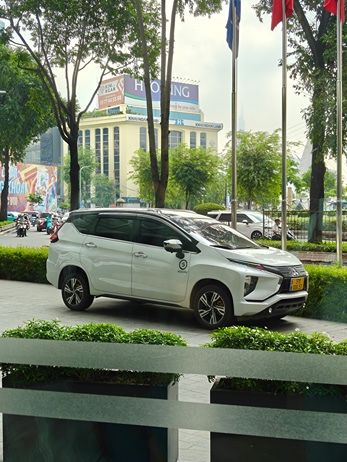






















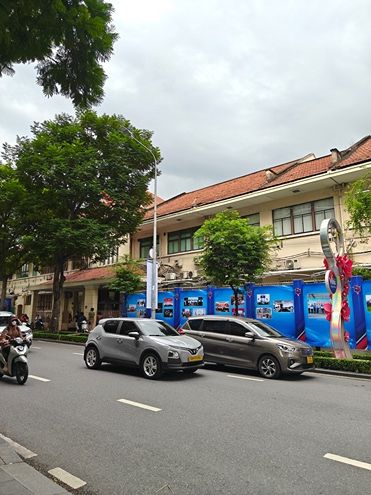








What genuinely surprised me was the 2x zoom. I didn’t expect much, but the results were sharp, well-exposed, and full of life, all without taking a single step forward. For quick, effortless framing, this mode quickly became my go-to.
Portrait mode, however, left me wanting more. While the colour tuning and subject focus were generally solid, edge detection was inconsistent at best. Stray hair and object outline blurred awkwardly into the background, taking away from what could’ve been a strong shot.





The ultra-wide lens did a commendable job. It captured expansive cityscapes without stretching the edges too much. Grain was minimal, and colour tones stayed true.
Low-light performance, though, remains the camera’s weakest link. In dim environments, textures softened and finer details were lost. Brighter zones still looked good, and thankfully, there was no distracting lens flare. This is an area where a software patch could make a big difference.












On the selfie front, the Nord 5 shows improvement. The camera handles skin tones well, and for once, I didn’t notice the unnatural redness that tends to creep in around the lips and cheeks on older OnePlus devices. It felt balanced and natural—something I honestly didn’t expect.





Battery and Charging
In a market where battery upgrades have become more of a necessity than a luxury, it’s reassuring to see OnePlus respond with intent. The Nord 5 arrives with a noticeably larger battery—1,300mAh more than its predecessor — and yes, you can feel it in the added heft and thickness.

On synthetic tests like PCMark, the results weren’t groundbreaking, it clocked in just under 15 hours, which feels modest when compared to others in the same battery bracket that often push past the 20-hour threshold. But benchmarks rarely tell the full story.
- Battery Capacity: 6,800mAh
- Charging Time: 1 hour and 2 minutes
- PCMark Battery Test: 14 hours, 16 minutes
While on the move, hopping between locations, shooting photos, navigating, texting, and endlessly scrolling, the Nord 5 quietly proved its mettle. It didn’t flinch. There was no battery anxiety, the all-day power kept up with everything I threw at it.
Charging was equally drama-free. The bundled 80W SUPERVOOC charger brought the phone from zero to full in a little over an hour, and impressively, it stayed cool throughout.
Ultimately, the OnePlus Nord 5 backs up the battery specifications with solid, real-world endurance. It may not top synthetic charts, but in the kind of daily grind that actually matters, it holds its ground effortlessly. That balance between numbers and lived experience is what gives this phone its edge.
Verdict
At a starting price of Rs 31,999, the OnePlus Nord 5 positions itself as a confident mid-range contender, offering a well-rounded experience without trying too hard to stand out.
The battery is one of its biggest strengths. With a 6,800mAh unit, it comes close to the capacity of the flagship OnePlus 13s. In daily use, I found it impressively consistent, holding up through navigation, camera use, and social media without the need for a midday charge.
On the performance front, the Snapdragon 8s Gen 3 delivers fluid responsiveness across the board. While it may not be the most cutting-edge processor for 2025, it handled multitasking and light gaming with ease. There were no lags, no heating, and nothing that broke the flow of regular usage.
The camera setup hasn’t changed from last year, but results were still reliable. Portraits, landscapes, and even 2x zoom shots looked sharp and true to colour. The one notable shift is in functionality. OnePlus has now fully replaced the Alert Slider with the Plus Key, which brings extra shortcuts and AI tools.
If you’re coming from a much older Nord device, this upgrade feels like a step up in every way. However, for users of the Nord 4 or Nord 3, the improvements may not feel dramatic enough to warrant an immediate switch.
Also worth noting is the change in materials. So, if design is high on your priority list, smartphones like the Realme GT 6 or GT 6T offer a more stylish build.
Overall, the Nord 5 gets the essentials right. It isn’t about radical reinvention. It focuses on consistency, and sometimes, that’s exactly what makes a phone dependable.