There was a phase in smartphone history when camera progress was easy to explain. More megapixels meant a better camera. Bigger numbers made for cleaner marketing and simpler comparisons. Over time, that logic broke down. Higher resolution did not automatically translate into better photos, and users began to notice the gap between specs and real-world results.
Those of us who have tracked phone cameras closely have seen this transition first-hand. The industry moved from megapixel races to sensor size, then to optics, and eventually to computational photography. Today, the conversation has shifted again, towards how well a camera understands context, intent, and the moment being captured.
Around the launch of Samsung's Galaxy S26 series, this evolution came into sharp focus during conversations with the company's camera leadership. We were in San Francisco at the time of the S26 launch when we had the opportunity to interact with Joshua Cho, Executive Vice President and Head of Visual Solution Team at Samsung Electronics, whose team oversees everything from capture to editing and sharing.
"Samsung has been developing cameras for nearly 40 years," Cho said. "Many of the engineers who once worked on DSLR cameras are still working on Galaxy cameras today."
That history shapes how Samsung now thinks about smartphone photography.
When hardware stopped being the only answer
By most objective measures, smartphone cameras today are already very capable. They capture sharp photos, record stable video, and perform reliably in good lighting. The real challenge, Samsung argues, is what happens when conditions are less predictable.
People move while filming. Lighting changes mid-shot. Scenes are part daylight, part shadow. Subjects are rarely still. This is where raw hardware improvements alone begin to show limits.
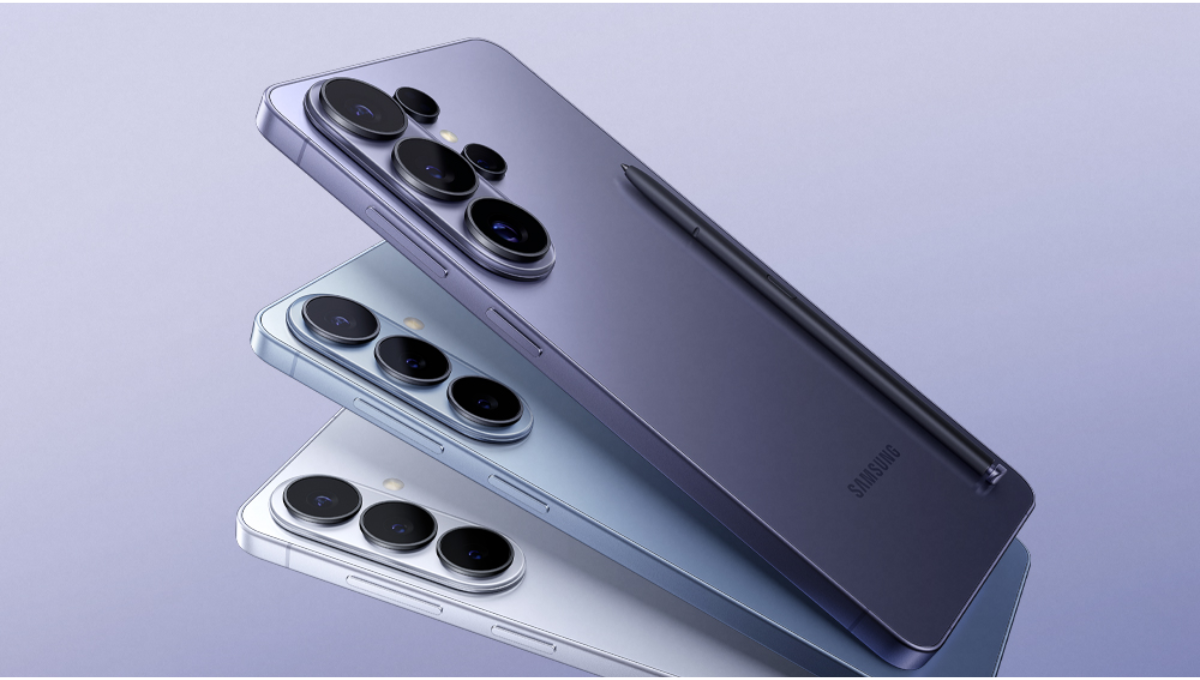
With the Galaxy S26 series, Samsung has leaned into wider camera apertures to allow more light to reach the sensor, improving low-light photography and video. Enhanced Nightography Video and upgraded Super Steady aim to make handheld shooting more usable in everyday scenarios, not just controlled ones.
But hardware is only part of the equation now. Samsung says the more meaningful leap comes from how data from the sensor is interpreted.
"Image quality alone is not enough," Cho explained. "What matters is understanding the intention of the user and helping them express that moment."
This thinking is reflected in Samsung's shift towards deeper AI integration in image signal processing.
AI moves from feature to foundation
One of the more important changes in the Galaxy S26 camera system is Samsung's expanded use of AI-driven image signal processing, including on the selfie camera. According to the company, this allows for more natural skin tones, better exposure control in mixed lighting, and smoother transitions when users move between bright and dark environments.
Samsung says its exposure control systems were trained using thousands of real-world scenes, later expanded into a much larger dataset, to better handle unpredictable lighting. Gyro data is also used to understand motion, helping the camera distinguish between panning, movement, and static shots.
"Starting with Galaxy S26, we have fully moved to AI-based image signal processing," Cho said. "Users should feel the difference immediately in smoothness and consistency."
AI also plays a growing role after the shutter is pressed. With the upgraded Photo Assist tools, users can describe edits in natural language, restore missing elements in images, or remove unwanted objects. Samsung says much of the pre-processing and post-processing happens on the device, with server-based models assisting where required.
"No matter what kind of generative editing you use, pre-processing and post-processing determine the final quality," Cho said. "That is where our differentiation lies."
Samsung also acknowledged concerns around AI-generated imagery and misinformation, stating that it complies with global content authenticity standards and embeds safeguards to ensure transparency around edited content.
A Camera Designed Around Everyday Life
What stands out in Samsung's S26 camera narrative is how deliberately it steps away from spec-first storytelling. The company frames the camera as a tool that needs to work across ordinary, imperfect moments, rather than exceptional ones.
The Galaxy S26 camera system integrates capture, editing, and sharing into a single flow. Creative Studio brings multiple editing tools into one space, while AI-powered features like Document Scanner aim to remove friction from everyday tasks, such as scanning receipts or paperwork.
After years of watching smartphone cameras chase numbers, the shift feels deliberate. Cameras are no longer judged only by resolution or sensor size, but by how reliably they translate intent into output.
Samsung's view is that the next phase of smartphone photography is not about adding more features. It is about making the camera quietly understand what the user is trying to capture, and getting out of the way once it does.
For an industry that once measured progress in megapixels alone, that may be the clearest sign yet that phone cameras have finally grown up.