With each passing year, India continues to dominate other countries in terms of its youngest demographics, boasting a median age of 27 years. Out of a population of 400 million youngsters, 308 million are students, studying in colleges and schools. However, in this land of the youth, it breaks the heart to see curriculum and teaching lag decades behind the needs of a digital economy. To this day, outdated methods like rote learning are still in practice to educate these energetic, young minds, with little to no sight of practical, hands-on experience. Moreover, as people increasingly rely on technology to stay ahead in the modern world, as per reports only 9.9% percentage of Indian youth own a computer. Witnessing this unfortunate state, Intel has decided to step up and help redefine the whole education system by integrating AI.
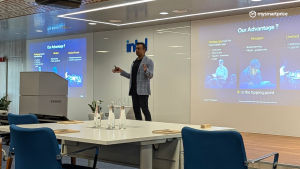
At its “PadhAi ka future” event, the company outlined the plans it intends to implement to reach this ambitious goal. Firstly, it aims to personalise teaching methods by analysing individuals’ personality traits, interests, and strengths using AI and adapting them based on the collected data. It also revealed that it is developing blueprints to gamify the lesson style, ensuring students’ interest in learning new concepts stays fresh. Building on this, Intel clarified that it seeks to promote more interactive education. Most importantly, it wants to provide education in the language students are more familiar with.
The plan for revamping the educational foundation was designed not only for students but also for teachers. Yes, Intel disclosed that it is working on streamlining the evaluation process of students’ performance to promote healthy growth in their knowledge. Additionally, it shared with the people present at the event that it is creating a system that helps teachers stay ahead in the emerging AI technology, modernising their teaching methods without age being a limiting factor in upskilling.
Witnessing this elaborate plan, one can’t help but wonder whether Intel is considering relying on itself to implement its ambitious vision. However, the brand revealed that it is partnering with prominent edtech firms to bring its ambitious vision to life for students and teachers alike.

Among all the companies gathered at the event, two stood out to me because of how they are leveraging AI to make education more engaging and accessible for the masses.
Physics Wallah, arguably one of the most popular channels for education on YouTube, demoed how it has integrated AI into its existing platform to help students grasp complex concepts in their personalised methods.
The website features an AI-powered smart assistant called AI Guru. The way it works is that it scours the entire catalogue of live classes done so far and searches for the answers to the questions students have doubts about. Then, it generates a detailed response with the link to specific timestamps of the lengthy recorded sessions, so that students don’t have to spend time looking for that point. If, by any chance, someone raises a question that hasn’t been addressed in any recorded session, the AI tool quickly flags it in the system and alerts the available teacher to answer it immediately.
Another company with an interesting idea on the block was UpEducators. It runs its AI natively on the Intel-powered computers to help teachers curate assignments, evaluation methods, and questions for examination based on their students’ interests and strengths. What’s more impressive about its way of using AI to upskill teachers is that it has eliminated the need for learning prompt engineering to create personalised teaching methods. Regardless of their age and willingness to learn new technology, they can ask the system to conceive the teaching plan in their natural language, and the tool provides customised lesson outlines and evaluation material instantly, removing the usual technical hurdles.
Ultimately, Intel is showing that with the right technology and collaboration, the future of education in India can be brighter and more accessible for everyone.