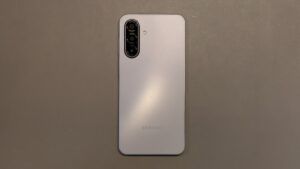
As artificial intelligence continues to shape smartphone photography, OPPO is taking a more deliberate path. Instead of overwhelming users with flashy AI filters or fully automated image generation, the brand is building a camera philosophy rooted in balance: one that navigates the space between science and style, and between realism and imagination.
We at MSP had an in-depth conversation with Lu Chenghao, Photography Product Specialist at OPPO, a clearer picture emerged of how the company views AI in the context of mobile imaging. “AI has two primary roles in photography,” he explained. “The first is to enhance what is already there. The second is to imagine what could be.”
The first role is familiar to most users. Whether it’s cleaning up a low-light shot, sharpening soft details, or lifting shadows without crushing highlights, AI is used here as a compensatory tool. This is especially important in smartphones, where compact sensors and lenses come with physical limitations. Lu noted that OPPO’s approach involves capturing up to nine frames with a single click, using a carefully designed computational pipeline to compensate for those constraints. He mentioned that this level of processing is already present in current flagships such as the OPPO Find X8 Ultra.
But it is the second role, Lu said, that defines where OPPO’s vision is headed. The company is now experimenting with AI recomposition and perspective shifting, features that can reinterpret a single image and offer alternative framings or moods. This, he clarified, is not about fabricating reality. It is about presenting moments in different ways that feel authentic yet expressive.
Importantly, OPPO is not enforcing this creative layer by default. “We believe users should have control,” Lu said. “For some, photography is about capturing reality exactly as it is. For others, it is a form of visual storytelling. Both are valid.” On the Find X8 Ultra, for instance, users can toggle AI zoom effects on or off. If the AI is deactivated, the image remains raw and unprocessed. This level of transparency and opt-in flexibility is rare in an industry that often blurs the line between enhancement and manipulation.
This nuanced approach is also shaped by OPPO’s deepening relationship with Hasselblad, the legendary Swedish camera company. The two brands have worked together since 2022, but earlier this year, they extended and expanded their collaboration. The partnership now covers deeper integration in computational photography, colour calibration, and image aesthetics across hardware and software. As OPPO continues to experiment with new AI imaging techniques, Hasselblad’s legacy in precision optics and visual storytelling acts as both a guide and a guardrail.
The evolving AI roadmap also ties into a broader shift in OPPO’s design philosophy. In an earlier interaction, Lu described a future where the smartphone itself could act as a digital core, with AI powering a flexible ecosystem of attachable lenses, grips, and storage. While that vision is still conceptual, it reinforces the idea that intelligence, not just hardware is the foundation of OPPO’s imaging ambitions.
For now, the Find X8 Ultra remains the company’s flagship showcase, combining large-sensor optics with real-time AI tuning for portraits, zoom, and video. But what OPPO is building goes far beyond a single device. It is working toward a future where AI doesn’t just make photos better. It makes them more personal, more expressive, and ultimately, more human.