Gaming laptops are often used for more than gaming. They may be connected to an external monitor at home and carried to college or work the next day. Price, weight, GPU power, ports and upgrade options are therefore worth comparing before buying.
The MSI Cyborg 15 Max C2WF-103IN, ASUS TUF Gaming 16 FX610JM-TU105WS and Lenovo Legion 5 15IRX10 (83LY00SVIN) are three RTX 5060 gaming laptops available in India. All three have 16 GB DDR5 RAM and an Nvidia GeForce RTX 5060 Laptop GPU with 8 GB GDDR7. However, their GPU power limits, processors, displays, storage, warranties and prices differ.
Based on the October 2026 prices quoted here, the MSI Cyborg 15 Max is the cheapest at ₹1,79,990. It weighs 2 kg and comes with a GPU power limit of up to 100 W, two M.2 storage slots and support for up to 96 GB RAM. ASUS has more CPU cores, while Lenovo includes a larger battery and SSD. These differences are relevant for anyone planning to use the same laptop for games, work and study.
MSI Cyborg 15 Max vs ASUS TUF Gaming 16 vs Lenovo Legion 5: Specifications Compared
| Specification | MSI Cyborg 15 Max C2WF-103IN | ASUS TUF Gaming 16 FX610JM-TU105WS | Lenovo Legion 5 83LY00SVIN |
| Processor | Intel Core 7 240H; 10 cores, 16 threads | Intel Core i7-14650HX; 16 cores, 24 threads | Intel Core i7-13650HX; 14 cores, 20 threads |
| Graphics | RTX 5060, 8 GB GDDR7 | RTX 5060, 8 GB GDDR7 | RTX 5060, 8 GB GDDR7 |
| Rated GPU power | Up to 100 W with Dynamic Boost | Up to 85 W (70 W + 15 W) | Up to 115 W TGP |
| Display | 15.6-inch FHD, 1920 × 1080, IPS-level, 144 Hz, 100% sRGB | 16-inch WUXGA, 1920 × 1200, IPS-level, 144 Hz, 100% sRGB | 15.3-inch WUXGA, 1920 × 1200, IPS, 165 Hz, 100% sRGB |
| Included RAM | 16 GB DDR5-5600 (1 × 16 GB) | 16 GB DDR5-5600 | 16 GB DDR5-4800 (1 × 16 GB) |
| Maximum stated RAM | 96 GB, two slots | 64 GB, two slots | 32 GB, two slots |
| SSD and slots | 512 GB PCIe 4.0; two M.2 slots | 512 GB PCIe 4.0; two M.2 slots | 1 TB PCIe 4.0; two M.2 slots |
| Battery | 60 Wh | 63 Wh | 80 Wh |
| Weight | 2.0 kg | 2.2 kg | 2.1 kg |
| Wi-Fi | Wi-Fi 6E | Wi-Fi 6 | Wi-Fi 6 |
| Listed standard warranty | Two years limited | One year | One year carry-in |
| October 2026 Pricing | ₹1,79,990 | ₹2,09,990 | ₹1,84,490 |
Prices are dated references for these exact model numbers and can change with stock and offers.
Our Recommendation: Which GeForce RTX 5060 Gaming Laptop Should You Buy?
The MSI Cyborg 15 Max is our pick among these three RTX 5060 gaming laptops. At ₹1,79,990, it is the most affordable option and comes with a 100 W RTX 5060 GPU, weighs 2 kg and supports up to 96 GB RAM. It also offers two M.2 SSD slots, Wi-Fi 6E and a two-year limited warranty. The Lenovo Legion 5 has a higher 115 W GPU power limit, a larger battery and more storage, while the ASUS TUF Gaming 16 offers a processor with more cores.
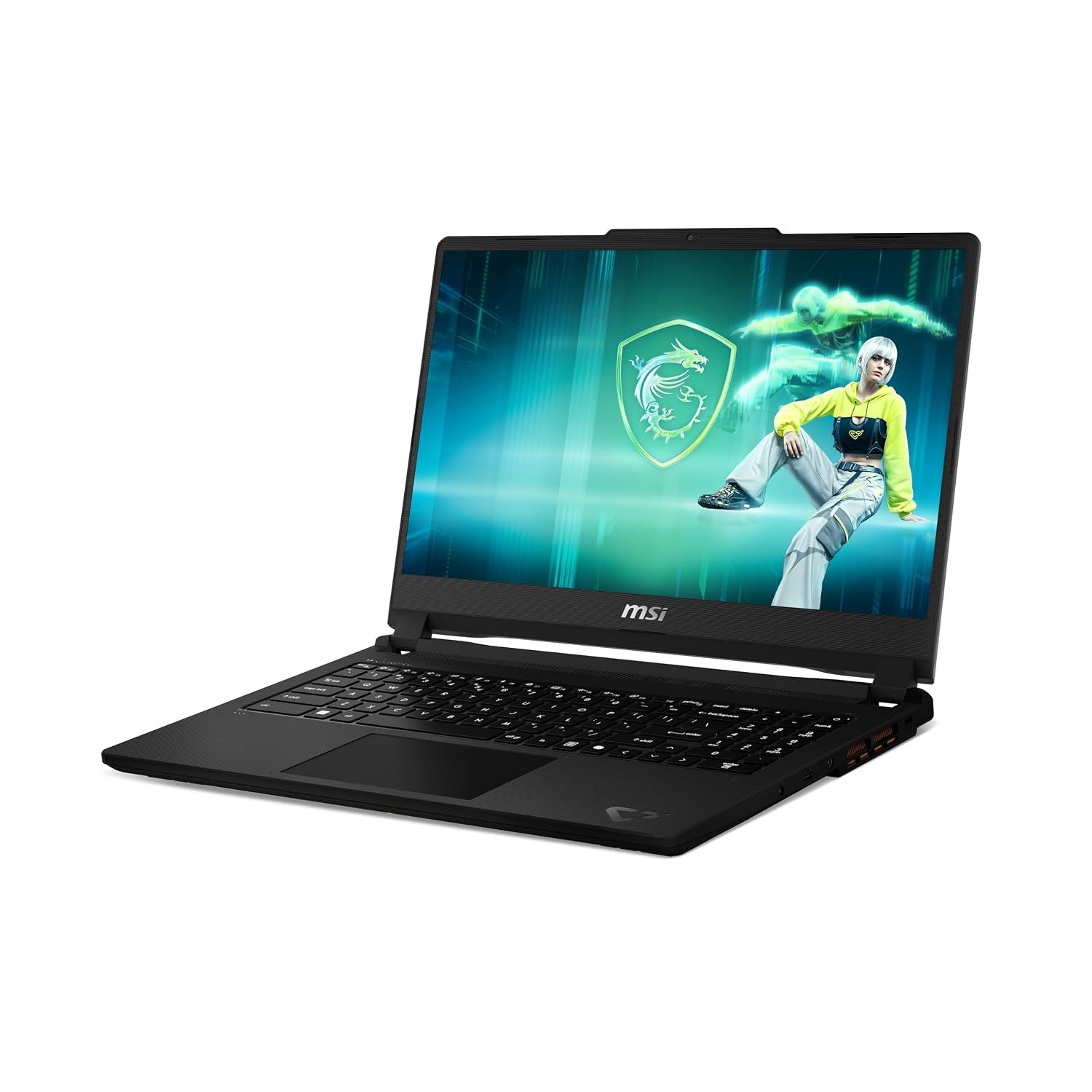
However, for buyers looking at price, graphics power, portability and future upgrades, the MSI Cyborg 15 Max is the best buy based on festive prices and offers. Let’s take a closer look at how the laptops compare on various key gaming laptop parameters that gamers should consider before buying a gaming laptop.
Graphics And GPU Power: Comparing 100 W, 85 W And 115 W Configurations
All three laptops use the RTX 5060 Laptop GPU with 8 GB GDDR7, but their stated GPU power limits differ. MSI lists up to 100 W Maximum Graphics Power with Dynamic Boost, ASUS lists 85 W and Lenovo lists up to 115 W. A higher power limit can affect GPU performance, although cooling and the workload also matter.
MSI’s stated 100 W limit is 15 W higher than ASUS’s, and the Cyborg 15 Max weighs 200 g less. MSI specifies a 180 W power adapter and Cooler Boost cooling with two fans and heat pipes. The laptop weighs 2 kg.
Lenovo has the highest rated GPU power at 115 W. Its laptop weighs 2.1 kg and costs ₹4,500 more than MSI at the referenced prices. The MSI model has a 15 W lower GPU power limit than Lenovo but a 15 W higher limit than ASUS. These are manufacturer power ratings, not measured gaming frame rates.
CPU Specifications: Comparing the Three Processors
MSI uses the Intel Core 7 240H, a 10-core, 16-thread processor with 24 MB cache and a maximum turbo frequency of 5.2 GHz. ASUS fits the Core i7-14650HX, with 16 cores, 24 threads, 30 MB cache and a 5.2 GHz maximum turbo frequency. Lenovo uses the Core i7-13650HX, with 14 cores, 20 threads, 24 MB cache and a boost frequency of up to 4.9 GHz.
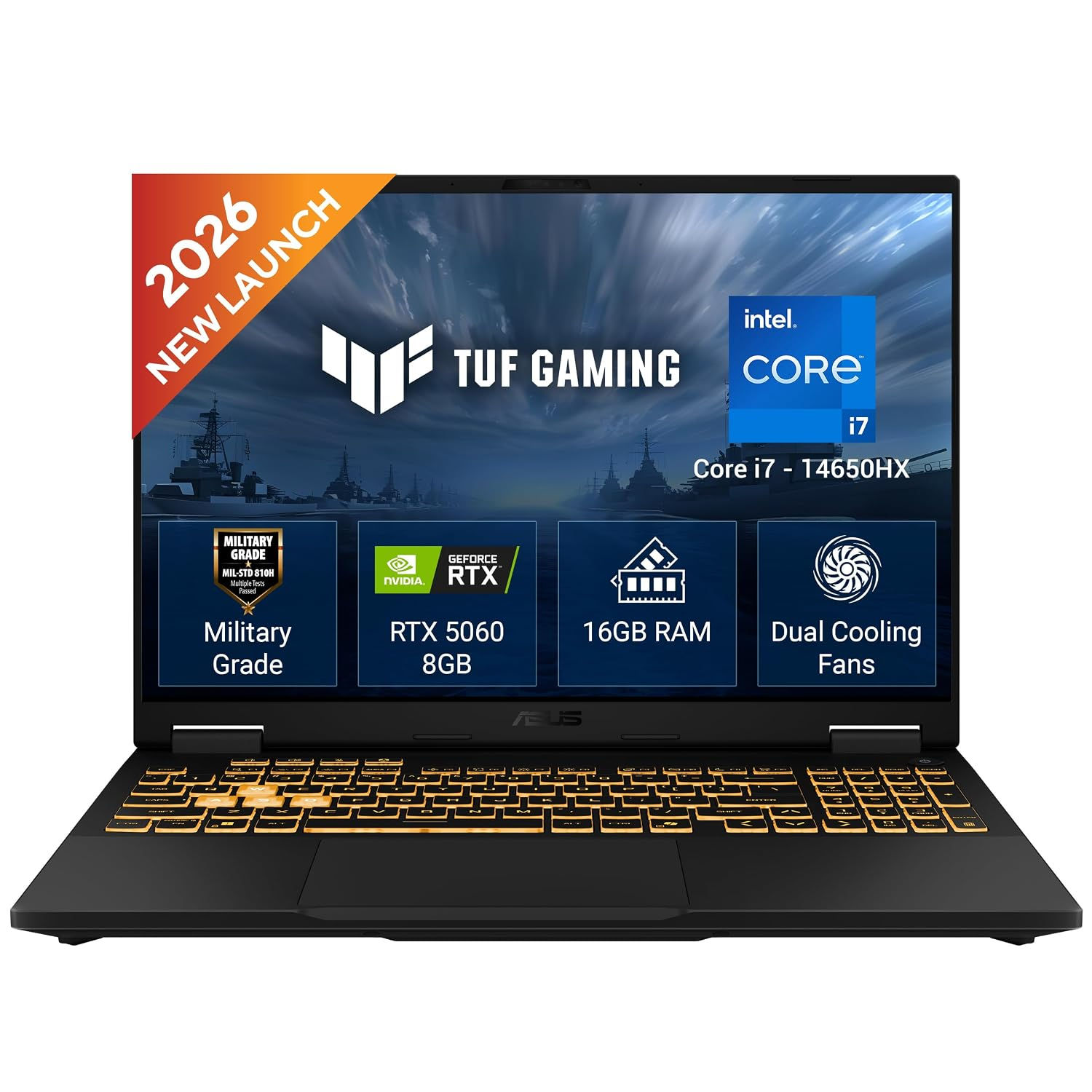
ASUS has the most cores and threads, followed by Lenovo and MSI. Higher core counts can help with heavily threaded tasks, including large software builds and CPU-intensive production work. Gaming results cannot be judged from core counts alone, so the GPU and other components also need to be considered.
The Core 7 240H in the MSI has six performance cores and four efficiency cores. Its listed maximum turbo frequency is 5.2 GHz, the same as the ASUS processor, although that does not mean the two CPUs perform equally. The MSI configuration combines this processor with a 100 W RTX 5060 and a 2 kg chassis.
Displays: Size, Resolution and Refresh Rate
The Cyborg 15 Max has a 15.6-inch Full HD IPS-level display at 1920 × 1080, with a 144 Hz refresh rate and advertised 100% sRGB coverage. ASUS provides a 16-inch 1920 × 1200 IPS-level panel at 144 Hz and 100% sRGB. Lenovo uses a 15.3-inch 1920 × 1200 IPS screen at 165 Hz, also rated for 100% sRGB. The ASUS and Lenovo panels have a taller 16:10 aspect ratio, which provides more vertical workspace.
MSI’s 1920 × 1080 screen has fewer pixels than the 1920 × 1200 panels on ASUS and Lenovo, which can reduce the number of pixels the GPU must render in games. MSI also lists a 144 Hz refresh rate and 100% sRGB coverage. These specifications do not, by themselves, establish display brightness, response time or colour accuracy.
ASUS and Lenovo provide more vertical screen space through their 16:10 displays. Lenovo also has the highest listed refresh rate at 165 Hz. MSI uses a 16:9 Full HD panel at 144 Hz and is the lightest and cheapest of the three at the referenced prices.
Memory And Storage: RAM Limits And SSD Options
Each laptop comes with 16 GB RAM. MSI states a maximum of 96 GB DDR5 across two slots, compared with 64 GB for ASUS and 32 GB for Lenovo. MSI and ASUS list DDR5-5600 memory, while this Lenovo configuration lists DDR5-4800. MSI therefore has the highest published RAM limit of the three.
Games generally do not require 96 GB RAM, but higher capacities may be useful for virtual machines, development tools and large editing projects. MSI comes with one 16 GB module, leaving the second slot available. Buyers should check the manufacturer’s compatibility and upgrade guidance before adding memory.
Lenovo includes a 1 TB PCIe 4.0 SSD, while MSI and ASUS each include 512 GB. All three have two M.2 SSD slots. The MSI storage capacity can therefore be increased later, but Lenovo provides more installed space from the start.
Cooling, Battery and Weight: How the Models Differ
The MSI Cyborg 15 Max weighs 2 kg, compared with 2.1 kg for Lenovo and 2.2 kg for ASUS. MSI lists dimensions of 359 × 249 × 21–22.9 mm, two fans with heat pipes under its Cooler Boost cooling system, and up to 130 W combined system power. These are published specifications; they do not indicate measured temperatures or fan noise.
ASUS lists rear-exhaust cooling and a 150 W adapter. Lenovo lists Coldfront cooling and a 245 W adapter. Cooling systems and adapter ratings vary across the three models. MSI is the lightest, while still including two M.2 slots.
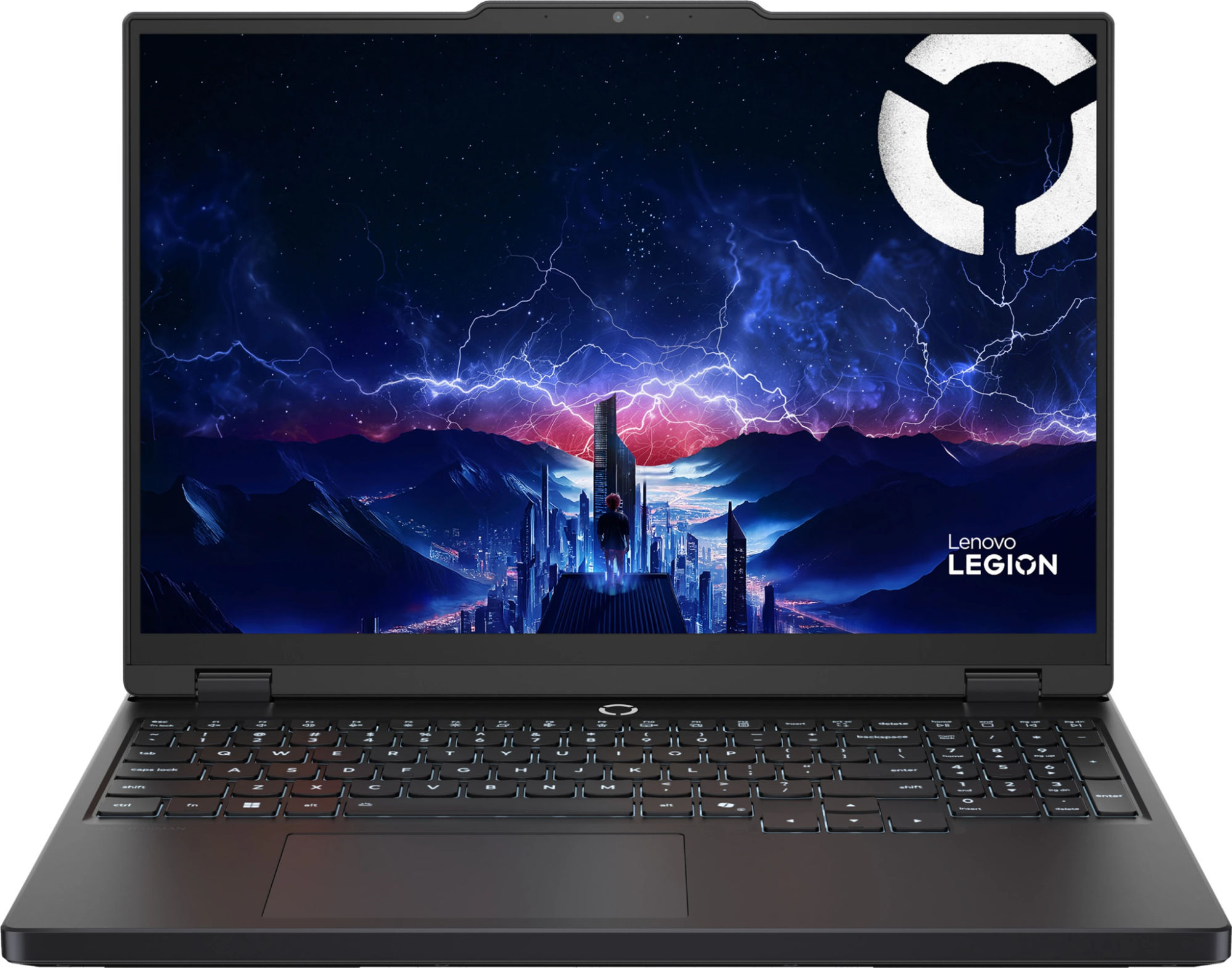
Lenovo has an 80 Wh battery, compared with 63 Wh for ASUS and 60 Wh for MSI. The Lenovo battery has the highest rated capacity, but actual runtime depends on power settings, workload and other factors. MSI has the smallest battery and the lowest listed weight and price. Buyers who regularly work away from a charger should consider this difference.
Ports and Wireless Connectivity
The Cyborg 15 Max has three USB-A ports, including two USB 3.2 Gen 2 ports, as well as USB-C with DisplayPort and Power Delivery, HDMI 2.1 and Gigabit Ethernet. MSI also lists Wi-Fi 6E and Bluetooth 5.4. The ports allow connections to peripherals such as a mouse, keyboard, external SSD and monitor.
ASUS has three USB-A ports, USB-C, HDMI 2.1 and Ethernet, although one USB-A port is USB 2.0. It lists Wi-Fi 6. Lenovo has two USB-C ports, three USB-A ports, HDMI 2.1 and Ethernet, and also lists Wi-Fi 6. Lenovo provides an additional USB-C port; MSI lists two USB-A Gen 2 ports and Wi-Fi 6E.
With a compatible router, Wi-Fi 6E can use the 6 GHz band, unlike the Wi-Fi 6 configurations listed for the ASUS and Lenovo models. MSI’s two USB-A Gen 2 ports can also be used with high-speed external storage. It additionally provides HDMI 2.1 and USB-C DisplayPort output.
Price and Warranty Comparison
The prices referenced on 16 October 2026 are ₹1,79,990 for MSI Cyborg 15 Max C2WF-103IN, ₹1,84,490 for Lenovo Legion 5 83LY00SVIN and ₹2,09,990 for ASUS TUF Gaming 16 FX610JM-TU105WS. These are model-specific reference prices, not guaranteed checkout prices. MSI and Lenovo prices come from retail tracking; buyers should verify stock and final prices with the seller.
At those prices, MSI costs ₹4,500 less than Lenovo and ₹30,000 less than ASUS. MSI also lists a 100 W RTX 5060, a weight of 2 kg, up to 96 GB RAM and Wi-Fi 6E. Lenovo includes a larger SSD and battery and has a higher GPU power limit. ASUS has more CPU cores but a lower GPU power limit. The appropriate choice depends on which of those specifications matters most to the buyer.
MSI lists a two-year limited manufacturer warranty, compared with one year for ASUS and Lenovo. Lenovo’s warranty is described as carry-in. Warranty coverage and conditions should be checked against the seller’s listing and final invoice. On the stated terms, MSI includes one additional year of standard coverage.
Verdict: Which RTX 5060 Laptop Should You Buy?
At the referenced prices, we would choose the MSI Cyborg 15 Max C2WF-103IN for buyers who want to keep the purchase price down without giving up a 100 W RTX 5060. It costs ₹1,79,990 and includes a 144 Hz Full HD screen, two M.2 SSD slots, support for up to 96 GB RAM and Wi-Fi 6E. It is also the lightest of the three at 2 kg and lists a two-year limited warranty.
ASUS is worth considering for its 16-core processor and taller 16:10 screen. Lenovo has the highest rated GPU power, an 80 Wh battery, a 165 Hz display and a 1 TB SSD. Those differences may outweigh MSI’s lower price for buyers with specific priorities. MSI is the lower-cost option with the highest stated RAM upgrade limit and longest listed standard warranty.
MSI is ₹30,000 cheaper than ASUS and ₹4,500 cheaper than Lenovo at the cited prices. Its 100 W GPU limit is higher than ASUS’s 85 W but lower than Lenovo’s 115 W. Buyers comparing the three should check current prices and, where available, independent gaming benchmarks before deciding.
Frequently Asked Questions
- Which gaming laptop offers the best value for money in 2026?
At the festive price of ₹1,79,990, MSI is the cheapest of the three. It has a 100 W RTX 5060, weighs 2 kg, provides two M.2 slots and supports up to 96 GB RAM. It also lists Wi-Fi 6E and a two-year limited warranty. Lenovo may be preferable for battery capacity and installed storage, while ASUS offers more CPU cores.
- Does GPU wattage matter when buying a gaming laptop?
Yes. The GPU power limit affects how much power the graphics processor can use and may affect frame rates. MSI lists up to 100 W with Dynamic Boost, ASUS lists 85 W and Lenovo lists up to 115 W. Actual gaming performance also depends on cooling, settings and the game being played.
- Is a gaming laptop with more CPU cores always better?
No. Extra CPU cores can help in heavily threaded applications, but gaming performance also depends on the GPU, processor design and game. MSI uses a 10-core, 16-thread Core 7 240H with a maximum turbo frequency of 5.2 GHz. ASUS and Lenovo have higher CPU core counts, while the MSI model costs less at the listed prices.
- How important are RAM and storage upgrades in a gaming laptop?
They matter if you intend to keep the laptop for several years or run memory-intensive programs. MSI supports up to 96 GB DDR5 across two slots, ASUS up to 64 GB and Lenovo up to 32 GB. All three have two M.2 SSD slots. Check compatible memory and SSD specifications before upgrading.
- Should you prioritise battery capacity or storage when buying a gaming laptop?
It depends on how the laptop will be used. Lenovo has an 80 Wh battery and 1 TB SSD; MSI has a 60 Wh battery and 512 GB SSD. MSI costs ₹4,500 less, weighs 100 g less and includes a second M.2 slot for additional storage. Battery capacity is not a direct measurement of runtime, so independent battery tests are useful for buyers who often work unplugged.
- What should students and professionals look for in a gaming laptop?
For college or work, check the laptop’s weight, battery, connectivity, memory and storage options alongside gaming specifications. MSI weighs 2 kg and lists a Core 7 processor, a 100 W RTX 5060, Wi-Fi 6E and support for up to 96 GB RAM. It also has a two-year limited warranty, compared with the one-year warranties listed for these ASUS and Lenovo configurations. At the referenced prices, MSI is the least expensive of the three.