At the recent GeForce Now (GFN) Media Preview, I finally got hands-on time with Nvidia's soon-to-release cloud gaming service. While Nvidia remained tight-lipped about the specific launch date and tier pricing for the Indian market, the event offered a clear look at what we can expect, and the results were surprisingly convincing.
High-End Gaming on Office Hardware
The standout moment of the preview was testing Battlefield 6 on an Acer Chromebook Plus. This is a thin-and-light laptop designed for office work, not graphical processing. Yet, running on GFN's top tier, which utilizes RTX 5000-level performance, the game ran at Ultra settings with a consistent 60 FPS.

The experience was fluid, limited only by the laptop's 60Hz display refresh rate. Seeing a device that typically handles spreadsheets delivering a high-end gaming experience was impressive. NVIDIA also showcased demos on Windows ultrabooks, MacBooks, iPads, and smartphones, reinforcing the pitch: you can get premium performance on almost any screen.
GeForce Now has gotten better to deliver “close to gaming PC” experience
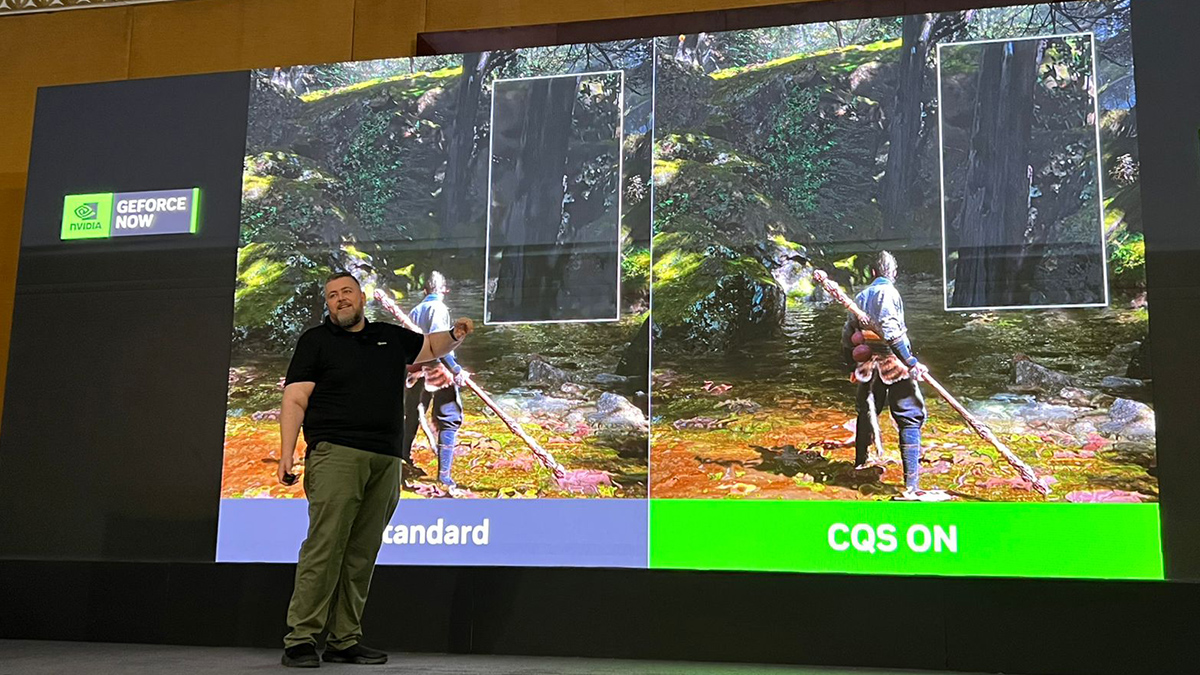
During the briefing, John Gillooly from Nvidia's marketing team outlined how the service has evolved over the last five years. NVIDIA calls their current standard “Cinematic Quality Streaming” (CQS), which brings HDR10 support to the cloud.
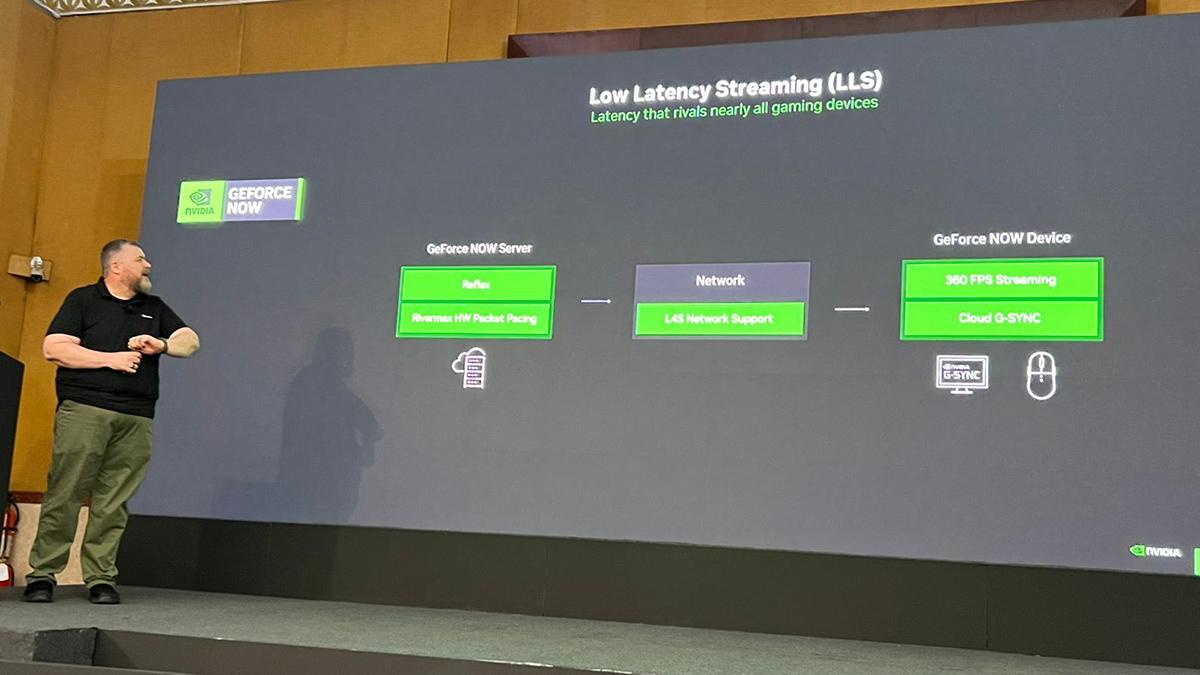
However, visual fidelity means little without responsiveness. NVIDIA is leaning on its local infrastructure, specifically Blackwell-based servers located in a Mumbai data centre, to tackle latency. By combining local proximity with technologies like NVIDIA Reflex, they are aiming to keep input lag below 30ms.
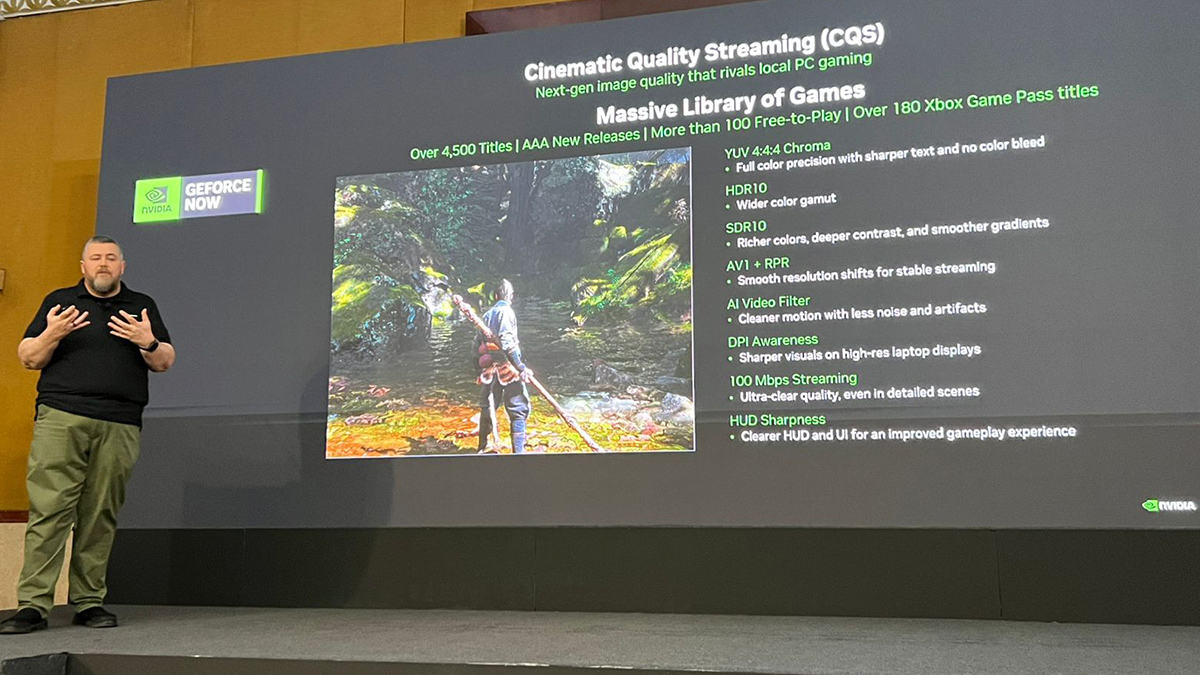
This local infrastructure gives GFN a theoretical edge over competitors. For instance, compared to Xbox Cloud Gaming, which is generally capped at 1080p/60fps and relies on browser-based decoding, GFN supports up to 4K at 120fps via a dedicated app. This app performs device diagnostics to optimize settings, avoiding the potential lag associated with browser decoding. We plan to do a full side-by-side comparison once the service launches, but on paper, the dedicated client is a significant advantage.
A Chat with Nvidia: Who is this For?
I sat down with John Gillooly after the demo to discuss the target audience. When asked how the service compares to a dedicated PC, he was candid: the experience is now “very, very close” to native hardware, though performance is naturally sensitive to network conditions.
He admitted that for enthusiasts who demand absolute zero latency and total control, a dedicated rig remains the gold standard. But for the wider audience, GFN offers a “plug and play” solution. It eliminates large downloads, driver updates, and the heat and noise associated with gaming laptops. You get the gameplay without the high RPM fan noise.
GeForce Now Pricing in India
While Indian pricing wasn’t disclosed, the international “Ultimate” tier costs around $20 (approx. ₹2,000) per month. Gillooly mentioned the India pricing would be “competitive and accessible,” acknowledging the price-sensitive nature of the market.
Even at a hypothetical ₹2,000 per month, the math is interesting. Compared to buying a mid-range gaming laptop for ₹1,00,000, which usually has a 3 to 4-year lifecycle, GFN could be a practical alternative for students or gamers who want the experience without the hardware maintenance. Though I have a feeling the pricing will be a bit lower than what it is internationally. NVIDIA will go for higher numbers, given the vast potential of the Indian gaming market.
I walked away from the preview optimistic about GFN's potential in India. It promises to make high-fidelity gaming accessible to a much larger demographic.
However, there is a caveat: your internet connection. While Nvidia states a minimum requirement of 25Mbps, based on my experience, I would recommend a stable 100Mbps connection with low latency (around 30ms) to truly enjoy the service as intended. If you have the bandwidth, this might be the answer to a lot of your daily PC gaming troubles.