MSP Consumer Insights 2026: Why Indians Are Keeping Smartphones Longer and Spending More
The Indian smartphone market is entering a new phase. Consumers are no longer upgrading their devices every year, nor are they making purchase decisions based solely on specifications. Instead, smartphone buyers are becoming more selective, holding on to their devices for longer periods, spending more on their next purchase, and increasingly looking at artificial intelligence (AI) features as a deciding factor.
These are among the key findings from MySmartPrice's Smartphone Consumer Insights Report 2026, based on responses from more than 11,000 smartphone users collected during Q1 2026.
The findings paint a picture of a market that is maturing rapidly. While traditional factors such as camera quality, battery life, performance, and display remain important, AI has emerged as a mainstream consideration for buyers. At the same time, established brands such as Samsung and Apple continue to enjoy strong customer satisfaction and purchase intent, while companies including vivo, OnePlus, iQOO, and motorola remain competitive across multiple segments.
Users Are Holding On to Their Smartphones for Longer
One of the clearest signals from the survey is that smartphone replacement cycles are lengthening. More than half of respondents reported using a smartphone that is over two years old. This suggests that users are extracting more value from their devices and are less inclined to upgrade frequently.
The trend reflects broader changes across the industry. Modern smartphones now receive longer software support, improved battery optimisation, and more capable hardware, reducing the need for annual upgrades.
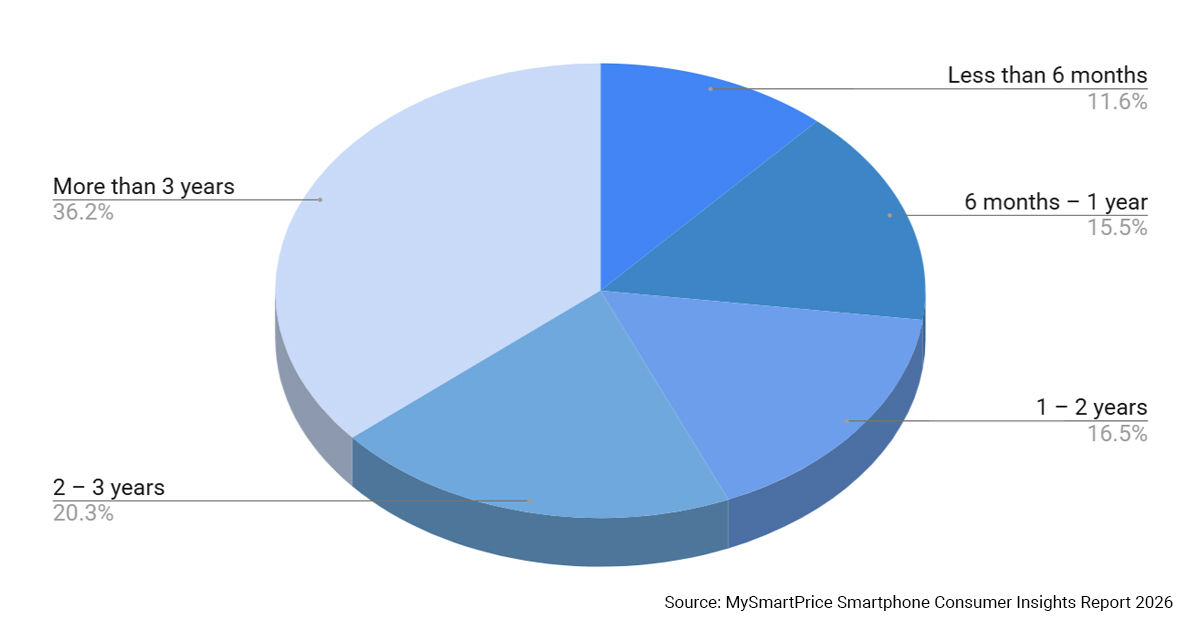
As a result, smartphone purchases are increasingly becoming long-term investments rather than routine upgrades.
Samsung Leads Current Smartphone Ownership
Samsung's position at the top of the current ownership table is not surprising, but the margin by which it leads still commands attention. Nearly one in five respondents (18.64 per cent) said their current device is a Samsung. Behind it, vivo sits at 14.69 per cent, OnePlus at 14.12 per cent, realme at 11.95 per cent, and Motorola at 10.17 per cent. These five brands together account for roughly 70 per cent of current ownership, a concentration that reflects how thoroughly the mid-market has consolidated.The distribution also highlights the continued fragmentation of the Indian smartphone market, where no single brand commands a dominant majority.
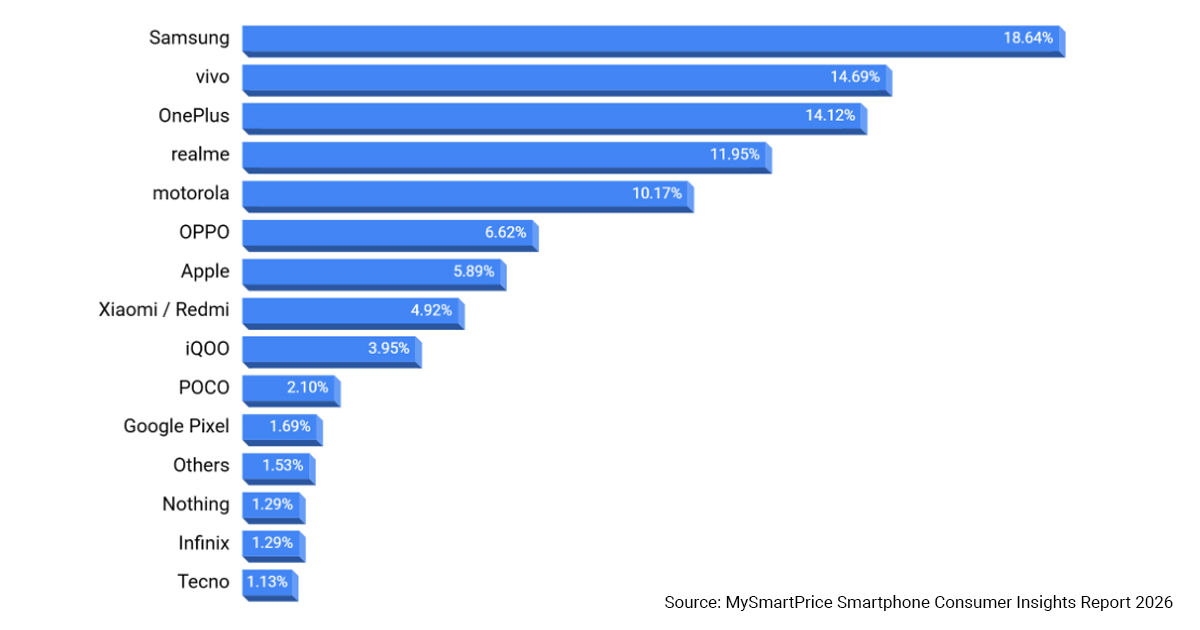
Apple's 5.89 per cent ownership share looks modest against these numbers, but positioned almost entirely above ₹75,000, it represents an unusually loyal and high-spending user base.
Premiumisation Continues Across the Market
The survey points towards a growing willingness among consumers to spend more on smartphones. Nearly half of respondents currently own devices priced above Rs 20,000. At the same time, the Rs 10,000 to Rs 20,000 segment remains the most popular category, demonstrating that value-conscious consumers continue to represent a substantial portion of the market.
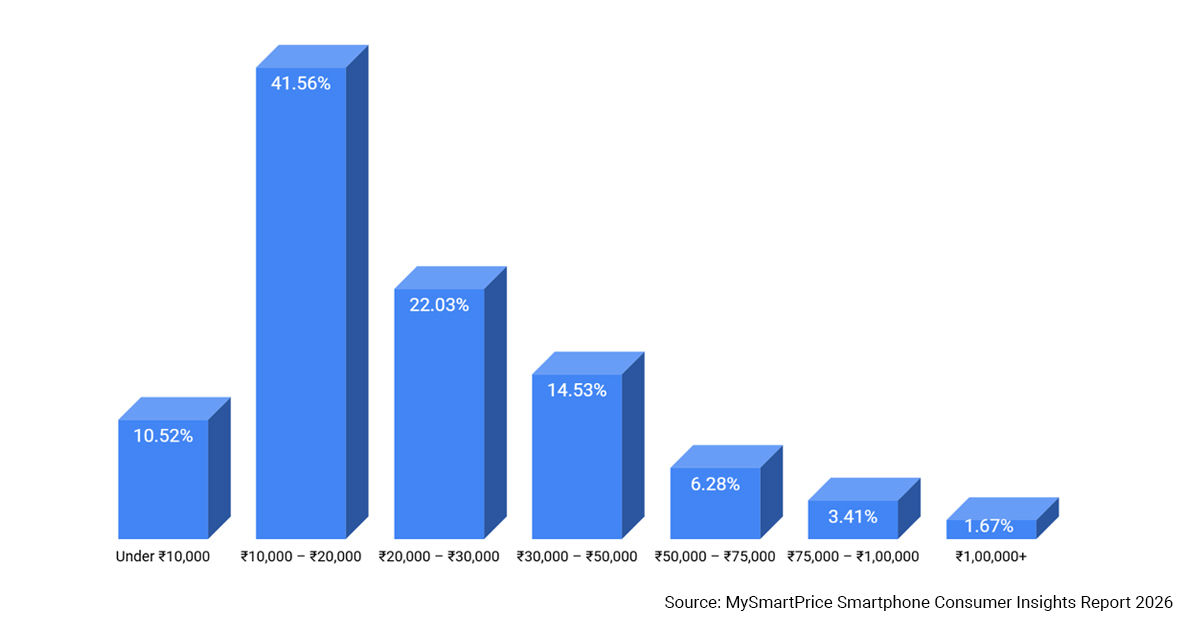
The findings suggest that while affordability remains important, consumers are increasingly willing to stretch budgets for features that improve everyday experiences such as photography, battery life, displays, and software.
AI Has Already Become Mainstream
Artificial intelligence is no longer limited to flagship devices. According to the survey, more than 55 percent of respondents already own smartphones equipped with AI-powered features. This is a significant development considering that AI functionality only became a major marketing focus for smartphone brands over the past two years.
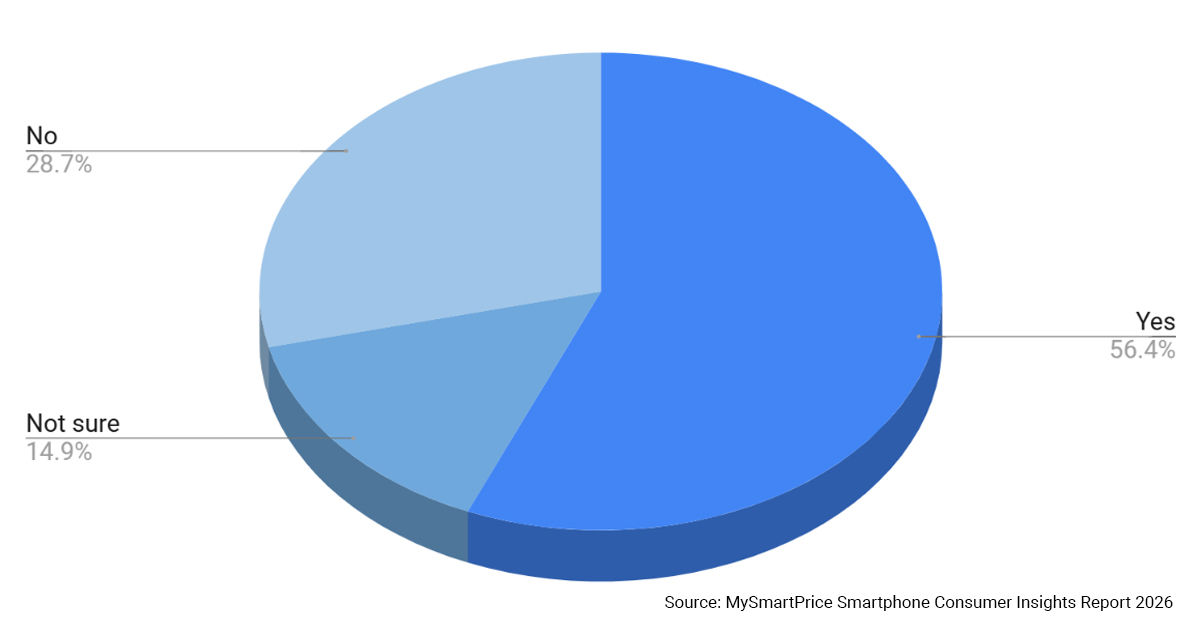
The widespread availability of AI tools indicates that manufacturers have been successful in bringing these capabilities beyond premium flagships and into more affordable price segments.
Which Brands Are Keeping Their Users Happiest?
The satisfaction rankings reveal that no single smartphone brand dominates every category. Instead, brands have established distinct strengths across camera performance, battery life, display quality, design, AI features, and overall user experience. While Samsung continues to perform consistently across multiple categories, brands such as vivo, Apple, OnePlus, realme, and motorola lead in specific aspects of the smartphone experience.
Camera Experience
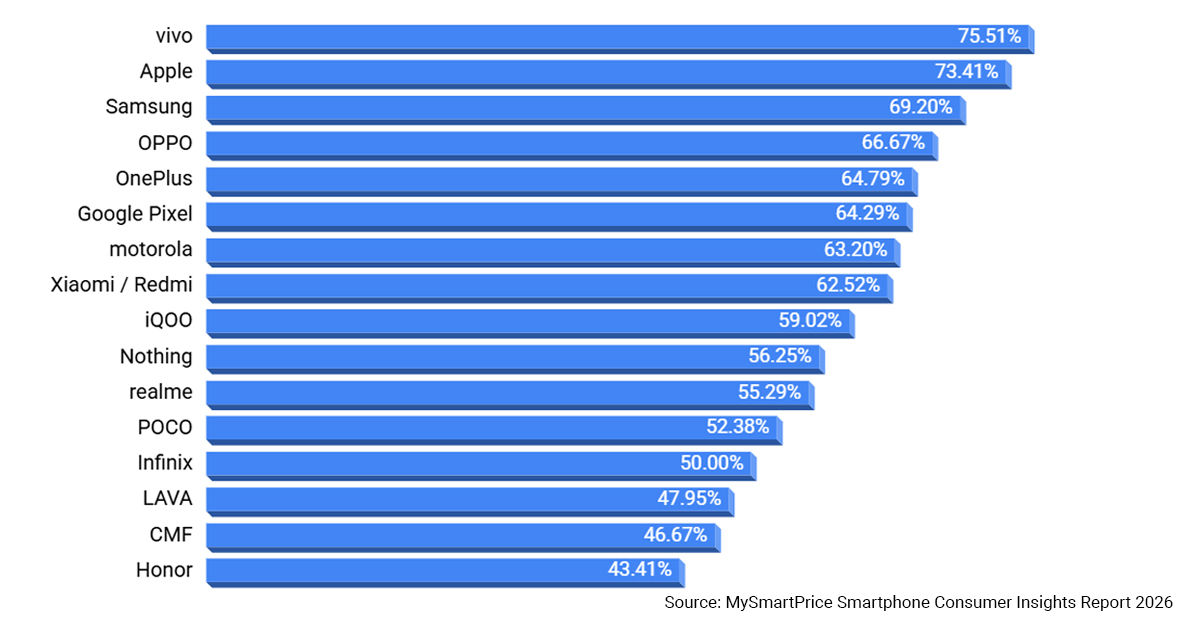
vivo emerged as the highest-rated brand for camera satisfaction, followed closely by Apple and Samsung. OPPO and OnePlus also delivered strong camera experiences, while Google Pixel and motorola continued to receive positive feedback from users.
Battery Life
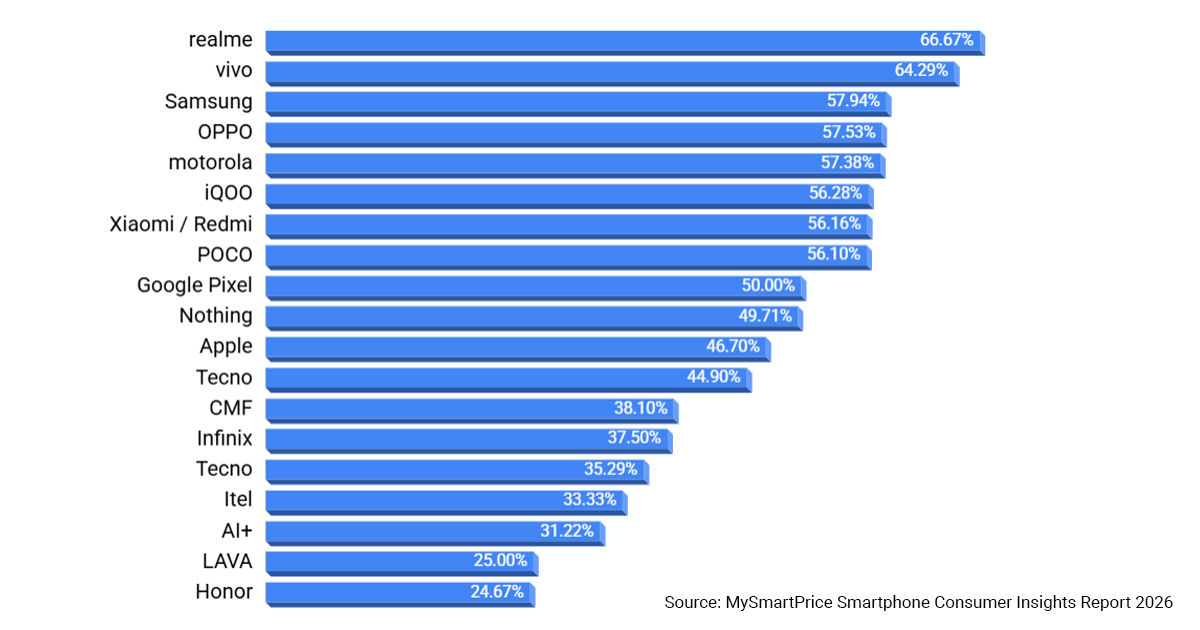
Battery performance remains one of the most important considerations for smartphone users. realme topped the battery satisfaction rankings, narrowly ahead of vivo. Samsung, OPPO, motorola, iQOO, and Xiaomi/Redmi also performed well, highlighting continued competition in battery performance.
Performance
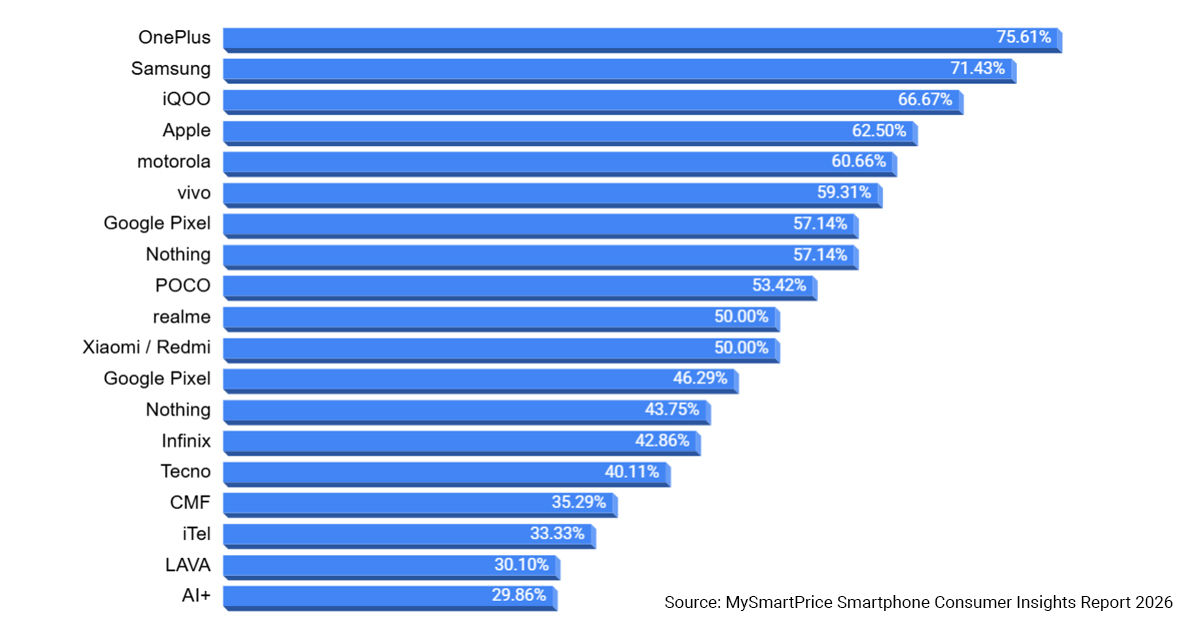
When it comes to speed, gaming, and multitasking, OnePlus led all brands with a 76 percent satisfaction rating. Samsung followed at 71 percent, while iQOO secured 67 percent. Apple, motorola, vivo, and Google Pixel also received positive feedback from users.
Display Quality
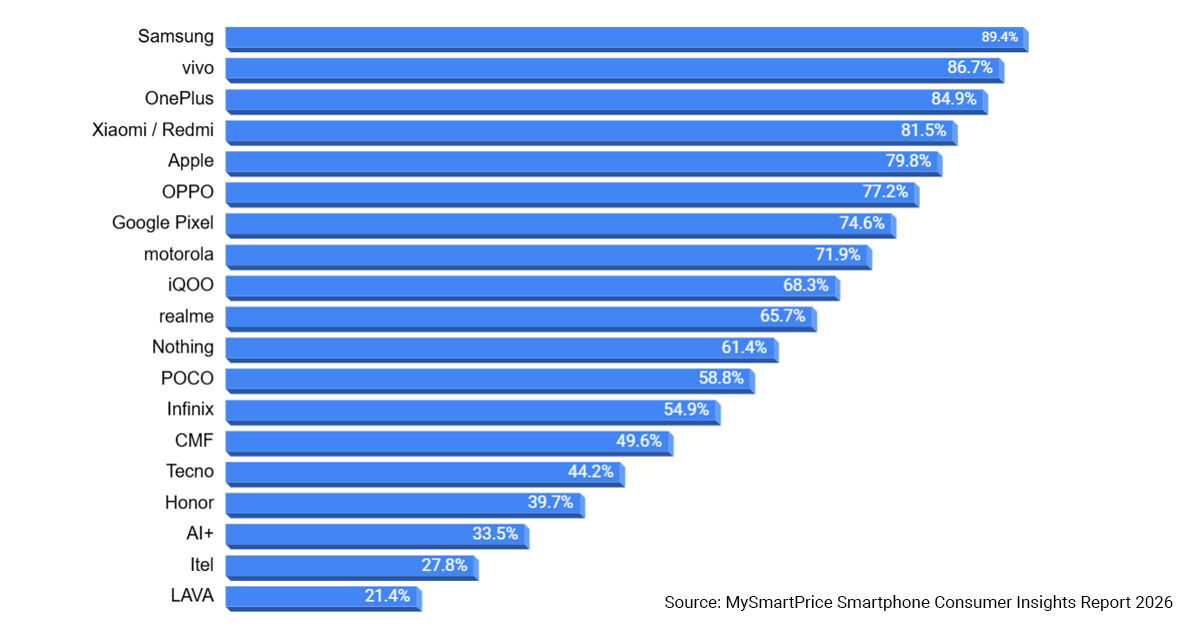
Display quality remains one of the strongest areas for several Android brands. Samsung led display satisfaction, followed by vivo and OnePlus. Xiaomi/Redmi also performed strongly, while Apple, OPPO, and Google Pixel received favourable ratings from users.
Design and Build Quality
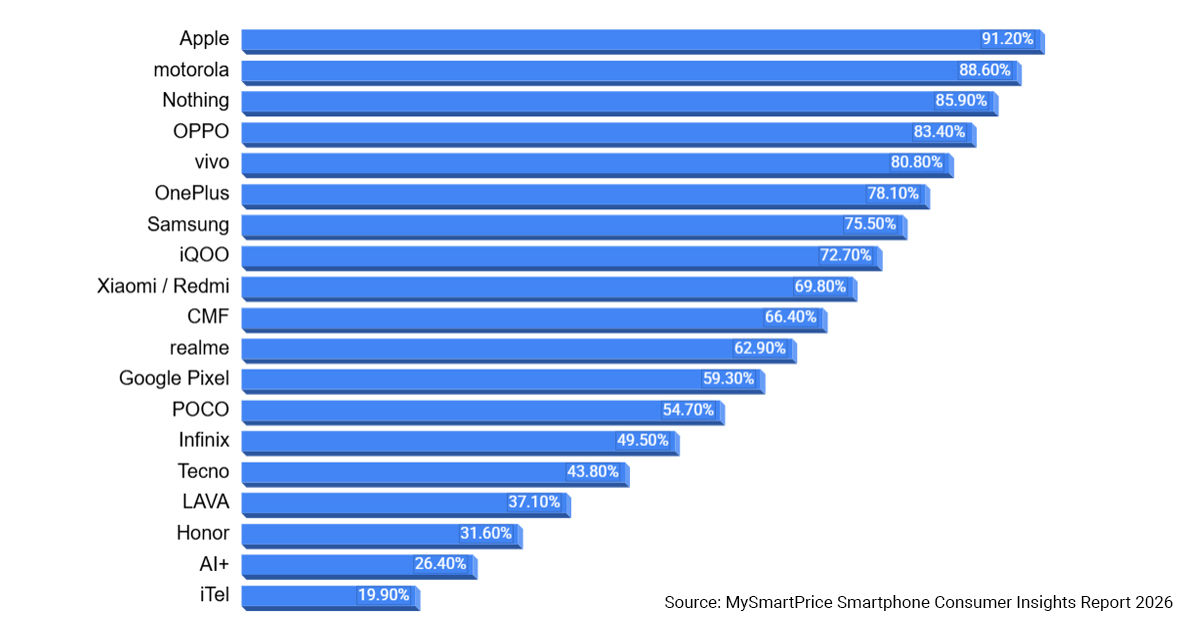
Apple, motorola, and Nothing emerged as the leading brands for design and build quality, with more than 85 percent positive ratings.
AI Experience
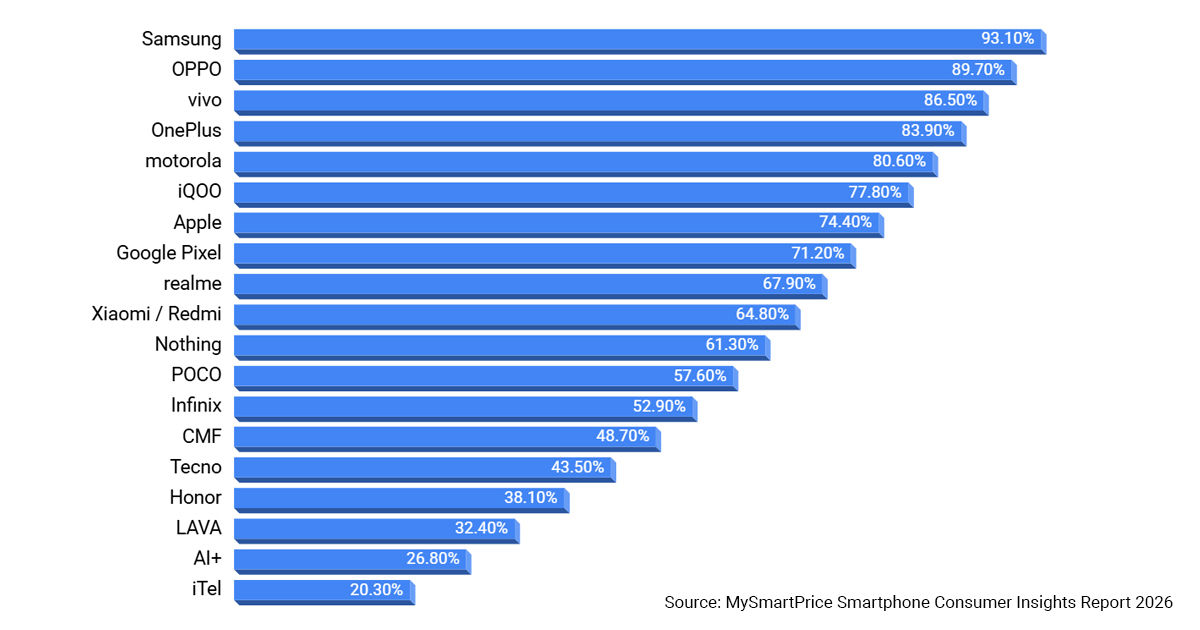
Among users who have access to AI features, Samsung, OPPO, and vivo received the highest satisfaction ratings. OnePlus, motorola, and iQOO also scored well in this category.
Overall Satisfaction
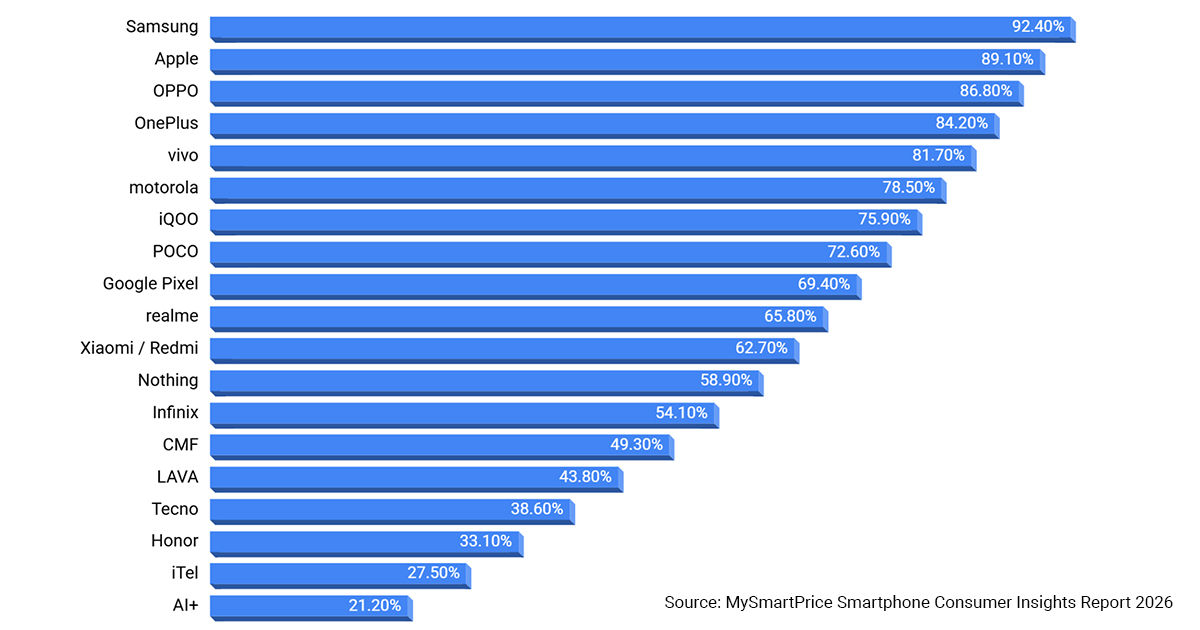
Looking at the complete smartphone experience, Samsung and Apple emerged as the strongest performers. Both brands achieved overall satisfaction scores exceeding 89 percent, ahead of most competitors. OPPO, OnePlus, vivo, and motorola also maintained strong overall ratings.
Samsung Leads Future Purchase Intent
While current ownership provides one view of the market, future purchase intent offers insight into where consumer demand is heading. Samsung secured the highest next-purchase preference at 18 percent. Apple followed with 13 percent, highlighting continued demand for premium smartphones. Meanwhile, vivo, iQOO, and OnePlus collectively accounted for more than a quarter of future purchase intent.
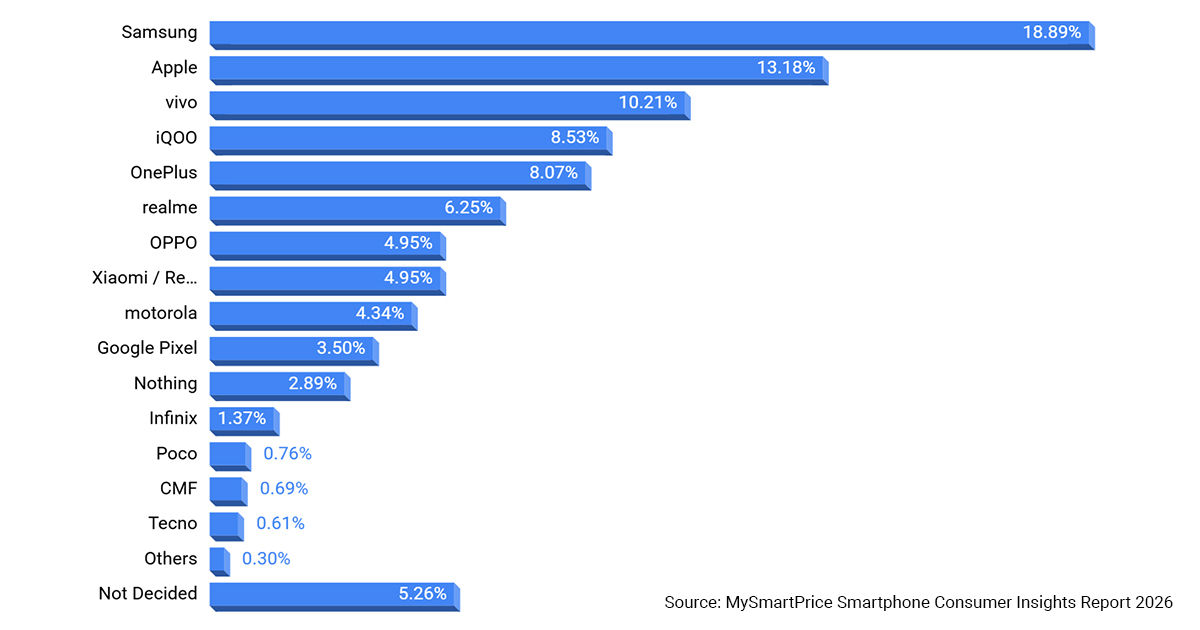
The findings suggest that Samsung's broad portfolio continues to attract users across multiple price segments, while Apple remains the aspirational choice for many buyers.
How Much Are Consumers Planning to Spend?
The survey also reveals distinct brand strengths across different price categories.
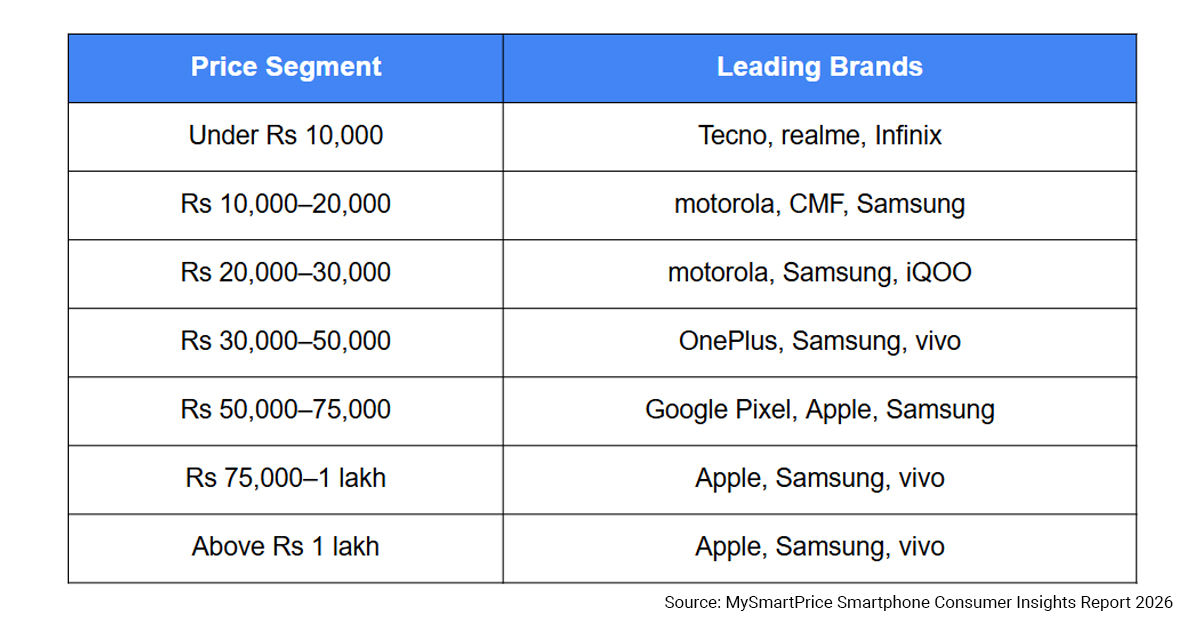
Samsung is notable for maintaining visibility across virtually every pricing tier, while Apple dominates the premium and ultra-premium categories.
Why Do Users Want to Switch Brands?
The report found that aspiration remains one of the strongest reasons for switching smartphone brands. More than half of OPPO and OnePlus users indicated they would like to try a different brand during their next purchase cycle. For Samsung, iQOO, and motorola users, pricing emerged as a more significant consideration.
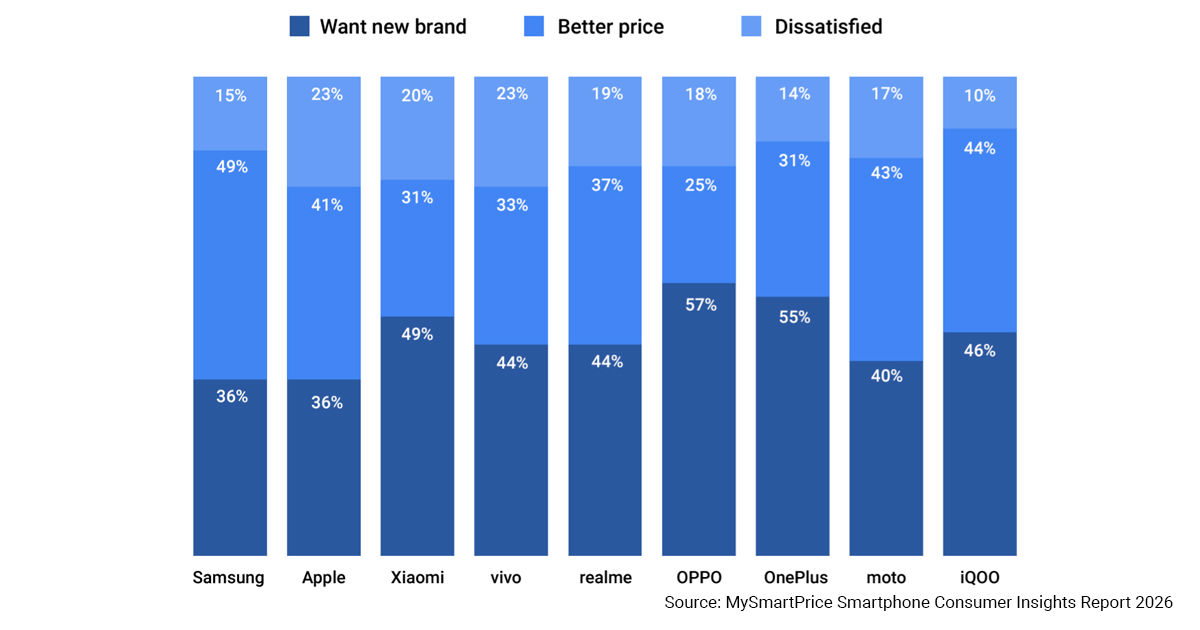
Importantly, dissatisfaction levels remained relatively low across brands, suggesting that most users are switching because of changing preferences rather than poor experiences.
Samsung Is the Biggest Beneficiary of Switching
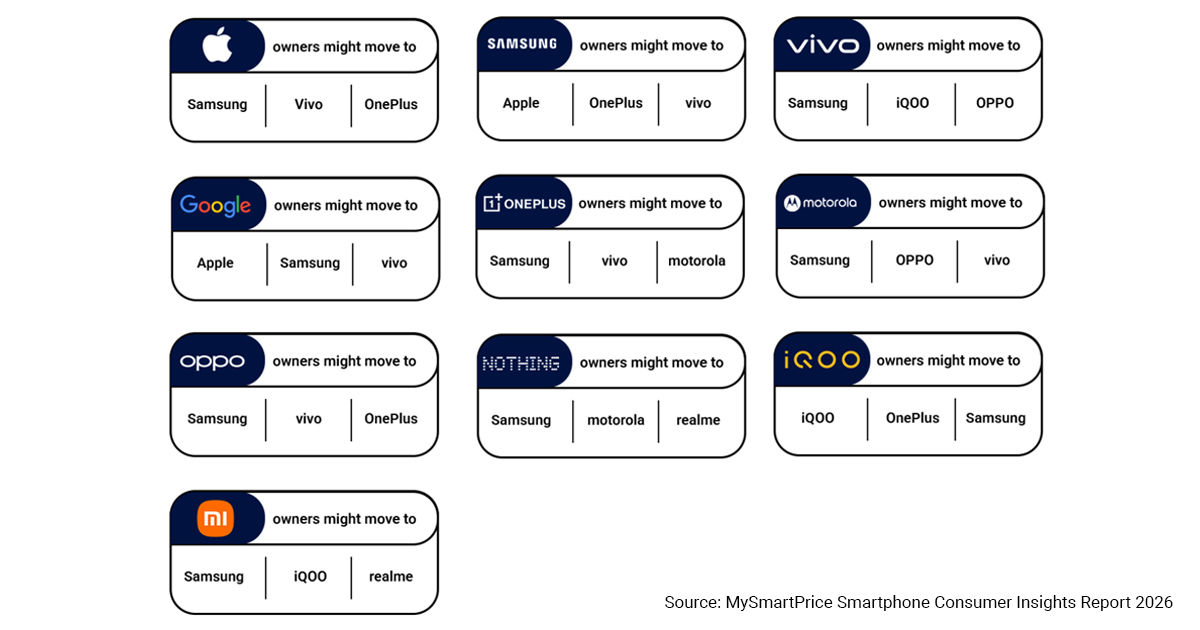
Brand-switching trends show Samsung attracting users from a wide range of competing brands. Apple continues to attract premium Android users, particularly from Samsung and Google Pixel. Meanwhile, OnePlus, vivo, and iQOO remain strong alternatives for consumers prioritising performance-focused smartphones.
Online Shopping Remains the Preferred Choice
More than 62 percent of respondents said they are most likely to purchase their next smartphone online. Amazon emerged as the preferred platform with 35 percent preference, followed by Flipkart at 23 percent.
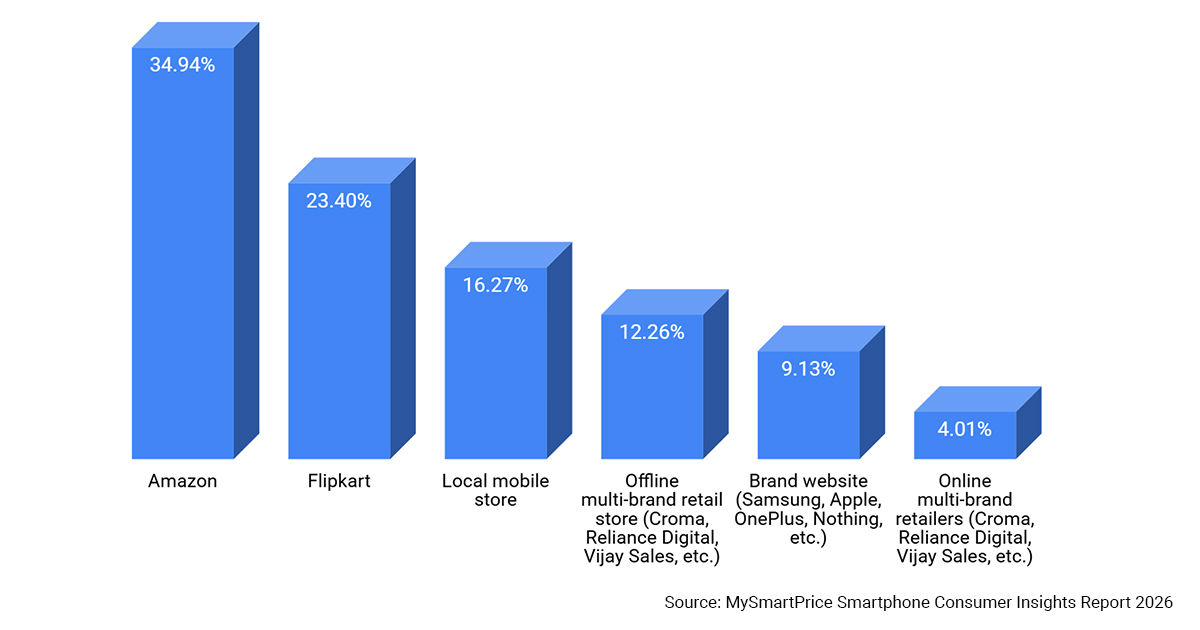
The data reflects the continued importance of e-commerce in smartphone sales, especially during major sale events and product launches.
Cameras Still Matter More Than Anything Else
When asked about smartphone usage, photography and videography emerged as the most common use case. Half of all respondents selected capturing photos and videos as their primary activity. Watching videos and gaming accounted for the remaining half, highlighting the growing importance of performance and display quality.
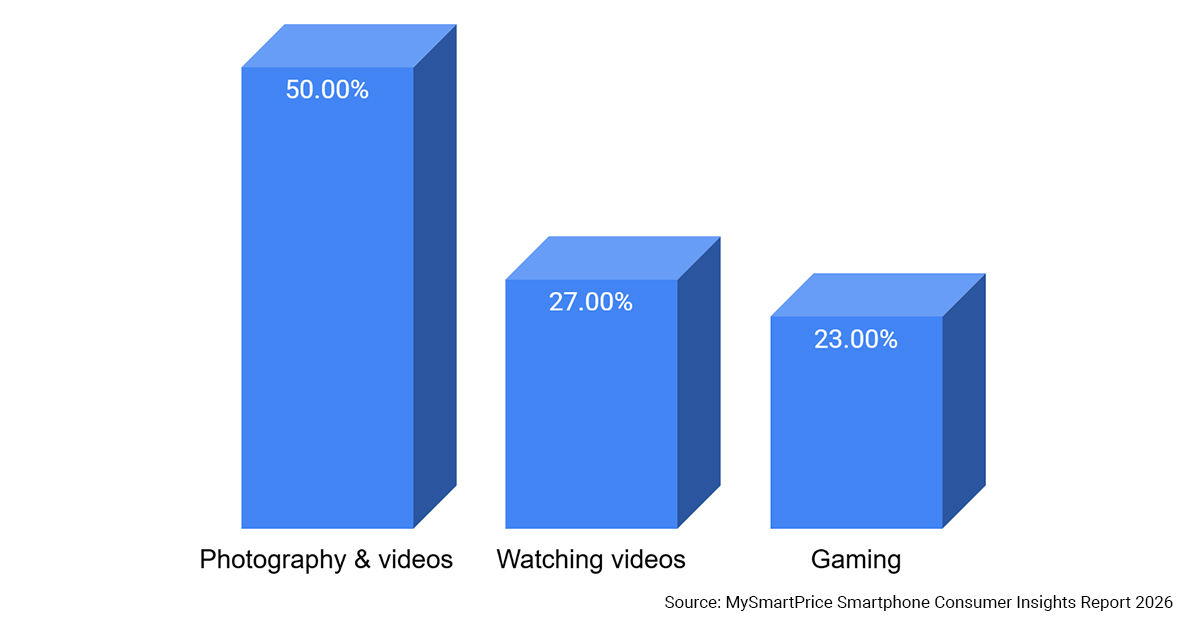
The findings reinforce why smartphone brands continue to focus heavily on camera hardware and computational photography.
Snapdragon Remains the Preferred Chipset
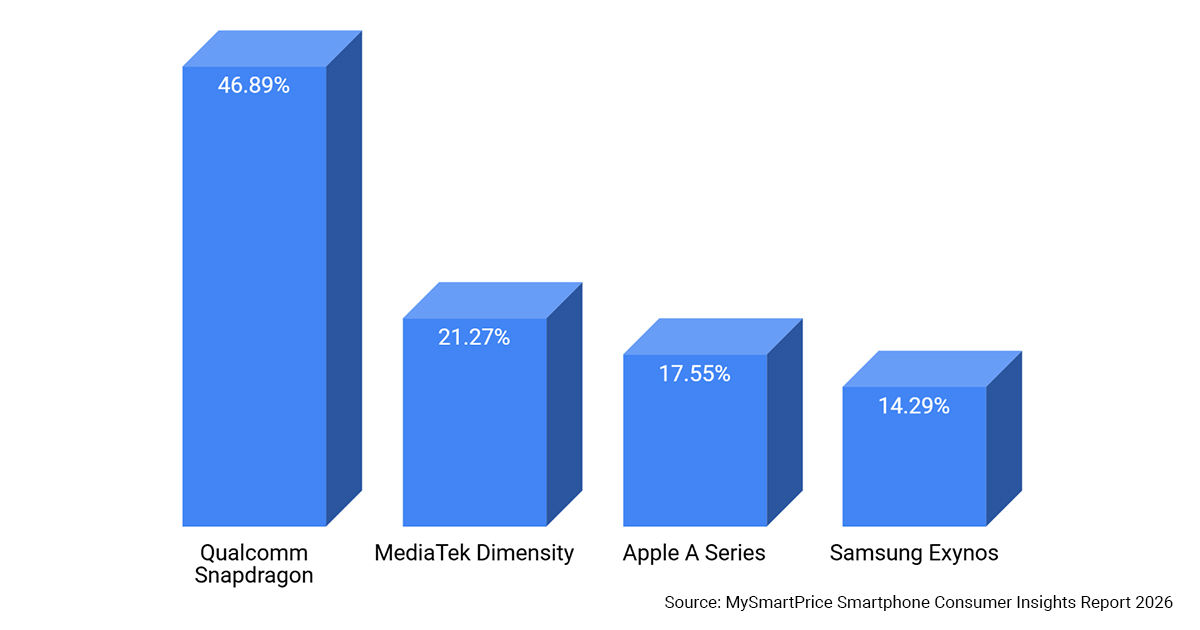
Among chipset preferences, Qualcomm Snapdragon emerged as the clear leader with 47 percent share. The chipset maker remained comfortably ahead of MediaTek Dimensity, Apple's A-series processors, and Samsung Exynos.
AI Is Becoming a Purchase Driver
If one story within this survey will define the next two years of India's smartphone market, it is the rise of AI as a purchase driver. Over 70 per cent of respondents consider AI features important when evaluating their next phone. More than 42 per cent say they will pay a premium to get them. That second number is the one that matters: it means a meaningful plurality of Indian buyers has moved past treating AI as a curiosity and now views it as a capability worth paying for, in the same way a better camera or faster processor justified a price step-up in earlier cycles.
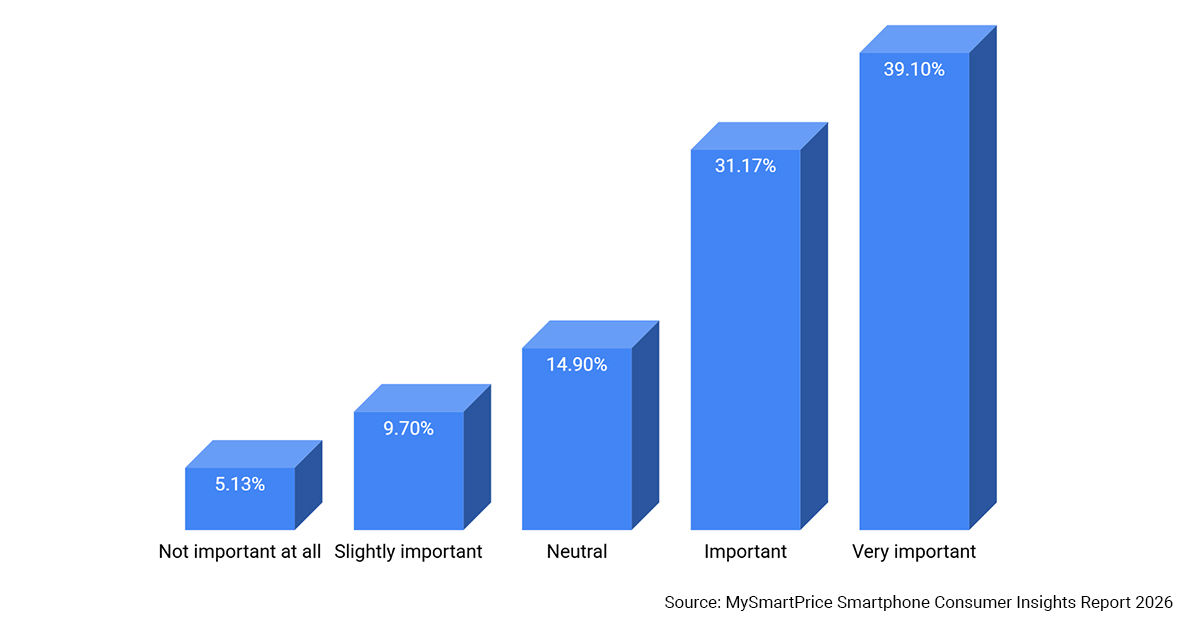
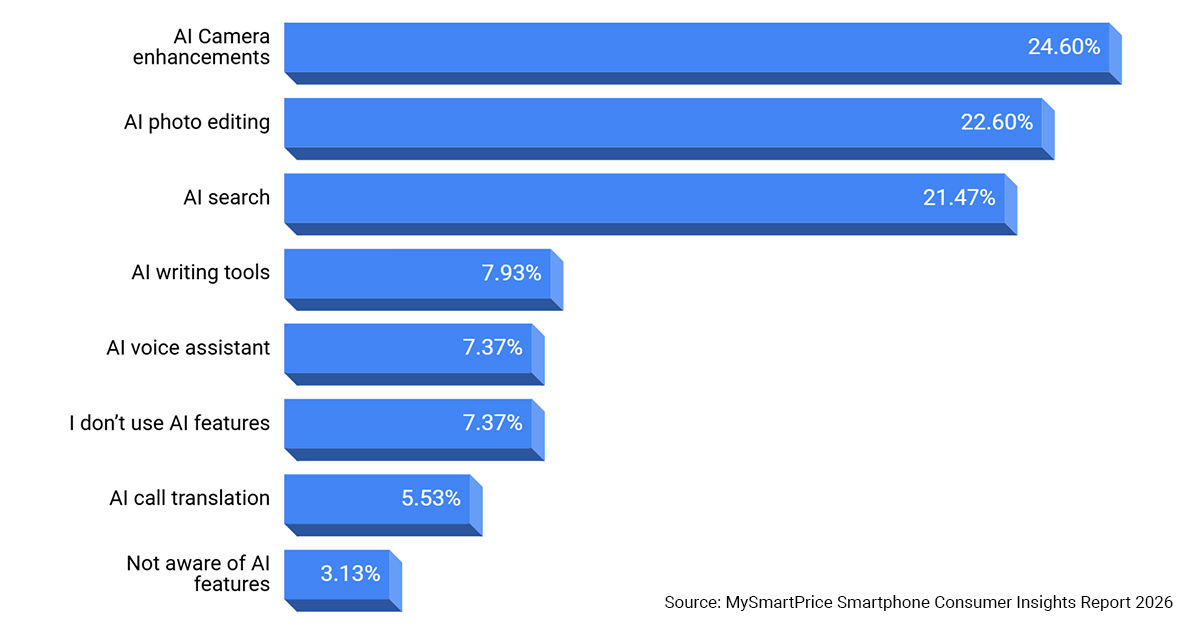
On which AI features matter most, camera-related capabilities dominate: AI camera enhancements lead at 24.6 per cent, followed by AI photo editing at 22.6 per cent and AI search at 21.5 per cent. This is consistent with the finding that photography and video is the primary use case for 50 per cent of users. AI tools that are anchored to everyday tasks making a photo look better, finding something faster rank far ahead of more abstract capabilities. Brands whose AI strategy is built around the camera, as Samsung, Google and Apple's is, are on the right side of this preference.
India's Smartphone Market Is Changing
The findings from the MySmartPrice Smartphone Consumer Insights Report 2026 suggest that India's smartphone market is entering a more mature phase. Users are holding on to their devices for longer periods, and when they do decide to upgrade, they are increasingly willing to spend more for a better overall experience. This shift is evident across multiple trends highlighted in the survey, from rising interest in premium smartphones to growing expectations around software, cameras, and AI-driven features.
The data also shows that brand loyalty remains strong for established players such as Samsung and Apple, both of which continue to perform well across satisfaction metrics and future purchase intent. However, the satisfaction rankings also highlight vivo’s growing strength across core smartphone experiences. The brand consistently ranks among the top performers in camera, battery life, display quality, and AI experience, reinforcing its position as one of the strongest all-round competitors in the Indian smartphone market. OnePlus, iQOO, and motorola also continue to stand out by catering to users who prioritise performance, value, and specific aspects of the smartphone experience.
Perhaps the most notable takeaway is the growing role of AI in the buying journey. What was once seen as a flagship-exclusive feature is now becoming a mainstream expectation, with a majority of respondents already using AI-powered smartphones and a significant number considering AI capabilities important for their next purchase. More importantly, users appear to value practical AI tools that improve photography, search, and day-to-day usability rather than features that exist purely for marketing.
Taken together, the findings indicate that smartphone buyers are placing greater emphasis on the overall ownership experience instead of focusing solely on specifications or price. For brands operating in India, that means long-term software support, meaningful AI features, reliable performance, and a well-rounded user experience are likely to play an increasingly important role in influencing future purchase decisions.