Apple’s first foldable iPhone is finally here, but how does it compare with Samsung’s Galaxy Z Fold8? The iPhone Duo offers a nearly invisible display crease, a nano-texture AMOLED screen and some interesting features. Samsung’s Galaxy Z Fold8 is lighter, thinner and offers more advanced multitasking. This comparison looks at the design, displays, cameras, performance, battery life, software, AI, durability and India pricing to find out which is the better overall foldable phone.
Apple has finally entered the foldable smartphone market with the iPhone Duo. It’s Apple’s first attempt at a book-style folding phone, while Samsung has already reached its eighth generation with the Galaxy Z Fold8. Both are expensive flagship phones with large folding displays, powerful processors and capable cameras. But the difference between them becomes clearer when the focus moves away from specifications and towards everyday use. The important question is which phone is easier to carry, more comfortable to use and better at taking advantage of its folding screen.
The Samsung Galaxy Z Fold8 comes out ahead in several of these areas. It weighs 53 grams less than the iPhone Duo, is thinner when folded, and offers more ways to use multiple apps on its large display. Samsung also has several years of experience making foldables, and that shows in its hardware and software. The iPhone Duo has its strengths too, particularly its less reflective AMOLED display, almost invisible crease and integration with Apple’s ecosystem. But the Galaxy Z Fold8 offers a better mix of portability, features and usability, making it the better overall foldable in this comparison. It also costs nearly ₹1.2 lakh less in India, although price isn’t the only reason to choose it.
Watch the iPhone Duo vs Galaxy Z Fold8 comparison video for a closer look at the design, displays, cameras, multitasking features and the differences between the two phones.
iPhone Duo vs Galaxy Z Fold8: Which Phone Wins in Each Category?
The table below shows where each phone has an advantage and which areas are too close to call. The results are based on their specifications and the observations from using both phones as per our detailed hands-on comparison video above. Design and display preferences are subjective, while battery performance and long-term durability will need more detailed testing before a clear winner can be established.
| Comparison aspect | Winner | Reason |
| Design and appearance | Galaxy Z Fold8 | Cleaner, more symmetrical design |
| Weight and portability | Galaxy Z Fold8 | 201g compared with the Duo’s 254g |
| Thickness when folded | Galaxy Z Fold8 | 9.7mm versus 11.3mm |
| Everyday handling | Galaxy Z Fold8 | Easier to carry and hold for long periods |
| Display technology | Tie | Both use AMOLED displays |
| Display crease visibility | iPhone Duo | Crease is almost invisible |
| Reflection and glare control | iPhone Duo | Nano-texture finish reduces reflections |
| Bright-environment viewing | Tie | Lower glare on the Duo; better contrast on the Galaxy Z Fold8 |
| Display contrast and colours | Galaxy Z Fold8 | Richer-looking colours and better perceived contrast |
| Movies and gaming display quality | Galaxy Z Fold8 | Punchier picture and greater visual depth |
| Everyday performance | Tie | Snapdragon 8 Elite Gen 5 on the Fold8 versus Apple A20 Pro on the Duo; both score around 3 million on AnTuTu and feel smooth in everyday use Both use the fastest processors in their respective ecosystems |
| Gaming performance | Tie | Both deliver smooth gameplay but get warm and throttle under prolonged load; the Fold8 makes better use of the inner screen in games such as BGMI |
| Rear cameras | Tie | Fold8: 50MP main + 50MP ultrawide; Duo: 48MP main + 48MP ultrawide. Both take good photographs, with each offering strengths in different shooting situations |
| Inner selfie camera | Galaxy Z Fold8 | 10MP ultrawide camera versus the Duo’s under-display FaceTime camera; clearer video calls in our comparison |
| Battery life | Tie | Both last a full day with moderate usage |
| Multitasking | Galaxy Z Fold8 | Three-app split screen and floating windows |
| Software optimisation | Galaxy Z Fold8 | Better use of the large folding display |
| AI features for productivity | Galaxy Z Fold8 | Galaxy AI works with Samsung’s multitasking features |
| Dust and water resistance | iPhone Duo | IP68 rating compared with IP48 |
| Stylus compatibility | iPhone Duo | Apple Pencil compatibility announced |
| Durability | Galaxy Z Fold8 | Survived the bend test in the JerryRigEverything durability tests; the Duo suffered hinge obstruction and inner-display failure in the same test |
| Standard India warranty | Tie | One year on both phones |
| Protection-plan price | Galaxy Z Fold8 | Two-year Samsung Care+ costs ₹25,999 versus around ₹51,900 for AppleCare+ |
| Starting price in India | Galaxy Z Fold8 | ₹1,79,999 versus ₹2,99,900 for the 256GB variant |
| Value for money | Galaxy Z Fold8 | More useful foldable features at a lower price |
| Best overall foldable | Galaxy Z Fold8 | Lighter design, better multitasking and more mature software |
Design and Build Quality
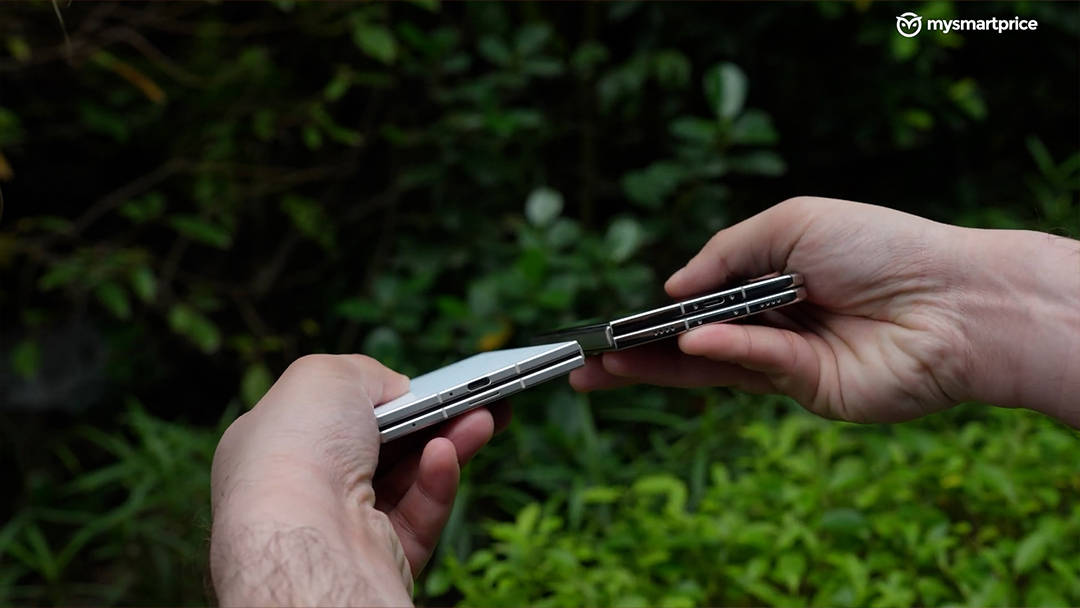
The Galaxy Z Fold8 and iPhone Duo look quite different when placed side by side. Samsung has gone with a sharp, squared-off design, with straight edges and symmetrical corners. The proportions look balanced, and the phone has a clean appearance. It doesn’t look particularly unusual for a modern Samsung flagship, despite being a folding phone. That’s a good thing. The design is simple, and the different parts of the phone look like they belong together. Samsung has been making book-style foldables since 2019, and the Fold8 looks like a product that has gone through several rounds of design changes.
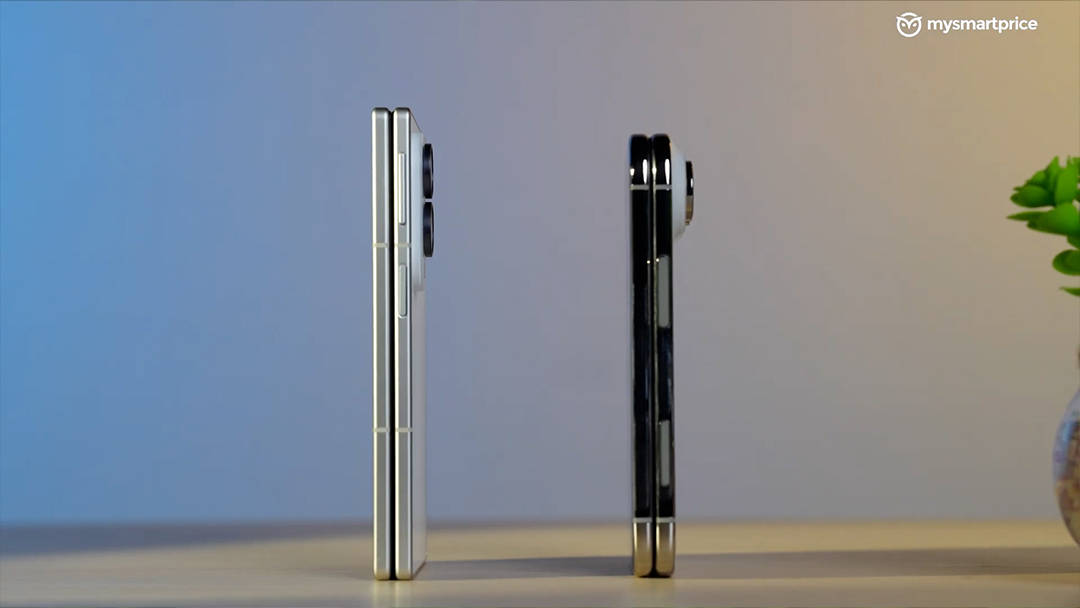
The iPhone Duo has a more unusual shape. Apple has mixed rounded and squared-off corners, giving it a different look from Samsung’s phone. It certainly stands out, but the combination doesn’t look quite as balanced. The rounded elements also give it a slightly playful, almost toy-like appearance. Some buyers may like that, but others may prefer Samsung’s more conventional design. The concern is whether the Duo’s unusual appearance will remain appealing after the initial excitement wears off. Design is a matter of personal taste, so there isn’t an objective winner here. But in this comparison, the Galaxy Z Fold8 looks like the cleaner and more refined product.
Weight and Portability: 201g vs 254g
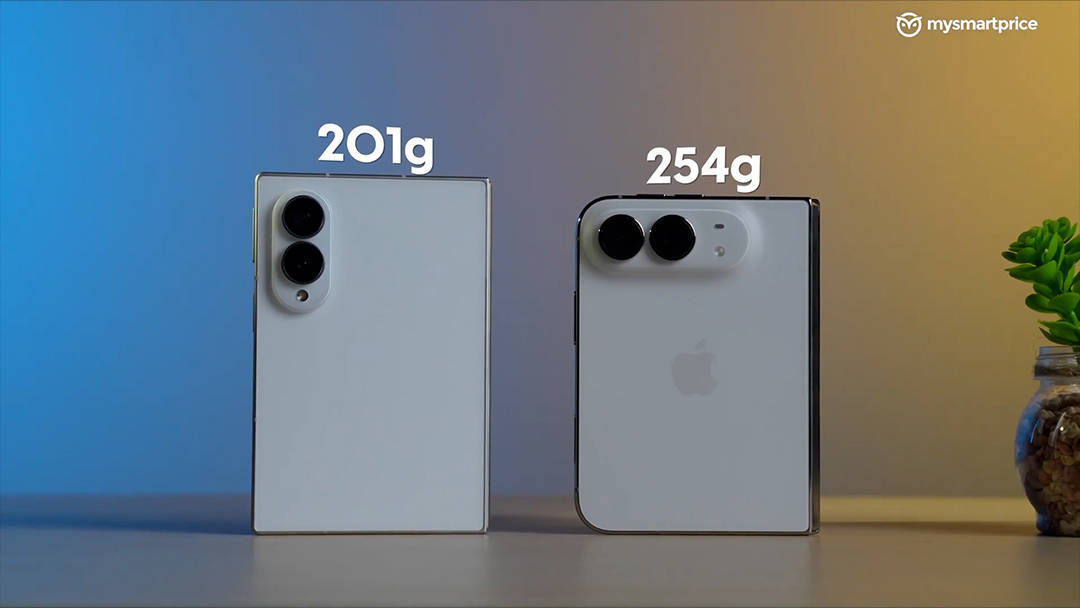
Weight is one of the biggest differences between these two phones. The iPhone Duo weighs 254 grams, while the Galaxy Z Fold8 weighs only 201 grams. That makes Samsung’s phone 53 grams lighter. The Fold8 is also thinner when closed, measuring 9.7mm compared with 11.3mm for the Duo. These differences matter because a folding phone is still supposed to work as a normal smartphone when closed. It should be comfortable to carry in a pocket and easy to hold when making calls, reading messages or browsing the internet. The larger display is there for when more screen space is needed.
The Duo’s weight makes it less convenient for this kind of use. At 254 grams, it is heavier than many conventional flagship smartphones, and its weight is noticeable when carried in a shirt or trouser pocket. It can also become tiring to hold during longer reading or gaming sessions. The Fold8 is considerably easier to manage. Its weight is much closer to that of a regular flagship phone, which makes a difference when it’s being carried and used throughout the day. For a product designed to combine the portability of a smartphone with the screen size of a small tablet, Samsung has done a better job of keeping the weight and thickness under control.
Display Quality: Nano-Texture AMOLED vs Glossy AMOLED
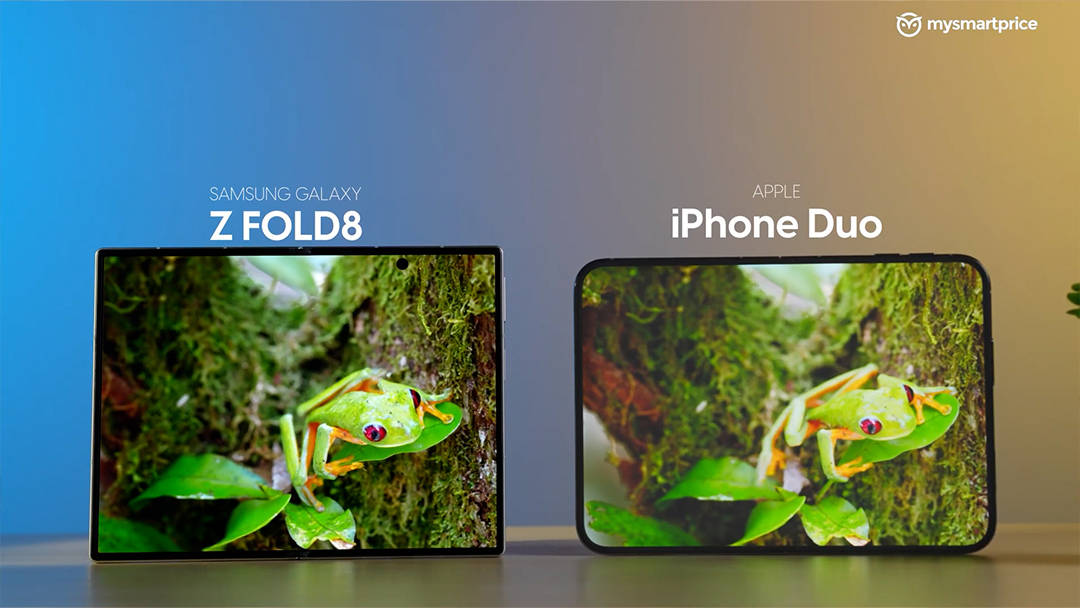
Both the iPhone Duo and Galaxy Z Fold8 use AMOLED displays, but they have different screen finishes. Apple has used a nano-texture treatment on the Duo’s inner display to reduce reflections and make the folding crease less noticeable. This addresses two common complaints about foldable phones. Reflections can make a large screen difficult to use under bright lights, while the crease can be distracting when watching videos or reading. The Duo handles both problems well. Its screen has a slightly matte appearance, reflections are much less noticeable, and the crease is almost invisible in many viewing conditions. This is particularly useful when using the phone outdoors or under strong indoor lighting.
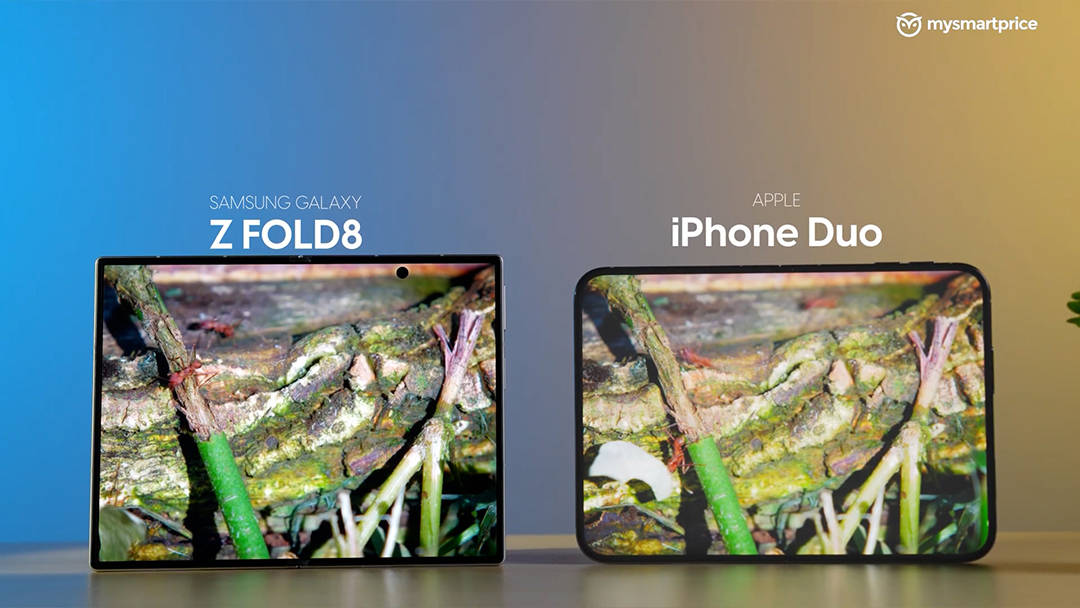
However, the nano-texture treatment also affects how content looks on the screen. In the side-by-side comparison, the Duo’s display has a slightly milky appearance when showing the same content as the Galaxy Z Fold8. This becomes more noticeable in dark movie scenes and colourful gaming footage. Samsung’s glossy AMOLED display looks punchier, with richer colours and better perceived contrast. Dark scenes have more depth, and colours look more vibrant. This doesn’t mean Samsung uses better display technology, since both phones use AMOLED panels. The difference is mainly in the screen finish and how it affects the image.
Apple has done a good job of reducing reflections and hiding the crease, but these improvements come with a trade-off in perceived picture quality. For movies, gaming, and general multimedia use, the Galaxy Z Fold8’s glossy AMOLED display looks better in this comparison. People who regularly use their phones in bright environments, however, may prefer the Duo’s less reflective screen. Neither approach is necessarily better for everyone. Apple’s display is easier to use under bright lights, while Samsung’s is more enjoyable for watching content where contrast and colours matter.
Performance: Both Phones Are Fast, but They Can Get Warm
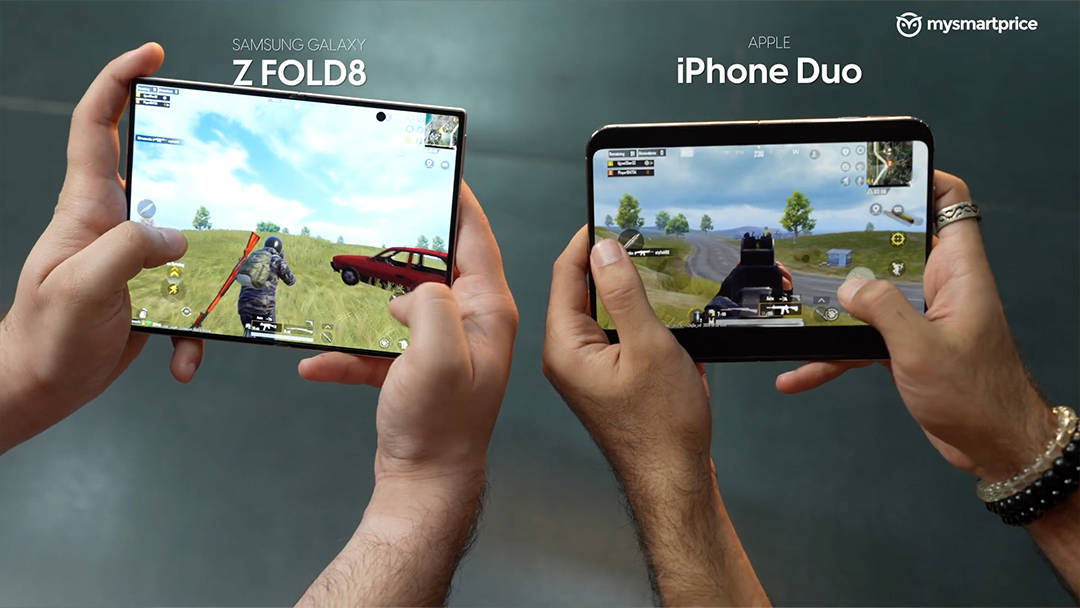
Performance isn’t an area where either phone has a major advantage in everyday use. Both the iPhone Duo and Galaxy Z Fold8 run on the fastest flagship processors available in their respective ecosystems; the Qualcomm Snapdragon 8 Elite Gen 5 powers the Samsung Z Fold8 while the newer Apple runs on the latest A20 Pro processor. The Antutu scores for both phones lie around the 3 million mark. And yes, both will throttle on prolonged heavy usage, just to keep the thermals in check. Both have more than enough processing power for demanding applications and gaming, so in the real-world daily usage scenarios these are the fastest book-style foldable phones that you can buy in India today. Whether it’s browsing, switching between apps, editing photographs, watching high-resolution videos, or playing games, both phones perform smoothly. There is no lag or stutter during normal use, and even with several applications running, both remain responsive. The different multitasking capabilities of the two phones are mainly a result of their software rather than a lack of processing power.
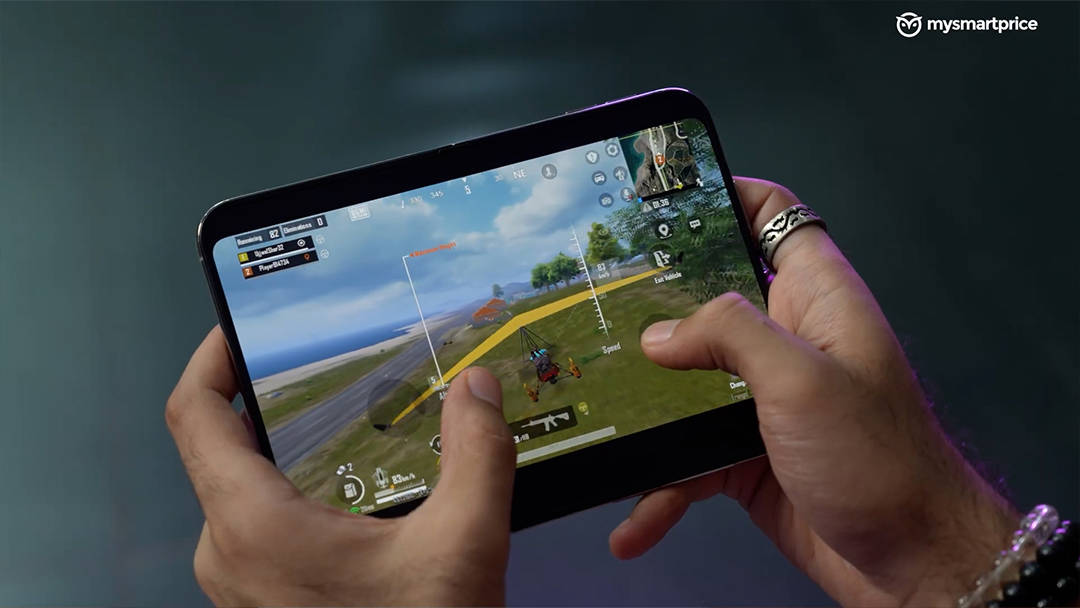
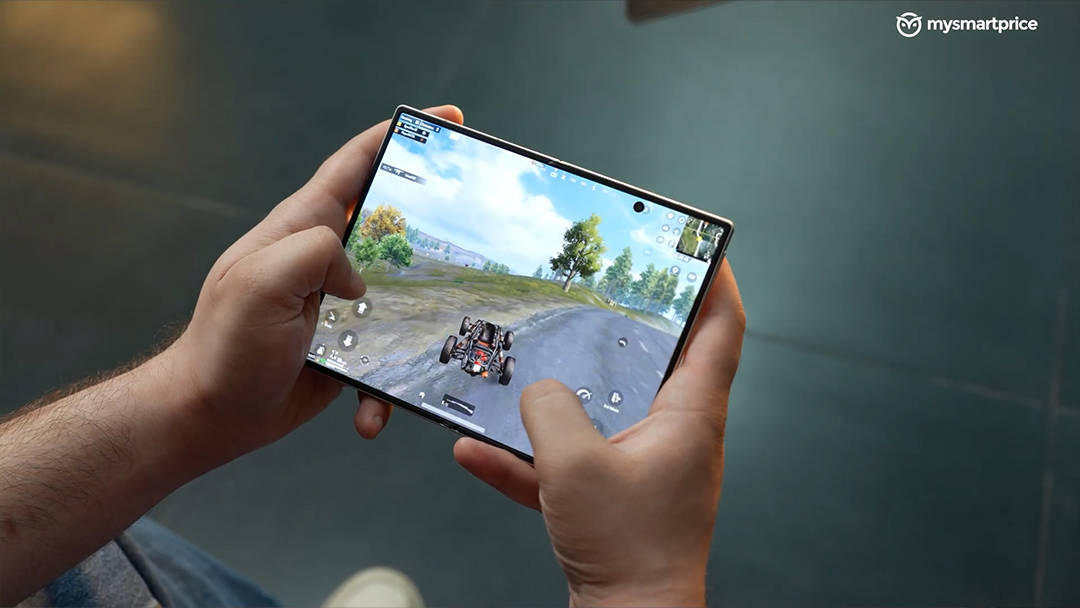
Gaming performance is also excellent on both devices. Demanding games run smoothly, and neither phone struggles with the kind of graphics and processing loads expected from a flagship smartphone. But we found the Samsung Galaxy Z Fold8 taking better advantage of the larger inner screen in comparison to the iPhone Duo (see our video to understand better). Popular games like BGMI don’t run full screen edge-to-edge on the iPhone Duo yet. The application and game optimization is where the Z Fold8 holds some advantage as of today. It might change later, but for now the gaming experience in terms of making most of the large inner screen is better on the Z Fold8. Both phones can, however, get noticeably warm during heavier tasks, particularly when gaming for extended periods or running processor-intensive applications. This can be attributed partly to their relatively compact and thin bodies, which have to accommodate some of the most powerful mobile processors available. There is less physical space to spread and dissipate heat than in larger devices, although the actual temperatures and sustained performance will need controlled testing to compare properly. During normal use, heat is not a major concern, and both phones offer the fast, responsive experience expected at this price. For everyday performance and gaming, there is no clear winner.
Cameras: The Inner Selfie Camera Makes the Difference
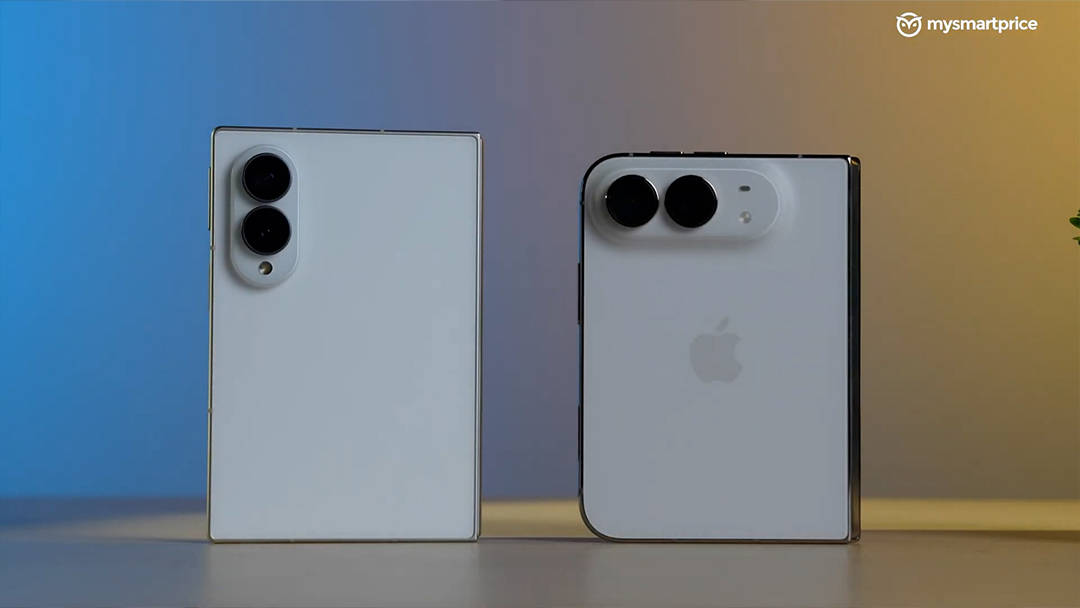
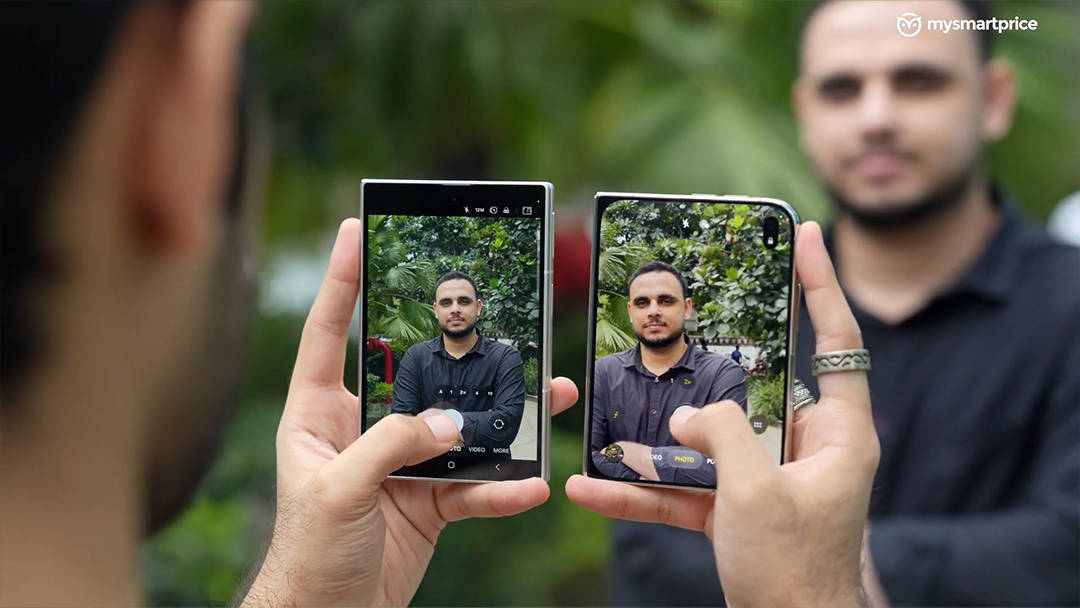
The rear cameras on both phones are capable of producing good photographs, so there isn’t a major difference in everyday photography. Apple has its strengths in image processing and video recording, while Samsung offers a capable camera system with its own advantages. Both can produce detailed photographs with good colours and handle most common shooting situations well. The final preference will depend on individual tastes, particularly in colour processing, exposure, and how each phone handles different lighting conditions. Based on the comparison covered here, neither phone has a clear overall lead in rear-camera performance.
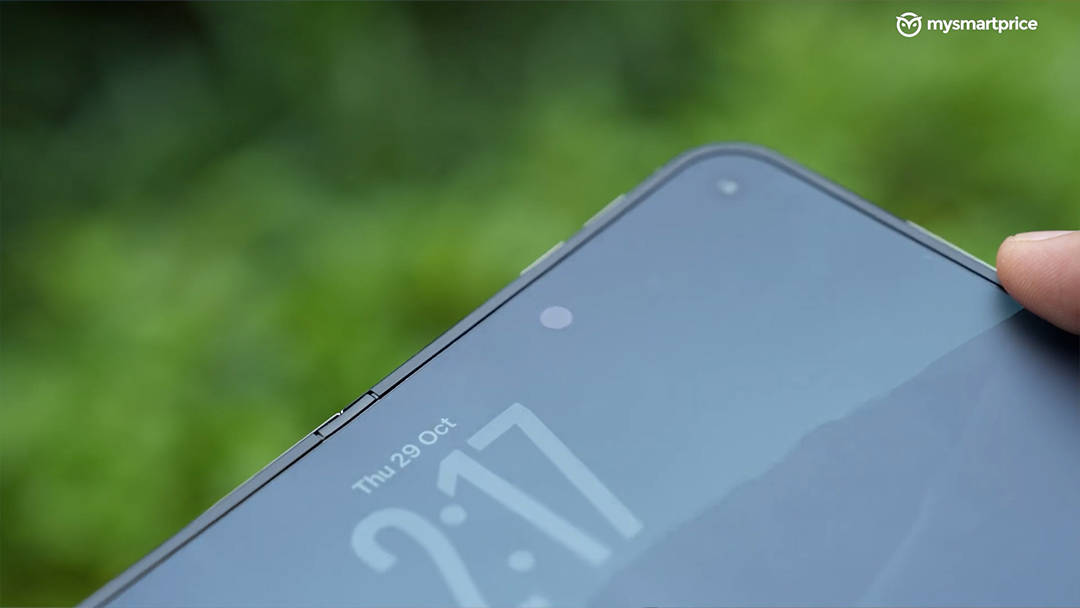
The bigger difference is in the inner selfie camera. Apple has placed this camera underneath the Duo’s folding display, so it remains hidden when it isn’t being used. This makes the display look cleaner, but it affects image quality. Video calls and selfies taken using this camera can look soft and hazy, with less detail in faces. Samsung has used a conventional visible camera on the Galaxy Z Fold8’s inner screen. It may not look as neat, but the image is clearer because the camera doesn’t have to capture light through the display layer. This matters for people who regularly use the large inner screen for video meetings or calls.
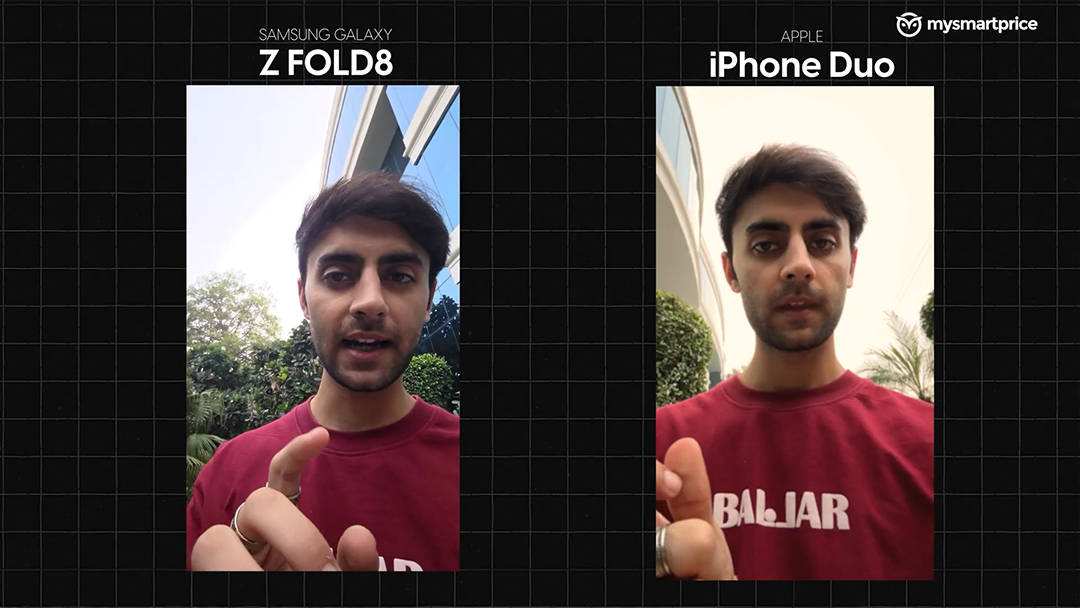
The Duo also allows users to take selfies with its better rear cameras, so the weak inner camera isn’t its only option. Even so, Samsung’s approach is more useful for normal video calls when the phone is unfolded. There is nothing wrong with trying to hide a camera underneath the display, but the improvement in appearance is less useful if the photographs and video calls look worse. In this case, Samsung’s conventional camera is the better choice for everyday use.
Battery Life: Both Can Last a Day With Moderate Usag
Both the iPhone Duo and Galaxy Z Fold8 offer good battery life for folding phones. In everyday use, both have been able to last a full day with moderate usage, including calls, messaging, browsing, social media, watching videos and occasional use of the larger inner displays. That’s a good result considering their thin designs, large screens and powerful processors. Neither phone has shown an obvious battery problem during normal use, and most people with similar usage patterns should be able to get through the day without needing to charge in between.
However, the two phones have not yet been tested under exactly the same conditions, so it would be premature to declare a battery-life winner. A proper comparison would need both phones to run the same apps, at the same screen brightness, on similar networks and with comparable use of their outer and inner displays. Gaming, camera recording and running several apps can also have a significant effect on battery life. For now, the important finding is that both phones provide enough endurance for a normal day of moderate use. Heavy users who spend several hours gaming or working on the larger screens may need to charge before the day ends. A more controlled comparison will be needed to establish which one actually lasts longer.
Multitasking and Software: Samsung Is Much More Flexible
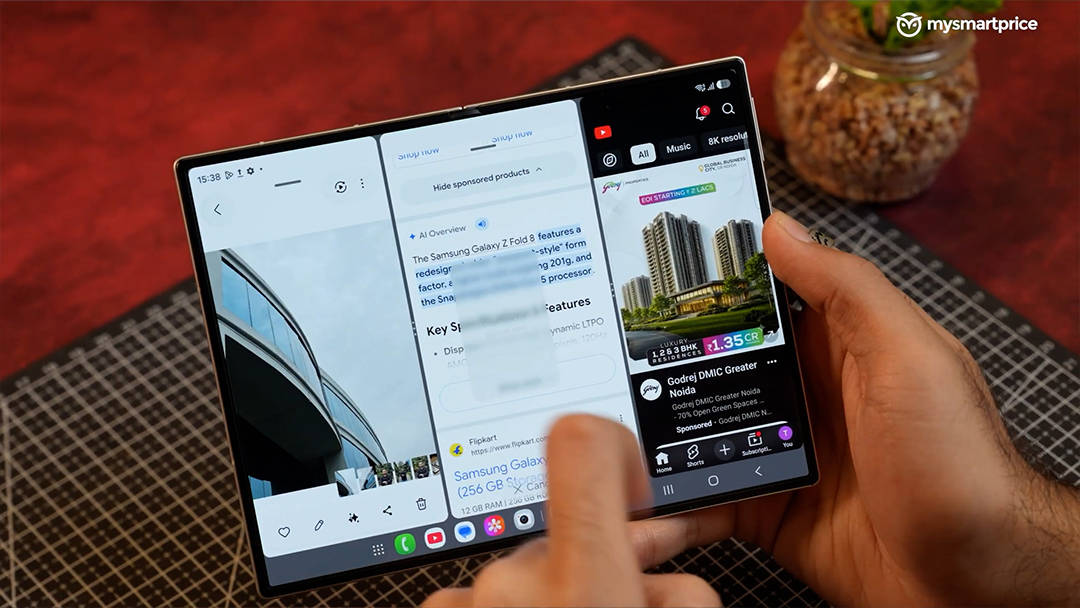
Software is where Samsung’s experience with foldables becomes most obvious. The Galaxy Z Fold8 can run three supported apps at the same time in split-screen mode. Users can change the size of each window, rearrange the apps, and open another app in a floating window. This is useful on a large folding display. Someone could keep a browser open on one side, read a document in another window, and reply to messages without switching away from either app. Samsung also provides a taskbar for quickly opening recent apps, and frequently used app combinations can be saved for later. These features make the Galaxy Z Fold8 useful for people who want to do more than simply watch videos on a larger screen.
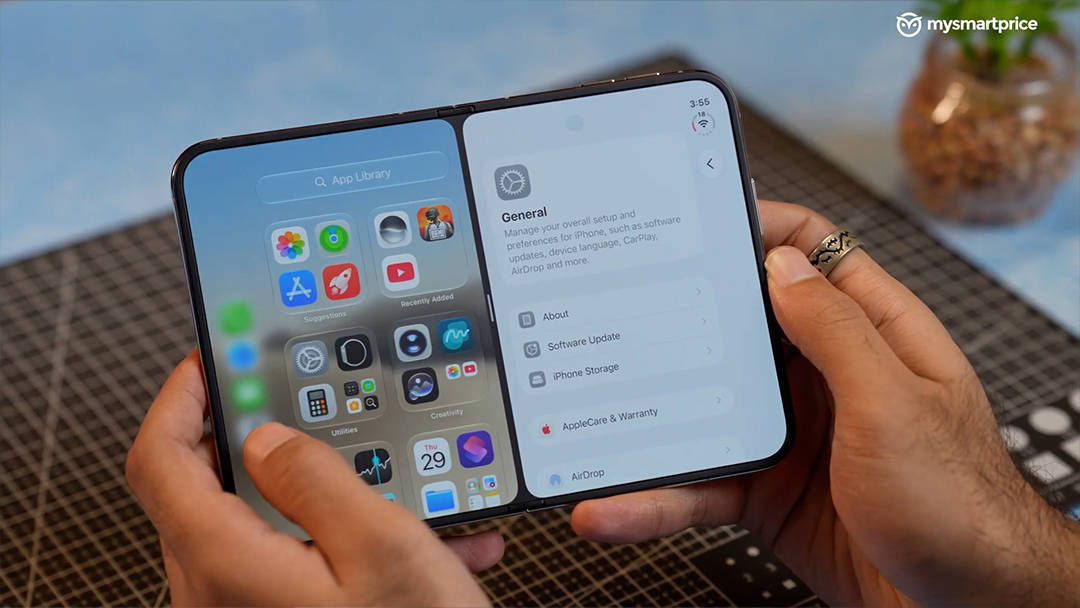
The iPhone Duo offers a simpler system. Apple’s Split View allows two apps to run side by side, but the screen is divided into two equal halves. Users cannot freely resize the two windows or run three apps in the same way as on the Galaxy Z Fold8. Apple has added useful features such as saved app pairs and the ability to open two windows of the same app, but the overall system is less flexible. There are also problems with some third-party apps that haven’t been properly adjusted for the Duo’s folding display. These apps may show awkward layouts or leave unused space on the screen. Apple and app developers may improve this over time, but Samsung’s software is already better suited to the form factor.
This is an important difference because a large folding screen should make it easier to work with several things at once. Watching a video on a bigger display is useful, but so is reading a document while referring to a webpage, or checking a calendar while replying to an email. Samsung gives users more control over how they use the available screen space. The Duo’s two-app layout will be enough for some people, especially those who prefer a simpler interface. But for users who buy a foldable mainly for productivity, the Z Fold8 offers considerably more options.
Galaxy AI vs Siri AI
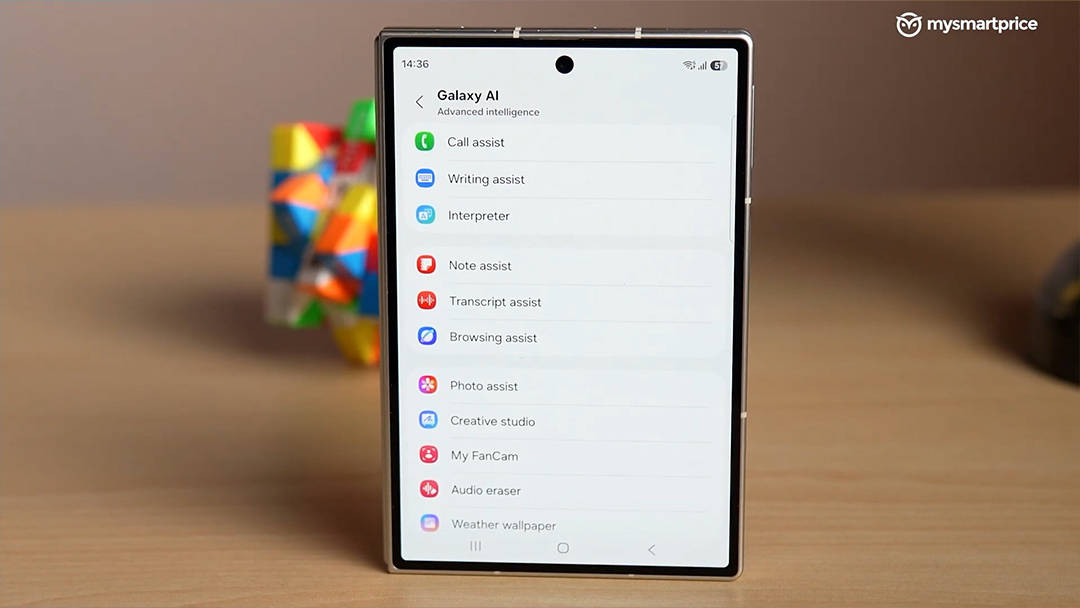
The software difference also affects how useful the AI features are on these phones. Samsung’s Galaxy AI includes Now Nudge, which can suggest actions based on information displayed in supported apps. For example, if someone sends a message mentioning a meeting date, Now Nudge can offer to open the calendar. On the Galaxy Z Fold8’s large screen, the calendar can open beside the messaging app, allowing the user to check availability without leaving the conversation. Similar suggestions can help with shared locations and other information. The feature is available only in supported apps and languages, but it shows how AI can work with the phone’s multitasking system.
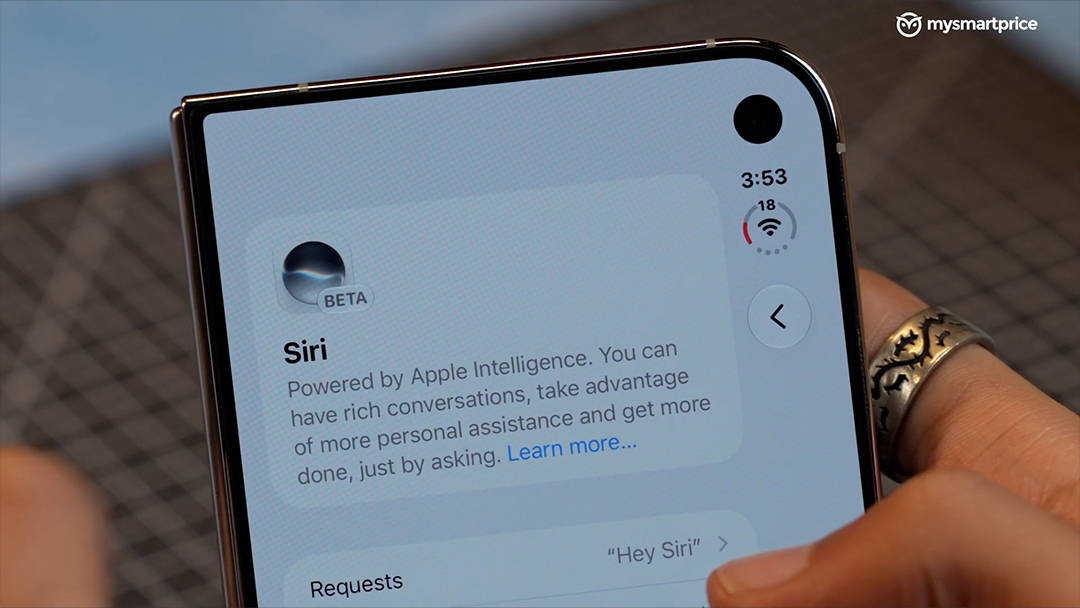
Apple’s new Siri AI also has useful capabilities, including better conversations, access to personal context, and the ability to understand information shown on the screen. On the Duo, Siri can remain open beside another app, allowing users to ask questions about what they’re viewing. However, Siri AI is rolling out in beta, and Apple’s foldable software is still new. Samsung has had more time to connect its AI features with the tools available in One UI. This doesn’t necessarily mean Galaxy AI is better than Siri at every task. The difference is in how the features work with the phone’s larger display. The Galaxy Z Fold8 allows more apps to remain open together, and that gives its contextual AI tools more room to be useful. For people who want to work across multiple apps, Samsung currently has the better setup.
Hinge Durability and Display Reliability
Durability is one of the biggest concerns with any folding phone, especially one that costs as much as the iPhone Duo. The phone has an IP68 dust and water resistance rating, which is better than the Galaxy Z Fold8’s IP48 rating on paper. Apple has also used a titanium body and a new hinge design. These are welcome features, but the more important question is how the phone will hold up after months and years of regular opening and closing. Folding displays are more complicated than conventional screens, and problems with the hinge or inner display can be expensive to repair. Long-term reliability is therefore an important consideration for anyone spending this much money on a phone.
We did not carry out destructive durability tests on these phones, but Zack Nelson of JerryRigEverything, an established reviewer known for his smartphone durability tests and teardowns, tested both. In his iPhone Duo test, debris entered the hinge and prevented the phone from closing properly. The subsequent bend test left a permanent green line across the inner display, which then became unresponsive. His Galaxy Z Fold8 test produced a better result: Samsung’s phone survived bending without its inner display cracking, although the back panel lifted under pressure. Both folding screens scratched easily, reinforcing the need to protect them from sharp objects. Samsung performed better in these destructive tests, but the results do not establish how either phone will hold up over several years.
There have already been some worrying reports from early iPhone Duo buyers. Within days of the Duo going on sale on October 23, 2026, users began reporting cracked inner displays, bright lines, and other screen failures around the hinge. On October 26, Apple acknowledged an issue affecting the inner display on a small number of iPhone Duo units and asked affected customers to contact AppleCare for a replacement. Apple has not explained the exact cause or provided a detailed failure rate, so there isn’t enough information to say how widespread the problem is. Not every report circulating online has been verified either. Still, the confirmed complaints deserve attention because they appeared so soon after launch.
Samsung went through similar problems when it introduced the original Galaxy Fold in 2019. That phone had display failures that forced Samsung to make changes to its design. Since then, the company has had several generations to improve its hinges, screens and manufacturing process. The Z Fold8 benefits from those years of development, but that doesn’t mean it is guaranteed to last longer than the Duo. There isn’t enough long-term reliability data for either 2026 model to make that claim. Nevertheless, the early screen failures make durability an important concern for Duo buyers. Given the price of the phone and the cost of repairs, it would be sensible to see how these issues develop over the coming months.
Warranty, AppleCare+ and Repair Costs in India
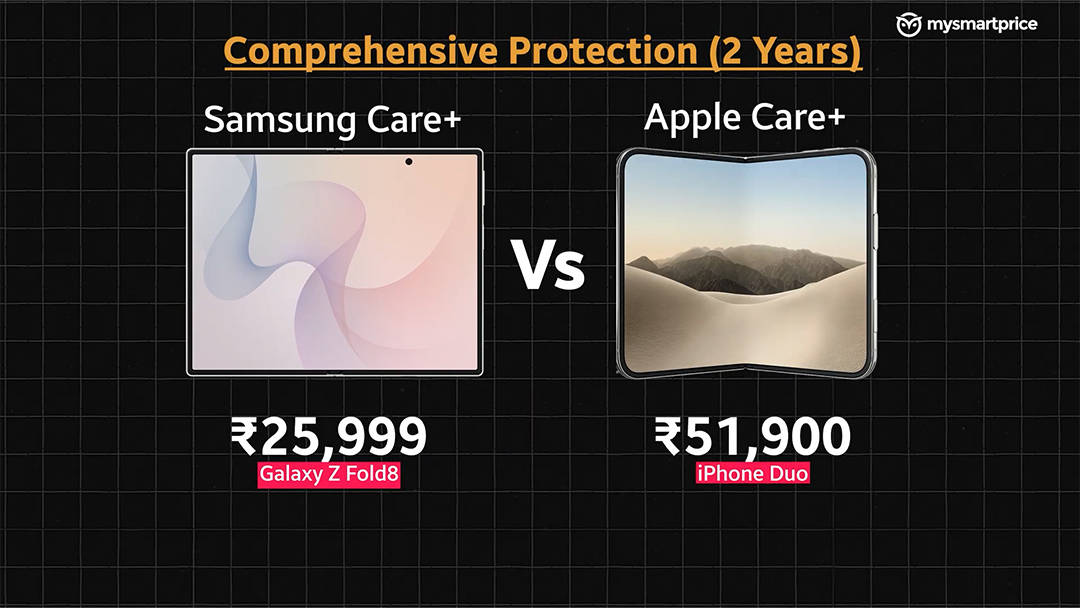
Both the iPhone Duo and Galaxy Z Fold8 come with a standard one-year manufacturer warranty in India. But with folding phones, accidental damage protection is worth looking at because replacing a folding display can be expensive. Samsung’s two-year comprehensive Care+ plan for the Z Fold8 is listed at ₹25,999, while Apple’s two-year AppleCare+ plan for the Duo has been quoted at around ₹51,900. The difference is considerable, although the plans don’t offer identical coverage and may have different service fees and conditions. Buyers should compare the terms before deciding which provides better protection, rather than judging the plans only by their purchase prices.
The biggest concern is the Duo’s out-of-warranty inner-display repair cost. Apple’s estimated price in India is almost ₹1.5 lakh, which is close to half the price of the phone. Under eligible AppleCare+ coverage, the service fee for inner-display damage is ₹8,900, but that comes after the cost of buying the protection plan. As per Samsung’s official website, the Galaxy Z Fold8’s main screen assembly costs ₹54,130, substantially less than Apple’s repair estimate. However, this is a part price, and labour, applicable taxes and any additional parts required could increase the final repair bill. Either way, repair costs should be part of the buying decision. A foldable is more complicated than a conventional phone, and owners may want to keep it for several years. At these prices, the cost of a damaged inner screen can be just as important as the cost of buying the phone.
iPhone Duo vs Galaxy Z Fold8: Price in India
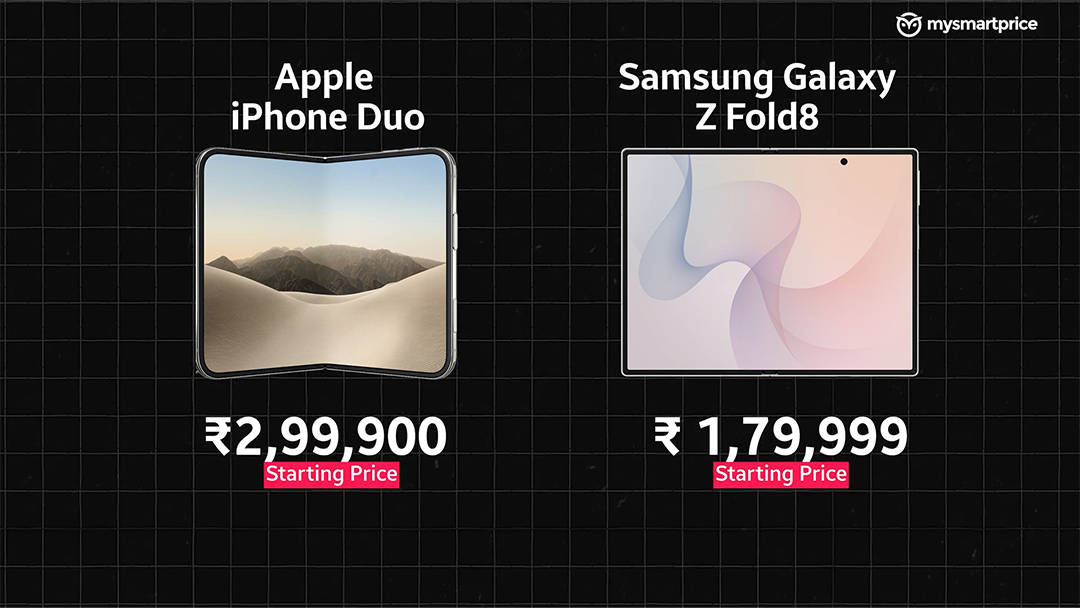
The price difference between these phones is large. The iPhone Duo starts at ₹2,99,900 in India for the 256GB version, while the Galaxy Z Fold8 is listed at ₹1,79,999 for the same storage capacity on Samsung’s India website. That’s a difference of ₹1,19,901. Samsung’s listed price includes a discount from its MRP, so retail prices and offers may change. Even allowing for those changes, Apple is asking a substantial premium for its first foldable. That would be easier to justify if the Duo clearly offered a better everyday experience, but the Fold8 has several practical advantages despite costing considerably less.
The Duo does have reasons to appeal to existing iPhone users. It runs iOS, works with Apple’s services and other devices, and offers a less reflective AMOLED display. Apple has also announced support for the USB-C Apple Pencil, giving the Duo an option for writing and drawing on its display. These features may be important for some buyers. But people choosing a foldable mainly for its large screen, multitasking and portability will find the Samsung Galaxy Z Fold8 more useful. It’s lighter, thinner, and makes better use of the folding display. The price difference makes Samsung the better value, but the main reason for choosing it is that it feels like a more complete foldable phone.
Frequently Asked Questions
Which is better overall, the iPhone Duo or Samsung Galaxy Z Fold8?
The Samsung Galaxy Z Fold8 is the better overall foldable in this comparison. It’s lighter, thinner, and offers more flexible multitasking than the iPhone Duo. Samsung’s software also makes better use of the large folding display, while quite a few popular apps are still not optimised for Apple’s inner display. The Duo has advantages in glare reduction and crease visibility, so it may suit buyers who value those features or want to stay with iOS. For most people looking for a practical book-style foldable, the Z Fold8 offers a better overall package.
Which foldable is lighter and easier to carry?
The Galaxy Z Fold8 weighs 201 grams, while the iPhone Duo weighs 254 grams. That makes Samsung’s phone 53 grams lighter. The Galaxy Z Fold8 is also thinner when folded, measuring 9.7mm compared with the Duo’s 11.3mm. These differences make Samsung’s phone easier to carry in a pocket and more comfortable to hold for longer periods. Weight matters more with foldables because users often spend extended periods reading, watching videos, or working on the larger inner display.
Which phone has the better AMOLED display?
Both phones use AMOLED displays, but the iPhone Duo has a nano-texture finish, while the Galaxy Z Fold8 has a glossy screen. The Duo is better at reducing reflections and making the folding crease less visible. However, the Z Fold8 looks better for movies and gaming in this comparison, with richer colours, stronger perceived contrast and more depth in dark scenes. Neither approach is better in every situation. The Duo is more suited to people who want fewer reflections, while the Samsung Galaxy Z Fold8 is the preferred choice for multimedia.
Which foldable offers better performance for gaming and multitasking?
Both phones offer excellent performance. The iPhone Duo uses Apple’s fastest flagship processor, while the Galaxy Z Fold8 uses the latest flagship Snapdragon processor designed for Galaxy devices. In everyday use, neither phone shows noticeable lag when switching between apps, multitasking or playing demanding games. Both can get warm during heavy tasks, which isn’t unusual for thin devices housing powerful processors. Samsung’s advantage in multitasking comes from its more flexible software, not a major difference in processing performance.
Which is better for multitasking and productivity?
The Galaxy Z Fold8 is better for multitasking. It can run three supported apps in split-screen mode, lets users adjust their sizes, and supports floating app windows. The iPhone Duo can show two apps side by side but uses a fixed 50-50 layout. Samsung also has a taskbar and app pairs that make switching between tasks easier. People who regularly work with documents, browsers, messaging apps, and calendars will get more use from the Samsung Galaxy Z Fold8’s larger screen.
Which foldable has better battery life?
Both the iPhone Duo and Galaxy Z Fold8 have been able to last a full day with moderate usage. This includes common tasks such as calling, messaging, web browsing, social media and watching videos. The phones have not yet been tested under identical conditions, so there isn’t enough evidence from this comparison to say which lasts longer. A controlled battery test with similar brightness, network conditions and app usage would be needed to establish a clear winner.
Does the iPhone Duo have a durability problem?
Some early iPhone Duo buyers reported cracked inner displays and screen failures around the hinge. Apple acknowledged an issue affecting a small number of devices on October 26, 2026, and offered replacements to affected customers. The cause and number of affected units remain unclear. Buyers should be aware of the reports without assuming that every Duo will have the same problem. Long-term durability will need to be assessed after both phones have spent more time in regular use.
Which phone has better cameras?
Both phones have capable rear cameras, and there isn’t a clear overall winner in this comparison. Apple has strengths in image processing and video features, while Samsung offers its own camera advantages. The Galaxy Z Fold8 does have a better inner selfie camera for video calls. Its conventional camera produces a clearer image than the Duo’s hidden under-display camera, which can look soft and hazy.
Is the iPhone Duo worth ₹1.2 lakh more than the Galaxy Z Fold8?
For most buyers, the additional cost is difficult to justify. The iPhone Duo starts at ₹2,99,900 in India, compared with ₹1,79,999 for the Galaxy Z Fold8. Apple offers iOS, stronger glare reduction and other features that may appeal to existing iPhone users. However, Samsung provides better portability, more flexible multitasking and more mature foldable software for substantially less money. The Z Fold8 offers better value for people buying a foldable mainly for everyday use and productivity.
Conclusion: Which Is the Better Overall Foldable?
The iPhone Duo is an interesting first-generation folding phone. Apple has done a good job with the nano-texture AMOLED display and has managed to make the crease almost invisible. The phone also offers the familiarity of iOS along with useful features for people who already own Apple products. Performance is excellent, and battery life is good enough to last a full day with moderate use. The Duo isn’t a bad phone, but it has some weaknesses that are difficult to ignore at its price. It’s heavier and thicker than the Samsung Galaxy Z Fold8 when closed, and its multitasking software doesn’t make full use of the large inner display. The under-display selfie camera is another compromise, and the early reports of display failures raise questions about reliability that will take more time to answer.
The Galaxy Z Fold8 is a better option for people who want a folding phone that works well as an everyday smartphone. Its lower weight makes it easier to carry, and its thinner design is more comfortable to use. Samsung’s glossy AMOLED display also looks better for movies and gaming in this comparison, although Apple’s nano-texture screen is better at reducing reflections. Both phones offer excellent performance, with enough power for demanding games and apps, and both can last through a day of moderate use. More importantly, One UI gives users much more freedom to use the large inner display. Three-app split-screen multitasking, adjustable windows, floating apps and Galaxy AI features make the Z Fold8 useful for work as well as entertainment. Samsung’s eight generations of foldable experience have helped it build a phone with fewer compromises in the areas that matter most during daily use.
The Galaxy Z Fold8 isn’t perfect, and there are areas where Apple has done better. Buyers who value a less reflective display and close integration with other Apple devices may prefer the Duo. But for everyday handling, multitasking, software and overall usability, the Samsung Galaxy Z Fold8 is the better overall foldable in this comparison. And this conclusion doesn’t depend entirely on price. Even if both phones were priced the same, the Samsung Galaxy Z Fold8 would still be the preferred option because it’s lighter, more practical, and makes better use of its folding design. At almost ₹1.2 lakh less in India, it also offers considerably better value for money.
Editorial note: Battery-life observations are based on moderate everyday usage. The two phones have not yet been compared under identical test conditions. The assessment of design, display quality and everyday usability reflects the observations covered in the comparison. Long-term reliability remains unconfirmed. Product prices, warranty and protection-plan costs are taken from respective official brand sites.