The Lumio Aura 5 are powered HiFi bookshelf speakers with separate left and right cabinets. They offer the wider stereo sound of a traditional speaker system without the need for a separate amplifier or subwoofer. Lumio has designed them for movies, OTT shows and music, with the convenience you’d expect from a soundbar. The speakers cost ₹22,999 on Lumio’s official store and Amazon. They were also offered for ₹19,999 during the introductory festive sale. At this price, the question is simple: can these compact speakers give you a better experience than a ₹20,000 soundbar?
Lumio Aura 5 Review
Rs 22,999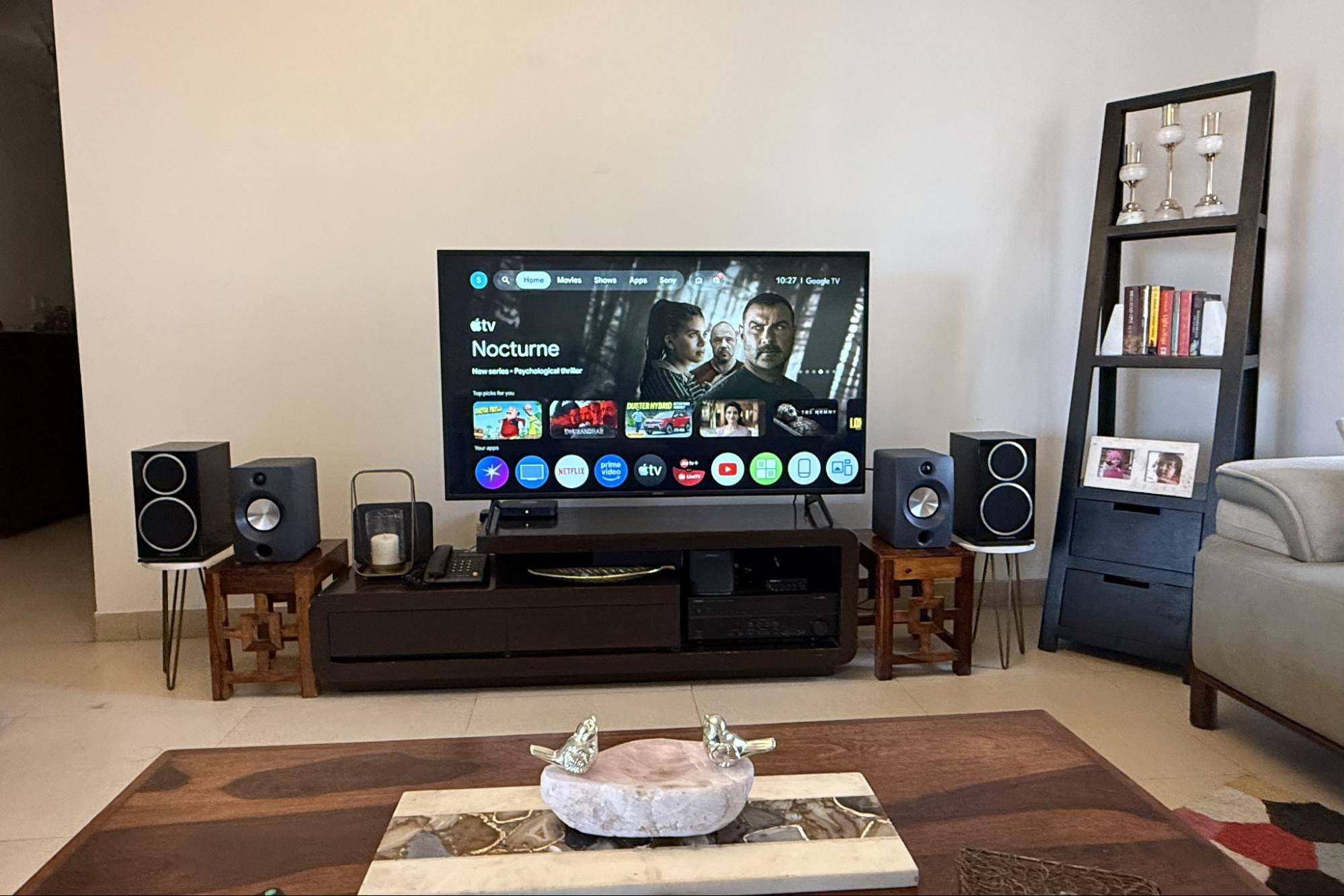
What Is Good?
- Clear dialogue and good sound for movies and OTT shows
- Attractive design and compact cabinets
- Plenty of connections, including HDMI ARC with CEC
- Good stereo separation for TV and music
What Is Bad?
- Bass lacks punch between 80 and 120Hz
- No companion app yet for more detailed sound adjustments
Design and Build Quality
My first reaction to the Aura 5 was simple: they look good, and they look small. Even with 4.5 inch mid/bass drivers, the cabinets are compact. The curved edges, matte finish and exposed drivers give them the look of traditional HiFi bookshelf speakers. There are no speaker grilles. They also feel light. The pair weighs about 6kg, while some powered speakers of a similar size that I’ve handled have weighed closer to 10kg. The cabinets are made of engineered wood, but their small size and low weight made me curious about how much sound they could produce.
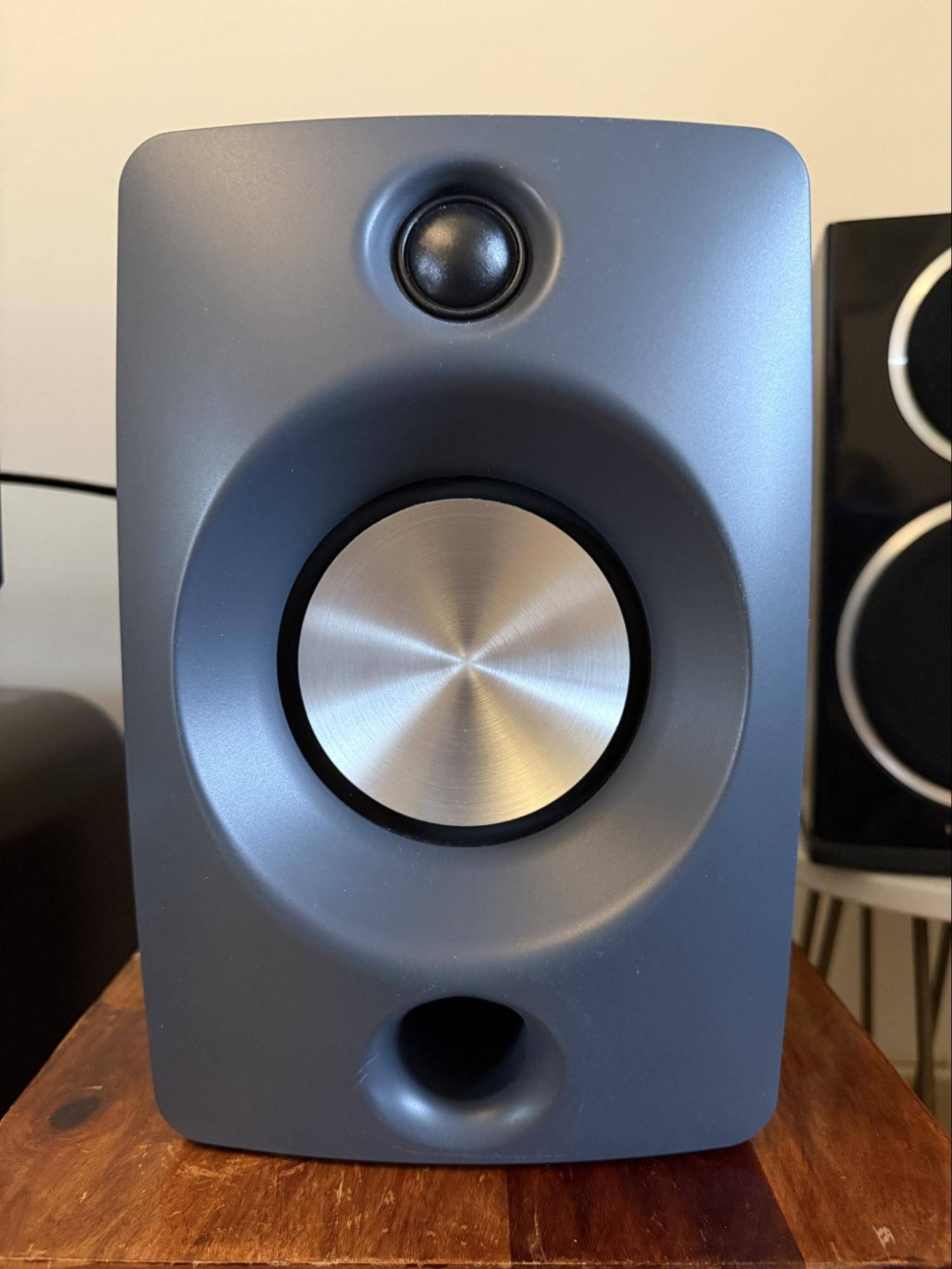
At the launch, Lumio said the Aura 5 could produce bigger and cleaner sound than their size might suggest, with a wider soundstage than a similarly priced soundbar. That was a claim I wanted to test. I liked the design from the start, especially the bass reflex ports on the front. They make it easier to place the speakers near a wall than some designs with ports at the back. The distance from the wall still affects the bass, but the front ports are useful when placing speakers beside a TV.
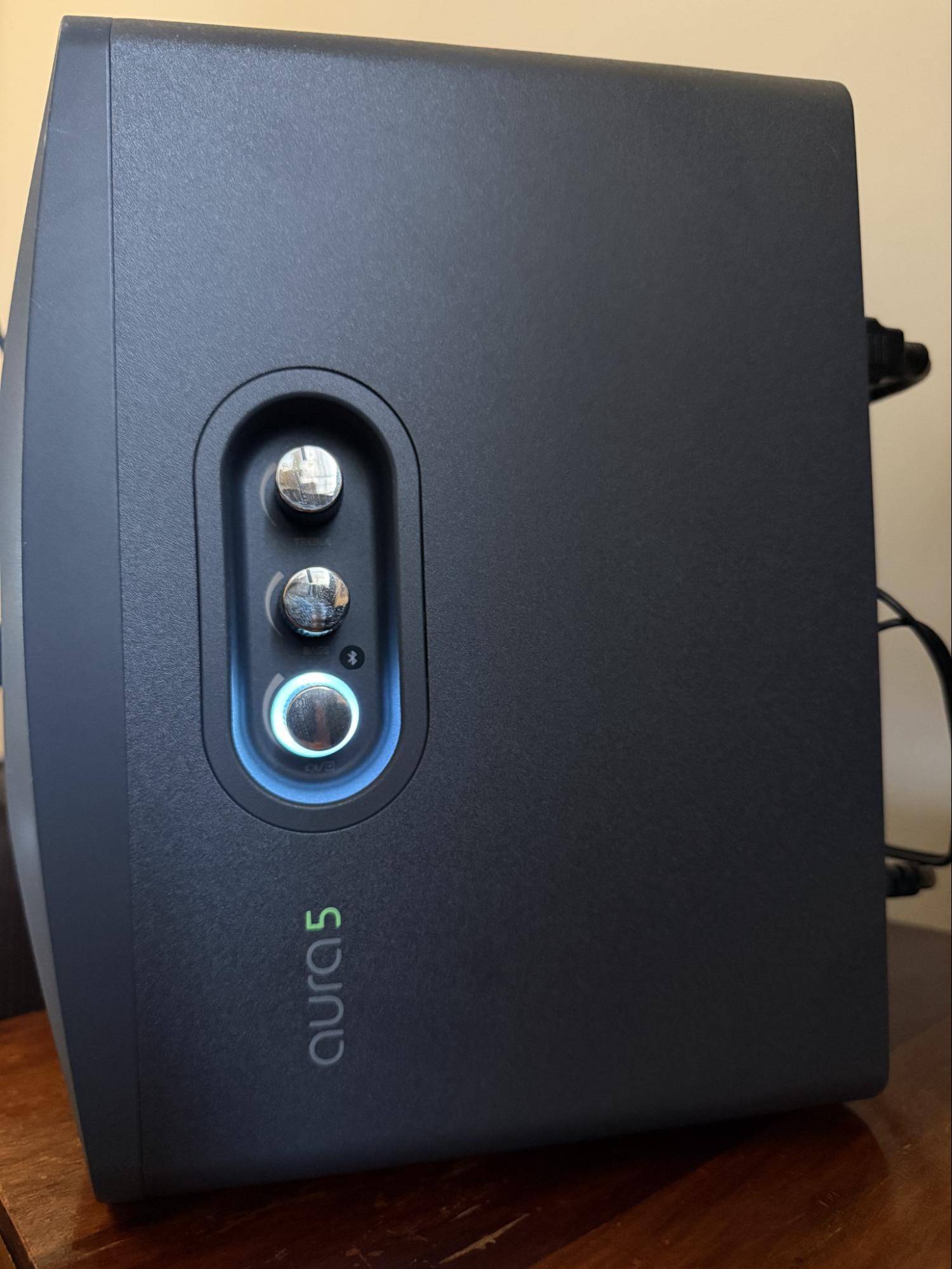
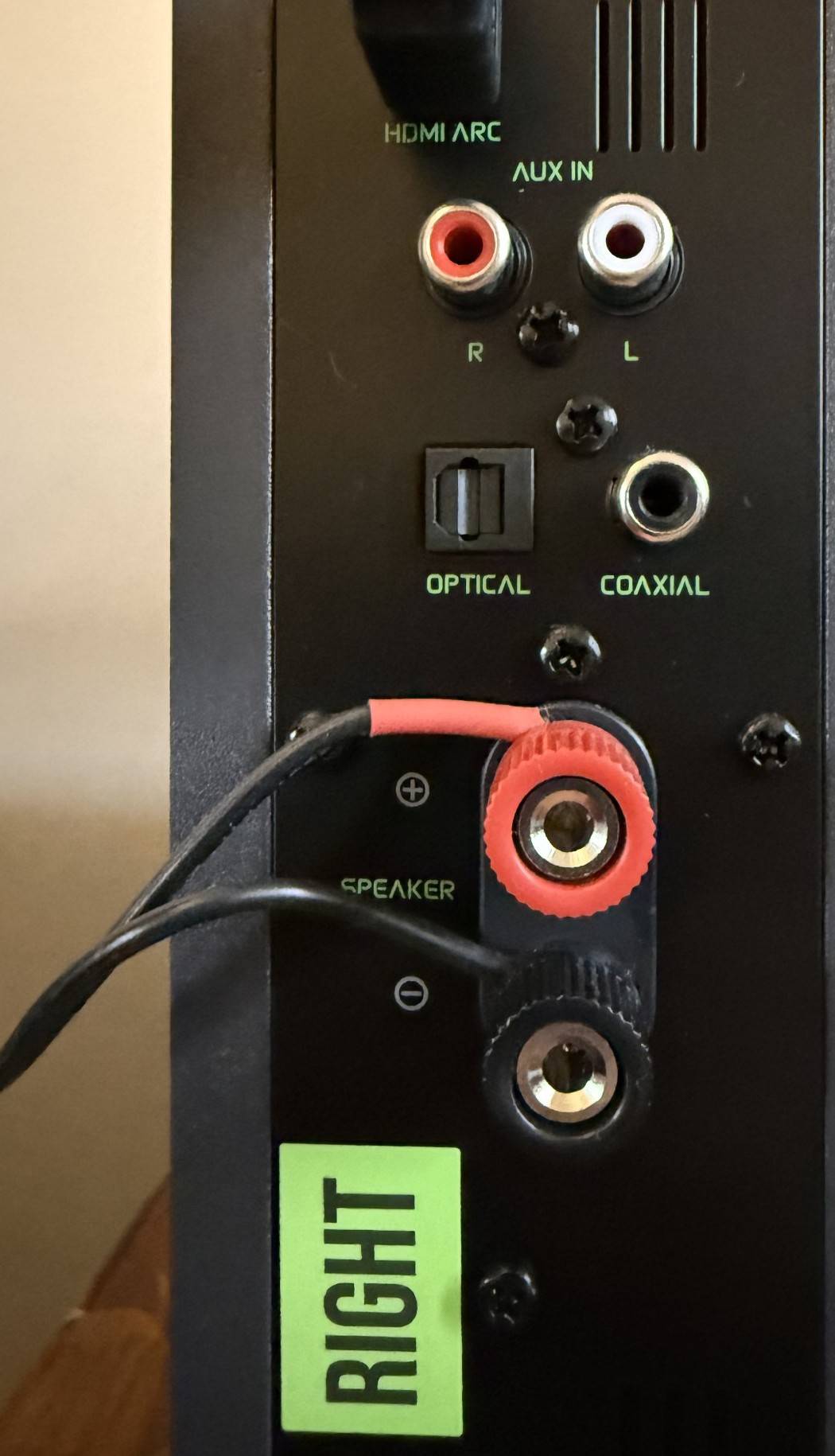
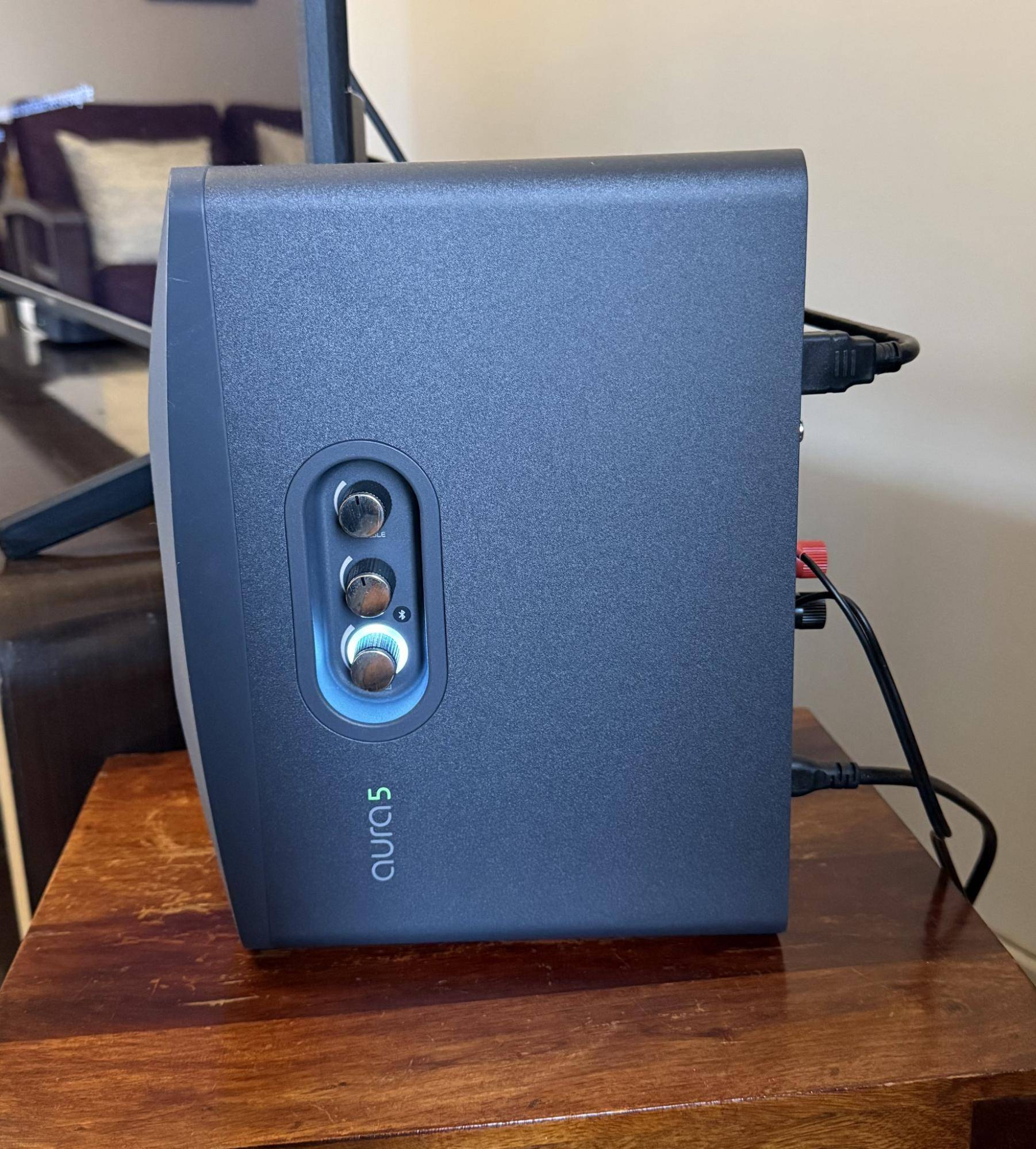
Each speaker measures 174 × 273 × 235mm (W × H × D). The box contains two speakers, a power cable, speaker wire, an HDMI cable and a small remote called the Minion. The right speaker contains the amplifier, power supply and input connections. The left speaker connects to it using the supplied wire. Only the right speaker needs a power socket, so setup is simple. Lumio provides a one year warranty on the speakers and six months on the remote.
Specifications, Connectivity and Features
The Aura 5 offer plenty of ways to connect your devices. The most useful is HDMI ARC with CEC. Connect the speakers to your TV’s ARC port using one HDMI cable, and you can control their volume with the TV remote. That makes them as easy to use as a soundbar for everyday TV viewing. HDMI ARC is still not common on powered bookshelf speakers at this price, so I’m glad Lumio included it.
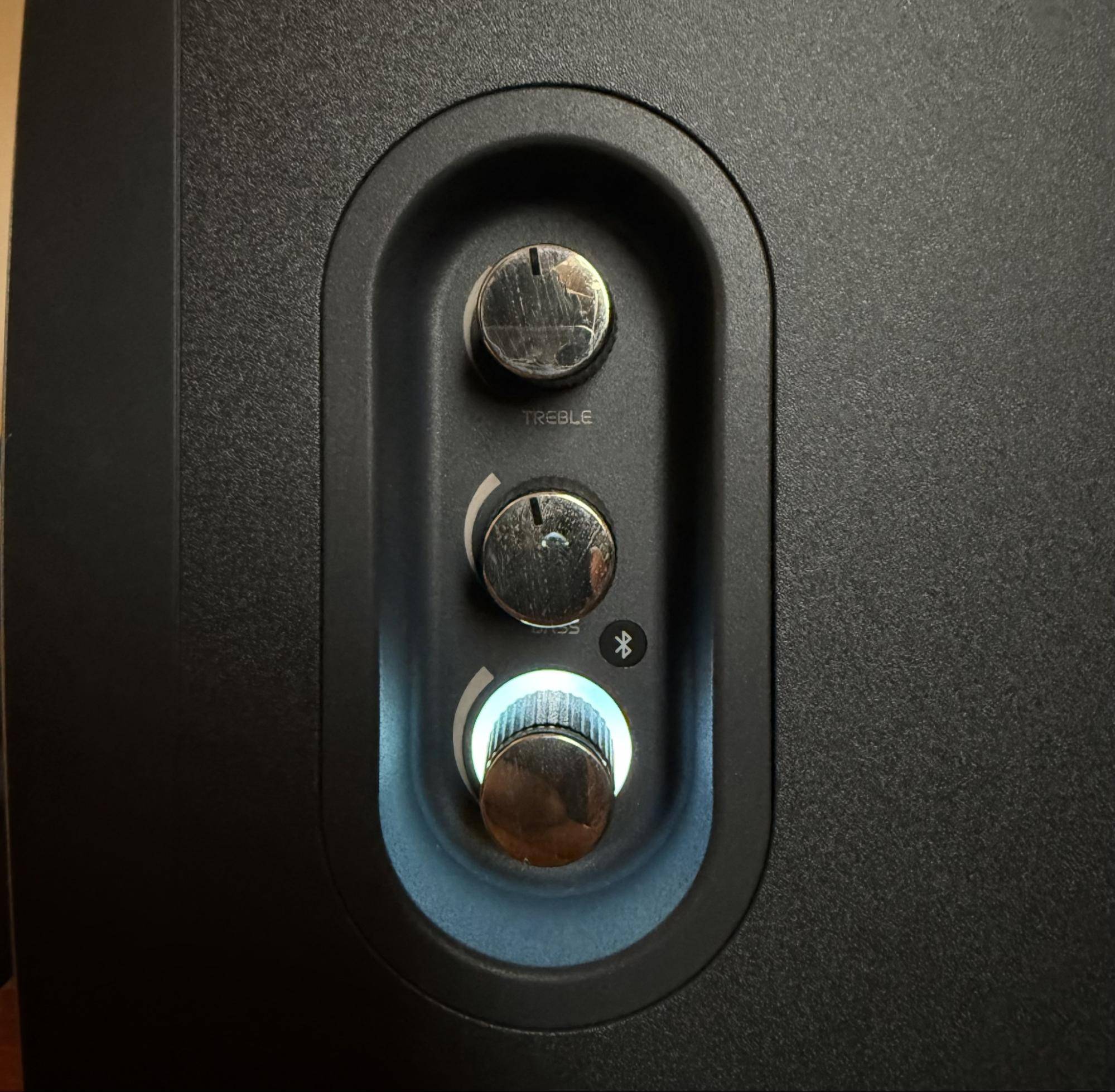
You also get optical and coaxial digital inputs, analog RCA/AUX, USB playback and Bluetooth 5.4. Lumio lists seven input modes, including PC and USB drive playback. The USB input plays FLAC files, and the speakers support digital audio up to 24 bit/48kHz through compatible inputs. That does not mean Bluetooth playback is lossless. Inside each cabinet are a 4.5 inch aluminium diaphragm mid/bass driver and a 1 inch silk dome tweeter. A Class D amplifier in the right speaker powers both cabinets. There are knobs for bass, treble and volume, along with three sound modes: Studio, Cinema and Groove. There is no dedicated subwoofer output listed in Lumio’s specifications.
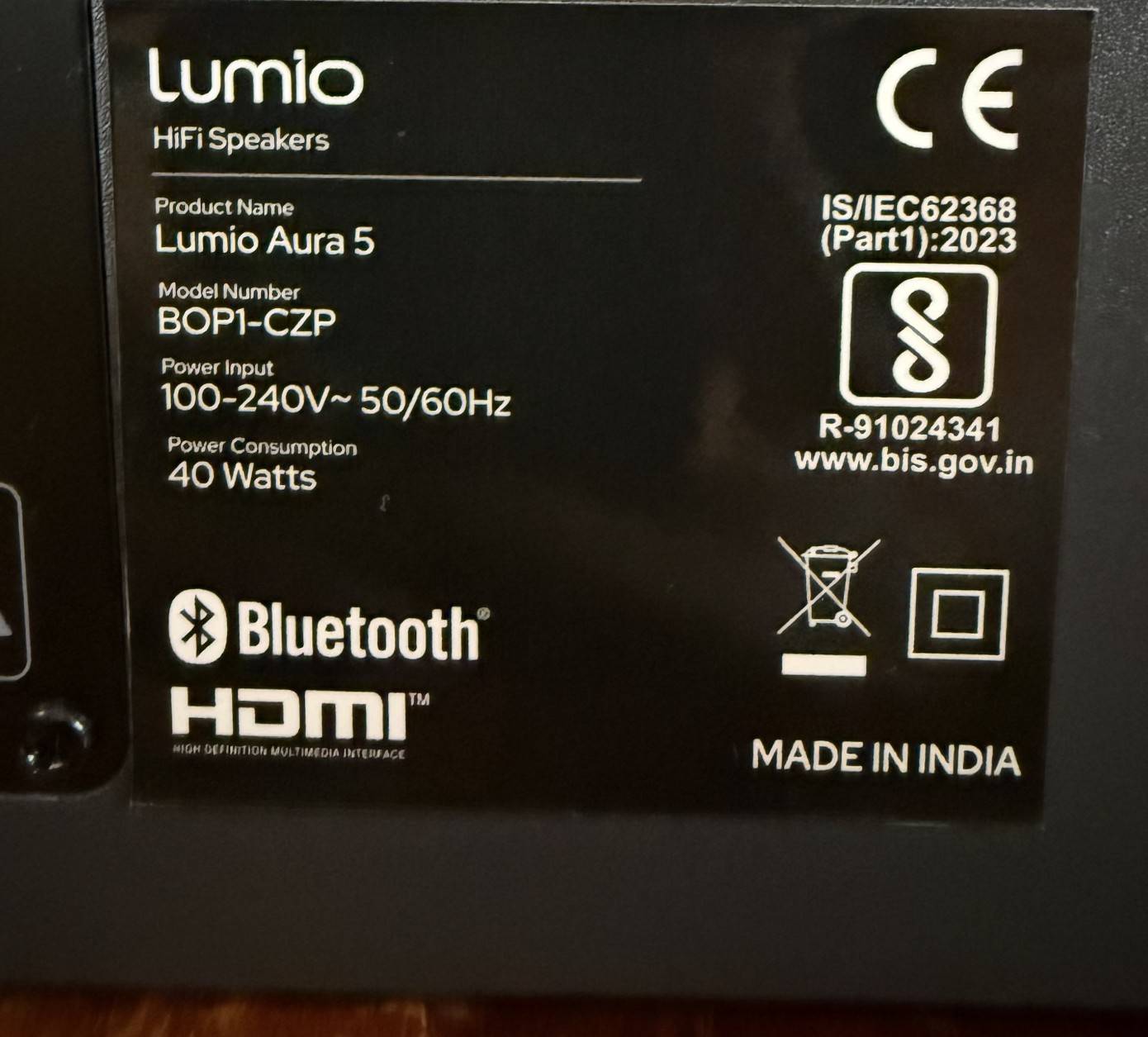
One detail in the specifications caught my attention. Lumio claims 100W RMS output and 200W peak output, but the product label lists electrical power consumption as 40W. If 40W were the maximum power drawn from the wall, the speakers could not continuously deliver 100W of audio power. Lumio has not said that 40W is the maximum, so these figures may have been measured under different conditions. Without more information, I wouldn’t judge the speakers by their wattage alone. Lumio also claims bass down to 35Hz in a room, which I checked during listening.
The Minion Remote
The Minion remote is as small as its name suggests. It feels basic, but it works well enough. The little OLED display is useful for checking the selected input and settings, although the text is tiny. The buttons on the side are my main complaint.
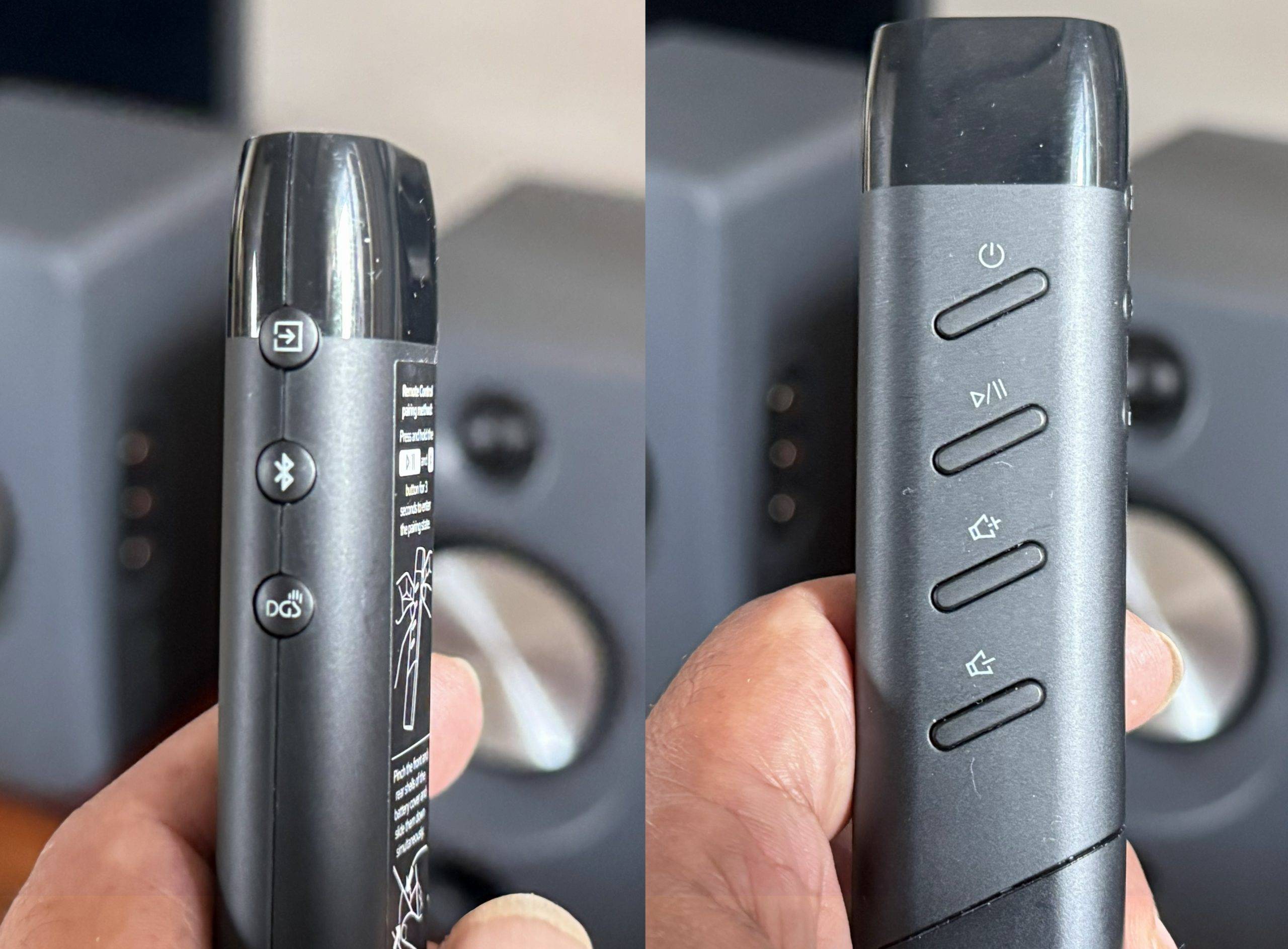
They control the source, sound modes and Bluetooth, and it’s easy to forget which one does what. Bigger buttons on the front would be easier to use. Otherwise, the remote does its job. There’s nothing special about it, but I had no problems using it.
The Reference Setup and Testing Method
For comparison, I used my decade old Wharfedale Diamond 220 passive bookshelf speakers. I normally run them with either a Yamaha HTR 3087 AV receiver, which uses Class AB amplification, or a small Fosi Audio BT30D Pro Class D amplifier. For this review, I used the Fosi because it is closer to the Aura 5 in size and amplifier design.
I know the Diamond 220 very well after almost ten years of listening to them. To my ears, they have a warm, full sound, controlled bass and a natural midrange. Each one has a 130mm, or roughly 5.1 inch, woven Kevlar mid/bass driver and a 1 inch soft dome tweeter. They are bigger and heavier than the Aura 5, and the Fosi has a higher claimed output. So this was not a direct contest to decide which system was better. The Wharfedales gave me a familiar reference for bass, voices, instruments and stereo imaging. They were designed mainly for music, while the Aura 5 are meant to work with both a TV and music sources.
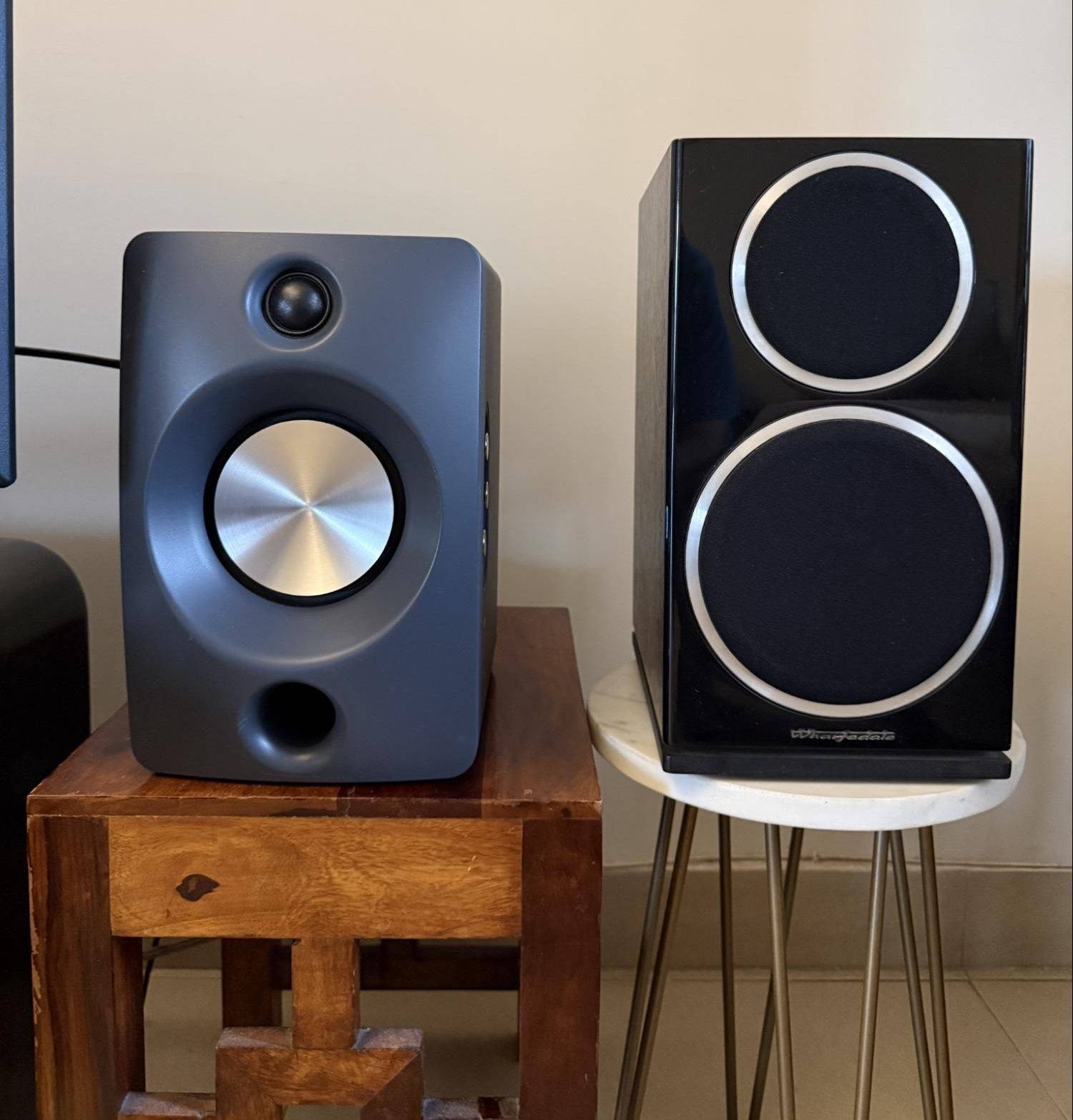
I kept both systems connected and switched between them while watching movies, OTT shows and news, and while listening to music. Before serious testing, I played the Aura 5 at moderate volume for about 15 to 18 hours, the run in period often called burn in. Whether this makes an audible difference is open to debate, but I wanted to give the speakers some use before testing. I placed them about five feet apart on either side of my TV, with the tweeters close to ear level. My listening position was seven to eight feet away, which is a normal distance for watching TV in a living room.
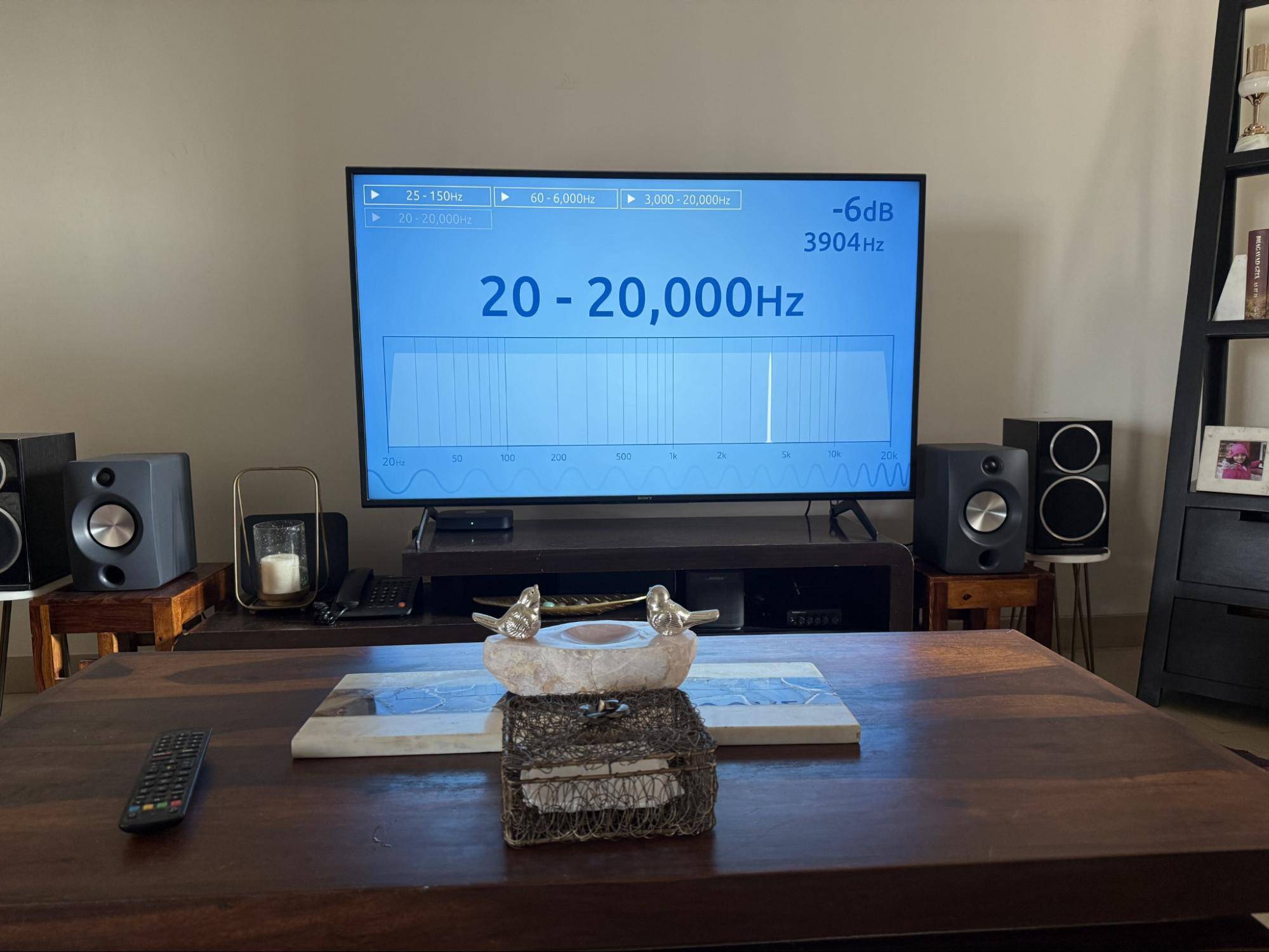
These are my listening impressions, not laboratory measurements. The frequency sweeps and volume comparisons describe what I heard in my room, with both systems playing at roughly similar levels.
HDMI ARC: Movies and OTT
Setting up HDMI ARC was easy. My TV recognised the speakers, and I set its digital audio output to stereo PCM. Volume control worked through the TV remote, and HDMI CEC turned the speakers on and off with the TV. I kept the bass and treble knobs at their middle positions except when testing the bass control.
I used Studio mode for most of the review. It is the default mode and sounded best to me. Cinema is supposed to make dialogue clearer, but I felt it reduced the rest of the sound more than it improved voices. Studio already makes dialogue easy to hear and gives a wider sound. Groove adds more bass and may suit some bass heavy tracks, but I preferred Studio for music as well.
Dialogue Clarity and Midrange
Dialogue clarity was the first thing that impressed me. The Aura 5 brings voices forward, with more emphasis on the upper midrange than the lower mids and mid bass. This makes speech easy to follow, even at modest volume. The speakers have no centre channel, so voices need to sound as if they are coming from the space between the left and right cabinets. The Aura 5 does this well. Dialogue sounds centred on the screen rather than coming from one side.
Voices are clear, not just loud. I could follow conversations even at around half volume. With the Wharfedales, I usually had to turn the volume control roughly 10% further to get similar dialogue prominence. News and dialogue heavy shows were easy to hear without regular volume changes. For people who value clear dialogue in a soundbar, the Aura 5 does a good job. That’s a major plus for a pair of bookshelf speakers intended for TV use.
Bass: Growl and Rumble, But Less Punch
Now, bass. In India, speakers are often judged by how much bass they produce. That isn’t my main concern, but I do like bass that sounds full and controlled, especially in movies. Lumio claims bass extension down to 35Hz in a room. In several frequency sweeps, I could hear useful bass down to about 45Hz without major distortion. My listening test cannot directly confirm or disprove Lumio’s claim, but that’s still good performance from 4.5 inch drivers without a subwoofer. Low hums, background rumble and movie effects had enough weight to make scenes enjoyable.
But the bass has a weakness. I missed a punch in the 80 to 120Hz region, even though the lower bass was quite noticeable. The best way I can describe it is this: the Aura 5 have the growl and the rumble, but are a bit weak on the punch. The low notes reach further than I expected, but drums and bass guitars sometimes lack the kick and body I want to hear.
Turning up the bass knob didn’t fix that. It gave me more low rumble, but not much more impact in the 80 to 120Hz range. There is also no dedicated subwoofer output, which makes adding an active subwoofer later less straightforward. For movies, the bass works well enough. With music, the missing punch is easier to notice.
Treble, Soundstage and Placement
The treble is good for movies and OTT shows. Screeching tyres, metal sounds and passing jets come through clearly without sounding too sharp. During high frequency sweeps, I thought the sound became quieter beyond about 15kHz. I didn’t find this distracting during normal viewing, because the sounds and details I wanted to hear were still clear.
The soundstage is good, but not great. At seven to eight feet, the Aura 5 filled my room with sound, but they don’t have the size or depth of a bigger home theatre system. Don’t expect deep bass that shakes the windows or sound coming from behind you. These are stereo speakers, not a surround sound system. Placement matters too. The distance between the speakers, their angle and the height of the tweeters affect how well you hear the stereo image. When I moved away from the main listening position, that image became less clear. With the speakers placed properly, however, the stereo sound was pleasingly wide.
Versus a Typical ₹20,000 Soundbar
From what I’ve heard, many soundbars around ₹20,000 struggle to give music and effects a wide stereo image. Most of the sound comes from the bar under the TV. Some systems with separate subwoofers also have bass that sounds muddy or disconnected from the rest of the audio. I’ve noticed that on more than one soundbar.
The Aura 5 sounded better balanced to me. With the two speakers placed apart, effects could be heard clearly on the left or right, and the sound felt wider. In the movies and shows I watched, quick sound effects also came through more clearly. A good soundbar and subwoofer can produce stronger bass, so the Aura 5 won’t beat every soundbar. But I preferred their stereo sound and overall balance to many soundbars I’ve heard at this price.
Volume and Distortion
The Minion remote shows volume from 0 to 32. I found 25 loud enough for most movies and OTT shows at my listening distance. Increasing the volume to 28 or 30 made the sound stronger without obvious distortion in normal scenes. In busy, loud scenes, with voices, music, bass and effects playing together, the speakers sometimes sounded a little strained. They seemed to have less room to handle sudden changes in volume.
More amplifier power would not necessarily fix this. Small woofers have to move further to produce loud bass, and they can distort when pushed too hard. But I rarely reached this limit during normal viewing. For their size, the Aura 5 played cleanly at useful volume levels.
Music and Soundtracks
Music is where I noticed the Aura 5’s limits more clearly. They’re better for music than many soundbars I’ve heard at a similar price, but I wouldn’t call them speakers made mainly for serious music listening. When I switched back to my Diamond 220, the difference was easy to hear. Guitars sounded fuller, voices had more warmth and drums had more weight. The Aura 5 lack some strength in the upper bass and lower midrange, which makes music sound thinner than I like.
The Aura 5 does a good job of keeping instruments separate. You can hear where sounds are placed across the left and right channels, and details are easy to pick out. What I miss is the weight and richness of those instruments. They are good at showing you where an instrument is, but not always at making it sound as full as it should. Different types of music make this easier to notice.
Which Genres Suit Them?
Pop, hip hop and electronic dance music suit the Aura 5. Think of the beat in Still D.R.E. by Dr. Dre featuring Snoop Dogg, the bass in 50 Cent’s In da Club, or the famous bass line in Michael Jackson’s Billie Jean. The speakers handle clear beats, voices and separate musical layers well. Their deep bass gives this music a good sense of rhythm, and the missing warmth matters less. If this is most of what you listen to, the Aura 5 should be enjoyable.
Classic rock, alternative rock and blues show what the Aura 5 are missing. In Money for Nothing by Dire Straits or Sweet Child o’ Mine by Guns N’ Roses, the guitars need both bite and body, while the bass guitar and drums need weight. The Aura 5 let you hear each instrument, but the music doesn’t sound as full. The same goes for B.B. King’s The Thrill Is Gone and Stevie Ray Vaughan’s Pride and Joy, where the sound of the guitar and voice is a big part of the experience. I enjoy this kind of music on my Wharfedales, and they sound richer to me.
That doesn’t mean rock, blues or classical music sounds bad on the Aura 5. If you’re used to listening through a ₹20,000 soundbar, the wider stereo sound and clearer instruments may be a big improvement. I would choose the Aura 5 over many soundbars for music. But if I were buying speakers mainly for music, I’d also listen to other bookshelf models in this price range. The Aura 5 are more suited to people who want one system for both TV and music.
Bluetooth Performance
Bluetooth 5.4 pairing was quick, and changing sources with the Minion remote worked without problems. I heard a small drop in sound quality compared with wired playback, but the speakers kept the same basic sound: strong low bass for their size, clear highs, forward voices and less energy in the lower midrange.
I played music at maximum volume over Bluetooth and didn’t hear obvious distortion with my usual playlist, which surprised me. For everyday music from a phone, the Aura 5 are easy to use and sound good. Having two separate speakers also gives music better left and right separation than a typical compact soundbar.
Conclusion
The Aura 5 are a likeable pair of powered bookshelf speakers, and they fit what I’ve seen from Lumio so far: good quality for the money spent. I don’t mean they offer the best possible sound or the lowest price. Lumio has tried to give buyers a useful mix of sound quality, connections and simple controls. These speakers aren’t aimed at people who want a dedicated music system above everything else. They’re for buyers who want better sound for their TV and also want to enjoy music. During my conversation with the Lumio team at the launch, it was evident that the Lumio Aura 5 are aimed at the soundbar market, offering convenience of a soundbar with much higher sound quality in comparison to a soundbar set-up. They have almost achieved that with the Aura 5.
For that buyer, the Aura 5 makes sense. Dialogue is clear, bass goes surprisingly low for the size, the speakers play loud enough for normal TV viewing, and the separate cabinets give you good stereo sound. There are also plenty of ways to connect devices. But the feature I like most is HDMI ARC with CEC, because it makes the speakers as easy to use with a TV as a soundbar. There aren’t many powered bookshelf speakers in this price range that give you all these features together.
At ₹22,999, the Aura 5 is worth considering. During the festive sale, they were offered for ₹19,999, with possible bank discounts on top of that. At the lower price, I’d recommend them even more easily to someone looking at a ₹20,000 soundbar.
If your main interest is music, the Edifier MR5 is worth a look. It was listed at about ₹22,000 on Amazon India. It is a three way powered studio monitor with a separate midrange driver, designed more for music listening. I haven’t tested it against the Aura 5, so I can’t say which one sounds better. But the MR5 doesn’t have HDMI ARC, and that makes the difference in who each system is meant for quite clear.
I wish the Aura 5 had more punch in the 80 to 120Hz range and fuller lower mids. Rock, blues, drums, guitars and vocals would benefit from it. A larger driver or cabinet might help, but that would also make the speakers bigger. I like their compact size, so I understand the choice Lumio has made. I’d also like a dedicated subwoofer output for people who want to add a sub later.
Lumio has said Android and iOS apps are in development, with more EQ controls and firmware updates. I’d like an EQ that allows me to adjust specific frequencies, especially the 80 to 120Hz range where I missed punch. The bass knob couldn’t fix that. Room correction using a phone’s microphone would also be useful for people with different speaker placements, although Lumio hasn’t announced that feature. And the Minion’s buttons could be easier to use. These are things I’d like to see improved, not reasons to avoid the speakers.
Overall, I think the Aura 5 is a good option for Indian buyers who are considering a basic 2.1 channel soundbar system. They aren’t a replacement for dedicated speakers built mainly for music, and they won’t sound like a full home theatre. But they are easy to set up, have plenty of connections and sound good with both TV programmes and everyday music. If you’re looking for something better than a typical ₹20,000 soundbar, I would recommend trying the Aura 5. If music is your only priority, there are other bookshelf speakers worth hearing before you buy.