Around the launch of its Galaxy S26 series, Samsung shared an unusually blunt view on the state of true wireless earbuds. The biggest limitation today, the company said, is not raw sound quality but how quickly that quality breaks down once earbuds leave ideal conditions.
In a technical interaction held alongside the Galaxy S26 rollout, an official spokesperson from Samsung's audio team argued that most earbuds are still designed for how people are expected to wear them, not how they actually do. Everyday movement, shifting fit, long listening hours, and changing environments all affect bass, clarity, and active noise cancellation in ways that lab testing rarely captures.
"Even with the same product, depending on ear shape, insertion depth, movement, and surrounding noise, bass can drop, detail can blur, and ANC can become unstable," said Han Gil-moon, who leads Samsung's Linux Audio Group. "The industry often designs around an ideal fit, but real life is different."
This philosophy sits at the centre of the Galaxy Buds4 Pro, which Samsung introduced alongside the Galaxy S26 series. Instead of optimising for peak performance in controlled environments, the focus this time was on maintaining stable sound quality throughout daily use.
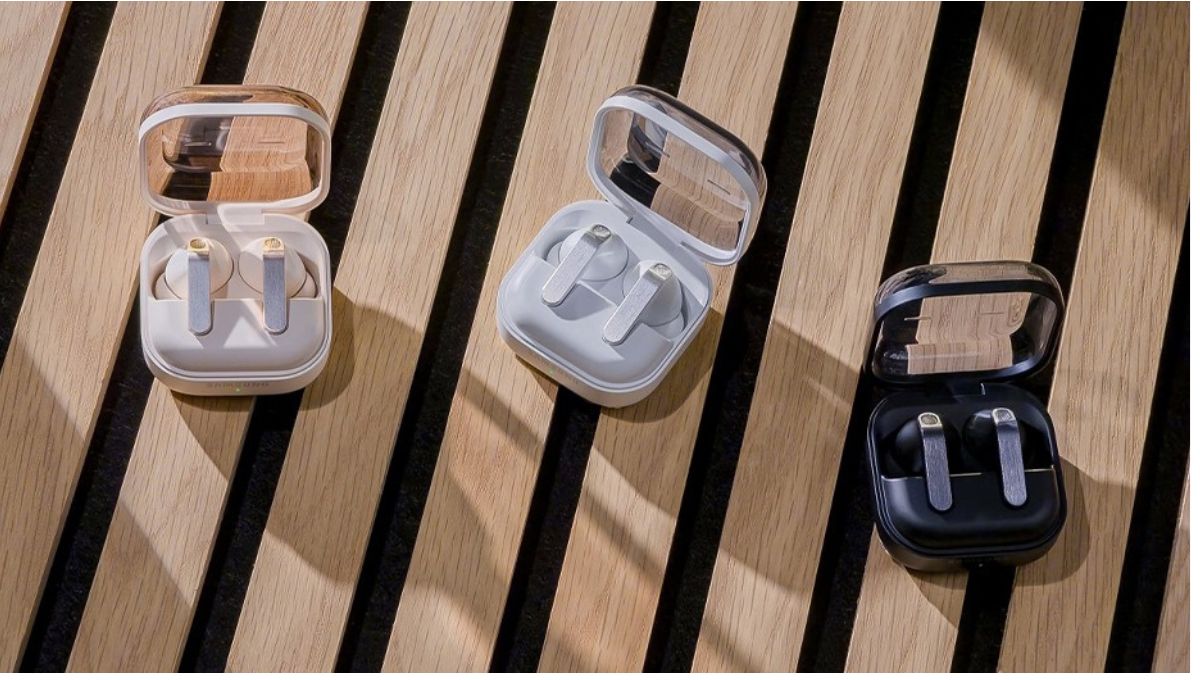
One of the clearest examples of this approach is Samsung's decision to retain a two-way speaker architecture. While many brands simplify to a single driver to save space, the Buds4 Pro continue to use a dedicated tweeter and woofer. Samsung engineers expanded the effective vibration area of the woofer by nearly 20 percent without increasing the size of the earbuds, allowing the system to move more air with greater control.
"For us, hi fi is not about sounding bright or exaggerated," Han said. "It is about reproducing the original sound as faithfully as possible, even when conditions are not perfect."
According to Samsung, this physical stability is critical because low frequency noise cancellation cannot be solved through software alone. A stronger acoustic foundation improves both bass consistency and ANC performance, particularly in real world scenarios such as commuting or walking outdoors.
Fit was treated as a performance issue rather than a comfort feature. The Buds4 Pro were designed using extensive ear shape data collected in collaboration with academic institutions and hospitals. Samsung says the modelling accounted not just for average ears but also extreme variations, resulting in a blade style design intended to reduce sound leakage as earbuds shift during movement.
Call quality followed the same real world logic. Instead of aggressively suppressing all background noise, Samsung prioritised preserving the natural flow of the user's voice. The Buds4 Pro combine external microphones, internal microphones, and vibration sensing to detect speech based on how sound travels through the body.
"Our goal was not to mute everything around you," Han said. "It was to deliver a voice that sounds natural to the person on the other end."
Samsung said it tested calling performance across cafés, roads, train stations, and high wind conditions, feeding that data back into tuning. All call related processing happens directly on the earbuds, ensuring consistent behaviour regardless of the connected phone.
Beyond audio, the Buds4 Pro are positioned as a deeper extension of the Galaxy ecosystem being built around the S26 series. Users can access AI agents such as Bixby, Google Gemini, and Perplexity through voice commands, while head gesture controls reduce reliance on touch interaction. Samsung sees this as part of a broader shift towards hands free, ambient AI experiences.
Priced at ₹22,999 in India, the Galaxy Buds4 Pro sit squarely in the premium segment. But Samsung's messaging suggests the company is less interested in spec sheet competition and more focused on addressing the everyday instability that defines true wireless audio.
By designing earbuds around how they fail in real life, rather than how they perform in ideal conditions, Samsung is quietly reframing what better sound actually means for most users.