Lumio is officially taking on the premium smart TV segment with the launch of its Vision 9 2026 series in India. While retaining its 2025 “speed crown,” the brand’s new pitch focuses on flagship-level disruption. At the launch, Lumio boldly compared itself to a 65-inch Sony Bravia 3 series TV, with a promise of superior tech, software, and speed.
To justify this leap, the Vision 9 features a massive hardware overhaul from its predecessor. The display jumps from a standard 60Hz to a native 144Hz 4K screen (up to 240Hz VRR at 1080p), driven by a new hybrid 75-inch EVA VA MiniLED panel with a 7000:1 contrast ratio and the upgraded DOPE 2 picture engine.
Audio gets an equally aggressive bump: stepping up from last year’s 24W setup to a 50W hexa driver system. With dual subwoofers (one of which is not an active woofer but a passive radiator driver). The setup aims to eliminate the need for an entry-level soundbar entirely. Powered by the flagship MediaTek Pentonic 700 chipset, Android 14, and the innovative (and upcoming) WhatsApp-controlled “Project Neo”, Lumio is moving well beyond just padding the spec sheet. (For a complete breakdown of specs, pricing, and availability, refer to our launch story.)
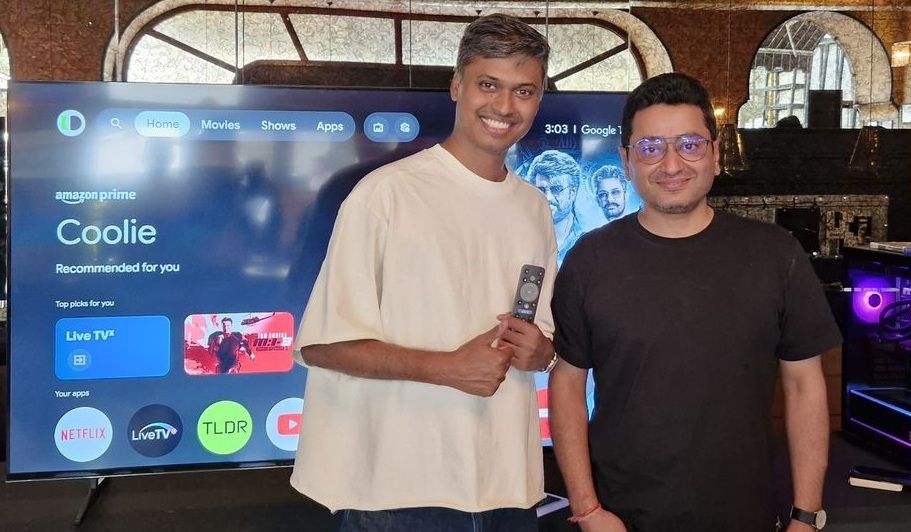
We sat down for a chat with Sudeep Sahu, head of product for Lumio TV, along with Raghu Reddy, co-founder of Lumio, who joined us later. We got into a deeper discussion to understand the exact calls and engineering decisions they took when working on the Lumio Vision 9 2026 series, exploring everything from panel tech and Google OS software optimization to premium pricing and their after-sales service network. Below is the transcript of the full interaction at the launch event.
Q: The whole “Fast TV” concept was unique, and it did solve a problem that most were living with. So, is it just a factor of throwing a faster chip, more RAM, and faster storage at it, or is there more? How do you approach OS optimization, and how much of a role do Google and the chipset provider play in attaining this kind of speed?
A: Hardware is always going to be one pillar, the starting point. The second is optimization. This OS wasn’t actually given to us by Google; it is made by Google. We worked very closely with MediaTek and the Google TV team to squeeze every ounce of performance. We are essentially optimizing the chip for our specific hardware, kind of doing that custom optimization, but without a label. We set a target for the TV to boot up in X amount of seconds. We went back and forth for almost three to four months, giving constant feedback to achieve this performance. I do have a feeling some of the team members there hate us because we keep nagging them, saying “no, this has to be improved,” pushing back against what they say is accepted and standard. Even in this generation versus our last generation, there is a two-second improvement. It’s a journey from a ₹30,000 TV to a ₹70,000+ TV, and you cannot get this level of performance without that tight combination of hardware and software working together.
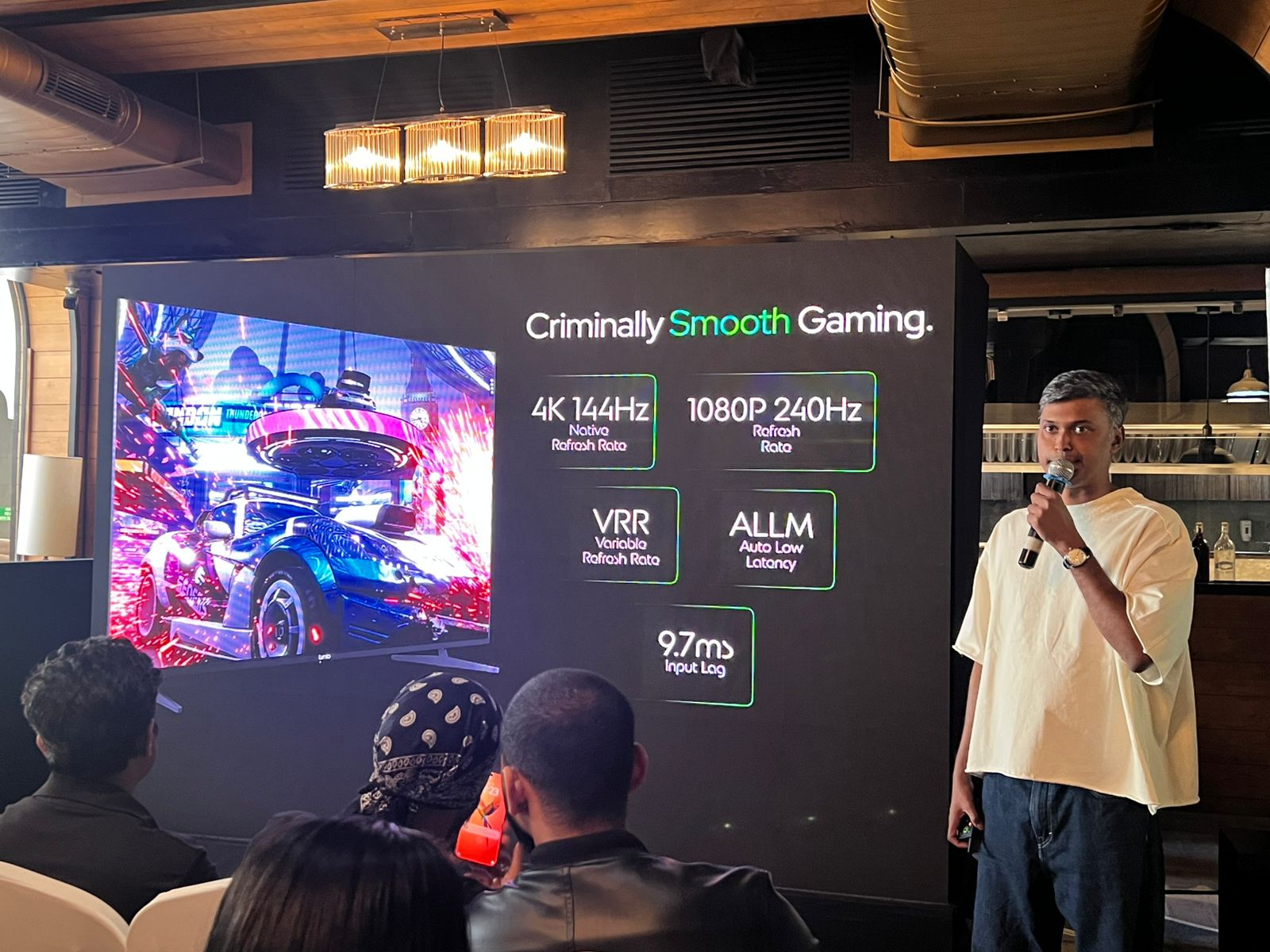
Q: You’re using an Enhanced VA panel, claiming it brings the best of both worlds, deep blacks and IPS-like viewing angles. As a stickler for viewing angles (I’m an IPS fan). I just checked it out, and it is better. However, does it solve for the color shift entirely? Looking at the greys, I noticed a slight color shift; it wasn’t exactly IPS-level quality. How do you balance this?
A: Those claims of 170-degree angles, we don’t even like to talk about it. This is phase one, or v1, of a new technology. IPS is still the king in terms of viewing angle. But if you look at this EVA panel versus a regular VA panel, there is a world of difference. We got feedback from people that they need deep, OLED-like blacks as a top priority, but they also want IPS angles. Historically, except for OLED, you could never get the best of both worlds. We compared this with other legacy flagship models costing lakhs of rupees that use VA panels, and ours is so much better regarding those corrections. It is the right step toward getting very close to OLED levels in the future.
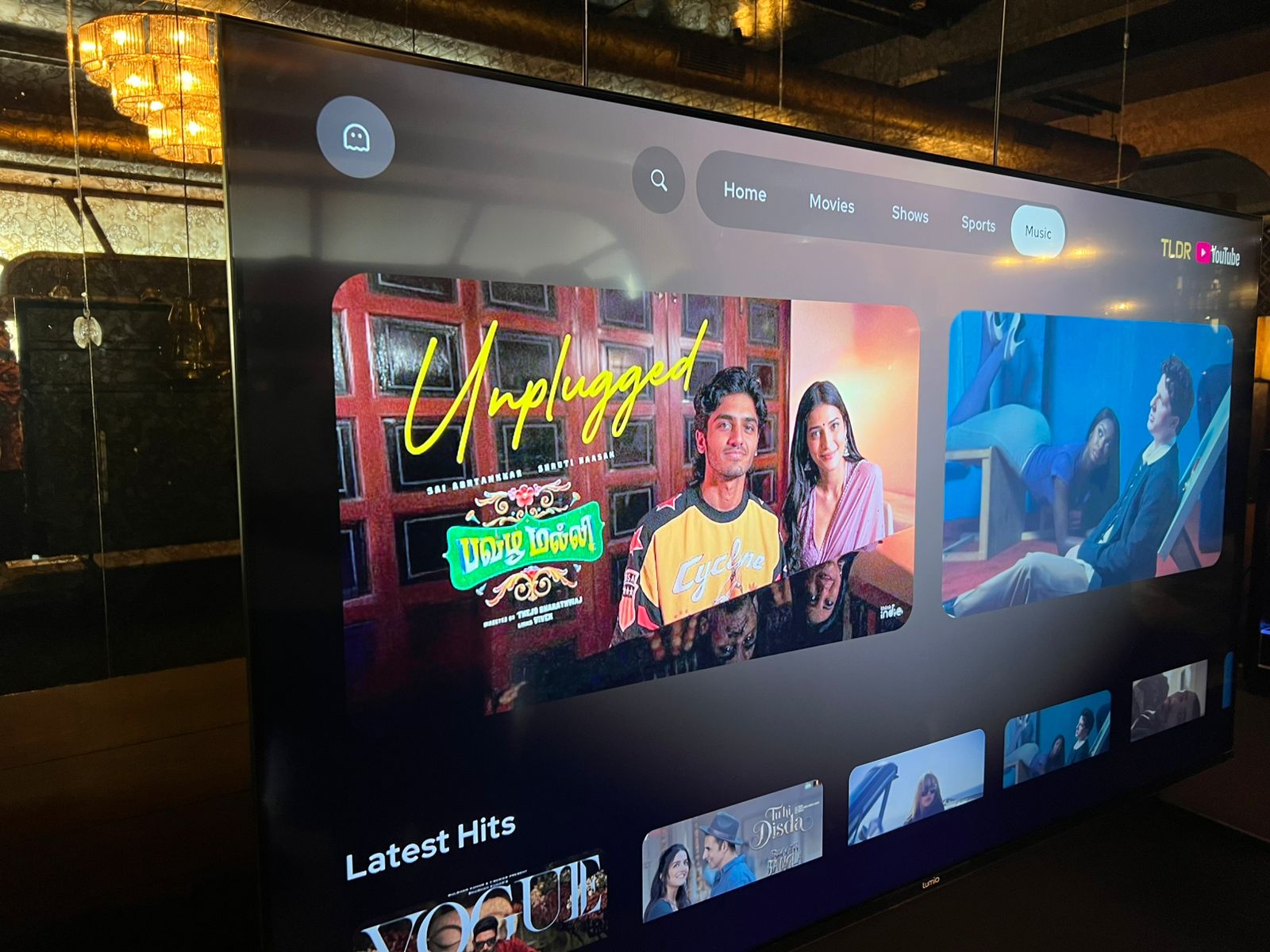
Q: You have 128 dimming zones for the mini-LED backlight layer. I’ve seen control issues with high numbers if the algorithm isn’t right. Also, even good panels end up being bad with pink-ish skin tones because the tuning is bad. Since you use professional displays as a reference for color tuning, and they are generally flat (true to real), and consumers these days prefer punchy colors, how are you managing that human tuning element?
A: Exactly, we benchmarked against TVs with 380+ dimming zones, and how you control each dimming zone with the algorithm is the key. High numbers mean nothing if the output isn’t satisfactory or if blooming happens. Our core philosophy is to create products that spark joy.
For tuning, I developed this skill set over a period of time and taught the team here. We keep a high-end flagship reference monitor and tune scene by scene, literally eyeballing and tuning real videos, not just red, green, and blue screens, with all AI turned off. We already have the hardware for 80% of Rec. 2020 and an 8-bit plus FRC panel (so it delivers 10-bit colors without the expense, and zero banding). The second step is fine-tuning. Many brands don’t have enough colors and push them above what the panel can actually deliver, making reds look pink. We turn off most of the tweaks out of the box because we want it closest to natural in Standard and Movie modes. If a customer wants more punch, they can choose Vivid or go and tweak it themselves inside the standard settings.
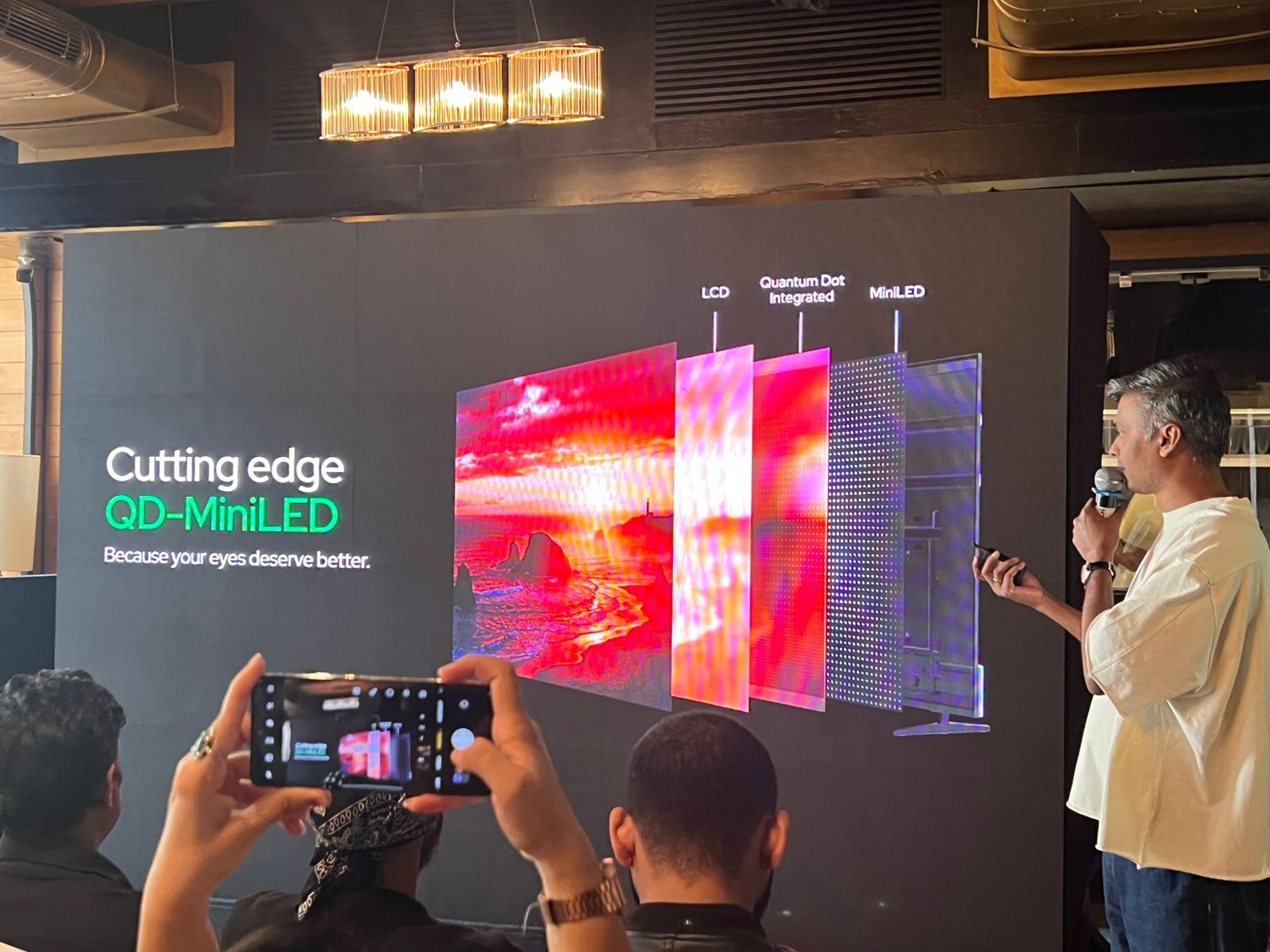
Q: You have dual subwoofers, one of which is actually a passive radiator, two full-range drivers, and two tweeters. That’s a mouthful of speaker specs. But what about the frequency response and sound tuning? When I had a listen to the demo zone, the sound profile leaned heavily towards the V-shape tuning, with more focus on lows and highs.
A: Since previous generations, we were very sure we wanted a tweeter and a full range because everyone complains about dialogue on standard TVs with single drivers and tiny boxes. This time, we are adding support for a hexa driver system with fatter boxes. We tune the audio to lean slightly towards a “V” shape out of the box because people don’t actually like perfectly flat sound. However, we have presets like Movie, Music, Stadium, and specifically a “News mode” which enhances the voice so dialogue is clearly heard (which you can easily use for a movie). Users can also go in and fine-tune it to manually bump up the mid-range if they want more vocals.
Q: Looking at the OS and the smart integration, I would want voice to be the default way to interact. Lumio is highlighting texting instead. Also, when it comes to TLDR implementation, is it using any machine learning-based personalization algorithms?
A: Voice sometimes doesn’t recognize accents very clearly, leading to problems. So we thought, why not give a different thing that is foolproof? Let’s use tools people are already using rather than trying to invent newer ways of communication. Everybody is on their phone texting on WhatsApp these days more than talking, even kids. Text is a new language, is what we believe. So texting your TV feels like a natural progression.
Regarding personalization of the TLDR lists. It is not a top priority for us right now; it is step two or step three. It’s a little tougher on a TV because it’s used by multiple people. There is a dilemma: do you personalize it for which user? Do we take everything as one user, or do it by profiles? When you switch on the TV, it becomes a mess every day, getting frustrated trying to find something everyone agrees with. It’s on the roadmap, but we are debating how exactly to implement it smoothly.
Q: Your pricing is creeping closer to the legacy top-tier brands. The TV experience really starts after buying it. Changing a panel is very expensive. How do you manage customer service across the country to justify that premium jump?
A: Before we even started selling the first TV, we established our after-sales network covering 19,000+ PIN codes with 350+ walk-in service centers. Amazon or Flipkart might handle delivery, but the service SOPs are created and done by us. Today, 80% of the orders we get are installed within 24 hours. We’ve served 20,000+ customers across 5,600+ PIN codes. And exactly because changing a panel is so expensive and painful, we give a two-year warranty on our TVs, which is something not too many people talk about but gives immediate value.
Q: You’ve done TVs and projectors. Is there an easier entry point for consumers to try your brand? Since you’re working heavily on audio, why not a ₹12k soundbar that sounds more like a 50K unit?
A: We would love to explore that, but our first rule is always: Is there a problem we can solve? For TVs, the problem was a slow TV. For projectors, there were really bad ones under ₹10k and great ones above ₹80k, with nothing in between, and the biggest problem wasn’t even the product; it was service. We don’t want to just look at product and price and go to market; we need a problem statement and differentiated features. But yes, our dream is flagship quality, and we definitely want to indulge in at least one more category in home entertainment when the right time comes this year.