The Canon EOS R50 joins the ever-growing cavalry of Canon cameras. The R50, in particular, is aimed at people who have mastered smartphone photography/videography and are now looking for a bigger challenge. Moreover, it also acts as an entry point for folks who want to start their photography and videography careers but don’t want to splurge when buying an expensive, heavy camera.
Canon EOS R50
Rs 69,999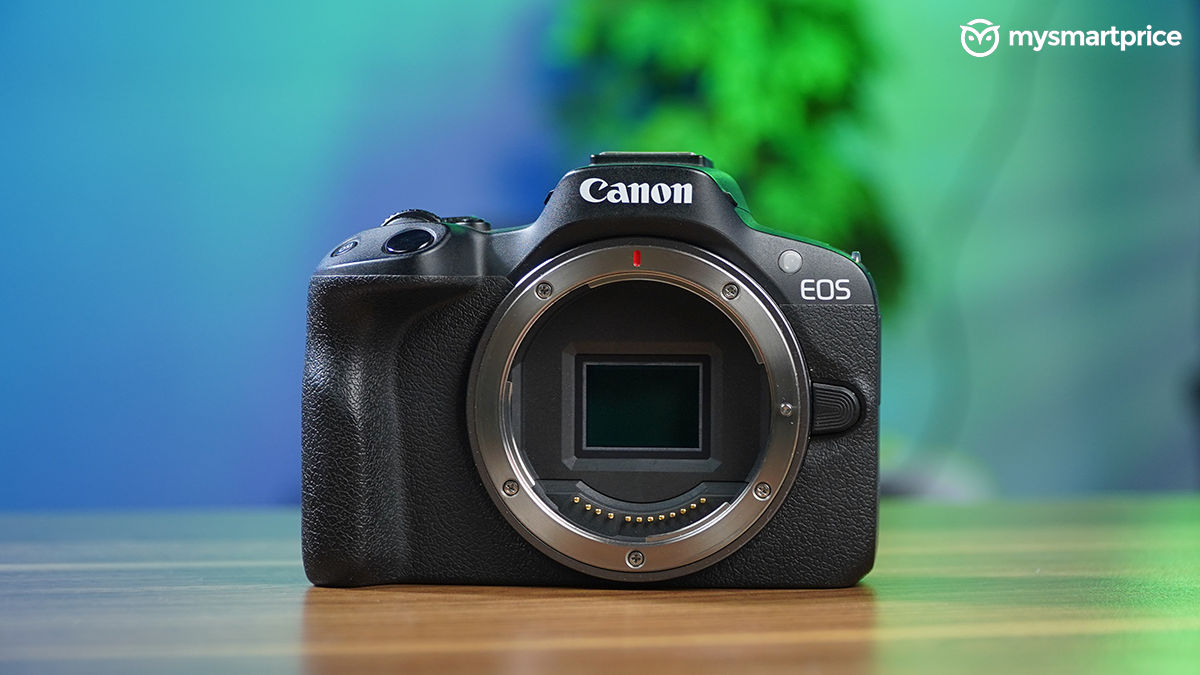
What Is Good?
- Compact form factor
- Captures good quality images, videos
- Good build quality, easy to carry
- Excellent and reliable autofocus capabilities
- Articulating LCD display, responsive touchscreen
What Is Bad?
- Overheats after extended 4K recording
- Limited controls, no secondary dial
- Unwieldly grip handle
- No 4K 60fps support
- No in-body image stabilisation (IBIS)
The R50 has hit the bullseye by introducing multiple useful features like filters, different modes, excellent connectivity features, and more that will aid beginners. It does all this while maintaining its small (read: cute) form factor. With a starting price of Rs 69,999 with the RF- S 18 – 45 mm kit lens, the R50 fits right into the market since content creation on Instagram and other social media platforms is rising. So, is it the perfect camera for you? Let’s find out in this review.
Canon EOS R50 Review: Pricing and Availability in India
The R50 is available in multiple online stores, including Canon’s website, Flipkart, and Amazon. The prices on these platforms differ by a small margin. However, it’s advised that you also enquire about the current prices in the offline market, as there is a chance you might get a better deal or some extra accessories. The R50 can be bought with its kit or extra lens, which I have tested in this review. Below are the pricing details.
| Product | Price in India (Flipkart) |
| Canon EOS R50 + RF- S 18 – 45 mm kit lens | Rs 69,999 |
| Canon EOS R50 RF – S 18 – 45 mm and RF – S 55 – 210 mm | Rs 95,299 |
Canon EOS R50 Review: Design and Build Quality
The R50 is a feature-rich mirrorless camera that combines form and functionality in a small package. It’s not necessarily a pocketable camera, but it can fit inside a backpack easily without wasting much space. Its small form factor is why I preferred carrying the R50 over my smartphone for a quick photography session, which is precisely what Canon aims for.

This form factor is even better than the Panasonic Lumix G85K which I had been daily-driving for a few years. But all this comes at a cost — which is its smaller-than-usual grip. It’s not the most comfortable, making it tough to hold the camera longer, especially if you have a longer lens attached. The camera is made of an amalgamation of aluminium alloy and sturdy plastic, most of which is wrapped in rubber that helps keep the camera firm in your hands.
| Dimensions | 116.3 × 85.5 × 113.1 |
| Weight (only body) | 375 grams |
| Built-in Flash | Yes |
| Colours | Black and White |
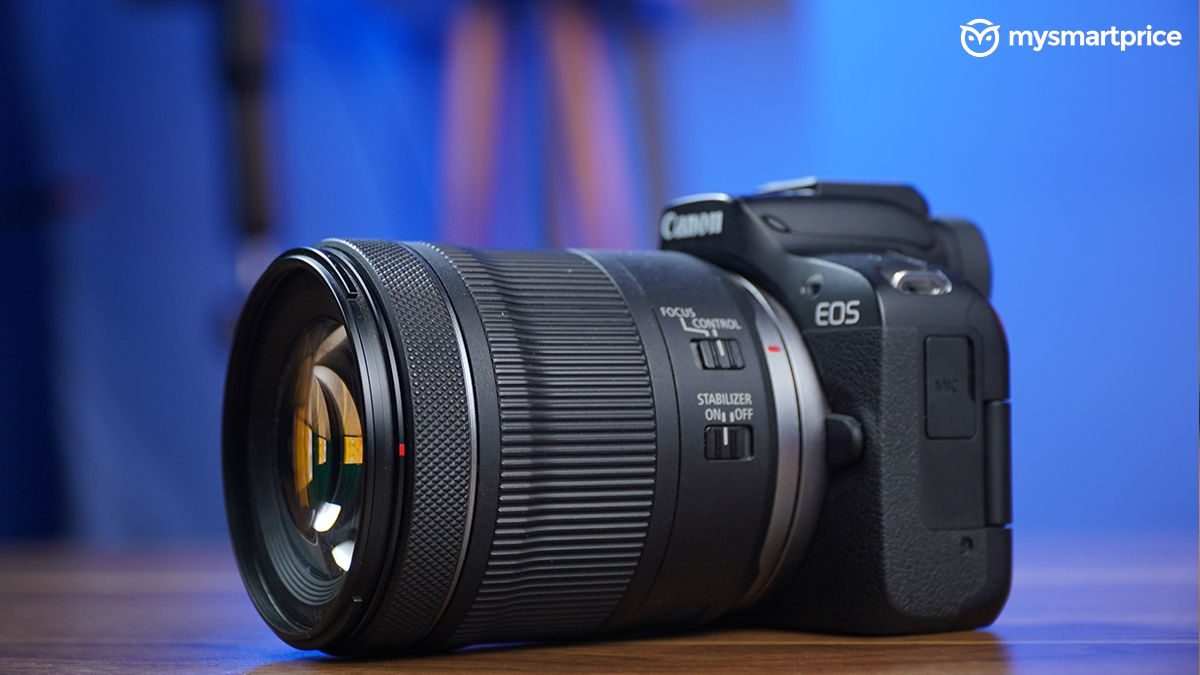
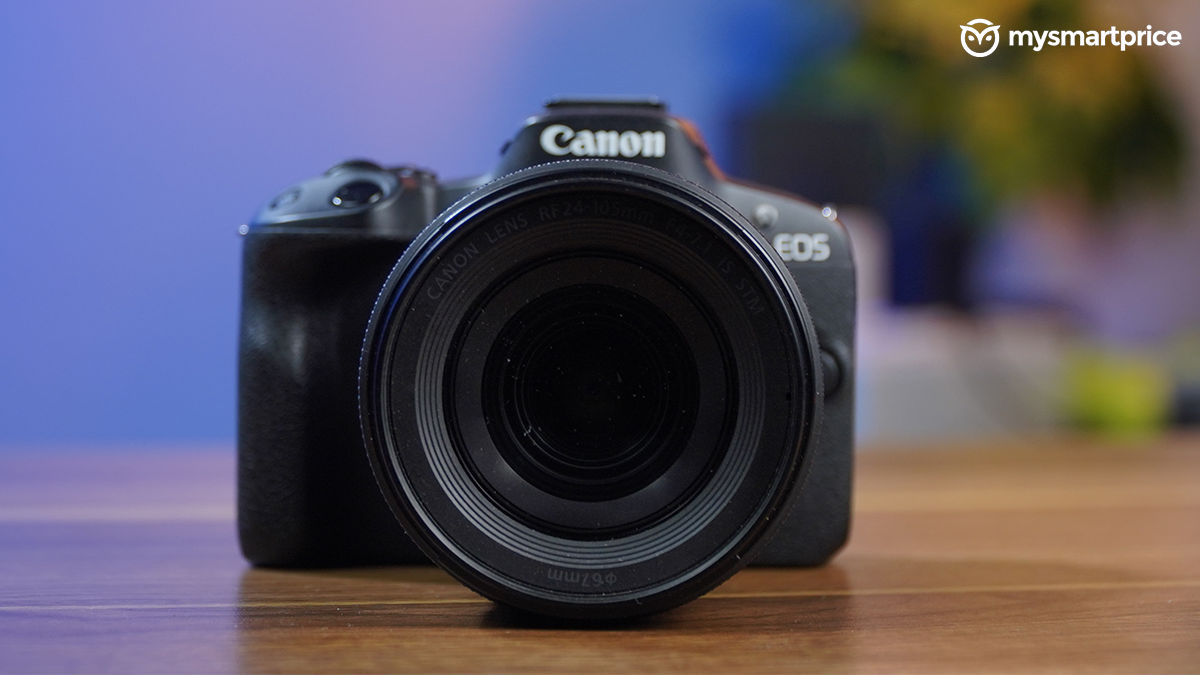
The R50 is not a flashy or standout camera in terms of design — in fact, it follows the same old traditional approach that most of Canon’s other cameras offer. However, the R50 comes in a White and Black colourway — giving more options to people who want to try something new.
Canon EOS R50 Review: Controls and Connectivity
The controls on the R50 are easy to reach and have good tactile feedback—except for the video recording button, which feels like pushing down on a very soft couch. The camera has a single dial for adjusting the shutter speed or aperture using the display, while a dedicated ISO button sits on the topmost right. My problem is that aperture, ISO, and shutter speed are the three pillars of any photo/video. To have to choose between these during a heated content creation session meant that this process was turned into a two-step process. A secondary dial would have been highly helpful.

That said, all of these settings can be tweaked using the touch-enabled display, which most smartphone users prefer before they get the hang of things.
The rest of the buttons are well-placed and can be reached easily., especially the playback button, which is placed right where your thumb rests — something even the Lumix G85K offered. However, I found the d-pad buttons very sensitive, causing my palm to enable the timers quite a few times.
| Display size | 3-inch |
| LCD monitor resolution | 1.62 million dots |
| Articulating screen | Yes |
| Touchscreen | Yes |
| Compatible Cards | SD Card, SDHC, SDXC |
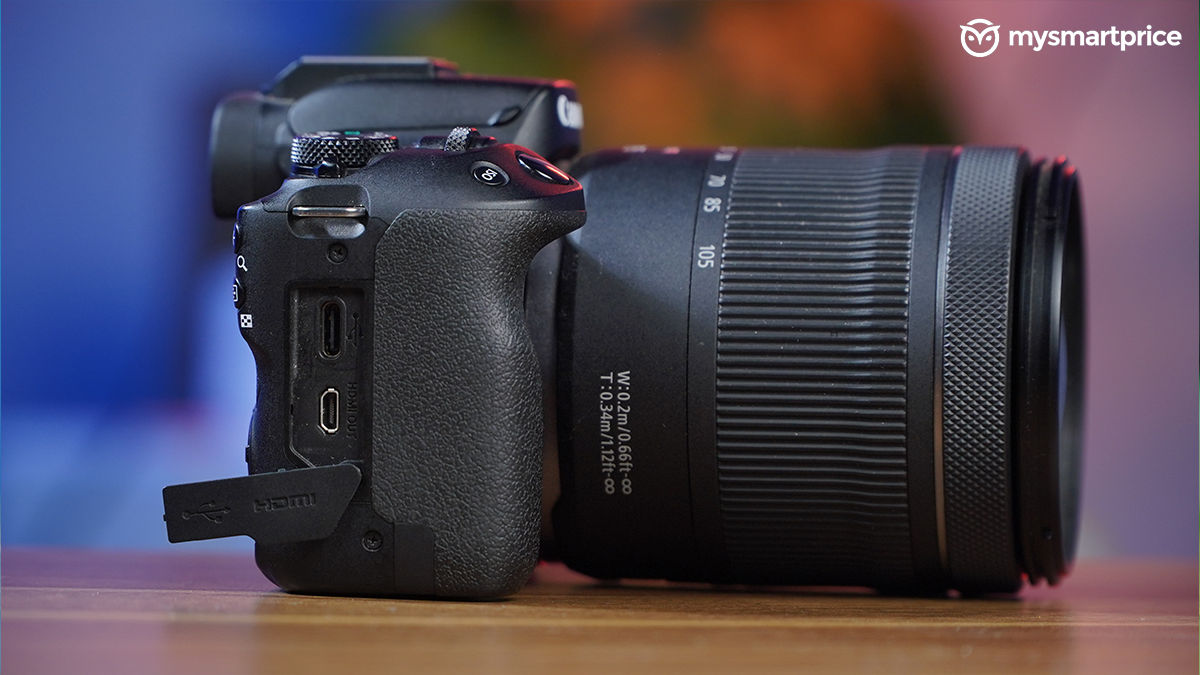
| Connectivity options | Right side: USB Type-C HDMI micro (Type D)Left side: External microphone in Bottom side: Battery and SD card slot |
The R50 has a fair set of connectivity options with USB-C on the right side that can be used for data transfer and for charging the camera. However, it lacks a headphone port to monitor the audio during a shoot. The Canon Camera Connect app also works flawlessly, allowing you to send a photo directly to a smartphone.
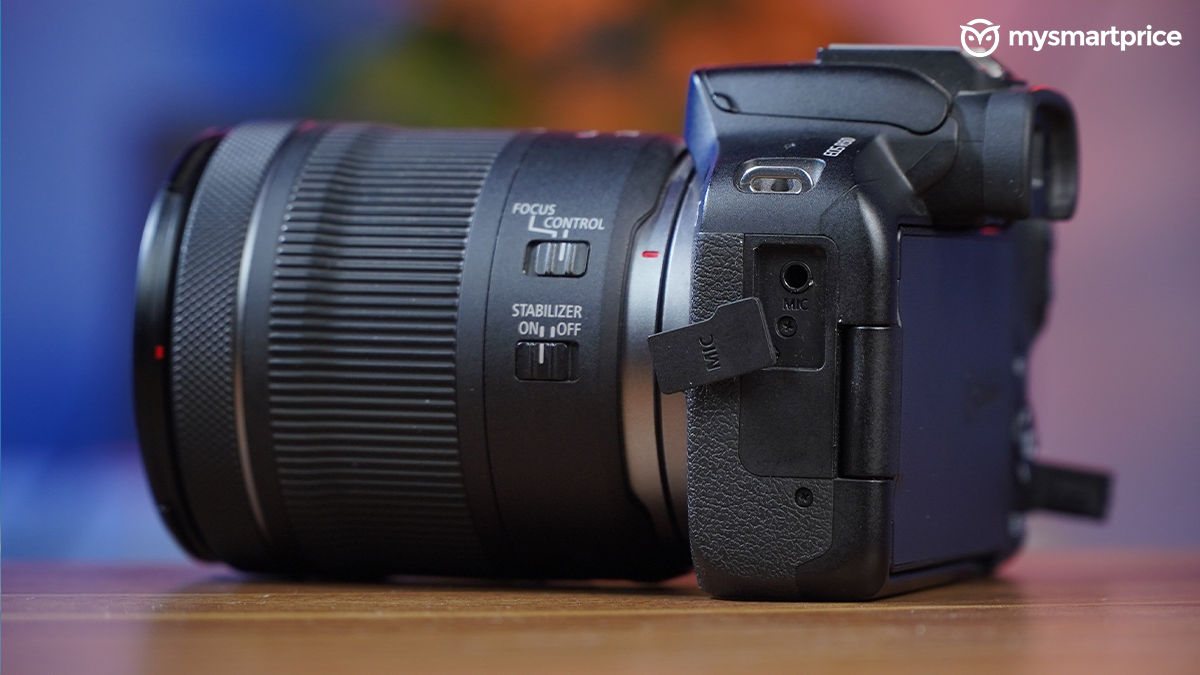
This makes file transfers a very menial task. The R50 also has a dioptric adjustment slider tucked under the EVF (electronic viewfinder). For the uninitiated, it’s a slider that can help you correct your poor vision so you can shoot without needing prescription glasses.

The R50 comes with a 3-inch articulating touchscreen LCD with a resolution of 1.62 million dots. The articulating screen makes taking photos and videos at awkward angles easy. The display is bright enough for outdoor shoots, but you might need to use the viewfinder under direct sunlight. The touch is very responsive and works well; however, the display easily gathers smudges, so you might need to keep a microfiber cloth handy.
Canon EOS R50 Review: Photography and Videography Performance
The 24.2 megapixel APS-C sensor on the R50 captures some excellent stills. I spent most of my time with an RF 24-105mm f/4-7.1 lens, but the kit 18-45mm lens also takes splendid shots that are extremely detailed and sharp.
In terms of image quality, the R50 captures slightly crispier photos than the Lumix G85K and this is evident even after cropping into the image. Capturing everyday sights and events is not an issue for the camera.
| Effective Pixels (Megapixels) | 24.2-megapixels |
| Sensor size | APS-C CMOS |
| Autofocus | Dual Pixel CMOS Auto Focus II |
| Eye Detection AF | Human and Animal eye detection (All AF mode) |
| Video capabilities | 1080p 60fps,1080p 120fps (slow-mo), 4K 30fps |
Photo Quality and Features
As a reviewer, I captured several product shots of smartphones and other gadgets, and the R50 was exceptionally reliable in these situations. Photos clicked in low-light conditions were more than useful, but you can find a fair amount of noise upon zooming in.
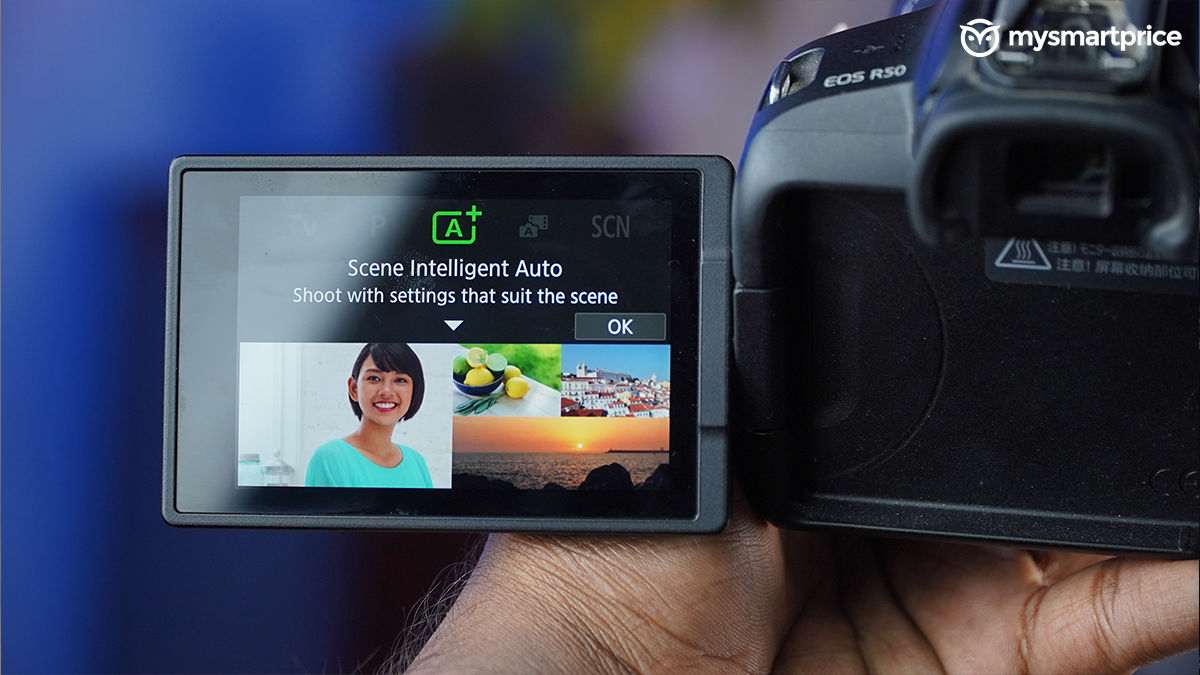
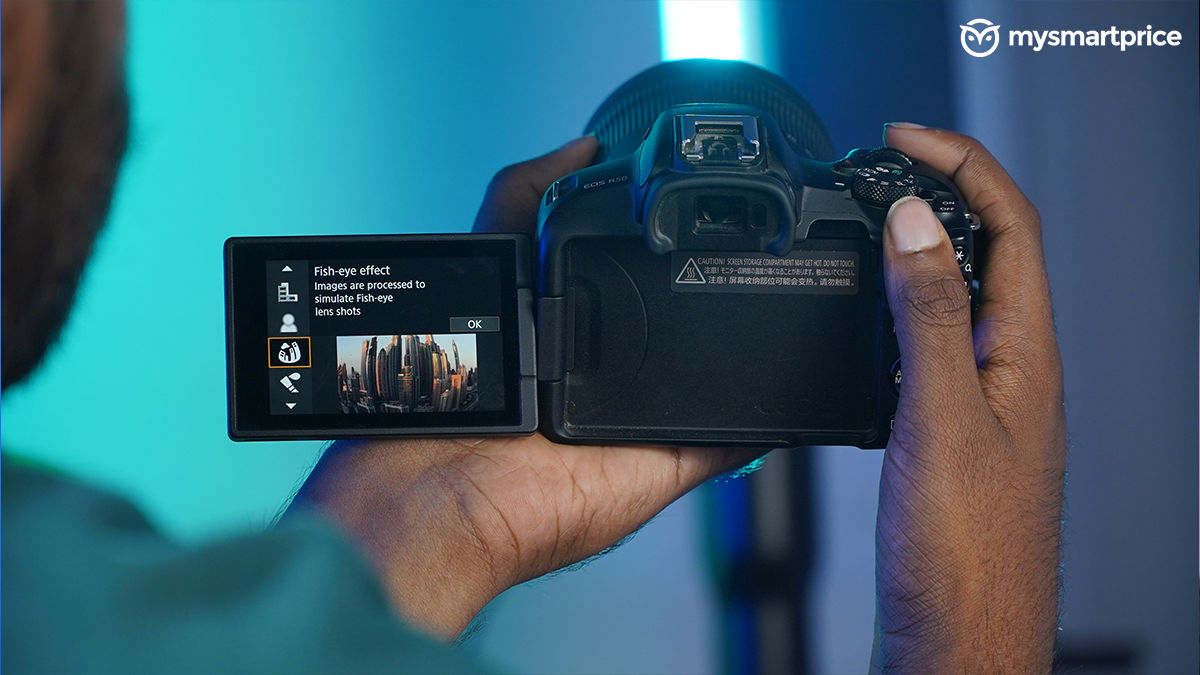
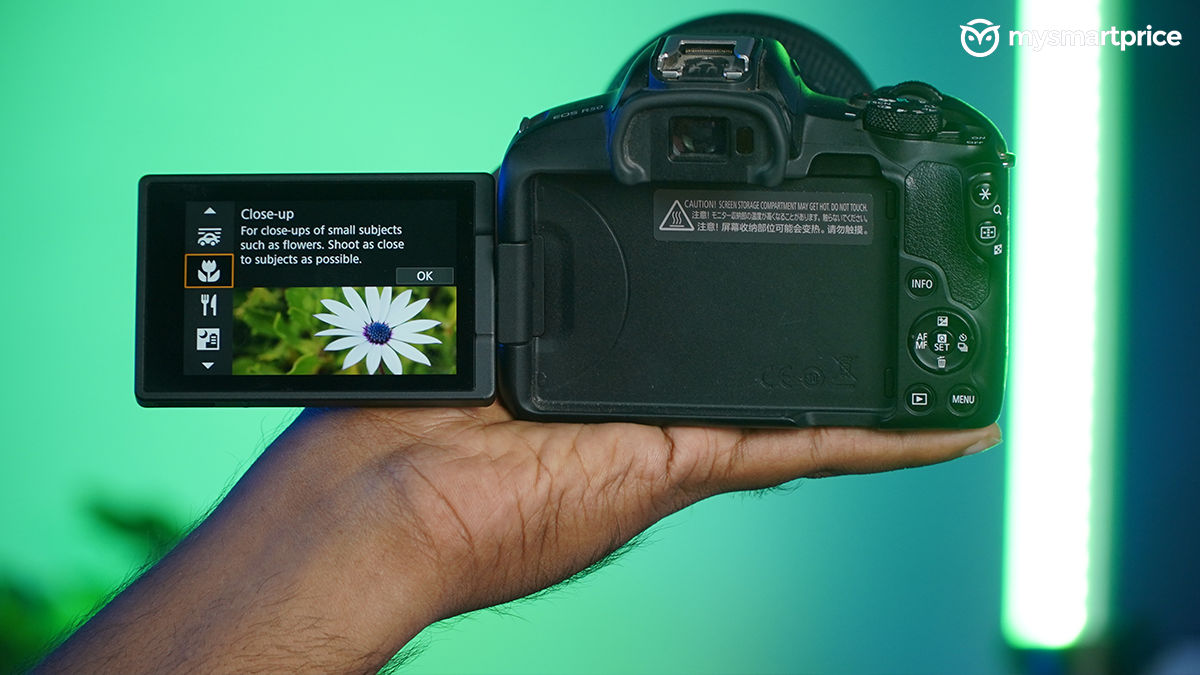
I usually prefer tweaking the colours in the post, but R50 captures a very natural colour palette that hardly ever needs rigorous editing. It also manages challenging dynamic range situations well by neatly balancing the highlights and shadows. It’s not always exceptional; there can be moments where the highlights on some subjects are blown away, but these are minor gripes that can be edited later on.







The R50 also offers many different colour presets to help you achieve a more vibrant and vivid approach to the image. While these are all good, the Creative Assist mode on the R50 was my showstopper. This will be highly appreciated by beginners. It captures processed photos that have been automatically adjusted per the scenery. You also get a Creative Bracketing mode, which takes three different photos of the same scenario, with the outcome producing different brightness, colour tones, etc.

The R50’s auto-focus capabilities are excellent at this price point. It features a Dual Pixel CMOS Auto Focus II system, which is also found in pricier cameras such as the Canon EOS R5. Subject detection for humans and animals is available here, which is extremely accurate. The eye detection also detects the faces of people on the telly.
It’s fast, reliable, and silent, something you would find in modern camera-focused smartphones. The eye detection remembers the subject even if it moves out of the frame for a moment and comes back in. This works seamlessly even if two people are in the frame during a vlog. The ISO performance was also quite good. The images below are taken at levels that range from 100 to 51200, which is the extended version.
Video Quality
The R50 excels in videos as well. It’s a reliable camera for vlogging or shooting YouTube videos, which is what I did. The camera supports up to 1080p (FHD) at 60fps in the normal mode. You can enable the “High Frame Rate” option to shoot 1080p videos at 120fps. This particular setting can be used if you want to shoot cinematic B-rolls. The R50 can also shoot videos at 4K, but you will be limited to 30fps.
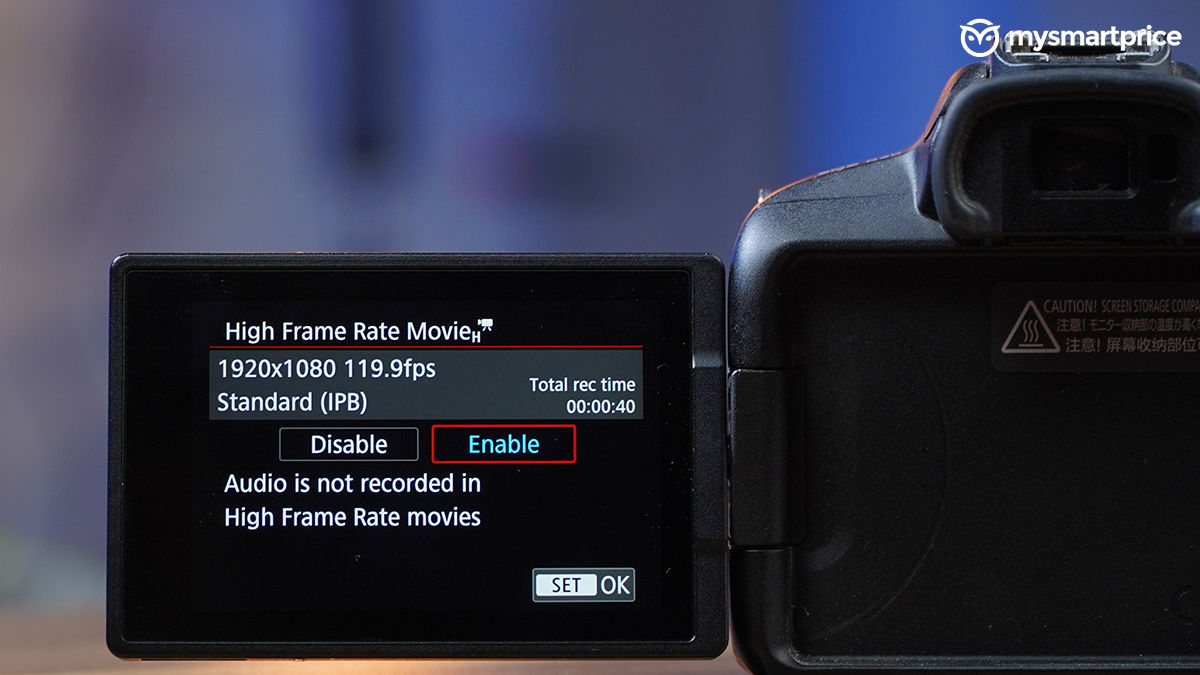
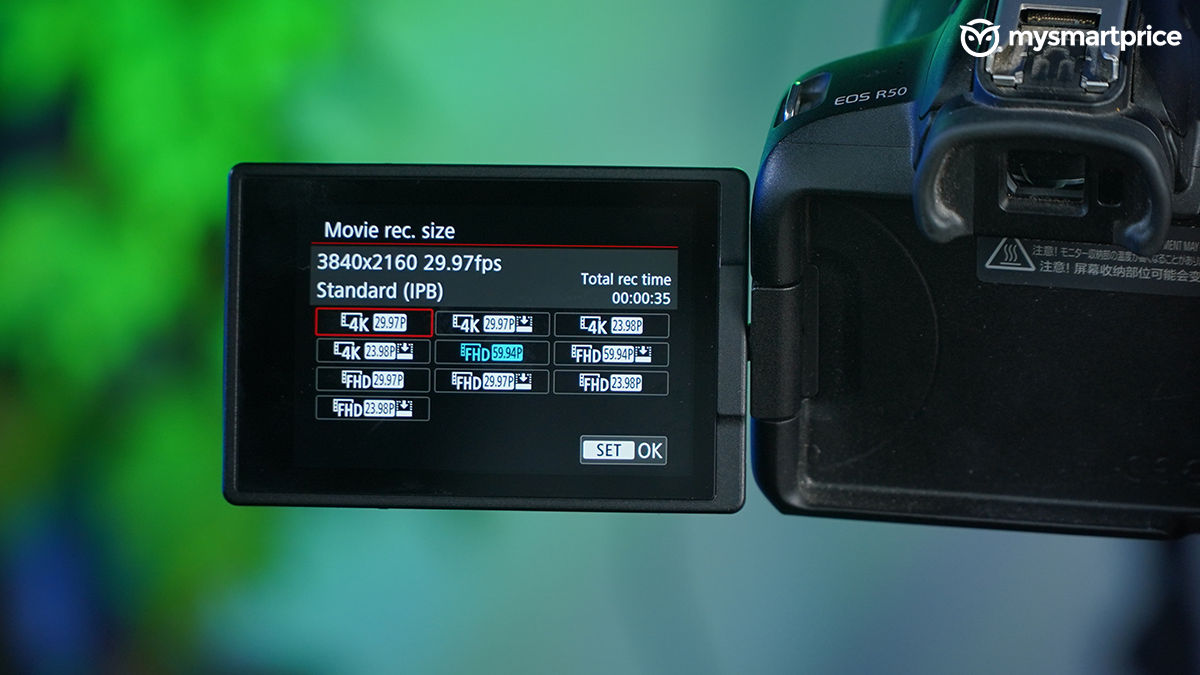
The two biggest upsides, though, are that it does not crop into the video, which sets it apart from many other cameras, and that it is supersampled from 6K, which gives it more details. It does not have any kind of in-body image stabilisation, so expect minor jitters when shooting videos that include heavy movements. Besides that, I also noticed the ‘temperature sign’ on the display after an extended 4K video recording session. You also get multiple different modes, such as “Movie for close-up demos,” which is essentially curated for product reviews and demos.
Canon EOS R50 Review: Battery Life and Charging Speed
The R50 has a compact 1040mAh battery inside. The battery is rated for 310 shots using the EVF or 440 shots using the display. While the battery life isn’t extraordinary, it’s reliable if you take photos or shoot videos at 1080p. The camera lasted about an hour and 53 minutes while shooting a video at 1080p 60fps, which is good.
If you plan to shoot multiple videos, it’s highly advised to invest in a secondary battery so that you can swap them out when needed. The included charger takes about an hour and 45 minutes to fully charge. You can also charge the camera using the USB-C port.
Canon EOS R50 Review: Verdict
It’s easy to understand whether you should consider the Canon EOS R50. This camera is targeted towards beginners, so if you have mastered the art of smartphone photography and want to up your game with a camera, this is a perfect choice. It’s built for beginners transitioning from a phone with the inclusion of user-friendly features and simplified controls.

The compact nature of the R50 makes it easy to carry around in your backpack, so this can be your travel companion during long trips. The Creative Assist feature is a game-changer, and the high frame rate support will be helpful in multiple scenarios. The photo quality is excellent, and the autofocus is more than reliable, not leaving an ounce of doubt. However, videographers may find the missing image stabilisation and 4K 60fps as a dealbreaker. Moreover, while the buttons are easy to understand, excluding a secondary dial is a missed opportunity.
That said, newcomers will not see most of these as problems, but if you are a professional who wants a high-end camera, you might have to look elsewhere. As for the price, it’s not really beginner-friendly, given that it starts at around Rs 69,999 —-but considering the features and ease of use it brings to the table, I would say it’s worth the investment.