AI-powered wearables are slowly moving beyond fitness tracking into something more personal. The NeoSapien Neo 1 is part of that shift. Instead of counting steps or tracking sleep, it focuses on something more ambitious, capturing conversations and turning them into summaries you can revisit later.
It's a different kind of device, and after using it for a while, it does show promise. But it also raises a few practical questions.
Battery life and charging
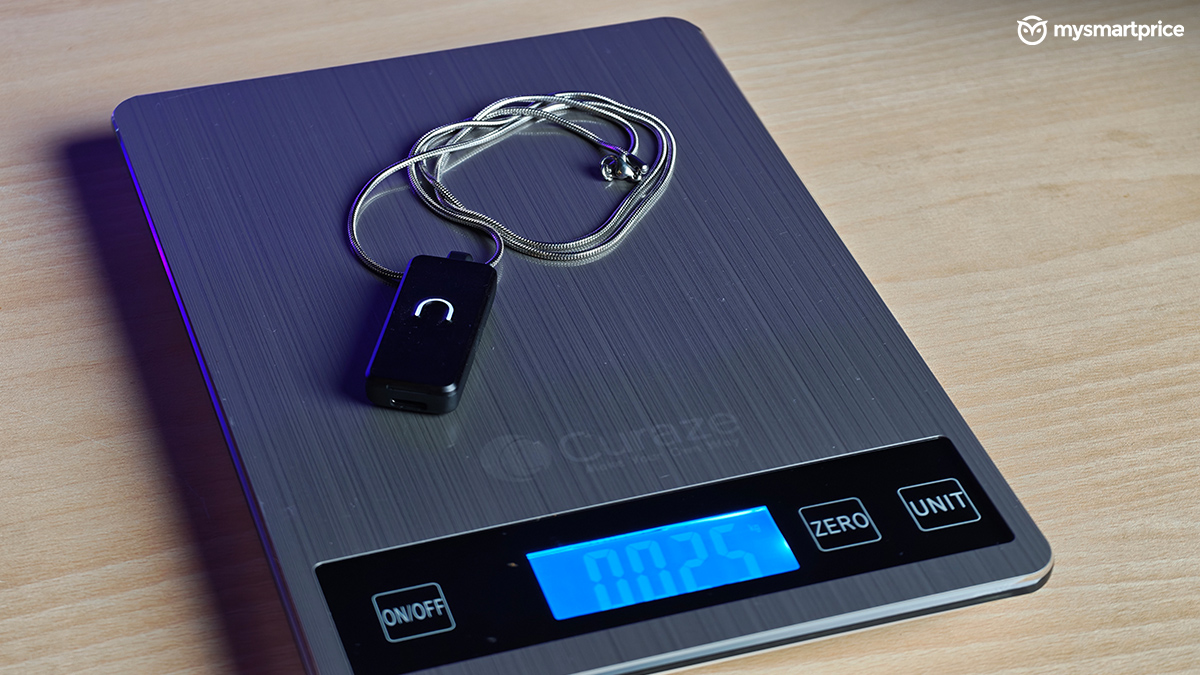
NeoSapien claims around 2–3 days of battery life, and in my usage, it lasted close to two days before needing a recharge. Despite having a decent battery life, it weighs only around 25 grams.
Charging is done via a USB-C cable included in the box, and a full charge takes roughly 2–3 hours. It's not particularly fast, but given the battery life, it's manageable for daily use.
How recording and storage actually work
The Neo 1 does not constantly record everything around you by default. Recording sessions are triggered through the companion app, after which the device begins capturing conversations, but for a summary of a particular conversation, you need to tap on the save memory button for the summarized conversation.
Once a session ends, everything is stored inside the NeoSapien App. Each recording is automatically organized by date and time, along with a generated summary.
It's worth noting that the device does not provide full, detailed transcripts of conversations. Instead, it focuses on generating summaries and key points based on what was discussed.
This approach keeps things concise, but it also means you're relying more on AI interpretation rather than having a complete word-for-word record.
Is NeoSapien storing your data?
A bigger concern with a device like this is how NeoSapien handles user data. According to the brand, "the data is being processed on the cloud and is stored on the cloud AND on your phone. Additionally, the raw audio is never preserved once the transcript is extracted. All data is encrypted at input and egress, which means that your data is safe and is only accessible to you. To further emphasize this, NeoSapien does not access your data nor use it for training any internal models. As a result, the day the customer decides to wipe out all their data, it is gone for good, with no trace or memory of it remaining with NeoSapien. We undergo regular security and penetration testing via third-party agencies to ensure security and compliance. We are also in the process of securing SOC 2 certification."
On paper, that does address many of the obvious concerns. But at the same time, the fact that conversations are still being processed on the cloud may not sit comfortably with everyone.
Finding older conversations
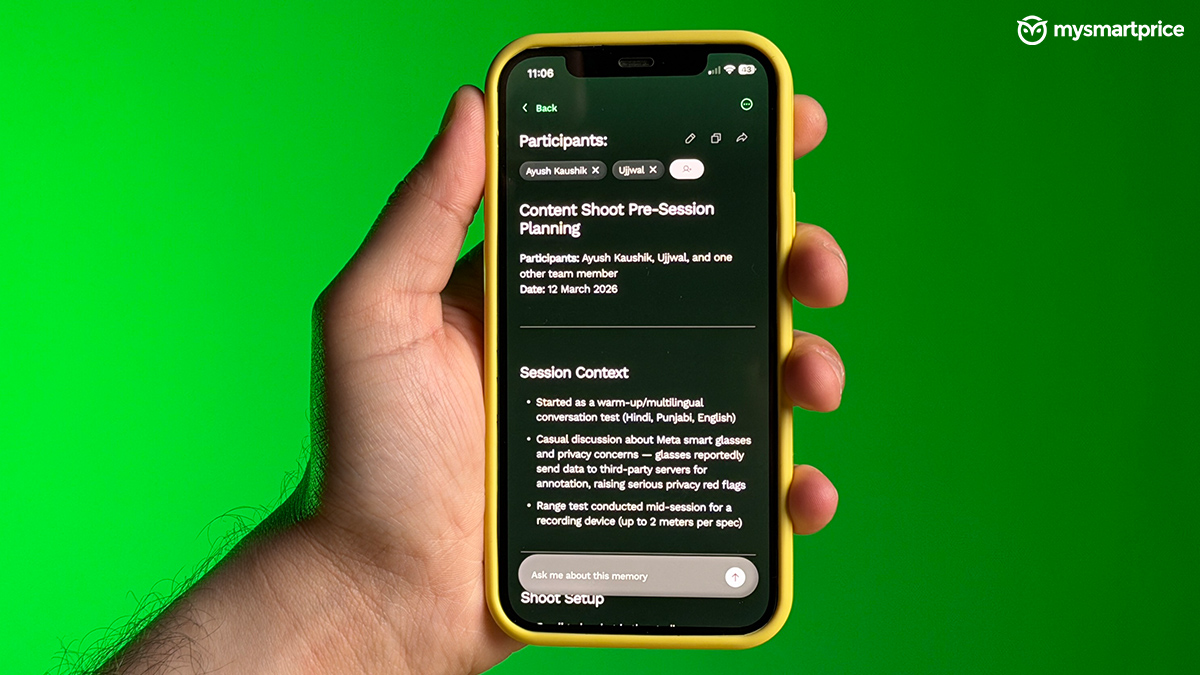
Retrieving older recordings is fairly straightforward. You can scroll through entries by date or search for specific keywords related to a conversation.
Since the system is built around summaries rather than full transcripts, finding information often depends on how well the AI has captured the key points. In most cases, it does a good job of highlighting the main ideas, but it may not always surface very specific details or exact phrasing.
For example, if you recorded something a few days ago around a specific time, you can navigate to that entry and quickly go through the summary instead of replaying the entire recording.
AI capabilities in real use
The core feature here is real-time conversation capture and summarization.
In practice, it works well, but not perfectly. Clear, one-on-one conversations in quieter environments were summarized most of the time accurately. However, in noisier settings or when multiple people were speaking at once, the summaries occasionally missed context or skipped smaller details.
When I say it worked around 95% of the time, that refers to how reliably it captured the overall context and key points of a conversation, not word-for-word accuracy.
It also attempts to recognize the user's voice and priorities it, which helps reduce background noise, especially in public settings.
Language support
NeoSapien claims support for over 100 languages, including several Indian languages.
In testing, it performed reliably with English and Hindi conversations. However, when switching rapidly between languages or using mixed-language sentences, the summaries sometimes missed parts of the conversation.
So while it works well for standard usage, it's not entirely seamless in multilingual scenarios yet.
The companion app
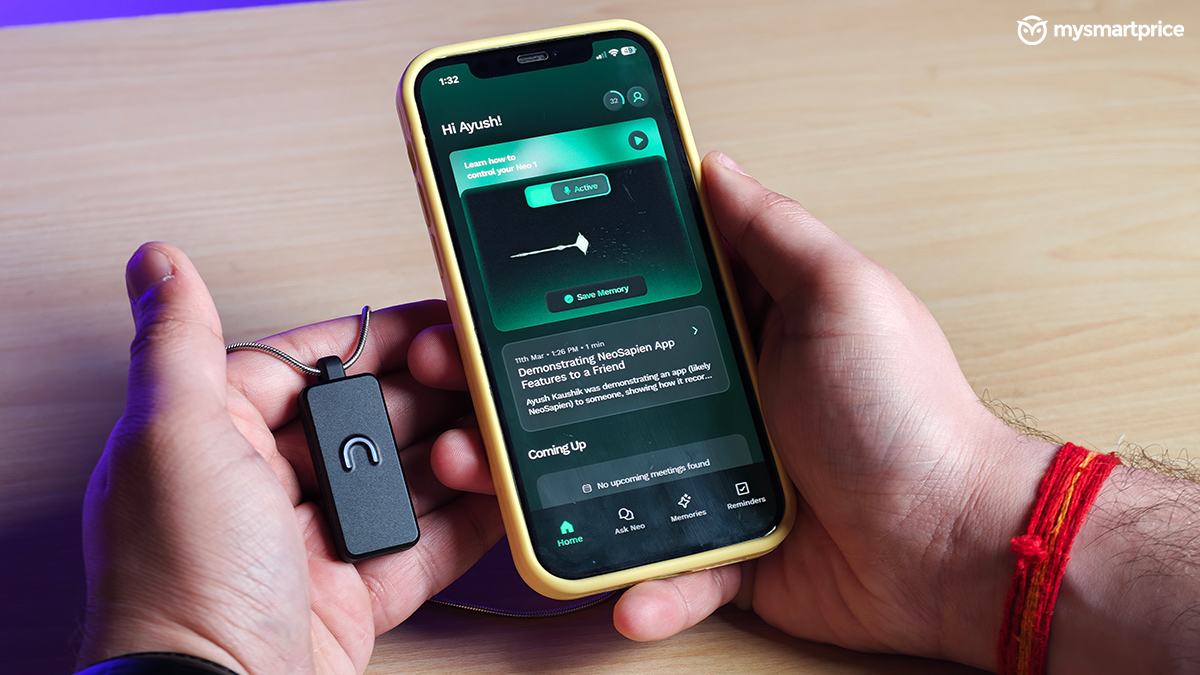
A big part of the experience comes from the NeoSapien app, and this is where most of the value lies.
The app lets you review summaries, check key points, and go through extracted insights from conversations. Instead of dealing with long recordings, you get a quick overview of what was discussed.
Over time, this creates a structured, searchable record of your conversations, although it leans more toward high-level recall rather than detailed documentation.
Price and alternatives
At around ₹11,999, the Neo 1 sits in a slightly tricky position.
Most smartphones today already offer voice recording with full transcription. In comparison, the Neo 1 takes a different approach by focusing on summaries instead of complete transcripts.
That makes it faster to skim through conversations, but less useful if you need exact wording or detailed records.
Verdict: Interesting Take on Wearable AI
The NeoSapien Neo 1 is an interesting take on what AI wearables can be. It's not trying to replace your phone, but to act as a memory layer for your daily conversations.
It works well in the right conditions and can be genuinely useful for quickly recalling discussions. At the same time, the lack of full transcription and occasional inaccuracies mean it's not ideal for situations where precision matters.
Right now, it feels like a product with clear potential, but one that still needs refinement to become truly reliable for everyday use.