AMD’s Strix Halo platform has mostly appeared in experimental devices so far, often prioritising raw silicon capability over practical laptop design. The Asus TUF Gaming A14 changes that equation. Powered by the Ryzen AI Max+ 392 with a Radeon 8060S integrated GPU and a 50 TOPS NPU, the laptop attempts to bring near-discrete GPU performance into a compact 14-inch gaming machine.
Asus TUF Gaming A14
Rs. 1,79,990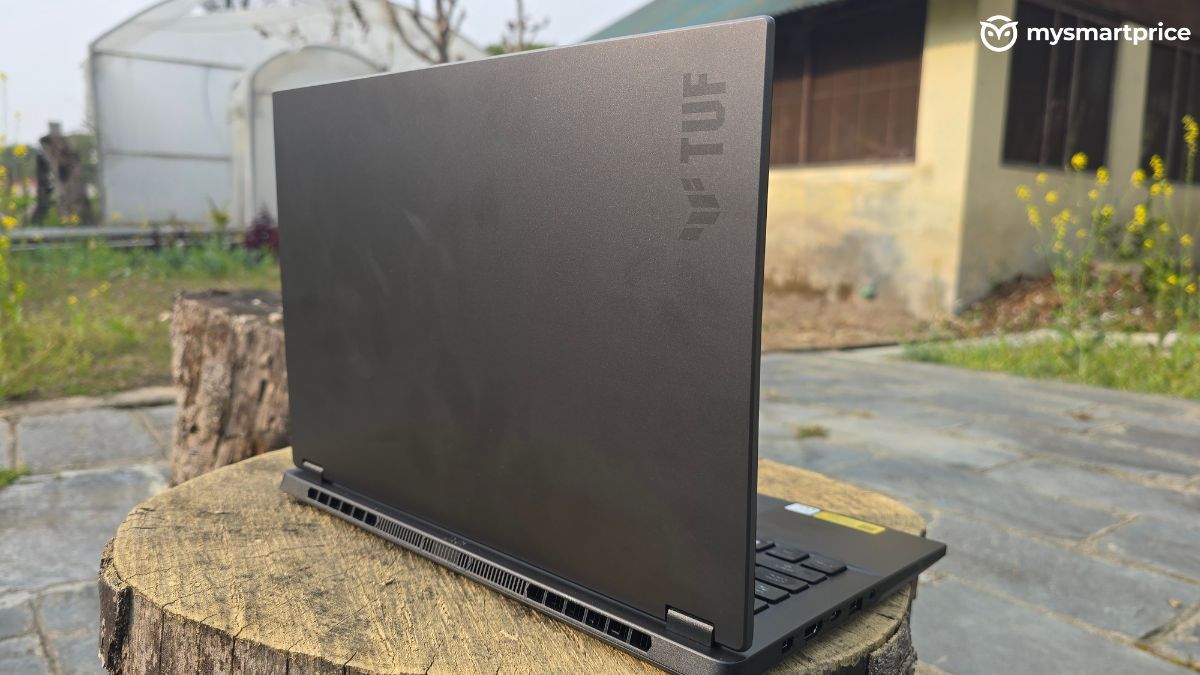
What Is Good?
- Strong Ryzen AI Max+ 392 CPU performance that rivals high-end Intel Core Ultra HX chips in sustained workloads.
- Radeon 8060S iGPU delivers near RTX 4060–class rasterised gaming performance at High settings without discrete GPU power draw.
- Excellent thermals for a Strix Halo system, with far lower sustained CPU temperatures than previous AI Max implementations.
- Lightweight 14-inch chassis at 1.48 kg offers a rare balance of portability, gaming capability, and efficiency.
- A shared unified memory architecture enables more VRAM allocation, unmatched by dedicated laptop GPUs.
What Is Bad?
- Display is limited to 100% sRGB and ~400 nits brightness, which feels underwhelming at this price point.
- Speaker quality is poor, with poor bass response and a narrow soundstage, hurting gaming and media immersion.
- The integrated GPU still trails the RTX 4060 in heavier titles and ray tracing workloads.
Priced at ₹1,79,990 for the 32 GB RAM and 1 TB configuration, the A14 positions itself as one of the more accessible ways to experience AMD’s latest high-performance integrated graphics platform. After spending some time with the laptop, here is how it performs in real-world use.
Asus TUF Gaming A14 Review: Specifications
• Processor: AMD Ryzen AI Max+ 392 (12 Zen 5 cores)
• Graphics: Radeon 8060S integrated GPU
• Neural engine: 50 TOPS XDNA 2 NPU
• Memory: 32 GB LPDDR5X unified RAM
• Storage: 1 TB PCIe 4.0 SSD (expandable via a second M.2 2280 slot)
• Display: 14-inch 2.5K (2560 × 1600), 165 Hz refresh rate, 3 ms response time, 100% sRGB, AMD FreeSync Premium
• Battery: 73 Wh with fast charging and USB-C charging support
• I/O: USB4, microSD card reader, and other standard ports
• Build and durability: MIL-STD-810H certified, 1.48 kg weight, 1.69 cm thickness
• Software: Windows 11 Home, Microsoft Office Home 2024, Microsoft 365 Basic (1 year, 100 GB cloud storage)
Asus TUF Gaming A14 Review: Design, Build Quality, Keyboard and Connectivity
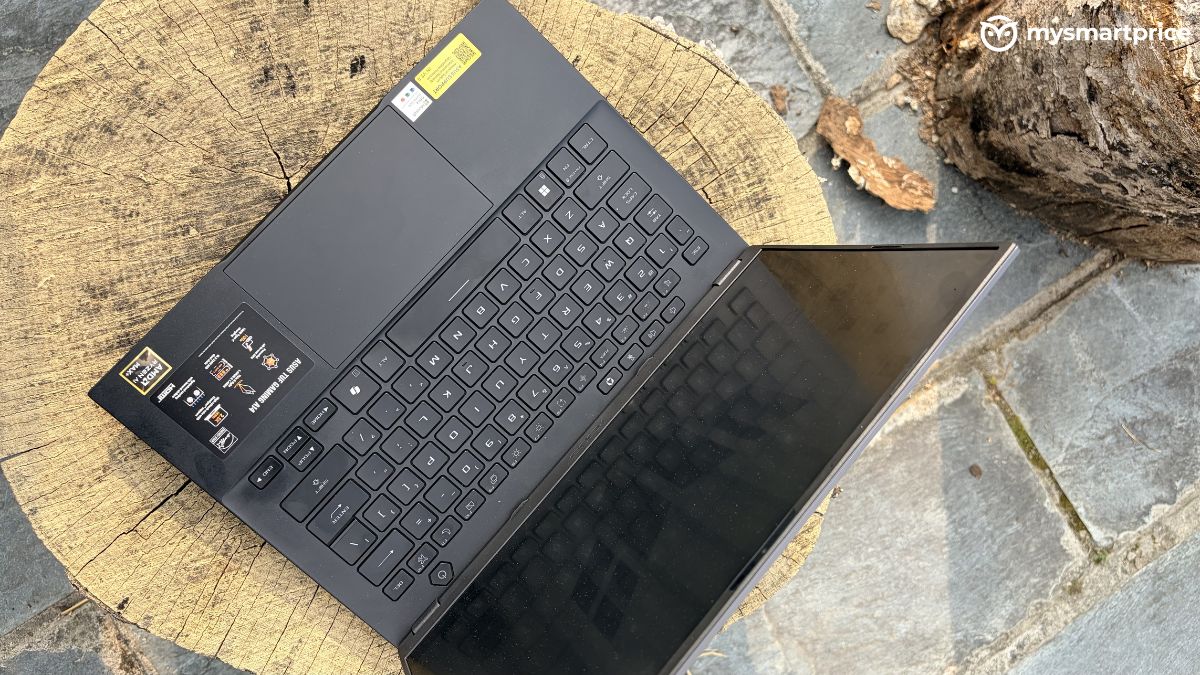
The Asus TUF Gaming A14 attempts to bring AMD’s Strix Halo platform into a more practical laptop form factor. Unlike the earlier Ryzen AI Max implementations that appeared mostly in niche devices like the ROG Flow Z13, the A14 packages the newer Ryzen AI Max+ 392 inside a compact 14-inch gaming chassis.
At 1.48 kg, the laptop remains quite portable for a gaming-oriented device. For reference, the 14-inch MacBook Pro weighs roughly 1.55 kg. The A14 uses a metal lid paired with a polycarbonate base, which is typical for laptops in the TUF series.
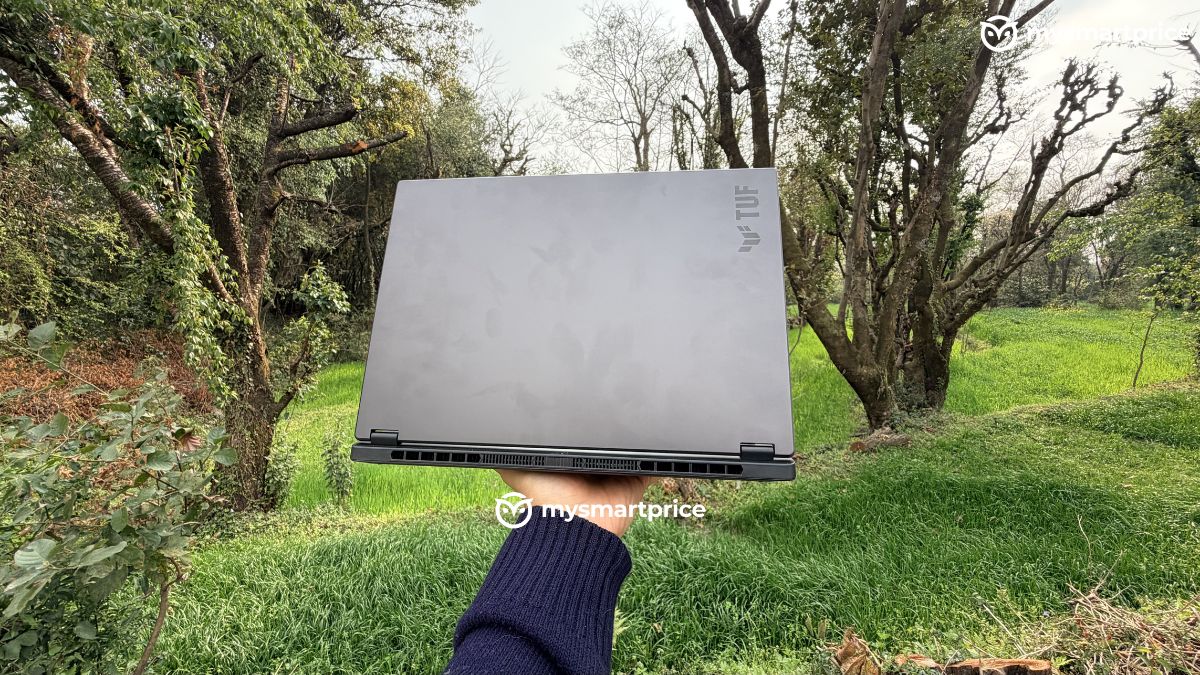
The base shows some flex under pressure, but it is not excessive given the smaller chassis size. The hinge is well tuned and allows the lid to be opened with one hand, though resistance increases slightly once the display passes the 90-degree mark.
The keyboard includes dedicated shortcuts for volume and mute along with an Armoury Crate key. I would have preferred separate keys for brightness and performance profiles, but overall the layout remains functional for daily use.
The mechanical touchpad is large for a 14-inch device and feels properly aligned without uneven travel. However, haptic touchpads remain one of the areas where Windows laptops still lag behind devices like Apple’s MacBook lineup.
Connectivity is well rounded for a compact gaming laptop. The A14 includes a USB4 Type-C port supporting charging and display output, three USB-A 3.2 Gen 1 ports, an HDMI 2.1 output, a microSD card reader, and a 3.5 mm combo audio jack. Through USB4, the laptop can also support an external GPU, although performance will still be lower than using a native high-bandwidth solution like Thunderbolt 5.
Asus TUF Gaming A14 Review: Display
The Asus TUF Gaming A14 features a 14-inch 16:10 display with a 2560 × 1600 resolution and a 165 Hz refresh rate. This combination has increasingly become the standard configuration for modern compact gaming laptops.
In day-to-day use, the panel delivers sharp text and smooth motion thanks to its high refresh rate. Viewing angles are solid and the matte finish helps control reflections indoors.
Colour coverage is limited to 100% sRGB. That is sufficient for gaming, streaming content, and general productivity work, but users working with wider colour spaces may find it restrictive. Higher-end laptops such as the Zephyrus G14 offer OLED panels with wider colour gamuts and deeper contrast.
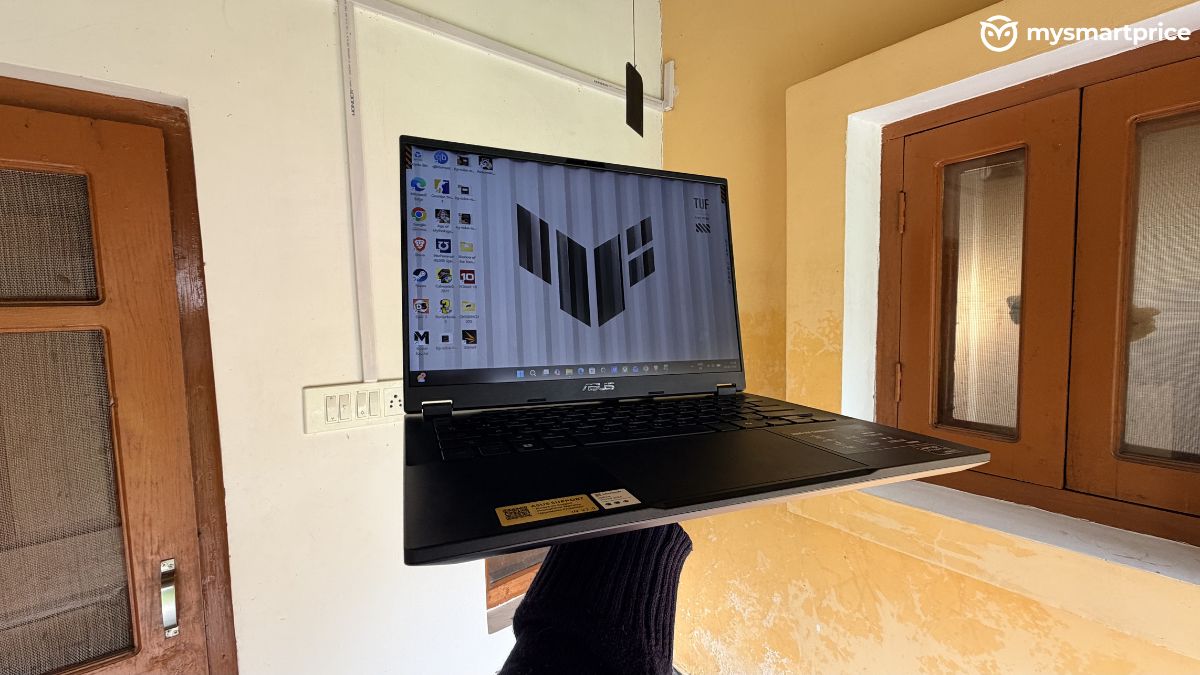
Brightness also reflects the panel’s positioning in Asus’ lineup. Indoors the display remains comfortable for long sessions, but outdoors it struggles in strong lighting conditions. With peak brightness around 400 nits, usability in direct sunlight is limited.
Overall, the display prioritises practicality rather than premium visual performance. For gaming and everyday workloads it works well, but users seeking high brightness or wide-gamut colour reproduction may want to consider higher-tier alternatives.
Asus TUF Gaming A14 Review: Audio Quality
The TUF Gaming A14 uses a dual down-firing speaker setup, and this is one of the weaker areas of the laptop.
In typical use the speakers sound thin and lack both bass presence and high-frequency clarity. Voices remain understandable, but music and game audio feel flat with limited depth.
Low frequencies roll off early, leaving almost no noticeable bass body. Increasing the volume does not significantly improve the experience, and the soundstage remains narrow.
Compared with laptops like the Zephyrus G14, which offer noticeably better tuning and bass response, the difference is immediately obvious. Apple’s 14-inch MacBook Pro remains in an entirely different class with deeper bass extension and a more balanced sound signature.
The speakers are usable for video calls or casual playback, but anyone interested in gaming immersion or music listening will likely prefer headphones or external speakers.
Asus TUF Gaming A14 Review: Webcam Quality
The laptop includes a 1080p webcam and performs better than many gaming laptops in this area.
In standard indoor lighting the camera maintains stable exposure and captures faces without overly aggressive contrast adjustments. Even with strong backlighting, it manages to preserve facial details rather than blowing out highlights.
Image quality naturally cannot match dedicated external cameras, but noise levels remain controlled and colours appear consistent. For video calls, meetings, and occasional streaming, the webcam is reliable and performs as expected.
Asus TUF Gaming A14 Review: Gaming, Performance, Thermals, And Battery Life
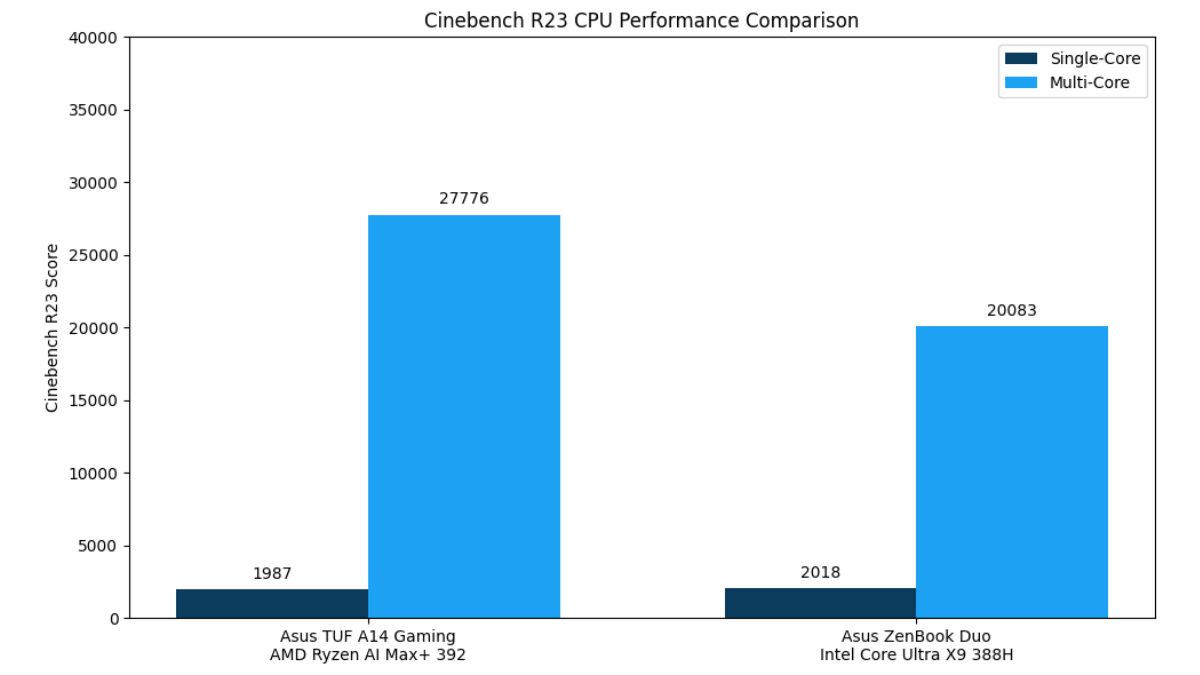
The AMD Ryzen AI Max+ 392 delivers solid CPU performance for a 12-core chip. In Cinebench R23, the processor scores around 1,987 in single-core and 27,776 in multi-core.
For comparison, the Intel Panther Lake chip we tested recently scored roughly 2,018 in single-core and 20,083 in multi-core. While single-core performance is similar, Intel achieves this at a lower package power of roughly 55 W, whereas the AMD chip averages closer to 85 W.
GPU performance is where AMD gains a clear advantage. In 3DMark Time Spy, the Radeon 8060S scores 10,889, compared with about 6,840 from the Intel GPU tested in the ZenBook Duo.
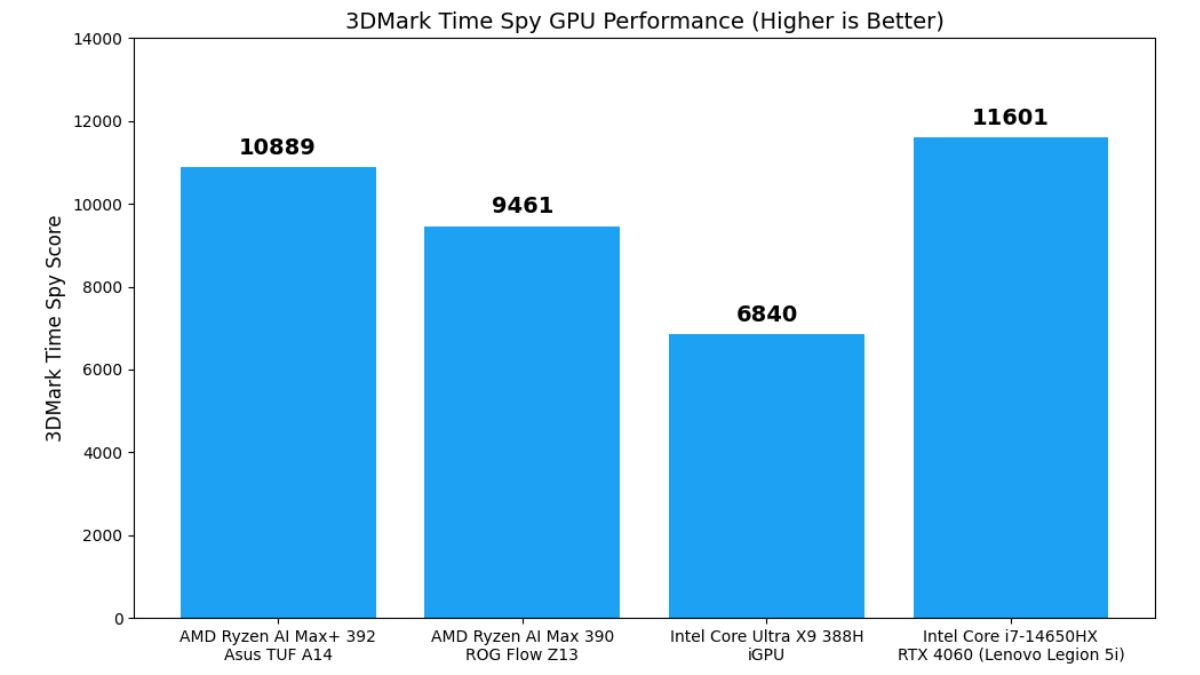
This puts the integrated GPU surprisingly close to the Nvidia GeForce RTX 4060 laptop GPU, which typically scores around 11,601 in the same benchmark. It is also a step forward from last year’s Ryzen AI Max 390, which scored 9,461.
Ray tracing performance also improves. The Ryzen AI Max+ 392 records 5,654 in 3DMark Port Royal, compared with 3,435 from the Intel Core Ultra X9 388H and 3,428 from the previous generation AI Max 390. An RTX 4060 laptop GPU still leads here with roughly 6,210.
Thermals are another noticeable improvement. During testing, the CPU averaged around 55°C, significantly lower than the 80°C averages observed on the earlier AI Max 390 platform. The larger laptop chassis and stronger cooling system appear to play a major role here.
Gaming performance also reflects the generational uplift.
In Metro Exodus (1200p High), the laptop averages about 95 FPS, compared with the mid-80 FPS range previously seen on the AI Max 390 and around 101 FPS on an RTX 4060 laptop.
In Dirt 5 (1200p High), the system reaches roughly 122 FPS, close to the 126 FPS recorded by the RTX 4060 in the Legion 5i.
In Shadow of the Tomb Raider (1200p High), the A14 delivers about 129 FPS, while the RTX 4060 system reaches approximately 153 FPS.
One advantage of AMD’s unified memory architecture is the ability to allocate up to 16 GB of VRAM from system memory, something dedicated GPUs typically cannot match.
Despite this progress, discrete GPUs still hold a clear advantage in heavier games and ray tracing workloads.
Battery life is respectable for a gaming laptop. While gaming, the system lasts roughly 1 hour and 20 minutes in high-performance mode. During typical productivity use such as web browsing, document editing, and video playback, the laptop can deliver around 5–6 hours of screen-on time.
This efficiency partly comes from the integrated design, where the CPU and GPU together draw a sustained maximum of around 85 W, compared with around 150 W on many RTX 4060 laptops paired with Intel HX-series processors.
Asus TUF Gaming A14 Review: Verdict
The AMD Ryzen AI Max+ 392 represents a clear step forward for the Strix Halo platform, and the Asus TUF Gaming A14 finally places the chip inside a laptop design capable of fully utilising it. The larger chassis and improved cooling allow the processor to maintain lower temperatures and more stable sustained performance than earlier implementations.
CPU performance is strong, delivering competitive single-core and multi-core results that rival several high-performance Intel chips. On the graphics side, the Radeon 8060S integrated GPU comes surprisingly close to RTX 4060-class rasterisation performance, especially in traditional gaming workloads.
The shared unified memory architecture also allows much larger VRAM allocations than typical dedicated laptop GPUs. Combined with the A14’s portable 14-inch form factor and relatively efficient power draw, the result is a laptop that balances performance and mobility better than most gaming machines in this category.
While the display and speakers reveal some cost-cutting, the Asus TUF Gaming A14 still presents one of the most compelling demonstrations yet of what AMD’s Strix Halo platform can achieve without relying on a discrete GPU.