As smartphone prices continue to rise, the sub-Rs 40,000 segment has seen fewer truly standout performers in recent months. The introduction of MediaTek’s new Dimensity 8500 in the POCO X8 Pro, however, offers a fresh option in this category. Positioned as a significant mid-tier upgrade, the chipset promises enhanced visual quality and smoother high-refresh-rate gaming.
This raises an important question: Does the Dimensity 8500 offer a noticeable step forward over last year’s Dimensity 8400? To understand the real-world improvements, we compared the two chipsets across a range of CPU and GPU benchmarks. Using the POCO X8 Pro and the Realme GT 7T as reference devices, we also assessed sustained performance during extended gaming sessions in BGMI and Wuthering Waves. Here is what our detailed comparison revealed.
Understanding the CPU Specs and Our Testing Process
Here is a closer look at the main differences between the Dimensity 8500 and the Dimensity 8400:
| MediaTek Dimensity 8500 | MediaTek Dimensity 8400 | |
| Process Node | 4nm (TSMC) | 4nm (TSMC) |
| CPU Configuration | 1x Cortex-A725 @ 3.4 GHz
(Prime Core) 3x Cortex-A725 @ 3.2 GHz (Performance Core) 4x Cortex-A725 @ 2.2 GHz (Efficiency Core) |
1x Cortex-A725 @ 3.25 GHz
(Prime Core) 3x Cortex-A725 @ 3.0 GHz (Performance Core) 4x Cortex-A725 @ 2.1 GHz (Efficiency Core) |
| GPU | Mali-G720 MC8 | Mali-G720 MC7 |
Both chipsets utilise an identical “all big core” architecture featuring solely Cortex-A725 cores. However, the Dimensity 8500 gains a distinct advantage through higher clock speeds. Its prime, performance, and efficiency clusters all operate at faster frequencies than the Dimensity 8400. This direct increase in raw speed gives the POCO X8 Pro a noticeable edge. As a result, demanding tasks and intensive mobile titles like Wuthering Waves feel notably more responsive.
On the graphics front, an upgraded GPU configuration provides an extra core compared to the Dimensity 8400 in the Realme GT 7T. This hardware enhancement equips the POCO device with the necessary rendering power to achieve smoother frame rates during demanding gameplay.
However, advantages don’t always match actual behaviour. To evaluate how the all-big-core architecture and improved graphics unit perform in real-world use, we conducted a series of CPU and GPU benchmarks:
- Antutu V11
- Geekbench CPU and GPU
- CPU Throttling (15 Minutes and 20 Threads)
- 3DMark
As benchmark optimisations can sometimes influence results, we included real-world gaming tests alongside synthetic benchmarks to ensure a more reliable comparison:
- BGMI
- Wuthering Waves
It’s worth noting that we ran these games for 30 minutes each on the POCO X8 Pro and the Realme GT 7T.
What the Tests Revealed
With the architecture and testing approach established, let us examine how the MediaTek Dimensity 8500 and MediaTek Dimensity 8400 perform in our evaluation:
| MediaTek Dimensity 8500 (POCO X8 Pro) | MediaTek Dimensity 8400 (Realme GT 7T) | |
| Antutu | 2083072 | 2117419 |
| Antutu CPU | 637173 | 665600 |
| Geekbench Single-Core | 1740 | 1600 |
| Geekbench Multi-Core | 6705 | 6186 |
| CPU Throttling | 83% | 92% |
The AnTuTu benchmark assesses a smartphone across various parameters, but the final overall score surprisingly sees the Realme GT 7T surpassing the POCO X8 Pro. This is a somewhat disappointing result for the newer Dimensity 8500. Although a quick look at the test outcomes shows minor wins for the POCO in user experience, the key performance scores stand out. Even when focusing solely on the CPU score, the older Dimensity 8400 surprisingly outperforms the Dimensity 8500.
However, a single benchmarking application rarely provides a complete picture of a processor’s abilities. Switching to Geekbench, the story changes to reveal the real processing improvements of the newer chipset. According to Geekbench, the higher single-core score indicates that the Dimensity 8500 can launch apps faster and deliver a more responsive user interface during scrolling. Additionally, the higher multi-core score indicates that the Dimensity 8500 SoC excels at multi-threaded tasks, such as 4K video export or multitasking.
While the Dimensity 8500 clearly surpasses the Dimensity 8400 in peak performance, the gap narrows under extended, demanding workloads. Sustained performance mainly depends on how effectively a device manages heat and maintains consistent tuning. In the CPU throttling test, the Realme GT 7T delivered marginally more stable results than the POCO X8 Pro, suggesting that early Dimensity 8500 devices may still have room for optimisation. As more smartphones adopt this chipset, its capacity to maintain peak performance over longer sessions is likely to improve further.
- GPU
| MediaTek Dimensity 8500 (POCO X8 Pro) | MediaTek Dimensity 8400 (Realme GT 7T) | |
| Antutu GPU | 653772 | 651915 |
| Geekbench GPU | 14055 | 10756 |
| 3DMark Wild Life Extreme | 4209 | 3923 |
| 3DMark Wild Life Extreme Stress Test | 69.3% | 80% |
The AnTuTu GPU benchmark assesses a smartphone’s ability to handle visually complex environments by simulating demanding console-level graphics. This comprehensive test shows that the Dimensity 8500 edges out the competition. The results indicate a slight hardware edge in rendering complex textures. Real-world performance in visually intensive smartphone titles such as Wuthering Waves and BGMI is discussed later in this analysis.
The Geekbench GPU test shifts the focus to raw performance by evaluating intensive tasks such as advanced facial recognition and complex physics calculations. In this particular assessment, the Dimensity 8500 takes a commanding lead. This wider margin suggests the POCO X8 Pro can render high-resolution videos or apply intensive photo filters much faster than the Realme GT 7T.
The 3DMark Wild Life Extreme benchmark pushes devices to their limits by rendering a demanding 4K scene to measure peak graphical output. During this short burst of activity, the Dimensity 8500 successfully maintains its advantage. It demonstrates that the chip has the raw power to support intense mobile graphics at maximum settings.
Sustained graphics performance follows a similar pattern to earlier CPU throttling results. While the Dimensity 8500 delivers higher peak performance than the Dimensity 8400, the performance gap narrows during extended workloads. In the 3DMark Wild Life Extreme Stress Test, the Dimensity 8400 maintains slightly more consistent stability over time. This suggests that sustained results can still vary depending on device-level thermal tuning. In the case of the POCO X8 Pro, the current tuning seems to prioritise stronger initial bursts, with room for further optimisation as more Dimensity 8500 devices enter the market.
- Gaming:
| MediaTek Dimensity 8500 (POCO X8 Pro) | MediaTek Dimensity 8400 (Realme GT 7T) | |
| BGMI Average Frame Rate | 96.6fps | 74.8fps |
| BGMI 5% Low Frame Rate | 58.5fps | 68.5fps |
On the POCO X8 Pro and Realme GT 7T, BGMI is set to the lowest graphics settings to push their native 120fps limit. In theory, the hardware should comfortably handle this target, but during our 30-minute session, neither device remained consistently close to it.
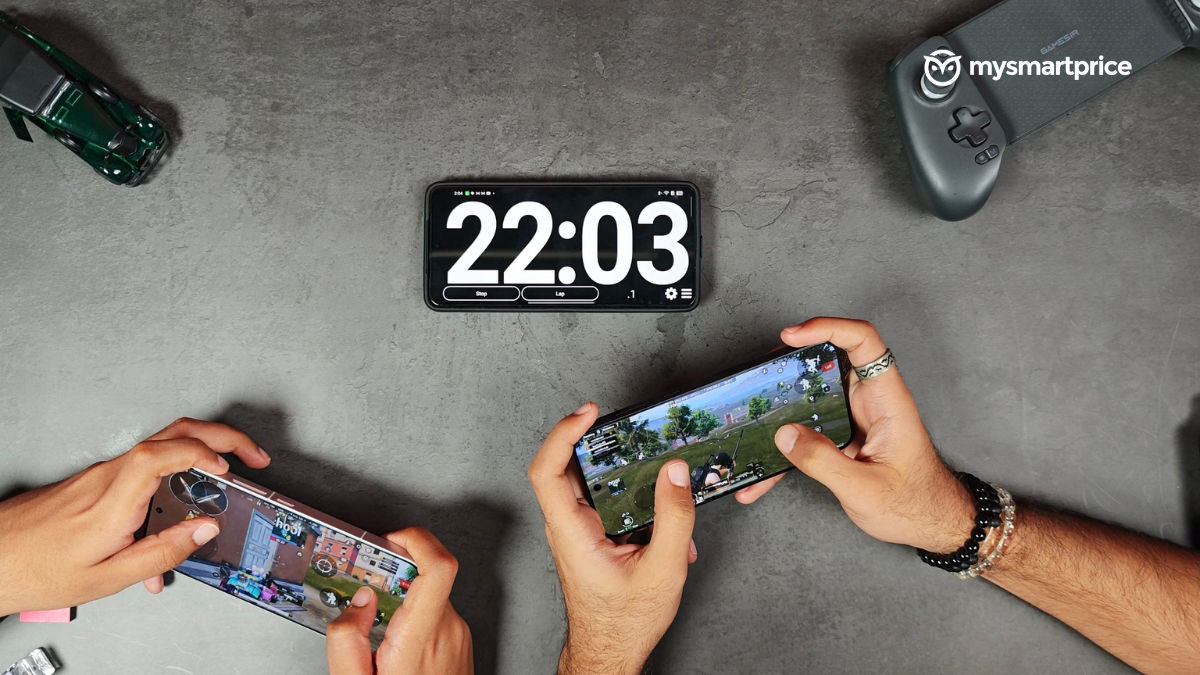
The POCO X8 Pro achieves a higher overall average frame rate, but stability remains an issue. Its 5% low figure is significantly below average, leading to occasional stutters, especially during intense gaming moments. The Realme GT 7T, on the other hand, maintains slightly more consistent frame pacing, although its overall average frame rate remains comparatively lower throughout the session.
Interestingly, this behaviour seems to be influenced more by current game optimisation than by hardware limitations. The Dimensity 8400 has previously delivered better results in BGMI, suggesting recent updates may have introduced inconsistencies in how the game interacts with these MediaTek chipsets. As optimisation improves, both processors should be able to deliver more stable high-refresh gameplay.
| MediaTek Dimensity 8500 (POCO X8 Pro) | MediaTek Dimensity 8400 (Realme GT 7T) | |
| Wuthering Waves Average Frame Rate | 40.2fps | 38.9fps |
| Wuthering Waves 5% Low Frame Rate | 28.6fps | 25.9fps |
| Initial Temperature (Rear) | 28°C | 27.9°C |
| Temperature After 30 Minutes (Rear) | 33.9°C | 33.9°C |
| Battery Drop from 100 percent | 91% (-585mAh) | 93% (-490mAh) |
Wuthering Waves is set to high visual settings with a target frame rate of 60fps on both devices. To evaluate sustained performance, initial rear temperatures, final temperatures after a thirty-minute session, and total battery drain were carefully recorded.
The POCO X8 Pro achieves a slightly higher average frame rate than the Realme GT 7T. It’s better, 5% low metric also indicates improved stability during graphically demanding combat sequences. The Dimensity 8500 renders the open world more smoothly overall, although maintaining absolute stability remains challenging for both chips.
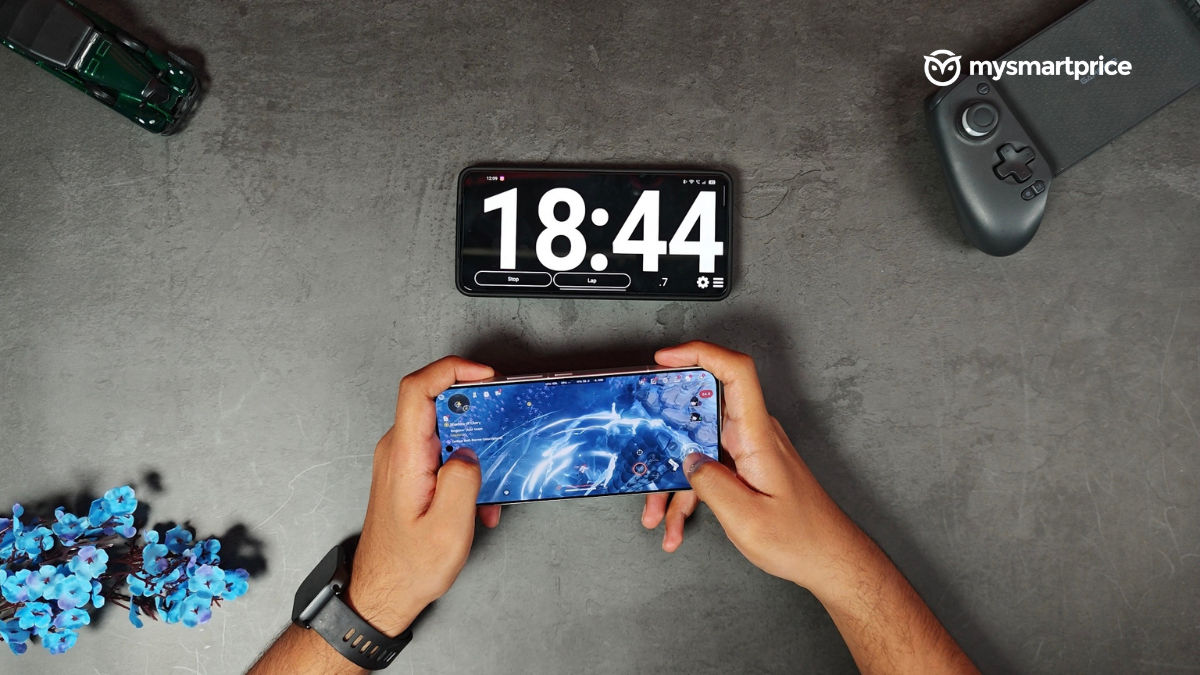
These results directly relate to the power and thermal data. The POCO X8 Pro consumes noticeably more power to sustain those higher frame rates, resulting in greater battery drain. However, this increased consumption does not lead to excess heat. Both smartphones impressively exhibit the same final chassis temperature. This suggests a performance-focused tuning approach where the POCO device utilises extra power for smoother visuals whilst efficiently managing the resulting thermals.
Verdict
Our testing highlights a clear difference between these two chipsets. The Dimensity 8400, as seen on the Realme GT 7T, shows strong sustained stability and efficient thermal performance during long workloads. The Dimensity 8500 inside the POCO X8 Pro, however, significantly raises the performance ceiling, delivering a noticeable boost in peak CPU and GPU performance. Its newer architecture offers greater initial fluidity in demanding scenes, emphasising the generational leap in raw capability.
Maintaining this advantage over the long term still depends on implementation. Currently, the Dimensity 8500 displays more noticeable performance variations and slightly higher power consumption under stress. This indicates the platform is currently tuned to prioritise immediate responsiveness, with long-term stability continuing to develop across early devices.
As more smartphones adopt the Dimensity 8500, a more refined balance between peak speed and sustained efficiency is likely to develop. From our tests, we can say that even now, the chipset stands out as a substantial upgrade with ample potential for further optimisation.