The mid-range segment in India is heating up, and two names are currently at the centre of it, the iQOO Neo 10 and the upcoming OnePlus Nord 6. While the iQOO Neo 10 has already launched in India and is currently available starting at Rs 34,999, the OnePlus Nord 6 is set to be unveiled on 7 April 2026, with sales beginning on 9 April.
Both phones share a similar hardware DNA, same chipset, and even the same camera sensor count. But there are some key differences that could make one a better fit than the other depending on what you prioritise. Here is a spec-by-spec look.
Performance
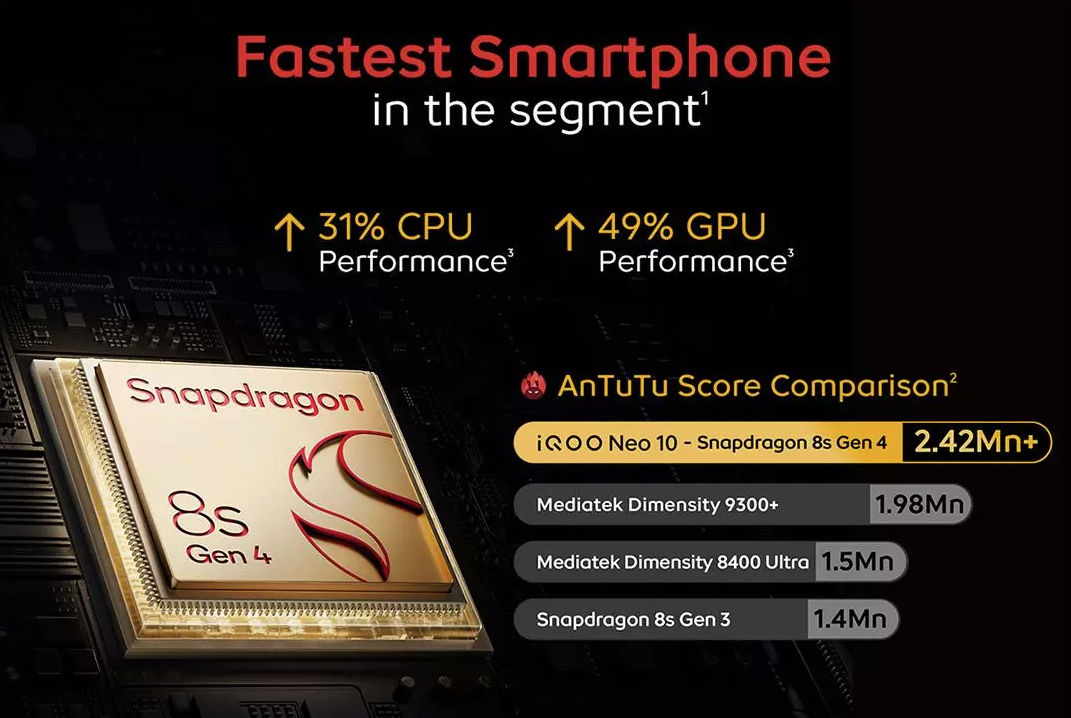
Both phones run on the Qualcomm Snapdragon 8s Gen 4, which is one of the most capable mid-range chipsets available right now. On paper, you are getting the same level of CPU and GPU performance from either device.
Where iQOO differentiates the Neo 10 is with a dedicated Q1 supercomputing chip for gaming, alongside a 7,000mm² vapour chamber for thermal management. OnePlus, on the other hand, has confirmed support for 165fps gaming in titles like BGMI and Call of Duty Mobile on the Nord 6, and has included a dedicated touch reflex chip.
In terms of RAM, the iQOO Neo 10 tops out at 16GB LPDDR5X, with options starting at 8GB. The Nord 6 is expected to offer similar configurations. Both phones use UFS 4.1 storage, with the iQOO Neo 10 going up to 512GB. Storage on the Nord 6 is expected to match this but will be confirmed at launch.
Both phones are evenly matched on the core chipset. iQOO adds a dedicated gaming chip and better cooling hardware on paper, while OnePlus claims higher peak gaming frame rates.
Display
The iQOO Neo 10 features a 6.78-inch 1.5K AMOLED panel. It offers a 144Hz refresh rate. For the OnePlus Nord 6, the only confirmed display specification so far is the 165Hz refresh rate. Details such as screen size, resolution, and brightness figures have not been officially revealed yet and are expected to be disclosed at the 7 April launch event.
The Nord 6 has a higher confirmed refresh rate at 165Hz versus the Neo 10’s 144Hz. Beyond that, a full display comparison will only be possible once OnePlus confirms the remaining specs at launch.
Camera
The camera setups are similar on both phones. Each gets a 50MP primary sensor, an 8MP ultra-wide, and a 32MP selfie shooter. The primary difference lies in the sensor. OnePlus has confirmed the Nord 6 will use a Sony LYTIA sensor with dual-axis OIS and multi-focussing. The iQOO Neo 10 uses a 50MP Sony IMX882 primary sensor.
The Nord 6 has OIS, which should help with low-light photography and video stabilisation. On paper, the Nord 6 edges ahead thanks to OIS. Real-world results will only be clear post-launch.
Battery and Charging
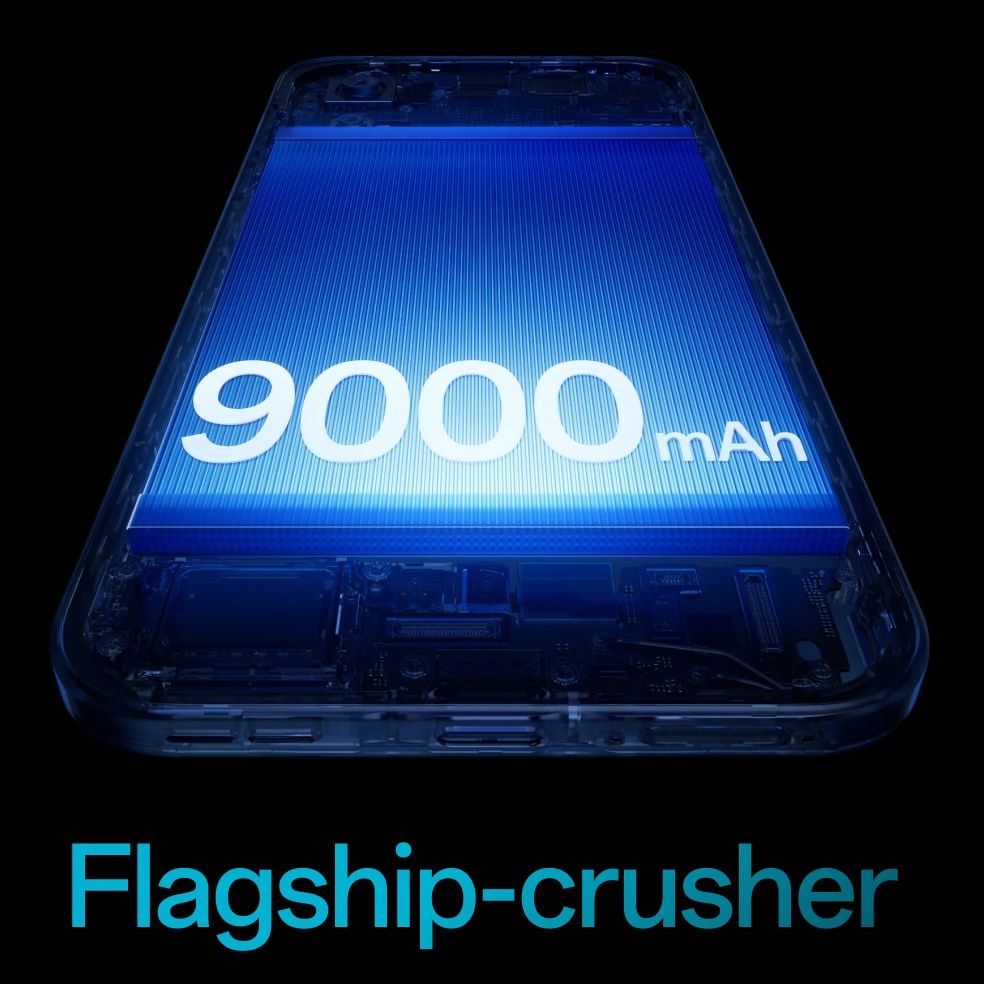
The OnePlus Nord 6’s headline feature is its 9,000mAh battery, which is 2,000mAh more than the Neo 10. OnePlus claims over 2.5 days of typical usage on a single charge. In contrast, the iQOO Neo 10 carries a 7,000mAh cell, which itself is quite large for this segment.
The trade-off is charging speed. The iQOO Neo 10 supports 120W fast charging. The OnePlus Nord 6 charges at 80W, which means it will take longer to top up despite the larger capacity.
So, Nord 6 offers far greater battery capacity, but iQOO Neo 10 wins on charging speed. If endurance is the priority, Nord 6 has a clear advantage. If you prefer faster top-ups, Neo 10 is better suited.
Durability
The Nord 6 makes a strong case in the durability department. It carries IP66, IP68, IP69, and IP69K ratings, making it one of the most water and dust-resistant phones in this price range. On the other hand, iQOO Neo 10 comes with the IP65 rating, which makes it Dust Tight and Water Resistant.
Software
The iQOO Neo 10 runs Funtouch OS 15 based on Android 15, with three years of Android updates and four years of security patches promised. The Nord 6 is expected to launch with OxygenOS 16 based on Android 16, which would give it a more current software base at launch. OnePlus typically promises four years of OS updates and five years of security patches for its phones.
Price and Availability

The iQOO Neo 10 is already available in India. It starts at Rs 34,999 for the 8GB + 128GB variant, with the 8GB + 256GB model at Rs 36,999, the 12GB + 256GB version at Rs 38,999, and the top-end 16GB + 512GB configuration at Rs 43,999.
The OnePlus Nord 6 is expected to be priced between Rs 35,000 and Rs 40,000, with the exact price to be announced at the 7 April launch event. It will go on sale on 9 April via OnePlus.in, Amazon India, OnePlus Experience Stores, and select offline retail outlets.
Which One Should You Buy?
If battery life is your top priority, the OnePlus Nord 6 is the clear choice. Its 9,000mAh cell is unmatched in this price segment, and it also brings a higher refresh rate display, better IP ratings, and a more current OS out of the box. However, it has not launched yet, so its actual performance, camera quality, and final pricing remain to be seen.