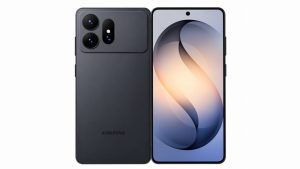
OnePlus is once again putting gaming at the heart of its smartphone’s identity. The company held an event in Singapore to showcase its new Gaming Core feature, a hardware-level tuning aimed at delivering a console-quality gaming experience on its smartphone. The first device to receive will be the upcoming OnePlus 15. Let’s take a closer look at what the Gaming Core actually does and why it might change the way OnePlus approaches mobile gaming.
The Gaming Core feature is a chipset-level optimisation centred around gaming. However, what’s surprising is that its base has been built using 20,000 proprietary codes that operate at the foundational level of Android. Moreover, it is backed by 254 gaming-optimisation patents.
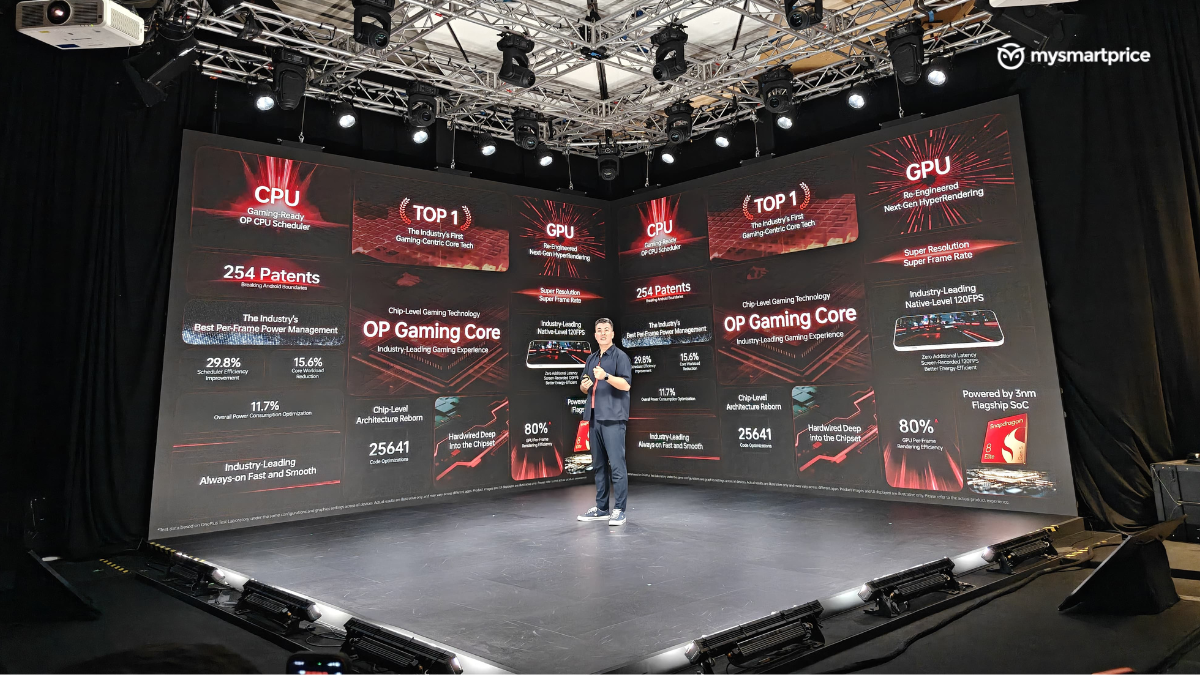
At the core of this innovation is the CPU Scheduler. It intelligently relocates resources to eliminate lags and performance conflicts in gaming by analysing the gaming workload thoroughly at the firmware level. This helps reduce CPU instructions for key tasks by 20 per cent, which OnePlus claims enables a stable 120fps gaming experience in popular games while consuming minimal power. It also improves thermal management, delivering a great gaming experience.
Working alongside the CPU Scheduler, the HyperRendering technology boosts GPU utilisation by handling native rendering and frame interpolation processes directly through the main chipset. Ultimately, it further speeds up the existing frame interpolation by a significant margin.
When combined, both these enhancements set the stage for console-quality visuals and high-frame-rate gameplay with improved power efficiency.
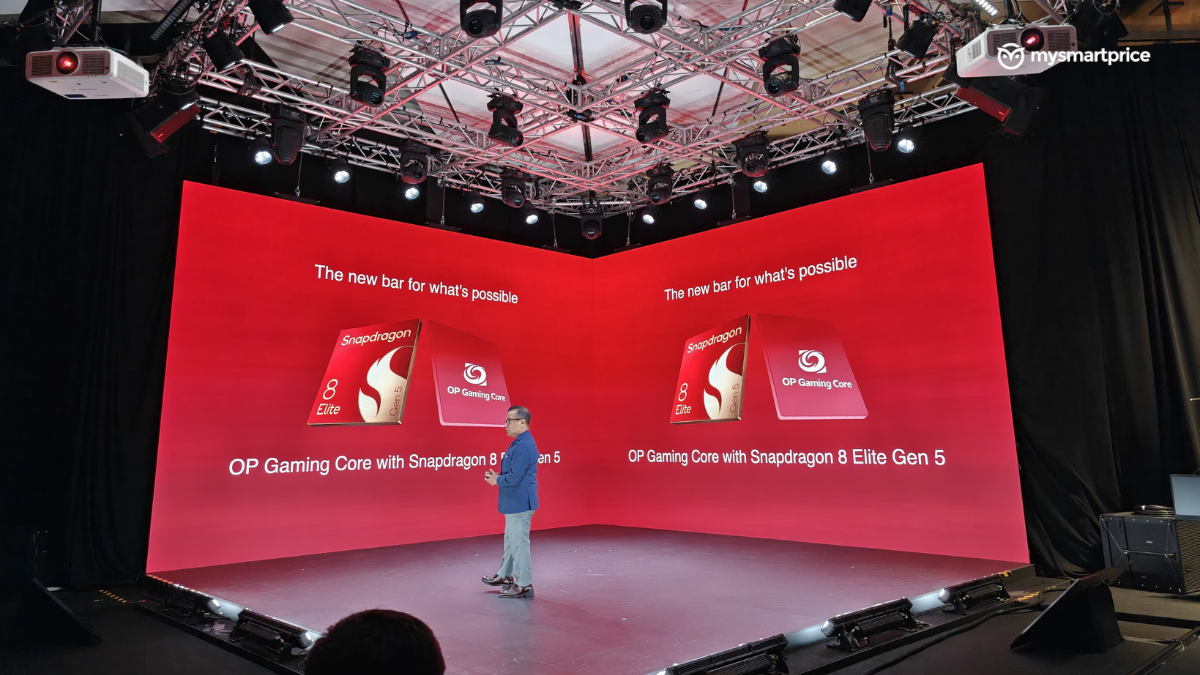
Furthermore, OnePlus has unveiled the Performance Tri-chip, a processor-level solution that integrates the Performance Chip, Touch Response Chip, and Wi-Fi Chip G2. The Performance Chip is said to be built on the Snapdragon 8 Elite Gen 5 processor, ensuring the best possible performance and appropriately tuned power delivery for a great gaming experience.
In addition, the dedicated Touch Response chip helps speed up the touch processing. It supports a 330Hz touch sampling rate in terms of hardware and can boost to an ultra-high 3200Hz instantaneous sampling rate. Moreover, it includes the new Next-Gen HyperTouch engine, blending hardware and software optimisations to make touch interactions quicker, more precise, and more consistent during gameplay.
On the other hand, the new Wi-Fi Chip G2 integrates advanced RF modules and enhanced algorithms, including SmartLink.
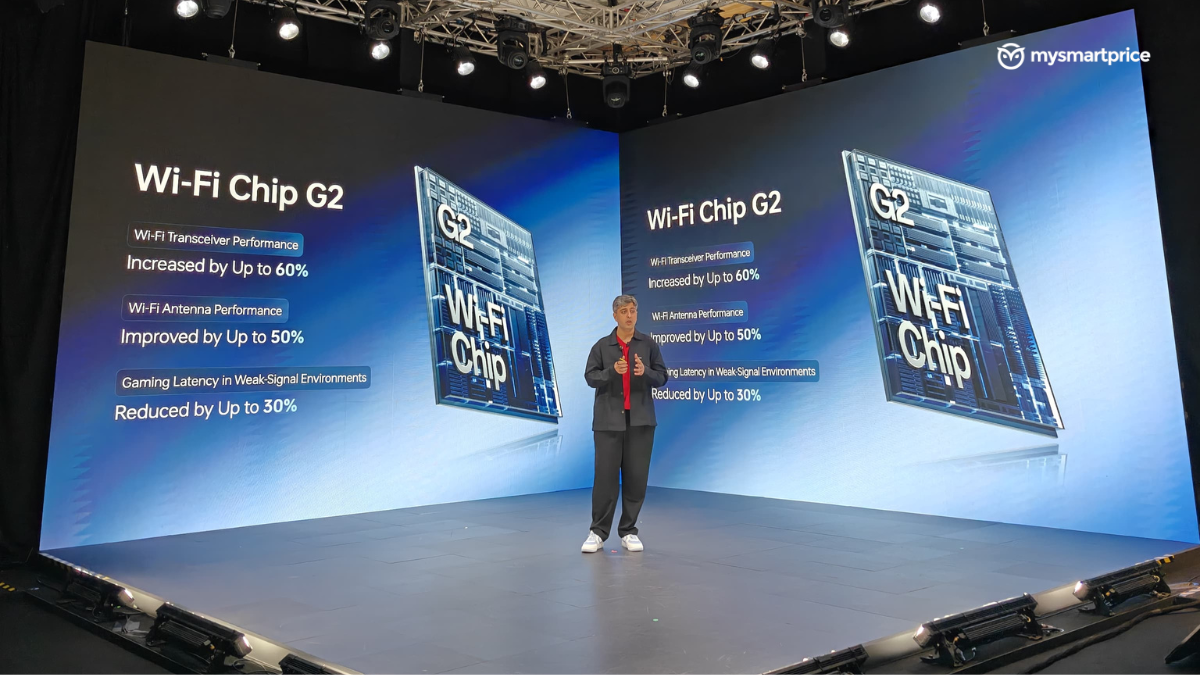
According to OnePlus, it paves the way for better network stability and lower ping times in challenging environments by intelligently managing gaming traffic for a seamless experience.
If this isn’t enough, the Pete Lau-led company has also introduced a high-frame-rate gaming solution called the OP FPS Max.
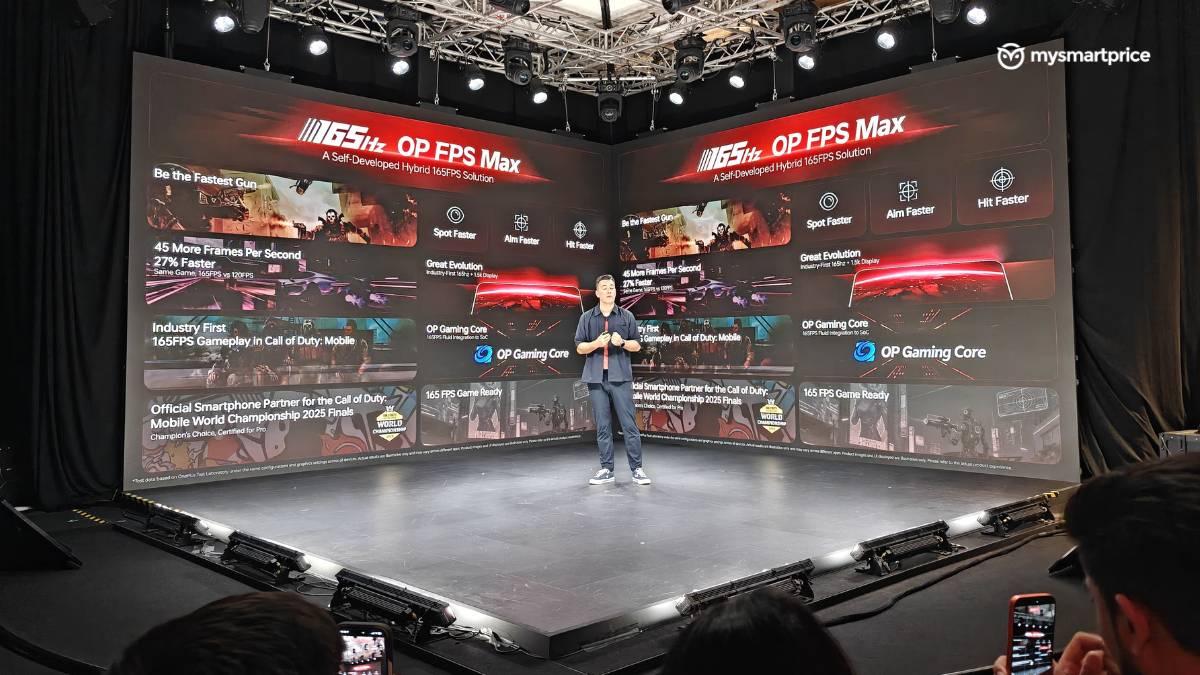
While the 120fps frame rate is fortunately on track to become an industry standard, OnePlus is shifting its gear to deliver a 165fps gaming experience with this technology.
With all these innovations, the brand has sent a clear message — the OnePlus 15 will be a new avenue to experience the pinnacle of Android gaming. Other competitors strive to provide solutions that enhance the gaming experience with their products. However, their implementations occur at the firmware level, which struggles to deliver consistent performance.
Let’s consider frame interpolation, for example. Although Samsung provides this feature on its ultra-premium smartphones, it is unfortunately implemented at the software level. As a result, the additional frame smoothness in games can still be unpredictable at times, disrupting the immersion. On the other hand, OnePlus has decided to tackle this feature deep in the hardware stack, which appears to be a successful approach in delivering more consistent performance.
With these two new pillars, the Gaming Core for performance and the DetailImage Max engine for photography (a first look at this feature), the OnePlus 15 is shaping up to be more than just another flagship. It represents a fresh chapter for the brand, one where both gaming and imaging are redefined through in-house innovation. If OnePlus delivers on these promises, its next flagship could easily set a new benchmark for what an all-round Android powerhouse should look like.