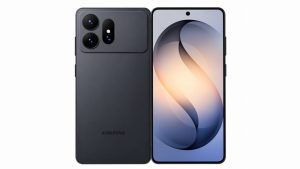
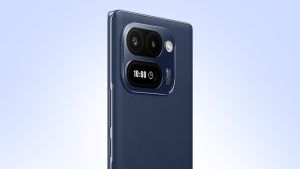
As we near the end of 2025, the remaining months are shaping up to be an intense battle for performance and camera dominance. This momentum is driven by multiple brands gearing up to unveil their next-generation flagship smartphones in the coming days. Among these brands, OPPO is striving to maintain its edge in the flagship race, and its upcoming Find X9 series effectively reflects its intention. To clarify, the series comprises two smartphones: the standard Find X9 and the Find X9 Pro.
The lineup is set to hit the Indian market on 20 November. Given their global debut on 28 October, most of their specifications are already out in the open. The things that were still under wraps were their storage specifications, colour variants, and retail prices. However, some of these details have now been revealed.
Abhishek Yadav, a prominent leaker, has posted details regarding the pricing of both these phones on X (formerly Twitter).
Exclusive ✨
Oppo Find X9 retail — and it lists ₹79,999.But the actual selling price will be ₹74,999 (12GB+256GB) in India. 🇮🇳 https://t.co/0B4bHj0Eai pic.twitter.com/Q2QxAORP3W
— Abhishek Yadav (@yabhishekhd) November 8, 2025
As we can see, the Find X9 Pro’s box features a price of Rs 1,09,999. On the other hand, the Find X9’s box lists Rs 79,999. However, according to him, the actual selling prices, of Find X9 Pro will be Rs 99,999, and the Find X9 will be available for Rs 74,999.
Exclusive ✴️
Oppo Find X9 Pro (16GB+512GB) Indian retail box price is 💰 ₹1,09,999.
Selling price in India will be ₹99,999. 🇮🇳 pic.twitter.com/ZX7tkCXqBm
— Abhishek Yadav (@yabhishekhd) November 8, 2025
With the expected pricing in place, the picture becomes clearer when we look at the storage options and colour finishes that OPPO has confirmed. The brand has taken the Find X9’s product page live, showcasing that it will come in two storage configurations: 12GB + 256GB and 16GB + 512GB. Moreover, it has confirmed that it will be available in two colours: Titanium Grey and Space Black. Similarly, the Find X9 Pro has been revealed to come in a single storage option: 16GB + 512GB. Speaking of the colour, it features the same options as the Find X9.
Where the Find X9 Series Stand Apart
Now that we know the configurations, it’s time to examine the specifications that define the Find X9 series. Let’s start with the performance.
Both will be powered by the MediaTek Dimensity 9500 SoC. We have already covered this chipset in detail, which you can check out here. Still, for those who want a concise explanation, here’s a brief look at it. The MediaTek Dimensity 9500 can deliver ray-tracing-capable gaming performance while still maintaining respectable battery efficiency. Additionally, it is equipped to handle demanding AI tasks, including 4K image generation and large-model token processing on the device, with impressive speed and efficiency.
These two Find devices will run on the ColorOS 16, which is based on Android 16. It is built around the “Smart & Smooth” approach, offering fluid motion, a softly illuminated visual style, and practical AI-based features.
Display is where the two begin to differ. The Find X9 features a 6.59-inch AMOLED screen with a 1.5K resolution and a 120Hz refresh rate. On the other hand, the Find X9 Pro features a larger display, measuring 6.78 inches in size. Despite boasting the same display type and resolution, the latter supports a 120Hz refresh rate, utilising LTPO technology.
Since the Find X9 series is heavily centred around the optics, both models are equipped with absolutely stacked cameras. The complete camera specifications are listed in the table below.
| Cameras | OPPO Find X9 | OPPO Find X9 Pro |
| Primary Camera | 50MP, ƒ/1.6, Sony LYT-808, OIS | 50MP, ƒ/1.5, Sony LYT-828, OIS |
| Ultra-wide Camera | 50MP, ƒ/2.0 with autofocus, Samsung 5KJN5 | |
| Telephoto Camera | 50MP, ƒ/2.6, Sony LYT-600, OIS | 200MP, ƒ/2.1, Samsung S5KHP5, OIS |
| True Colour Camera | Yes | |
| Selfie Camera | 32MP, ƒ/2.4, Sony IMX615 | 50MP, ƒ/2.0, Samsung 5KJN5 |
I’d like to briefly discuss the cameras of the Find X9 series, as they contain some interesting information that is hidden in plain sight.
Although the Find X9’s primary camera has the same megapixel count as its predecessor, the Find X8, its aperture has been widened from ƒ/1.8 to ƒ/1.6. Additionally, its sensor size has increased from 1/1.95” to 1/1.4”. In simpler terms, the Find X9 appears to excel in capturing more detail from the scene and taking brighter, cleaner images in darker areas compared to the Find X8 Pro.
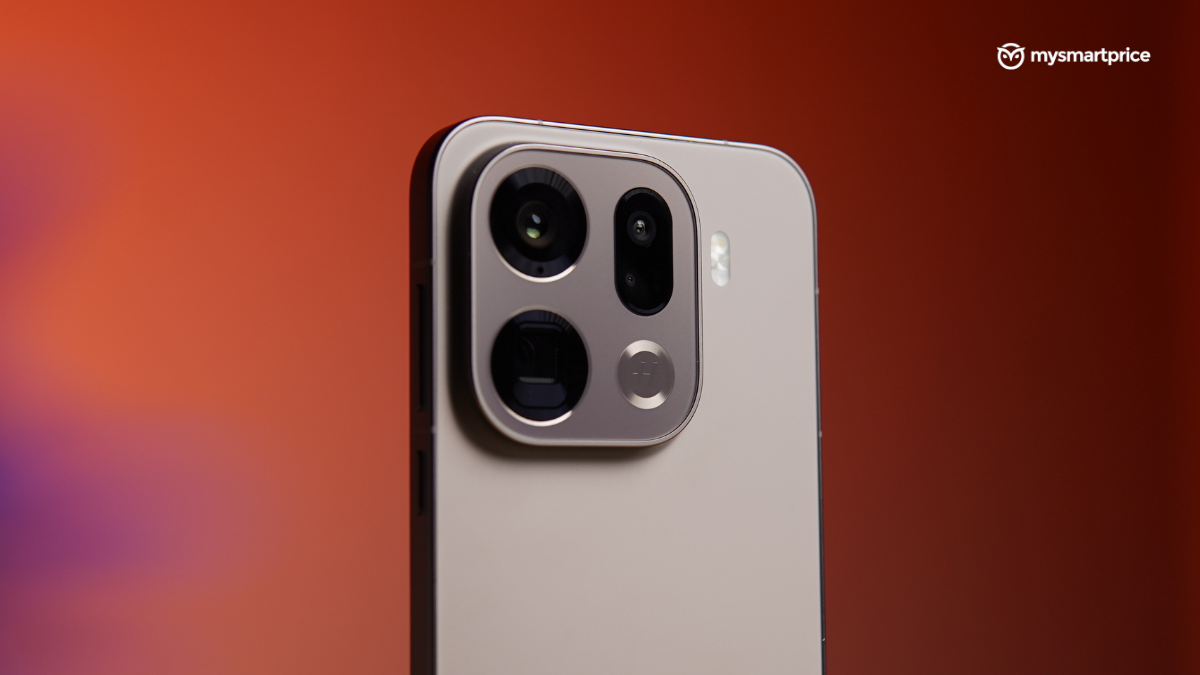
If we shift our focus to the Find X9 Pro, the primary camera also features a wider aperture and a larger sensor than its predecessor, the Find X8 Pro. However, what’s more fascinating about its camera array is that it marks the debut of a brand-new 200-megapixel Samsung HP9 telephoto camera, instead of sporting two periscope snappers. It features a 3x optical zoom, enabling it to capture sharp distant shots, strong portraits in various lighting conditions, and detailed macro close-ups.
On the battery front, the Find X9 packs a 7,025mAh Silicon-Carbon battery, while the Find X9 Pro is equipped with a 7,500mAh battery. The incredible aspect of this is that OPPO has managed to maintain the same thickness for both smartphones as their predecessors, the Find X8 and the Find X8 Pro, respectively.
Where the OPPO Find X9 Pro Stacks Up
If we walk back a little further to the speculated pricing, the Find X9 Pro has been placed in direct competition with the Samsung Galaxy S25 Ultra and the Pixel 10 Pro. When stacked against these smartphones, the Find X9 Pro has a significant edge in nearly every aspect. While the Pixel 10 Pro features a 48-megapixel telephoto snapper with a 5x zoom capability, the Find X9 Pro dominates it with a more pixel-dense primary camera. That said, a real-world test will help us determine their standing, as Google sometimes makes up for its inadequate hardware with smarter, more optimised firmware.
On the other hand, Samsung has strived to offer more capable hardware in the form of the Galaxy S25 Ultra.
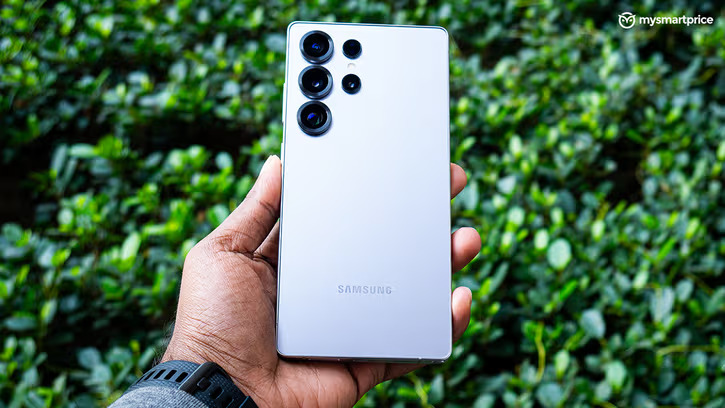
That’s why it features the likes of the 200-megapixel telephoto camera and a powerful Snapdragon 8 Elite processor. However, it has a trend of relying on strong brand familiarity and long-standing user trust to gain an advantage over its Chinese competitors.
With the expected pricing, the Find X9 Pro now stands toe-to-toe with the Galaxy S25 Ultra and the Pixel 10 Pro. On paper, it offers stronger camera hardware, larger batteries, and refined display technology. The standard Find X9 also appears well-positioned for those seeking a premium experience at a lower price point. While Samsung leans on brand familiarity and Google focuses on computational optimisation, OPPO is choosing to compete through hardware ambition and feature depth. We are yet to share the overall review based on the real-world testing will determine and you will have to stay tuned to MySmartPrice for all the details and the reviews of these two phones.