India's cooling industry is entering a new phase of expansion, driven by rising temperatures, rapid urbanisation, and growing demand for energy-efficient climate control systems. At ACREX India 2026 in Mumbai, global appliance makers used the platform to outline how they plan to tap into what is now one of the fastest-growing HVAC markets in the world.
Two announcements at the exhibition highlighted how companies are approaching this opportunity from different ends of the ecosystem. Panasonic emphasised a portfolio of smart and integrated climate solutions spanning residential, commercial, and cold chain applications. LG Electronics, meanwhile, focused on strengthening the supply backbone of the industry through locally manufactured compressors designed for Indian appliances.
Together, the announcements reflect how India's cooling market is expanding beyond just room air conditioners to include connected infrastructure, energy management, and local manufacturing capabilities.
Features and technologies showcased by Panasonic
Panasonic Life Solutions India used ACREX 2026 to present a wide HVAC portfolio covering room air conditioners, commercial cooling systems, and cold chain solutions, underscoring its strategy of building a full climate solutions ecosystem for the Indian market.
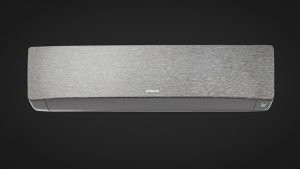
Among the highlights was a new Smart 1-Way Cassette air conditioner equipped with nanoe X technology aimed at improving indoor air quality. The company also showcased its smart residential air conditioner lineup powered by the MirAIe connected living platform, along with AI-enabled VRF systems designed for large commercial buildings and infrastructure projects.
The emphasis on connected and intelligent cooling reflects a broader shift in the HVAC industry, where energy optimisation, remote monitoring, and building management integration are becoming increasingly important for both residential and commercial customers.
Panasonic executives also pointed to India's position as one of the fastest-growing HVAC markets globally, with the company expanding its distribution footprint and strengthening its service network to support future growth.
Beyond residential and commercial air conditioning, Panasonic highlighted its iCOOL SE inverter condensing units designed for cold chain applications. The company sees increasing demand for temperature-controlled infrastructure across sectors such as e-commerce logistics, food retail, pharmaceuticals, and quick-service restaurants.
LG's localisation push through compressor technology
While Panasonic's strategy focuses on integrated cooling solutions, LG Electronics used ACREX 2026 to highlight the core component powering most HVAC systems: compressors.
The company showcased compressor solutions engineered specifically for the Indian market, including rotary compressors designed for the popular 1 to 2 ton residential air conditioner segment and reciprocating compressors for refrigerators in the 150 to 200 litre range.
LG also presented scroll compressors for commercial HVAC systems with capacities of up to 27 tons, aimed at supporting larger installations such as office complexes and industrial facilities.
A central theme of LG's showcase was localisation. The compressors on display are manufactured in India, supporting domestic appliance manufacturing and aligning with the government's Make in India initiative.
The company currently operates manufacturing facilities in Noida and Pune and is preparing a new plant in Sri City that is expected to begin operations in 2027, further expanding its local production capacity.
India's cooling industry moves beyond appliances
The developments highlighted at ACREX 2026 indicate that India's cooling industry is evolving rapidly. Appliance brands are investing in smarter and more connected HVAC systems that can optimise energy use and integrate with modern building infrastructure. At the same time, manufacturers are strengthening the supply chain through local component production to support the scale of India's growing appliance market.
With heat waves becoming more frequent and energy efficiency regulations tightening, the cooling industry is increasingly focused on technologies that balance strong cooling performance with lower energy consumption.
The contrasting strategies presented by Panasonic and LG at ACREX suggest that the next phase of growth in India's HVAC sector will be driven not just by more air conditioners, but by smarter systems, deeper localisation, and a stronger manufacturing ecosystem supporting the country's expanding cooling needs.