Samsung is doubling down on India's air conditioner market at a time when demand is already getting pulled forward by an unusually warm start to the year.
With the launch of its 2026 Bespoke AI WindFree lineup, the company is expanding its presence in a category that is seeing structural tailwinds from both climate trends and rising consumer adoption. The new range, starting at ₹32,490, reflects Samsung's push to position cooling as a smarter, more adaptive experience rather than just a seasonal necessity.
An Early Heatwave Is Already Changing the AC Buying Cycle
India has seen a warmer-than-usual February in 2026, with temperatures running several degrees above normal across multiple regions and crossing 30°C far earlier than expected. This has effectively shortened winter and accelerated the onset of summer, pushing consumers to consider cooling solutions weeks ahead of the usual March-April buying window.
This shift is significant because it stretches the overall demand cycle for air conditioners. Instead of a sharply defined peak season, brands are now looking at a longer, more distributed demand curve, which changes how inventory, pricing, and launches are planned.
Samsung Is Positioning ACs as a Core Growth Driver
Samsung's renewed focus on air conditioners signals a more deliberate strategy than in previous years, where the category did not receive the same level of attention as smartphones or TVs.
The logic is straightforward. AC penetration in India remains relatively low, leaving ample headroom for growth, while rising temperatures and longer summers are turning cooling into a more essential purchase. At the same time, the category is evolving in a way that aligns well with Samsung's strengths, particularly in AI, connectivity, and design.
Rather than competing purely on cooling hardware, Samsung is positioning its ACs as part of a broader connected home ecosystem, where intelligence and automation become key differentiators.
From Cooling Appliance to Intelligent Climate Control
The 2026 Bespoke AI WindFree lineup reflects a clear shift in how Samsung is framing the product.
Features such as AI-driven cooling, WindFree airflow, and Dry Comfort mode are designed to address real-world Indian conditions like uneven cooling and high humidity, rather than just delivering faster temperature drops.
This becomes particularly relevant in a year where weather patterns are becoming less predictable, with sharper temperature spikes and more variation in humidity levels across regions. The addition of AI Energy Mode and SmartThings integration further extends the role of the AC beyond cooling, positioning it as a system that can adapt, optimise, and integrate into a connected home setup.
Balancing Premium Positioning With Wider Accessibility
While Samsung continues to push its Bespoke branding and premium design language, the starting price of ₹32,490 indicates an effort to broaden its reach.
This reflects a wider trend in the AC market, where brands are trying to bring premium features to more accessible price points in order to capture aspirational buyers. For Samsung, this also strengthens its ability to compete with established players like LG and Daikin, while offering differentiation through software-led features rather than incremental hardware gains.
A Market Moving Beyond Cooling to Comfort
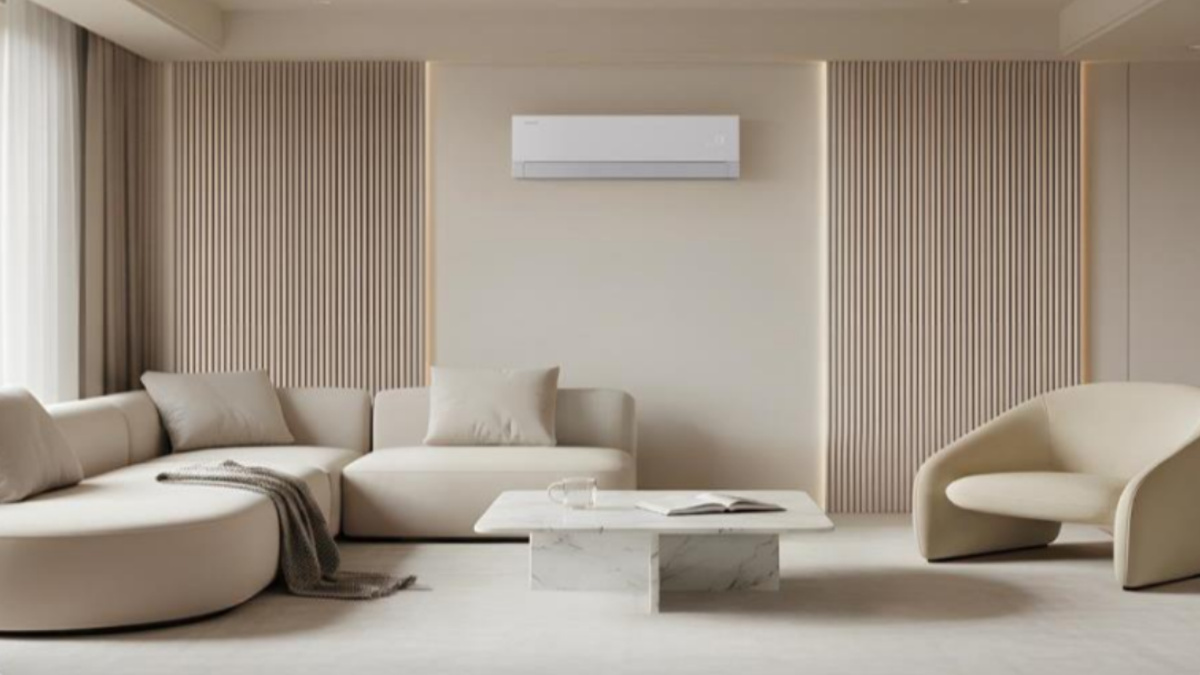
The AC category in India is undergoing a gradual but important shift. Cooling capacity and energy ratings remain essential, but they are no longer sufficient on their own to drive differentiation.
Consumers are increasingly looking for solutions that offer consistent comfort, better airflow distribution, and effective humidity control, especially as weather conditions become more erratic. Samsung's WindFree approach, which focuses on diffused airflow instead of direct cold air, aligns with this growing preference for comfort-first cooling.
A Longer Summer Could Reshape the Category
The early onset of heat in 2026 is not just a short-term demand trigger; it has the potential to reshape how the category behaves over time.
A longer summer extends the usage window for air conditioners and encourages earlier purchase decisions, which in turn affects how brands approach product launches and inventory cycles. It also creates an opportunity for companies to drive upgrades, as consumers look for more efficient and feature-rich models to handle extended usage.
Samsung Is Aligning Itself With the Next Phase of Growth
Samsung's expanded AC lineup reflects a broader shift in how the company is approaching the home appliances business in India.
By combining early demand momentum with a stronger focus on AI-led differentiation, Samsung is positioning air conditioners as a meaningful growth lever rather than a peripheral category. If current climate trends continue, the AC market is likely to see sustained expansion, and Samsung's strategy suggests it wants to play a more central role in that growth.