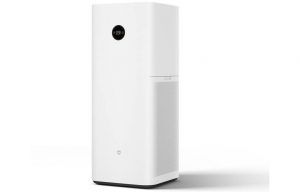
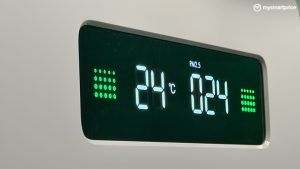
Xiaomi has launched the Mijia Smart Air Purifier 6 in China, and early listings suggest that a global release may follow soon. The purifier brings a key new feature that sets it apart from many rivals in its segment: formaldehyde removal. Alongside its multi-stage HEPA filtration system, this purifier is designed to target volatile organic compounds that come from furniture, paints, and other household materials. It also introduces an upgraded sensor suite that can measure PM2.5, PM1, dust, humidity, and temperature, with readings displayed on a compact OLED screen. With support for Google Home and Alexa, the device stays true to Xiaomi’s approach of offering advanced smart features at prices that are accessible to a wider audience.
Why Indoor Air Quality Remains a Major Issue in India
India continues to face serious challenges around air quality. Even though Delhi recorded its cleanest July in over a decade with an average AQI of 79, the city has not yet registered a single day in the “Good” range this year. The lowest reading was 51 in mid-July, which still only qualified as “Satisfactory.” Outdoor air pollution inevitably spills indoors, and poorly ventilated spaces often trap particulate matter and volatile compounds. This makes indoor air quality a critical concern, especially during the winter months when pollution spikes across northern India. For urban families, a purifier is increasingly seen as a health necessity rather than a lifestyle add-on.
The Market Momentum
While Air pollution is a big concern for India, even globally too the air purifier market is expanding at an exponential pace. According to a research report, the global air purifier market is expected to more than double from just over USD 3 billion in 2025 to USD 7.4 billion by 2033. The smart purifier segment is growing even faster and is projected to climb from USD 11.2 billion to USD 27.6 billion in the same period. This growth is driven by rising pollution, greater awareness of health risks, and the demand for connected devices that integrate into daily life.
In India, the shift has been sharper. Demand peaks during the winter when air quality worsens, and awareness has grown rapidly since the pandemic. Xiaomi was one of the first movers here with the Mi Air Purifier 2 in 2016. The Mi Air Purifier 3 added app and voice control, the Xiaomi Smart Air Purifier 4 improved noise control and efficiency, and now the Mijia Smart Air Purifier 6 is stepping into new territory by offering formaldehyde filtration at a price point that could challenge competitors.
Why we are excited about the Mijia Smart Air Purifier 6
At MSP, we have been reviewing air purifiers consistently over the past year and have tested more than a dozen models across price bands. The Xiaomi Smart Air Purifier 4 (review) stood out as one of the best performers under Rs 15,000 in our testing, balancing filtration performance, noise levels, and smart features better than most rivals in its class.
From my own usage, the Mi Air Purifier 3, which I purchased before the pandemic, continues to work daily in my parents’ room and has remained reliable over the years. The Xiaomi Smart Air Purifier 4 has been my everyday purifier and has consistently impressed with its efficiency and ease of use through the Xiaomi Home app. These experiences make me confident that Xiaomi understands the fundamentals that matter to Indian households. For buyers, the important factors are still the same: the purifier must cover VOCs and formaldehyde, it should run quietly in bedrooms, it should be easy to maintain, and filters should be easy to source locally. Xiaomi has managed to deliver across these areas in the past, and if the Mijia Smart Air Purifier 6 continues that record, it has every chance to become the next benchmark in the category.
When it comes to strategy, Xiaomi focuses on delivering practical features that directly improve air quality while keeping prices accessible. Dyson, in contrast, emphasizes design and multi-functionality, often combining purifiers with fans or heaters, but its models are priced far higher. Philips has leaned on medical-grade certifications and reliability, but its models often lag behind on smart features.
We feel that Xiaomi has captured a good sweet spot as it does not chase premium aesthetics, and it does not rely solely on brand heritage. Instead, it delivers core performance, strong smart integration, and value. That is why the Mi 4 succeeded in India and why the Mijia Smart Air Purifier 6, with its formaldehyde filtration and refined design, could become another defining model once it expands beyond China.
With India heading into another season of poor air quality, the prospect of this purifier arriving here could not be more timely. If the performance is consistent with Xiaomi’s track record, the Mijia Smart Air Purifier 6 could be one of the most relevant and impactful launches for households looking to safeguard their health in the months ahead.