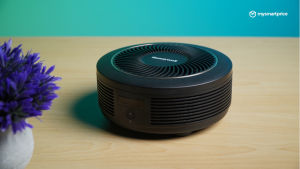
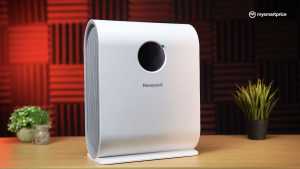
An air purifier has become a year-round appliance in my home. It runs through the day and into the night, so my expectations go beyond how quickly it can bring down pollution levels. The noise it makes while I sleep, how easily I can check the air quality and the effort needed to keep it clean all become part of the experience.
Xiaomi Mijia Smart Air Purifier 6
Rs17,999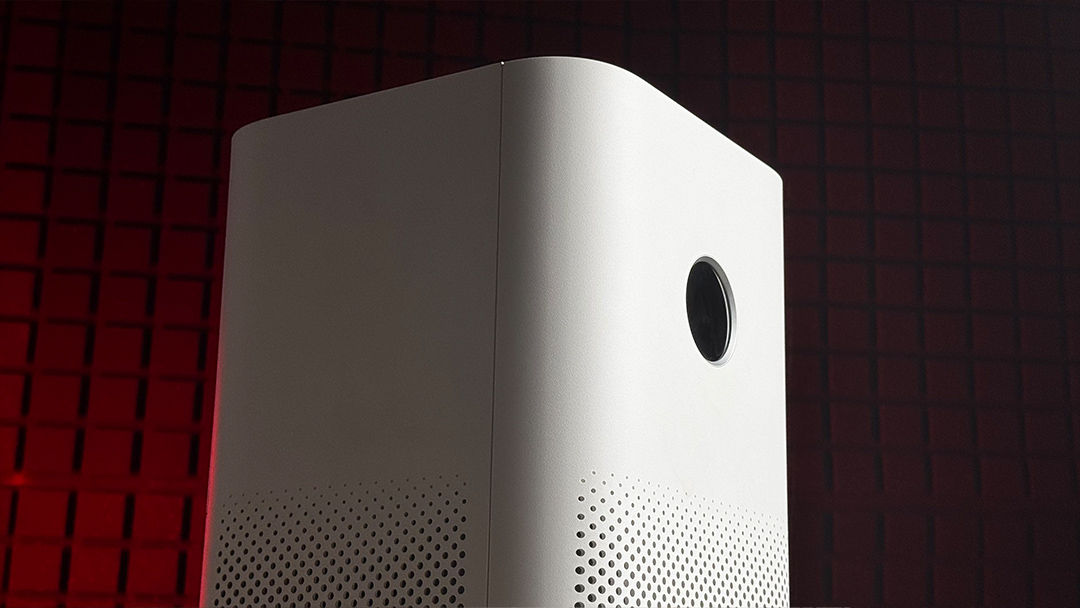
What Is Good?
- Faster PM2.5 reduction than the Xiaomi 4 in our recorded tests.
- Auto mode reduced PM2.5 by approximately 89% in 30 minutes.
- Clear, readable display with useful colour-coded information.
- Practical design and an exterior that is easy to clean.
- Noticeable reduction in lingering food smells during everyday use.
What Is Bad?
- Maximum-speed operation is clearly audible at 58–64 dB but it is better than Xiaomi 4 levels
Having lived with the Xiaomi Air Purifier 4 (for almost 3 years), I was curious to see how much the new Mijia Smart Air Purifier 6 would change that experience. At ₹19,999, it brings more detailed air-quality monitoring, a five-stage purification system and a claimed coverage of up to 940 sq ft at two air changes per hour. The familiar white exterior suggests continuity, but there is more to assess beneath it.
Alongside everyday use, we put it through our controlled tests at the MySmartPrice lab, examining purification performance in different positions, its behaviour in Auto mode and how its results compare with the other popular model in same price bracket and how it fared as opposed to its predecessor.
Design and Display
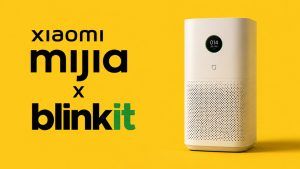
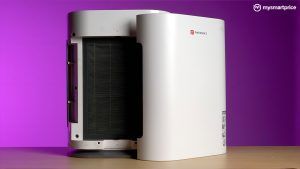
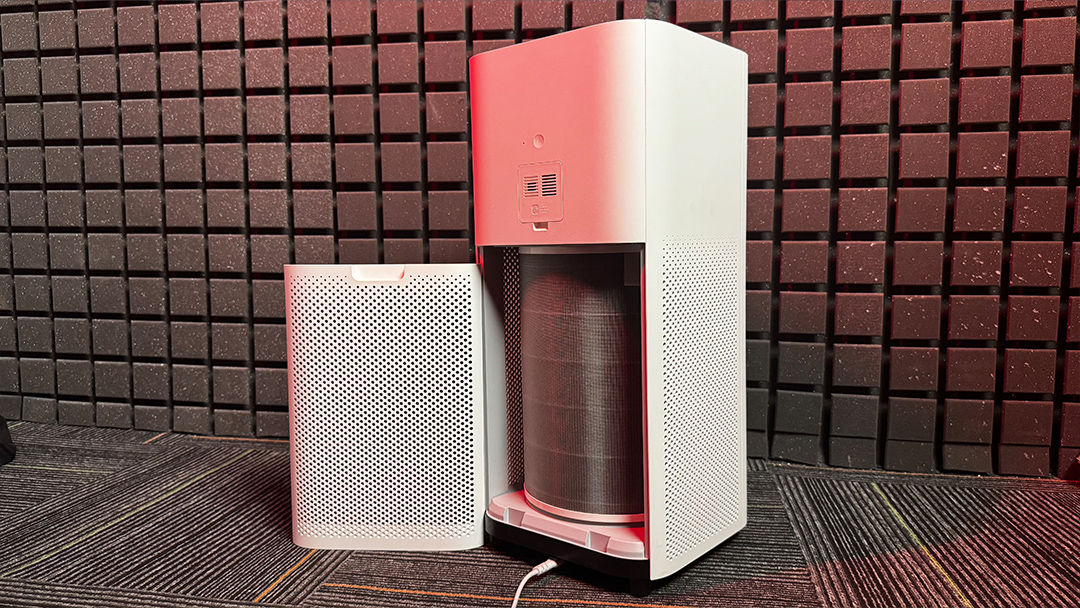
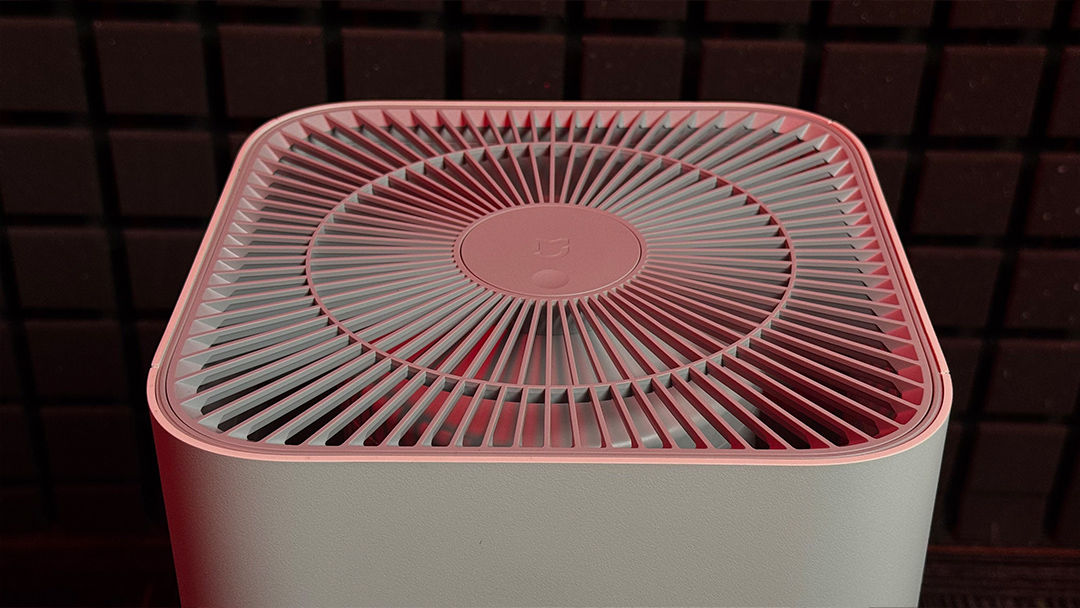
When Xiaomi entered the air purifier market in India, its understated white design was part of the appeal. It was an appliance that could sit in a bedroom or living room without looking out of place. The Mijia Smart Air Purifier 6 follows much the same approach, retaining both the colour scheme and the familiar tall body with rounded corners.
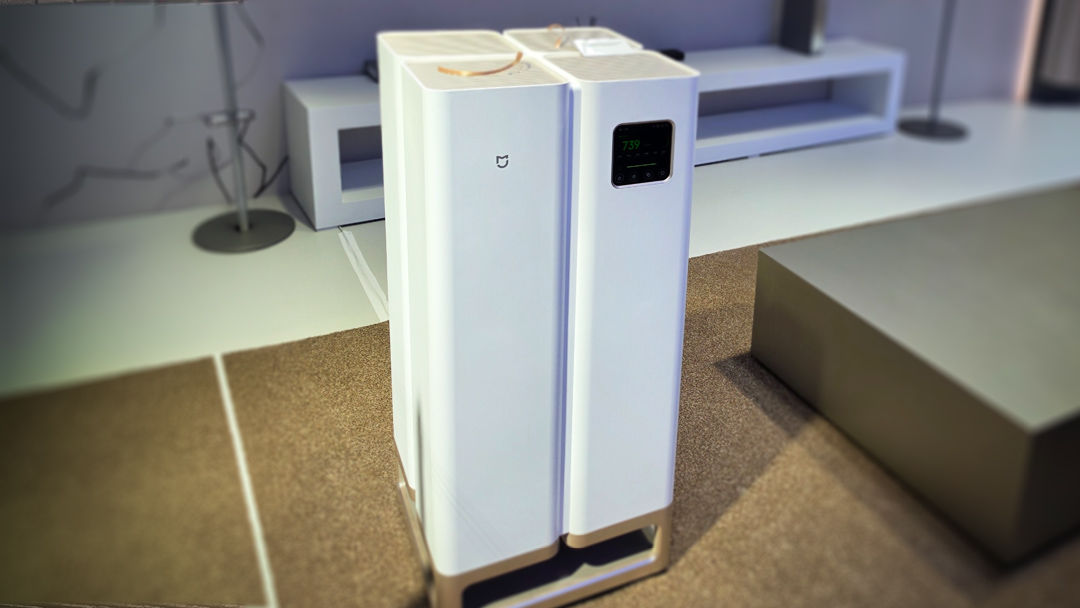
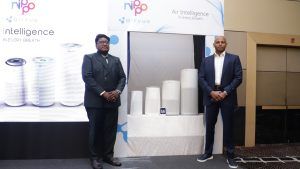
There is a clear family resemblance across the range. At IFA 2026, we saw more of Xiaomi’s latest air purifiers, and several followed a similar design language. Some of the larger models caught our attention, but the Air Purifier 6 is a more familiar proposition. With more brands experimenting with different shapes, finishes and colours, Xiaomi’s approach feels conservative. It is also practical, and there is little here that needs changing simply for the sake of looking different.
Despite the white finish, the body has been fairly easy to keep clean during our use. It does not look grubby particularly quickly, and a wipe with a damp cloth has been enough to remove everyday marks.
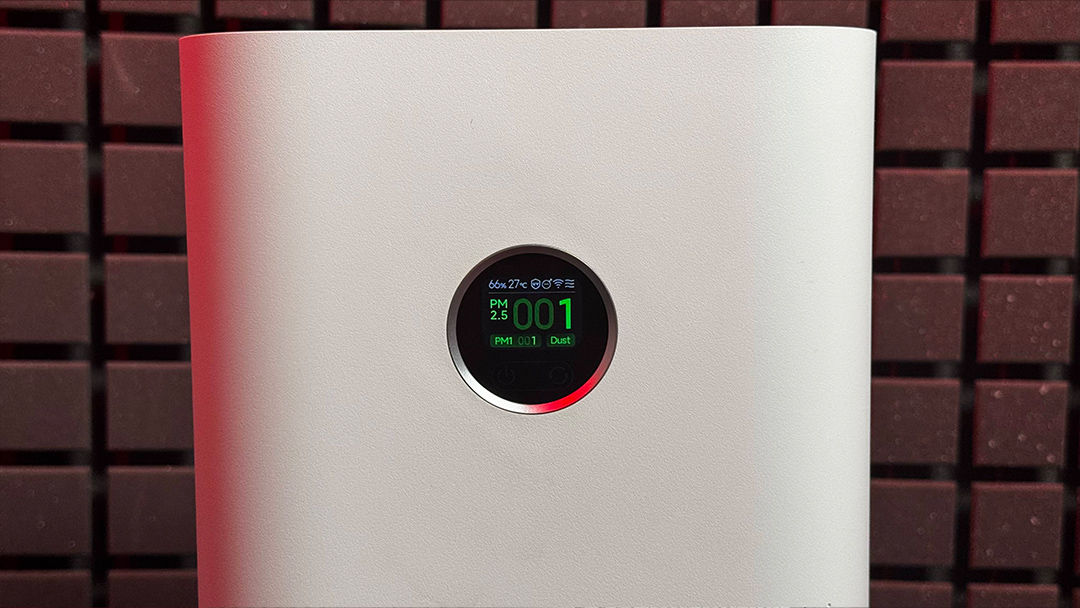
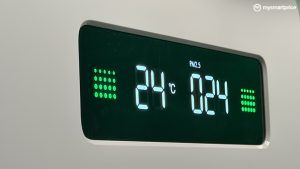
My favourite part of the design, however, is the display. I have always preferred air purifiers that put useful information directly on the appliance, and Xiaomi makes good use of the space here. PM2.5 and PM1 readings, temperature, humidity, and the colour-coded air-quality indicators give you a useful overview without reaching for your phone. I find the information is easy to read at a glance, while the colours make it easier to understand whether conditions are improving without having to interpret every number. Given that I have been in the ecosystem from the very first air puriifer that Xiaomi had to offer in India, I am more accustomed to this. Also, I feel this large display is particularly useful for elderly family members, who should be able to check the air and operate an everyday appliance without depending on an app. There is more to it even in terms of performance.
App Connectivity and Controls
Pairing the Mijia 6 with the Xiaomi Home app on my iPhone was straightforward. Once I had logged into my account, setup took little effort, and I could control the purifier remotely. Having used Mi Home for years, I found the interface familiar, with the main settings easy to locate.
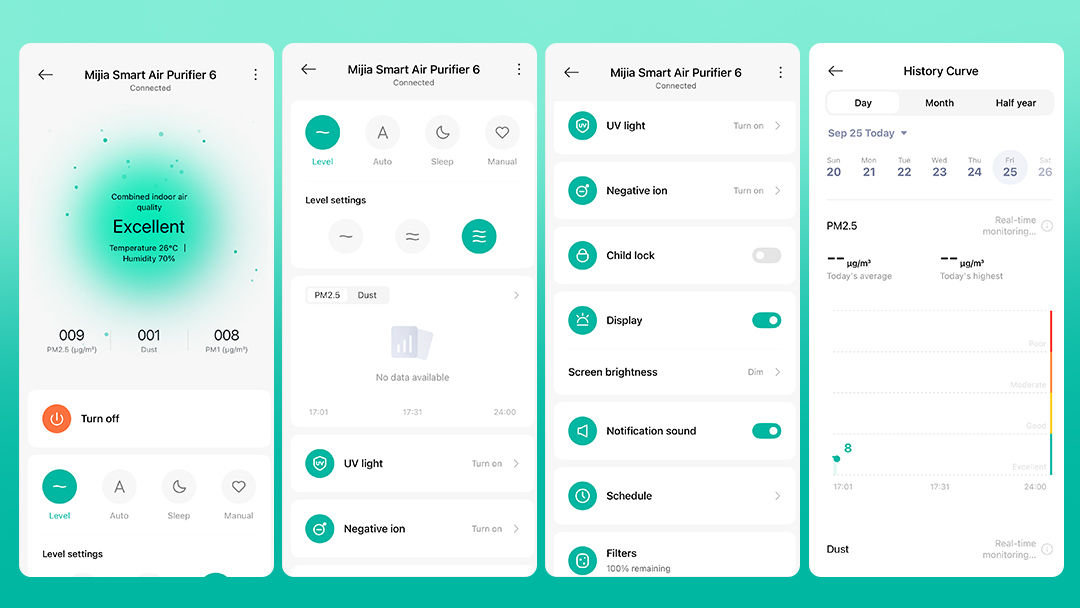
Beyond changing fan speeds and switching modes, the app lets you set schedules, control the UV light and negative-ion functions, and check filter status and replacement alerts. It also keeps a history of PM2.5, PM1 and dust readings across daily, monthly and six-month views. This gives you a better sense of how conditions change over time than the live reading on the purifier alone.
What I appreciate is that everyday operation does not require reaching for the phone. Power and mode changes are easily handled using the controls on the purifier, while the display provides the information I usually want at a glance. The app adds more detailed controls, historical data and remote access, but family members who simply want to switch it on or change its mode can comfortably use the appliance itself.
Purification Performance
Xiaomi rates the Mijia Smart Air Purifier 6 for up to 940 sq ft at two air changes per hour. While that is a substantial coverage figure, it comes with a qualification: it describes how frequently the purifier can process the air within that space. It does not guarantee the same cleaning performance across several rooms in a home.
At the MySmartPrice lab, we test air purifiers in a controlled environment, recording how particle concentrations change over time. Our room is smaller than Xiaomi’s claimed maximum coverage, so these results assess performance in our test space rather than validate the 940 sq ft claim. We also test the purifier in a corner and at the centre of the room to examine the difference placement makes.
With the Mijia 6 positioned in a corner, PM2.5 dropped from 390 µg/m³ to 201 µg/m³ within 10 minutes. By the 20-minute mark, it had fallen to 104 µg/m³, followed by 69 µg/m³ at 25 minutes. That amounts to an approximately 82% reduction over 25 minutes.
Moving it to the centre of the room produced a similar pattern.
| Time | Mijia 6: corner | Mijia 6: centre |
| Before testing | 390 | 395 |
| 10 minutes | 201 | 215 |
| 20 minutes | 104 | 115 |
| 25 minutes | 69 | 78 |
| Final reading | 40 | 40 |
PM2.5 concentrations in µg/m³. The final reading’s elapsed time was not recorded in the supplied results.
The corner run returned slightly lower intermediate readings, but the difference was modest, and both runs eventually reached 40 µg/m³. In our test room, moving the purifier to the centre did not produce a clear improvement. That is useful for everyday placement, since keeping an appliance in the middle of a room is not always practical. It still needs sufficient clearance around its air intakes.
We also compared the corner-test results with those of the Xiaomi Air Purifier 4 and Philips 3000i.
| Time | Xiaomi Mijia 6 | Xiaomi 4 | Philips 3000i |
| Before testing | 390 | 403 | 392 |
| 10 minutes | 201 | 217 | 164 |
| 20 minutes | 104 | 180 | 65 |
| 25 minutes | 69 | 141 | 38 |
| Final reading | 40 | 80 | 38 |
PM2.5 concentrations in µg/m³. Timed comparisons refer to the 10-, 20- and 25-minute readings.
The starting particle concentrations were close, and the results show a clear distinction between the three recorded runs. The Mijia 6 brought PM2.5 down more quickly than the Xiaomi 4, with the difference becoming more pronounced after 20 minutes. At 25 minutes, its reading was 69 µg/m³ against the older model’s 141 µg/m³.
The Philips 3000i was ahead of both, reaching 38 µg/m³ within 25 minutes. Over that period, the recorded reductions were approximately 82% for the Mijia 6, 65% for the Xiaomi 4 and 90% for the Philips. The Mijia 6 therefore shows a worthwhile improvement over the Xiaomi 4 in these tests, although it does not lead this comparison.
Auto mode also delivered a substantial reduction. Starting at 395 µg/m³, PM2.5 fell to 42 µg/m³ after 30 minutes, which is an improvement of approximately 89%. For users who prefer to let the purifier manage its own fan speed, that is an encouraging result under our test conditions.
Odour Control
Our air fryer testing provided a useful everyday challenge for the Mijia 6. After an extensive session, the lab was left with a lingering food smell. We switched on the purifier, and within minutes, the smell became noticeably less apparent.
That makes it useful in a room where cooking smells tend to linger. However, this observation is separate from our instrument readings. HCHO and TVOC levels did not fall between the starting and final readings in the Mijia 6 tests, so the data does not demonstrate formaldehyde or VOC reduction. The improvement we noticed was in the smell of the room.
Sound levels and electricity consumption
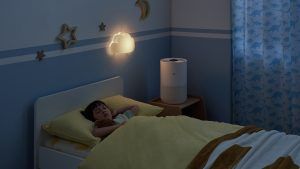
An air purifier runs in my home throughout the year, often all day, so its sound becomes part of the living space. At night, particularly, a purifier that cleans quickly but is difficult to sleep beside can become frustrating.
I have become accustomed to the Xiaomi Air Purifier 4 as a source of white noise, although it is more audible than the AC I currently use. The Mijia 6 sounds quieter to me, even at its highest setting. That is a subjective comparison based on my experience with the two models.
Our measured sound levels for the Mijia 6 were:
| Operating mode | Recorded sound level |
| Silent mode | 39–44 dB |
| Auto mode | 42.2–47.6 dB |
| Maximum speed | 58–64 dB |
Silent mode returned the lowest readings, while Auto mode stayed relatively close to it during our measurement session. Their ranges overlap, so the distinction between them may not always feel dramatic in everyday use.
Maximum speed is considerably more audible. Despite my preference for its sound over the older Xiaomi 4, the Mijia 6 is certainly not unobtrusive at full power. Auto and Silent modes are the more comfortable settings for extended use, while maximum speed involves a noticeable noise trade-off.
These readings reflect our test environment, including background sound; they should not be treated as directly comparable with manufacturer laboratory figures.
Since it is a device that runs all year round, we thought of checking how much power it consumed in an hour. During a one-hour test, we had the purifier run in Auto mode; the Mijia 6 consumed 0.004 kWh, equivalent to 4 Wh.
Verdict
The Xiaomi Mijia Smart Air Purifier 6 builds on a familiar design with improvements that matter in daily use. The white finish is easy to live with, the display makes air-quality information accessible without a phone, and the controls offer enough flexibility for both occasional adjustments and automatic operation. For me, that readable display remains one of its strongest features, particularly in a home where several family members use the appliance.
Its performance gives those conveniences substance. In our corner tests, the Mijia 6 reduced PM2.5 more quickly than the Xiaomi Air Purifier 4, while Auto mode achieved an approximately 89% reduction over 30 minutes. Placement at the centre of our room offered no clear advantage over the corner, and it also made a noticeable difference to lingering food smells after our air fryer tests.
There are limits to the praise. The Philips 3000i cleaned particles faster in our comparison, maximum fan speed remains clearly audible, and our room tests do not establish whole-home performance at Xiaomi’s advertised coverage. Long-term filter life and replacement availability also remain important ownership considerations.
At ₹19,999, the Mijia 6 makes a convincing case for someone buying a purifier for a bedroom or living room and wanting clear monitoring alongside effective particle cleaning. Existing Xiaomi 4 owners gain better results in our recorded tests and, to my ears, a more comfortable sound. Whether that warrants replacing a functioning unit depends on how well the older purifier is meeting their needs.