For much of the last decade, appliance innovation followed a familiar script. More modes, higher efficiency ratings, quieter motors, smarter sensors. By 2024 and into 2025, most major brands had exhausted that runway. In categories like air conditioners, washing machines, and refrigerators, feature differentiation began to blur, especially in the mid to premium segments. While AI continued to be the most talked-about feature, brands focused on demonstrating its usefulness.
As we step into 2026, what we are seeing now is a more structural shift. Appliances are no longer being positioned as standalone products. They are increasingly designed as entry points into brand-controlled platforms.
The Platform Play Is No Longer Subtle
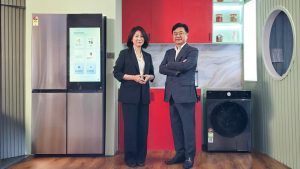
LG's ThinQ, Samsung's SmartThings, and Haier's evolving connected ecosystem are no longer treated as companion apps. They are central to how these companies think about product roadmaps.
The language around recent launches has changed. Instead of talking only about tonnage, capacity, or star ratings, brands are emphasising orchestration. Appliances that talk to each other. Energy usage that can be monitored and optimised across rooms. Predictive maintenance that reduces service downtime. Software updates that extend relevance beyond the initial purchase.
This is not accidental. Appliance replacement cycles are long, often eight to ten years in Indian households. Platforms allow brands to stay present during that gap, shape user behaviour, and create switching costs that go well beyond price.
Matter Promises Openness. Brands Are Testing Its Limits.
The arrival of Matter has added a new layer to this transition. On paper, Matter is meant to simplify the smart home by allowing devices to work across ecosystems like Google Home, Apple Home, and Amazon Alexa.
In practice, appliance brands are adopting Matter carefully and selectively. Basic controls are increasingly exposed for interoperability, but the deeper experiences still sit firmly inside proprietary apps. Advanced automation, usage insights, diagnostics, and AI-driven features remain gated.
The result is a familiar compromise. Matter reduces friction at the surface, while platforms retain control underneath. It reassures consumers without fully diluting brand lock-in.
Not All Platforms Are Being Built With Equal Clarity
This is where strategy begins to diverge.
LG and Samsung have spent years refining their platform narratives, even if adoption has lagged expectations. Haier, however, has emerged as a particularly interesting case in the Indian context. While the broader AC market struggled in parts of 2024 and 2025 due to uneven weather conditions, Haier continued to gain share, leaning heavily on design differentiation and AI-led positioning rather than aggressive discounting.
More tellingly, Haier has already begun signalling its 2026 direction in air conditioners. The emphasis is clearly on aesthetics, smart airflow design, and contextual AI features tuned for Indian usage patterns. This early signalling suggests a brand that sees platforms not as bolt-ons, but as part of a longer-term product and design philosophy.
By contrast, Whirlpool's connected approach remains present but less clearly articulated in India. While the brand has global platform ambitions, its local execution lacks the coherence seen from LG, Samsung, or Haier, making it harder to read its long-term strategy in the connected appliance space.
If you step back and look at recent appliance launches, a pattern emerges. Truly new hardware breakthroughs are rare. What is changing is how products are framed.
AI is no longer sold as intelligence for its own sake. It is being positioned as a way to reduce effort, optimise energy use, and adapt to habits quietly. Design is being elevated not just for aesthetics, but as a marker of premium intent. Connectivity is less about control from a phone and more about lifecycle management.
This suggests that upcoming launches will continue to look evolutionary on the surface, but strategic underneath. More platform hooks. Deeper software layers. Fewer headline features, more long-term positioning.
The Trade-Off Consumers Are Being Asked to Make
The platform shift is not without risk. As appliances become more dependent on software ecosystems, consumers are being asked to commit earlier and more deeply to a brand.
Account creation, data sharing, app dependence, and ecosystem lock-in are becoming part of the ownership experience. While Matter softens this to an extent, it does not eliminate it. The real test will be whether platforms deliver consistent, everyday value rather than just theoretical benefits.
Adoption data already suggests caution. Many users still engage with appliance apps only sporadically, often during setup or troubleshooting. For platforms to justify their central role, they will need to become less demanding and more invisible.
What This Shift Really Signals
This is not just about smart homes. It is about control, continuity, and economics.
Platforms allow brands to smooth revenue, reduce service costs, and maintain relevance between upgrade cycles. They also give manufacturers leverage in a market where hardware differentiation alone is no longer enough.
For consumers, the outcome will depend on execution. Platforms that respect user choice and deliver tangible benefits will strengthen trust. Those who overreach risk fatigue.
For now, the direction is clear. Appliances are no longer being designed only for the day they are sold. They are being built for the years that follow.