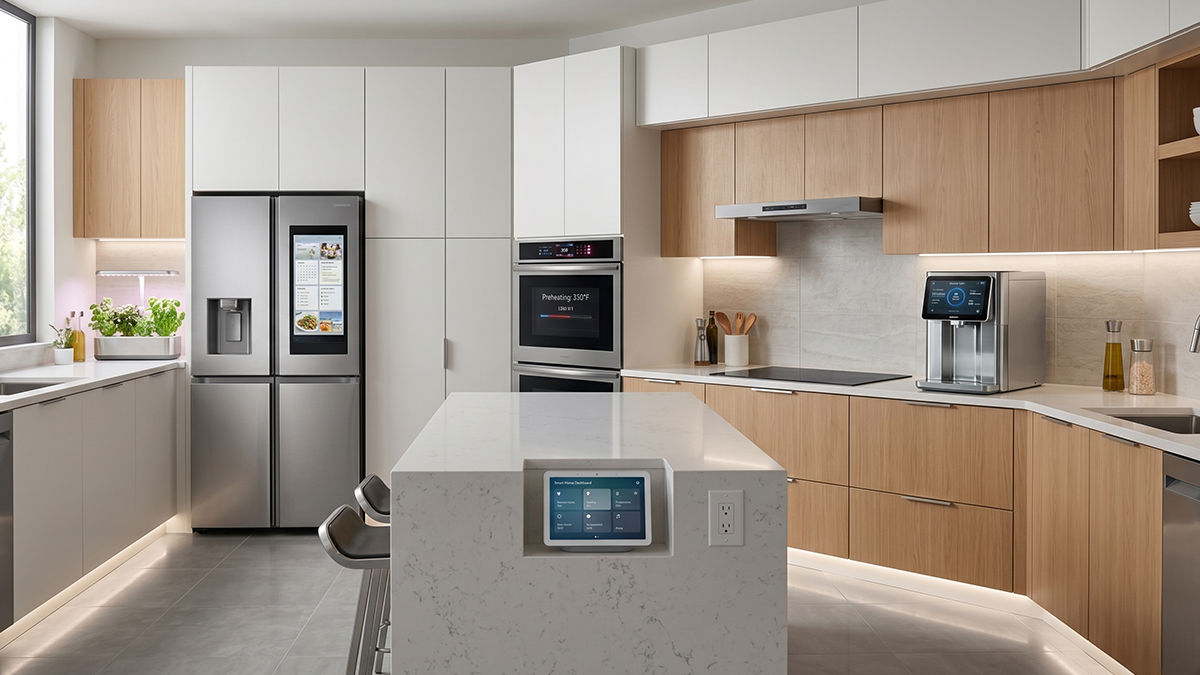
When we talk about smart kitchens, the conversation usually moves towards connected refrigerators, AI-powered ovens, automated coffee machines, and app-controlled appliances. However, one of the most important parts of the kitchen has largely stayed invisible: the water purifier.
That is beginning to change.
As Indian consumers become more conscious about what they drink, the purifier is moving from being a silent box on the kitchen wall to a connected appliance that can tell users what is happening inside. From tracking water quality and filter health to predictive maintenance, brands believe the next phase of the category will be defined by transparency and intelligence.
Speaking to MySmartPrice, Anurag Kumar, Chief Growth Officer, Eureka Forbes, said connected water purifiers have started gaining traction over the last year and a half, with consumers increasingly wanting more visibility into the water they consume.
"I think what smart purifiers or IoT-connected purifiers offer consumers today is two or three things. You get to know the quality of your water because it measures water quality in terms of TDS input and output," Kumar said.
He added that users can now see this information directly on the device or through an app, along with details such as purifier health and filter life. "You can know the health of the purifier on your own. So therefore, you are actually a step ahead, and you are actually in control as a consumer," he explained.
From a Black Box to a Transparent Appliance
For decades, water purifiers have largely worked in the background. Consumers installed them, waited for service reminders, and depended on technicians to tell them when something needed attention.
That model is now changing.
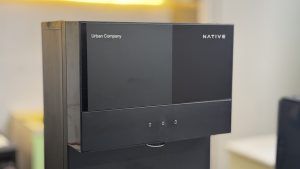
Amit Das, SVP, Design & Native, Urban Company, believes connectivity is solving one of the biggest gaps in the category: trust.
"The biggest change that connectivity enables is transparency for the user. Traditionally, purifiers didn't have smart connectivity, which made the purifier as good as a black box running on pure hope," Das said.
According to him, IoT-connected purifiers can now provide granular information such as how much water was purified, how much the filters have been used, the remaining filter life, the quality of incoming water, and the quality of the water users are actually drinking.
Smart diagnostics are also becoming a key part of the experience. Instead of waiting for a breakdown and then booking a service visit, future purifiers could detect issues earlier and help resolve them faster.
Why Consumers Are Paying More Attention to Water Quality
The shift is also being driven by a change in consumer awareness.
Kumar said that the biggest change Eureka Forbes is seeing is that people are becoming more concerned about water contamination and the quality of water reaching their homes.
"Quality of water is becoming a top-of-mind concern. One of the reasons why the growth of this category is accelerating is exactly because of that," he said.
He pointed out that water purifiers are not a one-time purchase category, but a long-term relationship between the consumer and the brand.
"You are using drinking water every single day. Your entire family depends on it. While it silently works, there are times when it can give a problem, and that time how the company reacts and solves the problem is equally important," Kumar added.
The Smart Features Consumers Actually Want
While AI and smart features have become popular buzzwords, brands say consumers are looking for practical intelligence rather than gimmicks.
Rakesh Kaul, CEO and Managing Director, Livpure, believes the first requirement remains safety.
According to Kaul, consumers want a clear understanding of whether the water they are drinking is safe. One of the most important data points for them is TDS (Total Dissolved Solids), as users increasingly associate it with water quality.
The second big requirement is reducing unnecessary maintenance costs.
"Consumers do not want to increase their total cost of ownership beyond a point, and hence they want to replace filters only when the filters have gone bad," Kaul said.
He added that knowing the actual life of consumables and replacing them only when required is becoming one of the most useful smart features.
The Future Water Purifier Could Be One You Barely Notice
As kitchens become more premium and integrated, the design of water purifiers is also evolving.
Kumar said Eureka Forbes is seeing interest in newer formats such as hot and ambient water purifiers and under-the-counter models, especially as modular kitchens become more common.
"People are starting to see new segments grow as they become more conscious about the need for a purifier and what they want from a purifier," he said.
Das believes the future purifier could become even more invisible. Instead of asking users to manage it, the appliance could understand usage patterns, adapt to changing water quality, predict maintenance needs, and take care of service before something breaks.
Five years from now, the smartest purifier in your kitchen may not be the one with the most visible technology. It could be the one quietly working in the background, making sure you never have to think about it.