With air quality becoming a growing concern in Indian cities, an air purifier is increasingly moving from a niche appliance to something many households consider for everyday use. But buying one is not simply about picking the model with the highest filtration claim. Room size, filter technology, noise levels, smart features and the cost and availability of replacement filters can all make a difference over time.
If you are looking for an air purifier without spending more than Rs 15,000, we have picked four options from Coway, Philips, Xiaomi and Qubo that take different approaches to air purification.
Coway Airmega AIM (AP-0623B): Focuses on Filtration and Warranty
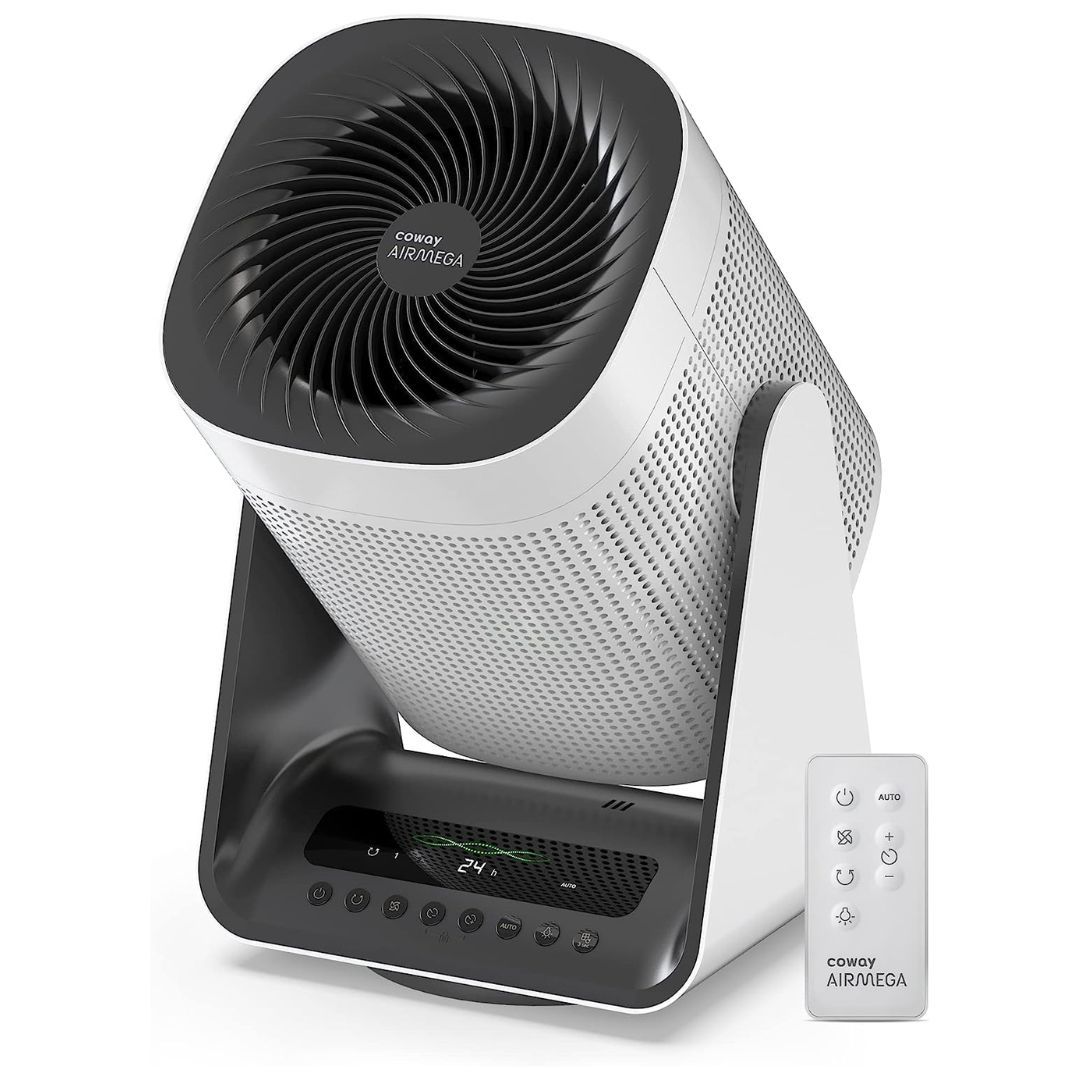
The Coway Airmega AIM is available for Rs 13,999 (Buy Now!), compared to its MRP of Rs 29,900. It is designed for rooms of up to 355 sq ft and uses a 3-in-1 filtration system comprising a vacuumable pre-filter, True HEPA filter and deodorisation filter. Coway also claims that its anti-virus HEPA filter can capture and kill certain viruses, germs and bacteria with up to 99.999% efficiency. The purifier uses a 360-degree air intake, allowing it to draw air from different directions.
The Airmega AIM also takes a slightly different approach to airflow, with up to 80-degree auto oscillation and up to 90-degree vertical tilt. This can help distribute purified air around the room rather than keeping the airflow fixed in one direction. Coway offers a five-year warranty on the motor and one year on electrical parts, with an option to extend the motor warranty by another two years after registration. For buyers who put a higher priority on after-sales support and warranty coverage, this is one of the more notable aspects of the deal.
Best for: Buyers who prioritise filtration, airflow flexibility and long warranty coverage.
Philips Air Purifier 900 Series: A Quiet Option for Bedrooms
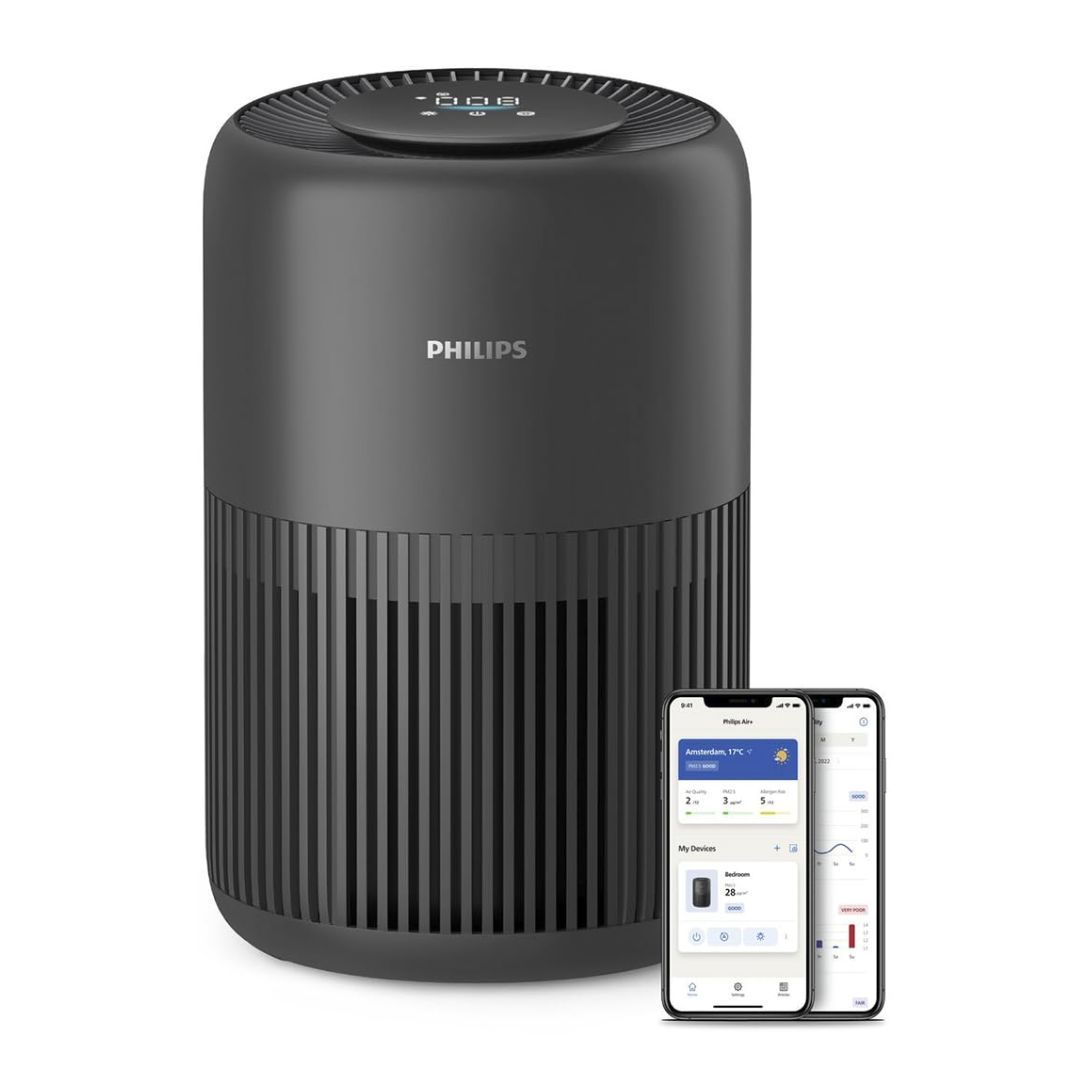
The Philips Air Purifier 900 Series is priced at Rs 11,750 (Buy Now!), down from its MRP of Rs 14,995. It can cover up to 65 sq m according to the supplied specifications and uses a three-layer HEPA filtration system. Philips claims that it captures 99.97% of particles down to 0.003 microns, while also removing airborne viruses and bacteria.
Where the Philips model stands out is its focus on quiet operation and low power consumption. Its Sleep Mode operates at 20.5dB, which makes it particularly relevant for bedrooms and other spaces where fan noise can become distracting. The purifier consumes 23W at maximum power and can be connected to the Philips Air+ app for remote monitoring and control. It also has a smart filter replacement indicator that tracks filter life and alerts users when the filter needs to be replaced.
Best for: Bedrooms and users who want quiet operation with app control and low power consumption.
Xiaomi Air Purifier 4 Lite: Large Coverage at a Lower Price
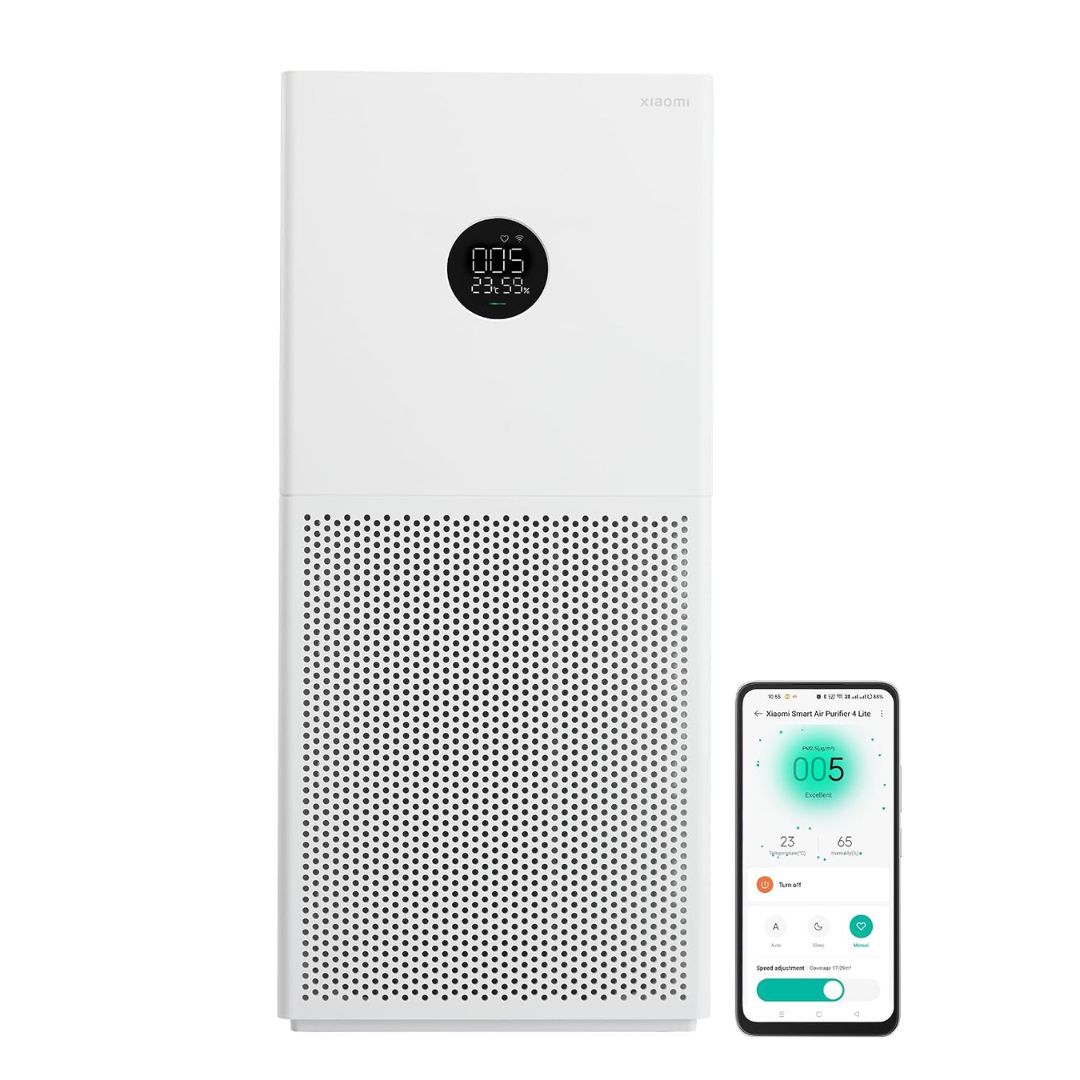
At Rs 10,999, the Xiaomi Air Purifier 4 Lite (Buy Now!) is the most affordable option in this list apart from the Philips model and carries an MRP of Rs 14,999. Xiaomi says it can cover up to 462 sq ft and uses a triple-layer filtration system with a primary filter, True HEPA filter and activated carbon filter. The company claims the system can capture 99.99% of 0.1-micron particles, while the carbon layer is designed to tackle household odours.
The purifier also puts more emphasis on real-time monitoring. Its display shows air quality, temperature, humidity, Wi-Fi status and the selected mode, while a colour-coded light strip provides a quick indication of air quality. Users can monitor the purifier and adjust its settings through the Xiaomi Home app or voice commands. There is also a filter replacement indicator to help track when a new filter may be required.
Best for: Buyers looking for a smart air purifier with broad room coverage and real-time air-quality monitoring without spending close to Rs 15,000.
Qubo Q600: The Smart Option With a Long-Lasting Filter
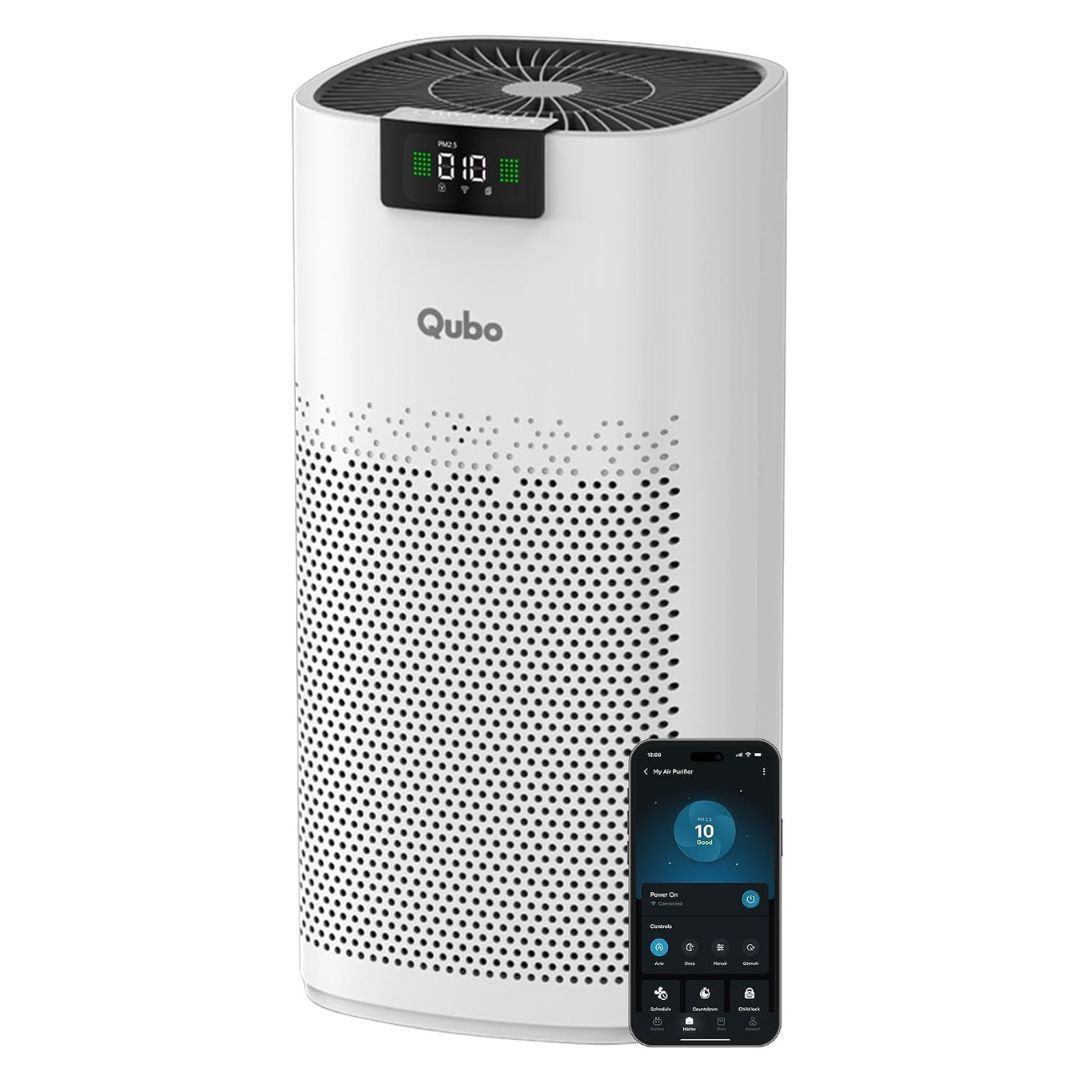
The Qubo Q600 is priced at Rs 13,990 (Buy Now!), compared to its MRP of Rs 24,990. It is designed for rooms of up to 600 sq ft and uses a five-layer filtration system comprising two pre-filters, a nano-silver antibacterial coating, activated carbon and a True HEPA H13 filter. Qubo says the system can capture pollutants down to PM0.01, along with dust, pollen, pet hair, smoke and odours.
The Q600 also has Auto, Manual, Sleep and AI modes, with the latter designed to adjust operation based on air quality. Its on-device display shows the actual PM2.5 reading rather than just using a colour indicator, while the Qubo app allows users to monitor air quality, change modes and create schedules remotely. One of its more interesting practical features is the claimed filter life of up to 9,000 hours. For buyers concerned about recurring filter replacement, this could be an important consideration.
Best for: Larger rooms and buyers who want detailed air-quality monitoring, smart controls and a longer claimed filter life.
Air Purifier Deals Under Rs 15,000 Compared
| Air Purifier | Deal Price | Claimed Coverage | Filtration | Smart Features | Standout Feature |
|---|---|---|---|---|---|
| Coway Airmega AIM | Rs 13,999 | Up to 355 sq ft | 3-in-1 True HEPA | — | Long warranty and 360-degree intake |
| Philips 900 Series | Rs 11,750 | Up to 65 sq m | 3-layer HEPA | Air+ app | 20.5dB Sleep Mode |
| Xiaomi Air Purifier 4 Lite | Rs 10,999 | Up to 462 sq ft | Triple-layer, True HEPA + carbon | Xiaomi Home app, voice control | Real-time AQI, temperature and humidity display |
| Qubo Q600 | Rs 13,990 | Up to 600 sq ft | 5-layer, True HEPA H13 + carbon | Qubo app, AI Mode | 9,000-hour claimed filter life |
What the Air Purifier Market Under Rs 15,000 Tells Us
The sub-Rs 15,000 segment is no longer limited to basic air purifiers with a filter and fan. These models show how manufacturers are adding features such as real-time air-quality monitoring, app controls, automated modes and longer filter life to make their products more useful beyond simple filtration.
There is also a noticeable difference in how brands are positioning these products. Philips focuses on quiet operation and energy efficiency, Xiaomi combines air purification with a broader smart-home ecosystem, Qubo pushes detailed air-quality monitoring and filter longevity, while Coway places greater emphasis on filtration, airflow and after-sales support. This gives buyers more choice, but it also means the cheapest model is not necessarily the best fit for every room.
What Should You Check Before Buying an Air Purifier?
- Room size: Make sure the purifier’s claimed coverage is suitable for the room where you plan to use it.
- Filtration: Look for a proper HEPA filter if your priority is removing fine particulate matter.
- Filter replacement cost: Check the price and availability of replacement filters before buying the purifier.
- Noise levels: A quieter model can make a significant difference if you plan to run it overnight in a bedroom.
- Air-quality sensors: PM2.5 monitoring and automatic modes can reduce the need to manually adjust fan speeds.
- Power consumption: If the purifier will run for several hours every day, even small differences in power consumption can add up.
- Smart features: App control is useful if you want to monitor or operate the purifier remotely, but it should not come at the expense of basic filtration performance.
Which Air Purifier Deal Is Right for You?
The Xiaomi Air Purifier 4 Lite stands out as a value-focused option, particularly if you want broad claimed coverage, real-time air-quality information and smart controls at Rs 10,999.
The Philips 900 Series makes more sense for bedrooms or users who prioritise quiet operation, with its 20.5dB Sleep Mode and 23W maximum power consumption.
The Qubo Q600 is worth considering for larger rooms and buyers who want more detailed monitoring, app controls and a claimed filter life of up to 9,000 hours.
The Coway Airmega AIM is the more interesting choice for buyers who value filtration technology and long-term warranty coverage, with a five-year motor warranty and the option to extend it further after registration.
Ultimately, the right deal depends less on the discount and more on where you plan to use the purifier, how long you expect to run it each day and how much you are willing to spend on replacement filters over time.