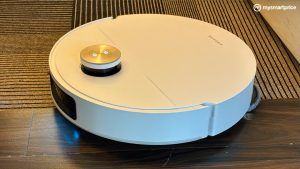
Robot vacuum cleaners have reached a point where the question is no longer whether they can clean your house. The more interesting question is how much of the cleaning routine you are willing to hand over to them. The better models now map the home, recognise different floor types, empty their own dustbins, wash and dry their mop pads and return to the dock when their batteries run low. The Dreame D30 Ultra takes that idea quite seriously. It is priced at ₹52,999, combines a claimed 25,000Pa suction power with LiDAR navigation, dual rotating mop pads, edge cleaning and a multifunction dock that handles much of the maintenance automatically.
Dreame D30 Ultra
Rs 52,999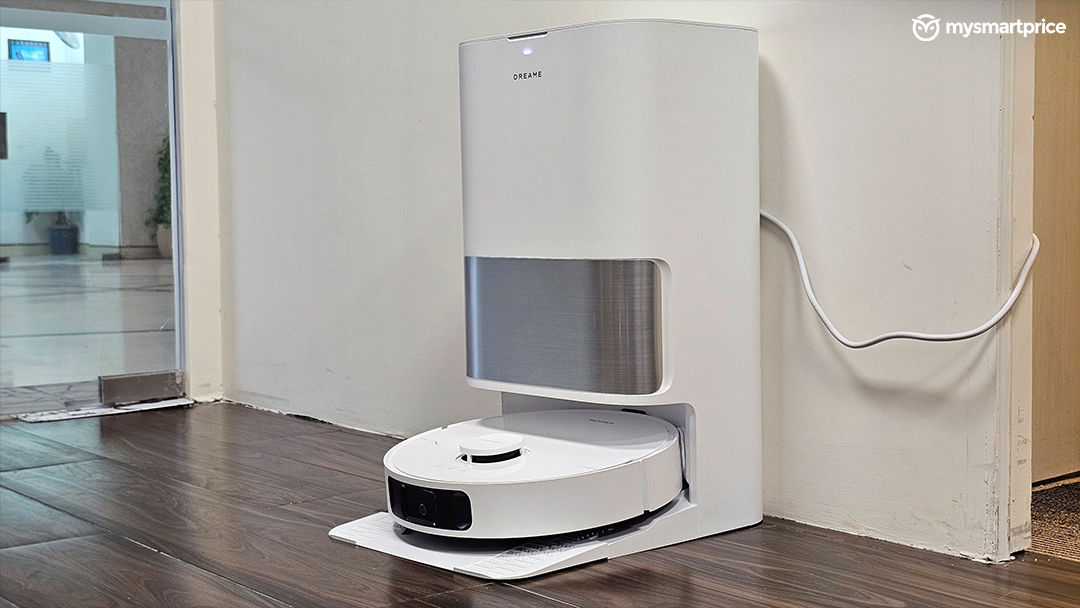
What Is Good?
- Excellent 25,000Pa suction power
- Effective MopExtend RoboSwing edge cleaning
- Large 4.5L clean and 4L dirty water tanks
- Good LiDAR navigation and mapping
- Long 5,200mAh battery life with recharge-and-resume
What Is Bad?
- Obstacle avoidance is not class-leading
- Dust-emptying cycle can be noticeably loud
- Large docking station requires considerable space
- Higher price than Xiaomi X20 Pro and Narwal Freo X Ultra
That also puts the D30 Ultra in an interesting position within Dreame’s own lineup. We have previously spent time with the higher-end Dreame L50s Pro Ultra and L40 Ultra AE, priced at ₹79,999 and ₹59,999 respectively. The L50s Pro Ultra impressed with its 30,000Pa suction, 100°C mop self-cleaning, strong vacuuming and mopping performance and excellent battery life, although occasional software and navigation issues remained. The L40 Ultra AE, meanwhile, delivered strong 19,000Pa vacuuming and mopping performance with largely hands-free maintenance, but had some quirks around app setup, mapping, small-object handling and side-brush reliability. That experience gives us a useful reference point when looking at what the D30 Ultra offers at ₹52,999.
This puts the D30 Ultra in a particularly interesting part of the market. It is considerably more expensive than something like the Xiaomi Robot Vacuum X20 Pro, which is listed around ₹44,499 in India, and the Narwal Freo X Ultra 2.0, which is currently around ₹44,989. At the same time, it remains below Dreame’s L50 Ultra CE, which costs ₹64,999 and adds features such as 80°C hot-water mop washing and an extendable side brush. So the D30 Ultra has to justify that middle position. After spending time with it, I think it does, although perhaps not in the way its 25,000Pa headline suggests. The D30 Ultra’s biggest strength is that it is a very good vacuum wrapped in a highly automated cleaning system. Its mopping is competent, the app is comprehensive and the dock removes much of the routine work. The main concern is obstacle avoidance, particularly when compared with some of the more sophisticated systems appearing in this price bracket.
Design and Build
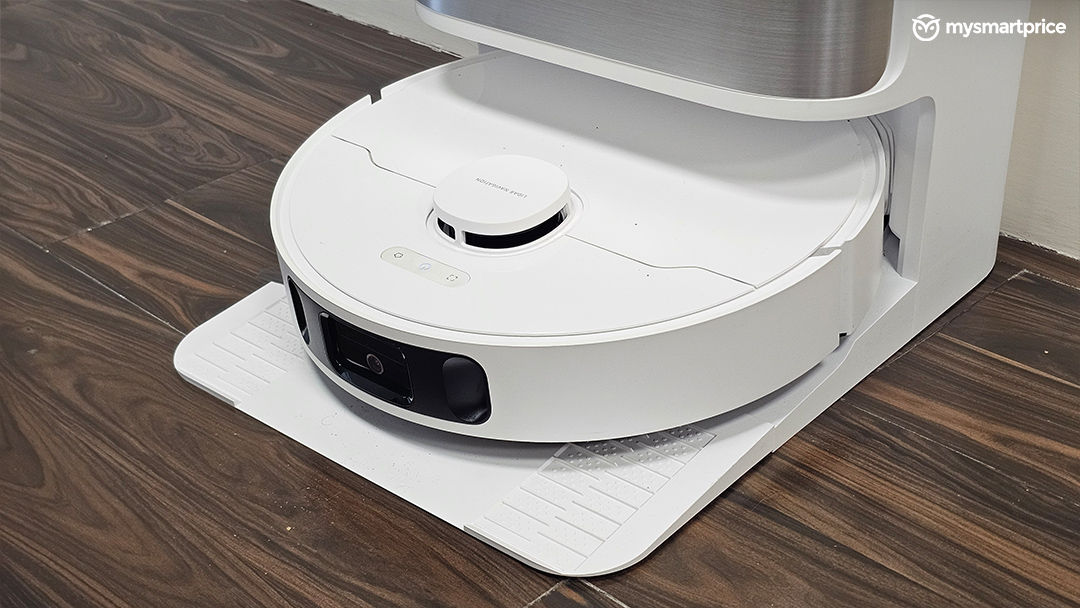
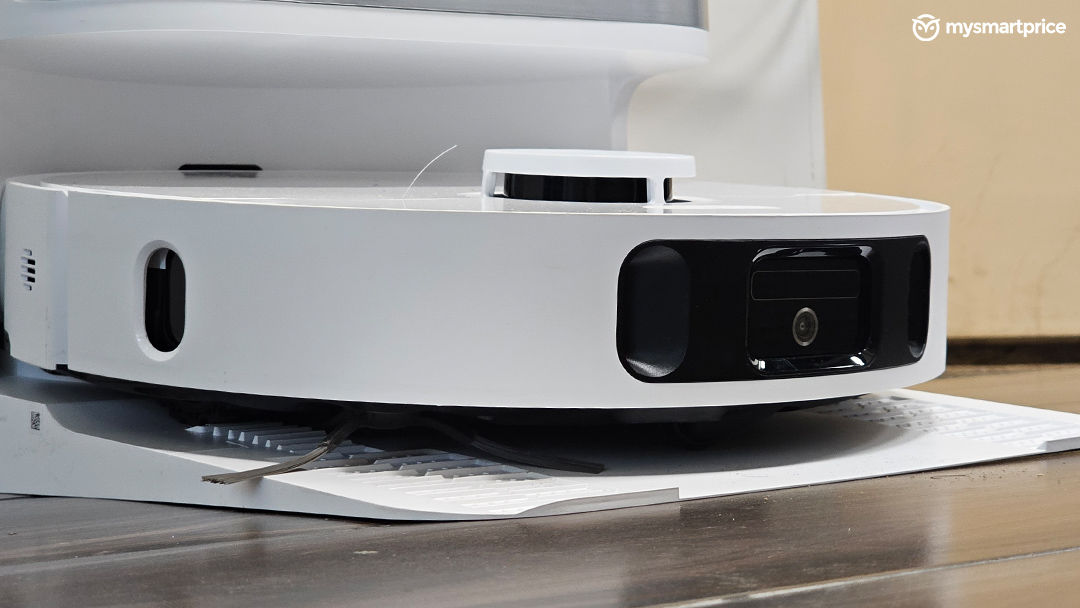
The overall design will also feel familiar if you have seen Dreame’s higher-end models. The D30 Ultra follows the same broadly understated design language as the L50s Pro Ultra and L40 Ultra AE, with the circular robot, raised sensor module and similarly styled docking station. There are differences in the hardware and functionality between the models, but Dreame has clearly maintained a consistent design approach across its lineup. In that sense, the D30 Ultra doesn’t try to reinvent the look of the company’s premium robot vacuums, and I don’t think it needs to.
The station houses the clean and dirty water tanks, dust collection system and mop-washing hardware. The clean-water tank holds 4.5 litres, while the dirty-water tank is rated at 4 litres. The robot’s 250ml internal dustbin is emptied into a 3.2-litre dust bag inside the dock. Dreame claims up to 100 days of hands-free cleaning, although that will obviously depend on the size of the home, how frequently the robot runs and how much dirt it encounters. The dock does occupy a fair amount of floor space, so this isn’t a product you buy first and decide where to put later. It needs a reasonably accessible position, particularly because the water tanks and dust bag eventually need attention. Build quality, however, is reassuring. The various tanks and removable parts are straightforward to access, and nothing about the robot feels unnecessarily delicate.
Vacuuming Performance
Vacuuming is the D30 Ultra’s strongest suit, and this is where its 25,000Pa Vormax suction becomes relevant. The number itself should be treated with some caution. Suction measurements don’t tell the whole story, and brush design, airflow, floor contact and navigation all influence actual cleaning. But in use, the D30 Ultra has the sort of power you would expect from its specification. Dust, grit, rice, coffee grounds and everyday debris are handled easily on hard floors. The stronger suction becomes more useful on carpets, where dirt can settle deeper into the fibres. Dreame has also given the D30 Ultra several carpet-specific functions. It can automatically increase suction when carpet is detected, while its Intensive Carpet Cleaning mode slows the robot down and makes an additional pass. The mop pads lift by 10.5mm, allowing the robot to move between hard floors and carpets without leaving wet pads on the carpet.
This is where the D30 Ultra has a clear advantage over the Xiaomi X20 Pro on paper. Xiaomi’s machine is a very capable all-rounder, but its maximum suction is 7,000Pa, compared with 25,000Pa on the Dreame. The Xiaomi does have structured-light obstacle avoidance and a more advanced perception system than the simpler X20, but if raw vacuuming power is the priority, there is little argument about which specification favours the Dreame.
The comparison with Narwal is more interesting. The Freo X Ultra offers 8,200Pa suction, but Narwal has put considerably more emphasis on the mopping side, including DirtSense technology that can detect remaining dirt and send the robot back for additional cleaning.
That tells you quite a lot about the three machines. Xiaomi is trying to offer a complete package at a lower price, Narwal puts more emphasis on intelligent floor washing, while Dreame is clearly prioritising vacuuming power. And for homes with carpets, pets or a lot of everyday dry debris, I think Dreame has chosen the right priority.
One of the more useful features on the D30 Ultra is MopExtend RoboSwing. A round robot will always have a physical limitation when it comes to corners and edges. The main body simply cannot get all the way into a sharp corner. Rather than pretending this isn’t a problem, Dreame has given the mop assembly the ability to extend by up to 4cm towards edges and corners. The company claims more than 99% edge coverage in its own testing. In practice, this helps the robot clean areas that would otherwise be left untouched. It is worth noting that the D30 Ultra’s approach is somewhat different from Xiaomi’s X20 Pro. Xiaomi also uses an edge-focused obstacle system, but its X20 Pro relies on structured light and an edge sensor to position the robot accurately near obstacles. Its more expensive X20 Max goes further with an extendable mop arm.
Dreame’s implementation on the D30 Ultra is therefore a useful middle ground. You don’t get every premium edge-cleaning feature found in the company’s higher-end models, but you do get more than the conventional side-brush approach used on basic robots.
Mopping Performance
Mopping is where the D30 Ultra becomes less dominant. The robot uses two rotating mop pads, with Dreame quoting a maximum rotation speed of 160RPM and 6N of downward pressure. That gives the pads considerably more mechanical action than the simple cloth plates used on cheaper robot vacuums. For everyday cleaning, the results are good. Dust residue, footprints, light spills and the general marks that accumulate on hard floors are handled well, particularly when the robot is allowed to clean regularly.
But this isn’t where I would choose the D30 Ultra over the Narwal. The Freo X Ultra, for example, uses Narwal’s DirtSense system to assess the dirt level during cleaning and can continue mopping until the floor meets its cleaning criteria. It also applies up to 12N of downward pressure, compared with 6N on the Dreame. Narwal’s system also includes automatic detergent dispensing and 40°C mop drying. That doesn’t mean the Narwal is necessarily the better robot overall. It means the two companies have made different choices.
The difference becomes more apparent when you move up Dreame’s range. The L50s Pro Ultra’s 100°C mop self-cleaning is a more aggressive approach to maintaining the mop pads, while the D30 Ultra takes a more conventional automated washing and drying approach. In everyday cleaning, however, the D30 Ultra’s system is still effective and does a good job of reducing the amount of manual intervention required.
Dreame has given the D30 Ultra substantially more vacuuming power and a very capable automated dock. Narwal has invested more heavily in the intelligence and hardware behind wet cleaning. If you have mostly hard floors and frequently deal with stains, that difference could make the Narwal more attractive. If your home is carpet-heavy and vacuuming is the bigger concern, the Dreame’s priorities make more sense.
The Dock
The D30 Ultra’s dock is one of the reasons the machine feels like a proper premium appliance rather than simply a robot vacuum with a charging station. After cleaning, it can automatically empty the dustbin, wash the mop pads and dry them. The dock also cleans its own washboard, while the clean and dirty water tanks mean the robot doesn’t need to be manually filled after every run. This is where the D30 Ultra compares favourably with the Xiaomi X20 Pro as well. Xiaomi’s X20 Pro also has an all-in-one dock that collects dust, washes the mops and uses hot air to dry them.
So Xiaomi isn’t giving you a dramatically simpler system for the lower price. In fact, the X20 Pro offers a surprisingly complete dock for roughly ₹8,500 less. That puts more pressure on the D30 Ultra to justify itself through cleaning performance, and this is precisely where the higher suction and more sophisticated edge-cleaning hardware become important. The D30 Ultra also uses AceClean DryBoard for mop washing and drying. The automated system is convenient, although the dock itself is large and the dust-emptying cycle is noticeably louder than ordinary robot operation.
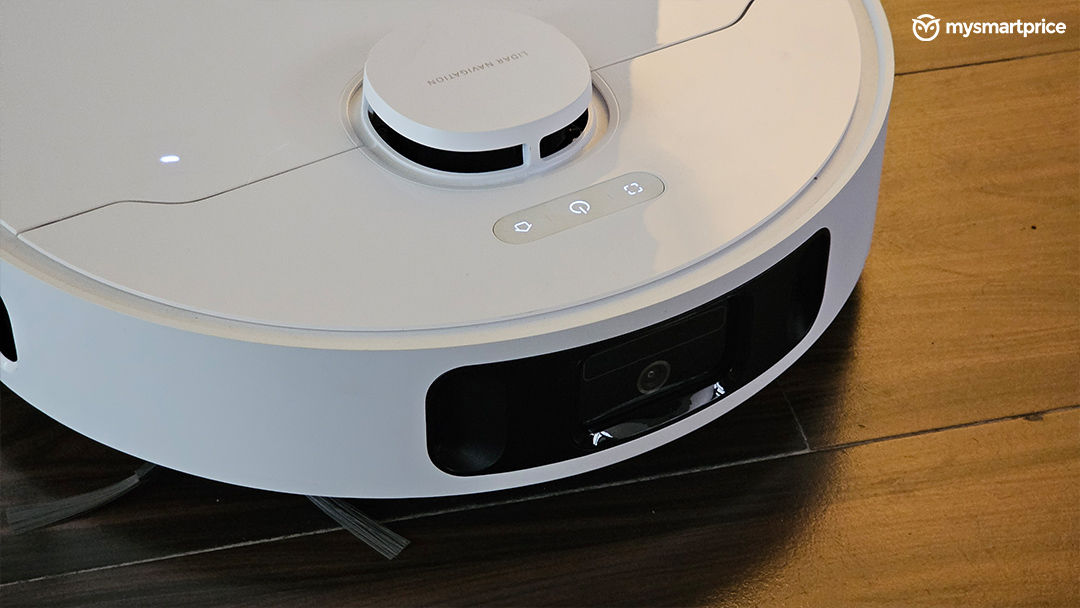
The area I would look at most carefully before buying the D30 Ultra is obstacle avoidance. The robot uses Dreame’s 3DAdapt system, which combines dynamic laser navigation with obstacle detection. That sounds impressive, and the robot is certainly capable of navigating furniture and room boundaries effectively.
Small objects are another matter. The more interesting comparison here is with the Xiaomi X20 Pro and Narwal Freo X Ultra. Xiaomi’s X20 Pro uses 120-degree structured light with an edge sensor to identify low obstacles and avoid collisions. Narwal’s Freo X Ultra uses front and side sensors alongside LiDAR and is designed specifically to identify obstacles while maintaining close proximity to edges. That doesn’t make either robot infallible, but it shows where Dreame’s compromise lies. The D30 Ultra is an excellent navigator, but I wouldn’t put it in the same category as the best robots when it comes to recognising everything that has been left on the floor. If your home is tidy, it probably won’t matter much. If you have pets, children, charging cables and toys appearing everywhere, it matters considerably more.
Battery
The D30 Ultra has a 5,200mAh battery, with Dreame claiming up to 230 minutes of runtime in Quiet vacuum mode. Actual endurance will obviously depend on suction level, floor type and cleaning settings. That is a healthy amount of endurance, and the robot can return to the dock, recharge and resume cleaning if it runs out of power during a larger job. The D30 Ultra has plenty of battery capacity for most Indian homes, and the recharge-and-resume feature makes the absolute runtime less important than it might initially appear.
Navigation and Mapping
Setup is handled through the Dreame Home app, after which the D30 Ultra uses LiDAR to map the house. This part of the experience is mature. The robot understands the basic layout of a home well, creates room divisions and generally follows sensible cleaning paths rather than moving around randomly. You can create multiple maps, set room-specific cleaning preferences, define no-go zones and schedule cleaning according to your routine. The D30 Ultra supports four maps, making it suitable for multi-storey homes, while its 20mm threshold-crossing capability should allow it to negotiate most ordinary transitions between rooms. Where things become less straightforward is obstacle avoidance. The D30 Ultra has 3DAdapt obstacle avoidance and uses its sensors to detect objects in its path, but its ability to understand small objects isn’t quite as impressive as its ability to understand the structure of the home. That distinction matters because a robot vacuum can be perfectly competent at mapping a room while still getting into trouble with a charging cable or a child’s toy.
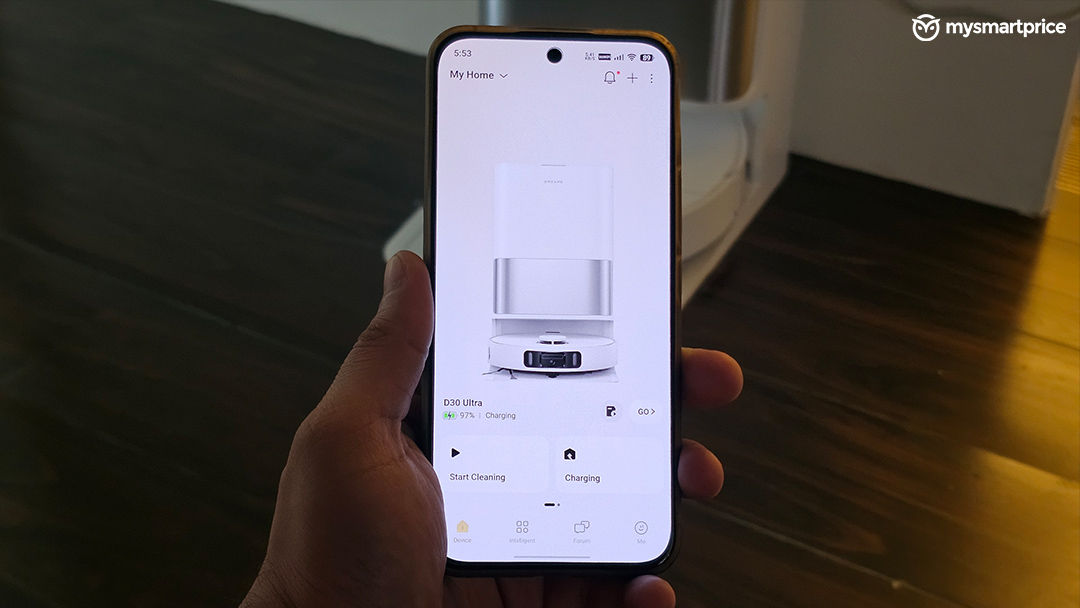
The Dreame Home app is comprehensive without being particularly difficult to understand once the initial setup is complete. You can select rooms, create schedules, adjust suction and water settings, establish restricted areas and manage multiple maps. That allows the robot to be configured according to how your home actually gets dirty rather than forcing the same cleaning routine everywhere. In other words, the D30 Ultra doesn’t have a decisive advantage here. The app is good, but it’s the combination of hardware and automation that makes the Dreame interesting.
Maintenance
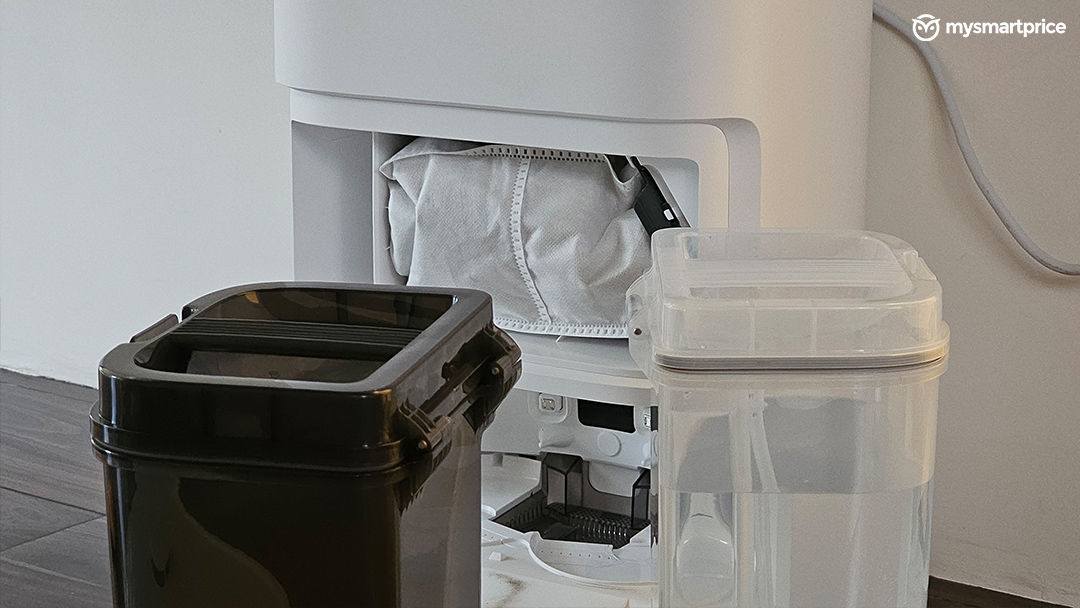
The D30 Ultra substantially reduces the amount of maintenance involved in everyday cleaning, but it doesn’t eliminate it. The brushes and filters still need to be checked periodically, the water tanks need attention and the dock itself needs cleaning. The dust bag is another consumable that eventually needs replacing. Dreame’s TriCut brush is worth mentioning carefully, because the company’s Indian specification page lists it as a separately purchased accessory rather than an included component. It is designed to cut through hair and reduce tangling, but buyers should check exactly what is included with the package they are purchasing. This is a small but important distinction in a review because an optional accessory shouldn’t be presented as part of the standard product.
Verdict
The Dreame D30 Ultra is a product that makes more sense once you stop looking at its feature list and start looking at the compromises behind it.
At ₹52,999, it costs more than Xiaomi’s X20 Pro and Narwal’s Freo X Ultra, both of which offer surprisingly sophisticated all-in-one cleaning systems for less money. Xiaomi makes a particularly strong case for itself if you’re looking for a balanced package, while Narwal is the more interesting alternative if mopping and adaptive floor cleaning are your priorities.
The Dreame’s response is straightforward: vacuuming performance. The Dreame D30 Ultra is a product that makes more sense once you stop looking at its feature list and start looking at the compromises behind it. Having used Dreame’s L40 Ultra AE and L50s Pro Ultra as well, it is clear that the D30 Ultra sits between those machines not simply in terms of price, but also in terms of how much hardware and automation Dreame is willing to offer at this level.
Its 25,000Pa suction is substantially higher than the 7,000Pa on Xiaomi’s X20 Pro and 8,200Pa on Narwal’s Freo X Ultra, and the D30 Ultra backs that specification up with strong everyday debris pickup and capable carpet cleaning. The MopExtend system, 10.5mm mop lift, automated mop washing and drying, large water tanks and 5,200mAh battery make it a genuinely convenient machine to live with. Its biggest weakness is obstacle avoidance. The D30 Ultra navigates a mapped home well, but it isn’t the robot I’d leave running in a room full of cables, socks and toys and expect to deal with everything without supervision. At this price, that is a meaningful limitation, particularly when competing systems are putting more emphasis on structured-light and multi-sensor object detection. The mopping system is also good rather than class-leading. It is perfectly capable of keeping hard floors maintained, but Narwal’s DirtSense approach is more ambitious when it comes to deciding whether an area actually needs another pass, while moving higher into Dreame’s own range gets you hot-water mop washing and additional edge-cleaning hardware.
That leaves the D30 Ultra with a fairly clear identity. It is the vacuum-first option in this group. If you have a home with carpets, pets or plenty of everyday dust and debris, and you want the robot to take over as much of the cleaning routine as possible, the D30 Ultra is a compelling choice. If your floors are predominantly hard and mopping is more important than vacuuming, the Narwal deserves a closer look. And if you want a comprehensive all-in-one system while spending less, Xiaomi’s X20 Pro is difficult to ignore.
For me, that is what makes the D30 Ultra interesting at ₹52,999. It isn’t the most feature-packed robot vacuum for the money, and it doesn’t have the best obstacle avoidance in its class. What it does have is a very strong vacuuming system attached to a dock that takes most of the routine work out of ownership. And for a robot vacuum, that remains a very good place to start.