A refrigerator with more doors, a washing machine with three drums and a television promising better picture and sound can make for an impressive product line-up. Their relevance, however, depends on how well they address the limitations consumers encounter at home. Haier is building its premium appliance strategy around that distinction, with a focus on more flexible food storage, smaller and separate laundry loads, and televisions suited to everyday living rooms.
In a conversation with MySmartPrice, NS Satish, President and CEO of Haier Appliances India Pvt. Ltd., outlined the thinking behind the company's latest products and its expansion into kitchen chimneys and hobs. Alongside the technology, he repeatedly returned to installation and after-sales service as essential parts of the proposition. For a company seeking to sell several categories of appliances to the same household, the experience with one product can influence whether a customer considers another.
Premium demand, in his assessment, is also becoming more geographically dispersed. Although the segment remains a smaller part of the overall market, interest is extending beyond metros and tier-one cities. Affluent consumers across smaller towns and rural markets are looking for better appliances, giving brands a wider audience to address. The challenge is to offer improvements that justify the additional spending and support those products wherever they are sold.
Designing Around the Way Indian Homes Use Appliances
Refrigeration offers a useful example of Haier's approach to local requirements. Households store vegetables, fruit, cooked food and meat, often with different temperature needs, within the available compartments of a refrigerator. Greater capacity can help, but the way that space is divided also determines its usefulness. Satish pointed to Haier's three-door refrigerator as a product developed specifically for India, with a layout intended to give consumers more refrigerator space relative to the freezer.
"This was made only for India," he said, adding that the product was designed and manufactured in the country. The explanation centred on households whose fresh-food storage requirements outweigh their need for frozen storage. Allocating more usable space to those preferences gives the product a clear purpose beyond its door configuration. It also illustrates why a format developed for one market may need reconsideration before being introduced in another.
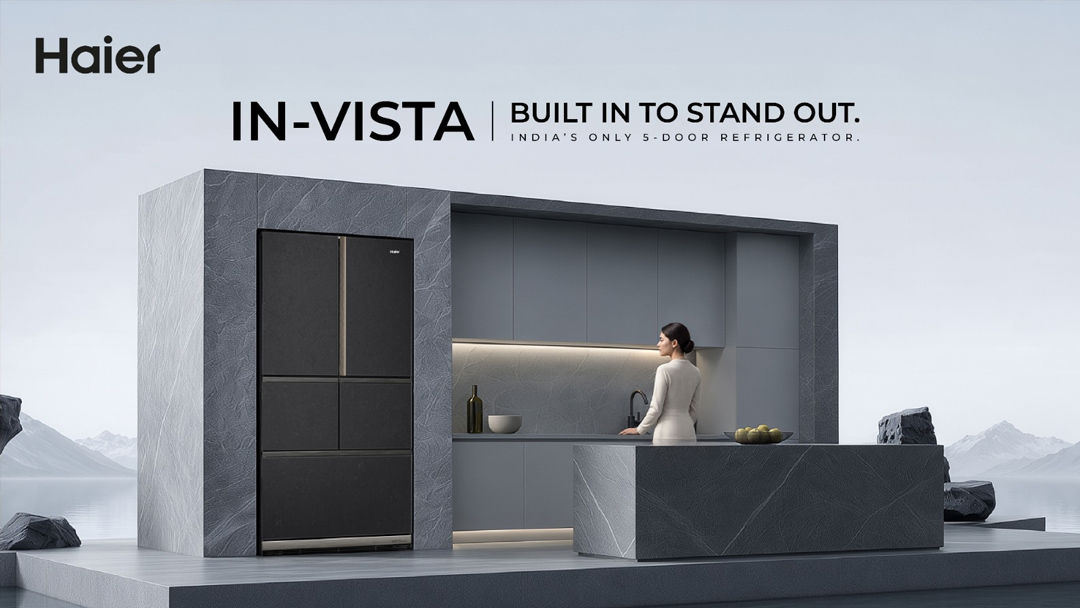
Kitchen design is shaping a separate part of the refrigeration portfolio. Haier's five-door built-in refrigerator is intended to sit flush within a modern kitchen, with its door and hinge design aimed at reducing the surrounding clearance required. For buyers planning fitted cabinetry, the appliance's dimensions and opening space become part of the kitchen layout from the outset. Appearance matters, but so does the ability to access compartments comfortably once the refrigerator is installed.
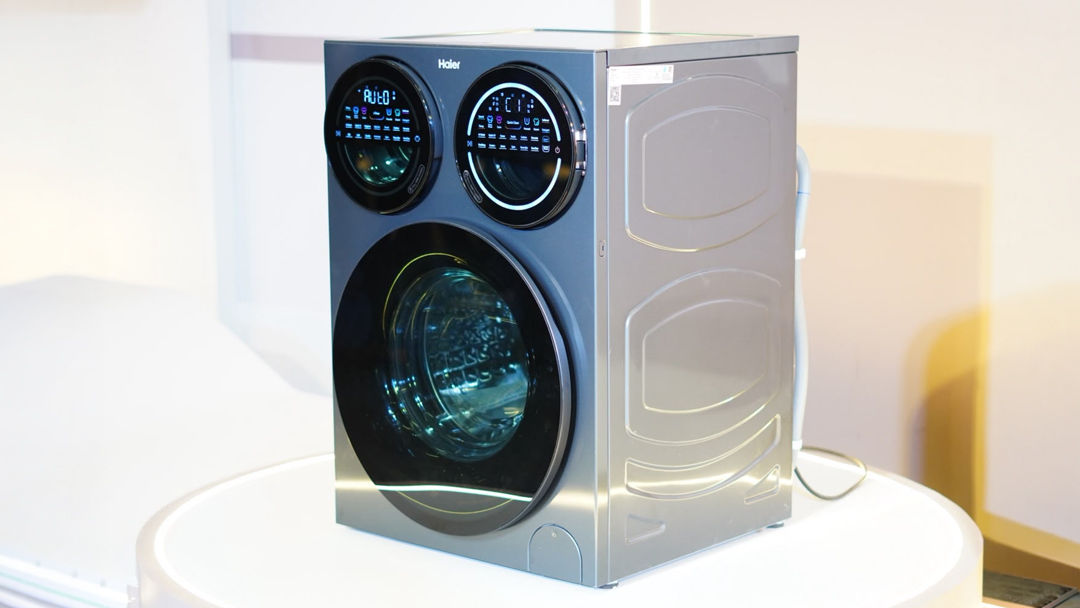
A similar emphasis on usage sits behind the three-drum washing machine. According to Satish, consumers may postpone smaller washes because they associate running a partially filled machine with wasting water and detergent. Separate drums are intended to give them greater flexibility to wash smaller loads without waiting for enough laundry to fill the main drum. The practical appeal will depend on how closely the available capacities match a household's washing habits, particularly where clothes are regularly separated into different loads.
A Television Strategy Built Around the Living Room
Haier's television ambitions address a different set of everyday conditions. Many households watch television in a shared living room with mixed lighting, rather than a dedicated, darkened entertainment space. Picture visibility under ambient light and sound that can comfortably fill the room therefore become important considerations. Cricket, films and general entertainment may place different demands on a television, but all benefit from an experience suited to the room in which it is used.

Satish identified sound as a particular area for improvement, arguing that built-in television speakers often fall short of what consumers expect. Haier's latest range is intended to strengthen the combination of picture quality, audio and user interface, reducing the compromises buyers encounter in regular use. Whether a television can deliver satisfying sound without an additional soundbar is a practical question for consumers weighing the complete cost and complexity of their setup.
Competing against brands with decades of recognition will nevertheless require more than a stronger specification sheet. Haier acknowledged the difficulty of the category and outlined a combination of wider retail placement, targeted digital marketing and after-sales support to build consideration. Its confidence comes from its experience in other appliance segments, where it believes the right product, pricing and ownership experience have helped attract customers. In televisions, the task will be to establish that confidence among buyers who already have familiar brands on their shortlist.
Chimneys and Hobs Become a New Growth Focus
Kitchen chimneys and hobs represent another area where Haier sees room to expand. Satish argued that these products often receive less consideration than they deserve, despite their role in managing the heat, fumes and cleaning demands associated with cooking. Open kitchens make those concerns more visible because the cooking area shares space with the rest of the home. Effective extraction matters not only to the person preparing a meal, but also to everyone using the adjoining living area.
Haier intends to address the category across mid-premium, premium and super-premium price segments, with a range of chimney designs and hob configurations. The company sees its in-house research and development and access to experience across its global brands, including GE Appliances and Fisher & Paykel, as advantages in developing the portfolio. The commercial contribution may be modest initially, but kitchen appliances are being positioned as a source of future growth.
"Getting a product is not a difficult thing in this category," Satish said, placing greater emphasis on installation and the speed of response when a customer needs assistance. His argument was that bringing a chimney to market is only part of the work. Correct fitting and dependable support are central to whether the appliance performs as expected in the customer's kitchen.
Beyond suction power, Haier is highlighting noise levels, ease of operation and cleaning, including self-cleaning options, as reasons to consider its products. Those are relevant distinctions for an appliance used close to the cooking area, often for extended periods. A compelling demonstration can establish interest, but convenience over months of use will depend on how effectively the chimney handles fumes and how manageable it is to maintain.
After-Sales Service Connects the Wider Portfolio
Across the discussion, service emerged as a commercial priority as well as an ownership requirement. Haier's expanding range creates opportunities to sell more than one product to a household, but it also means that dissatisfaction can extend beyond the appliance involved. A poor experience with a refrigerator or washing machine may affect whether the same buyer considers a television, chimney or hob from the brand.
"If a customer is not happy with one category, he would not come back to us for the rest of the category," Satish said. He contrasted the resources companies devote to acquiring new customers with the attention given to retaining existing ones, arguing that a satisfied owner can both return for another purchase and bring others to the brand. Service, in that view, has a direct bearing on the prospects of the wider business.
Haier's premium push brings together products aimed at specific household needs and an ambition to become a more frequent choice across the home. More flexible storage, separate laundry loads and better kitchen ventilation offer tangible reasons for consumers to consider an upgrade. Delivering those benefits consistently, from installation through everyday use and repair, will determine whether the first purchase leads to the next.