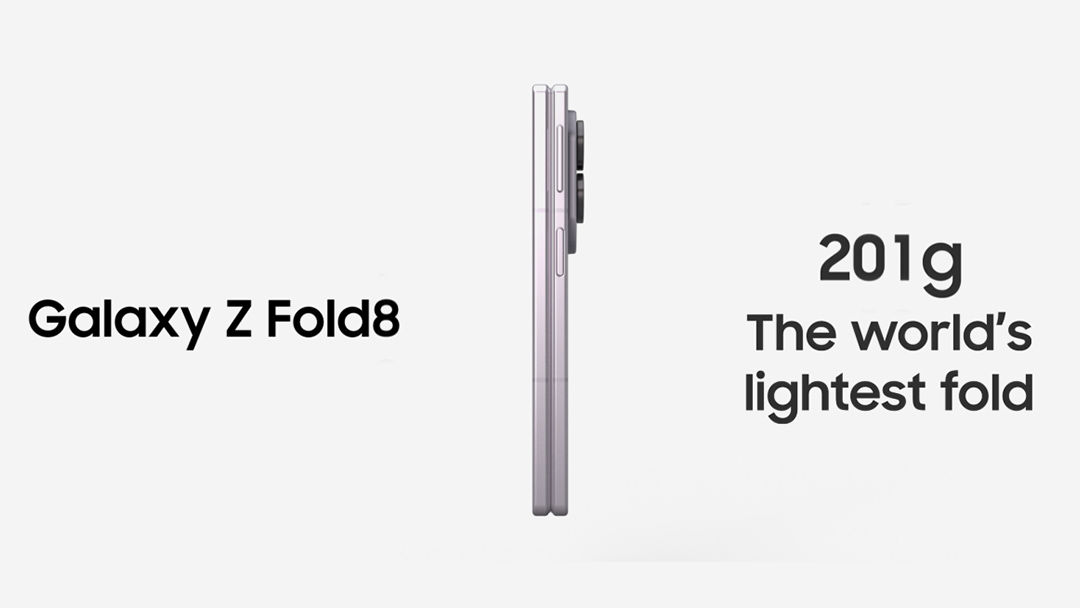
Pick up a Galaxy Fold8, and it feels much like a regular flagship. At 201 g and 9.7 mm closed, it is no heavier or thicker than many non-folding phones. That is the achievement of eight generations: the folding hardware has become so refined that you no longer feel it in daily use.
In 2019, Samsung became the first major smartphone maker to launch a foldable flagship phone. The Galaxy Fold gave buyers something no mainstream phone had offered before: a screen that opened into something closer to a tablet, in a device that still fit in a pocket. It was a bold idea, and it created a category. Since then, the Fold has become thinner and lighter while keeping its main benefit: a large screen that still fits in your pocket.
In that time, Samsung has built a large foldable user base and stayed ahead of most rivals in the segment. In India, the company accounted for around 88 per cent of foldable smartphone shipments in 2025, according to Counterpoint Research. The latest Galaxy Z series recorded more than 271,000 pre-orders in India within 72 hours of launch, with almost half coming from Tier 2 cities and below. That scale matters. Eight generations of Galaxy Fold, used across seven years, have given Samsung something most competitors do not have: a long record of real-world usage to learn from and give back in return an improved version that addresses all the concerns.
The Galaxy Fold8 is the result of that process. It is not a reinvention. It is the outcome of a long cycle of feedback, engineering, and software work that has turned the foldable from an intriguing prototype into a phone people can rely on every day.
Eight Folds, One Direction: Thinner, Lighter, Stronger
It took seven years of steady reductions in thickness, and a large drop in weight overall, to get there. It started with the first Galaxy Fold, announced in February 2019, weighing 276 g and measuring up to 17.1 mm when folded. It proved the idea worked, and from there every generation made the hardware thinner and, in most years, lighter, with improvements in design, features and performance.
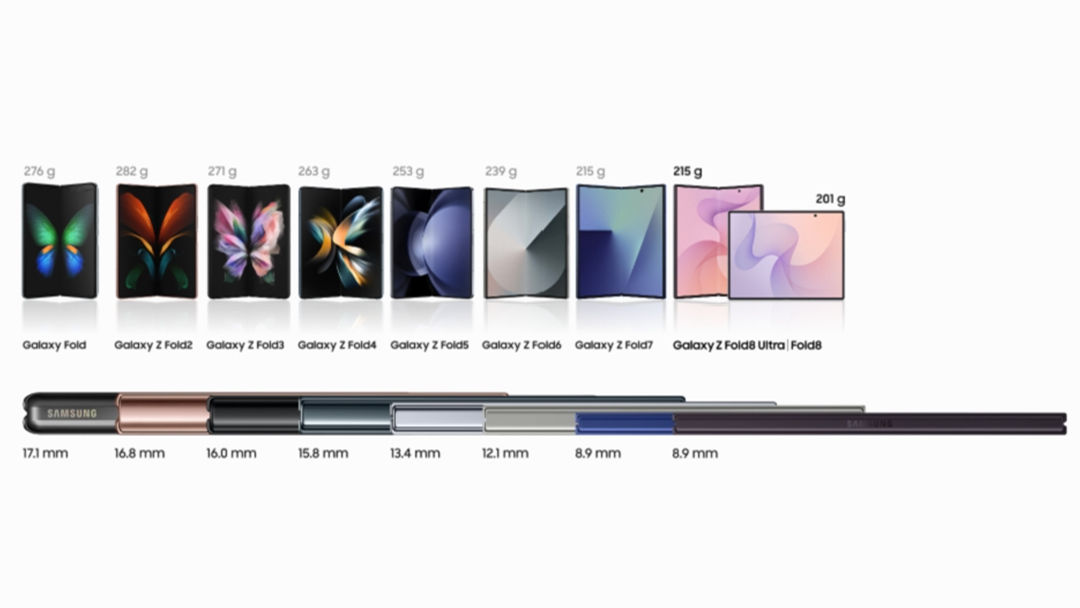
Fold2 introduced the Hideaway Hinge with more than 60 internal parts and brought folded thickness down to 16.8 mm. Fold3 added IPX8 water resistance, stronger materials and S Pen support. Fold4 replaced the gear-based hinge with a simpler linear system and fewer parts. Fold5 introduced the Flex Hinge, which let the screen fold in a water-drop shape so the two sides closed without the gap seen on older models, and added a dual-rail structure to absorb impacts.
Fold6 reduced size again and improved the hinge for Flex Mode. Fold7 brought the Armor FlexHinge, an 8-inch main display, and a large drop in weight and thickness. Fold8 and Fold8 Ultra then took the hardware in two different directions: Fold8 Ultra keeps the larger 8-inch screen and reaches 4.1 mm when open, while Fold8 moves to a wider shape and becomes Samsung’s lightest Fold device at 201 g.
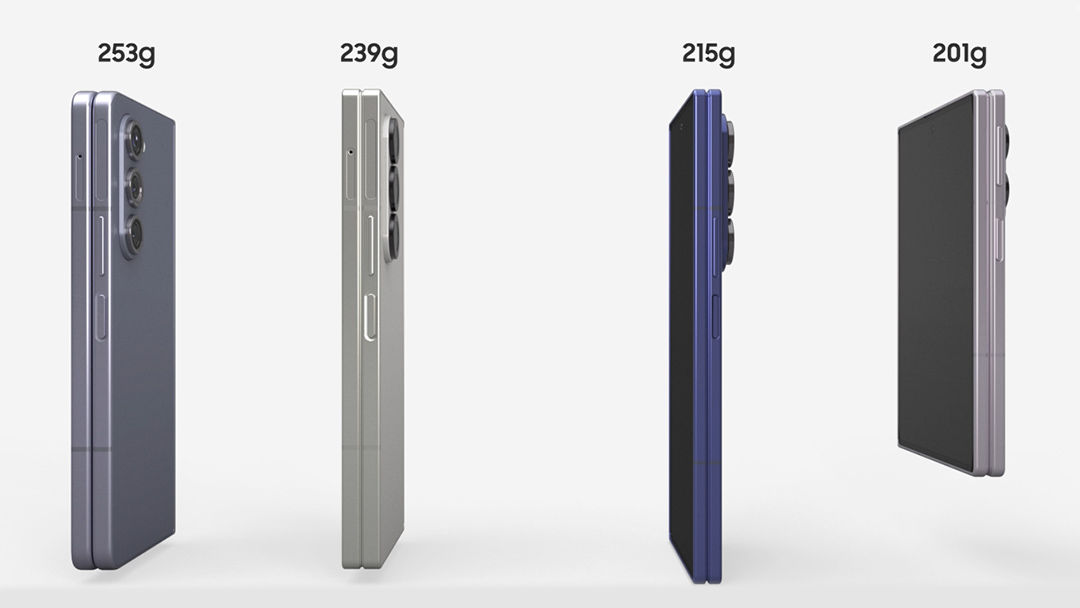
The change is clear in the numbers. Folded thickness went from 17.1 mm on the original to 8.9 mm on Fold7 and Fold8 Ultra, a 48 per cent reduction, with the wider Fold8 at 9.7 mm. Weight fell from 276 g to 201 g. Over seven years, the Fold lost more than a quarter of its weight and up to almost half its thickness while gaining a bigger screen, water resistance and a hinge that closes flat.
The Engineering Behind 201 grams
Samsung has explained the engineering and R&D that makes the Fold8 the lightest foldable ever. The drop was steepest in the last four generations: Fold5 at 253 g, Fold6 at 239 g, Fold7 at 215 g and Fold8 at 201 g. No single component delivered it. Samsung points to three areas of work.
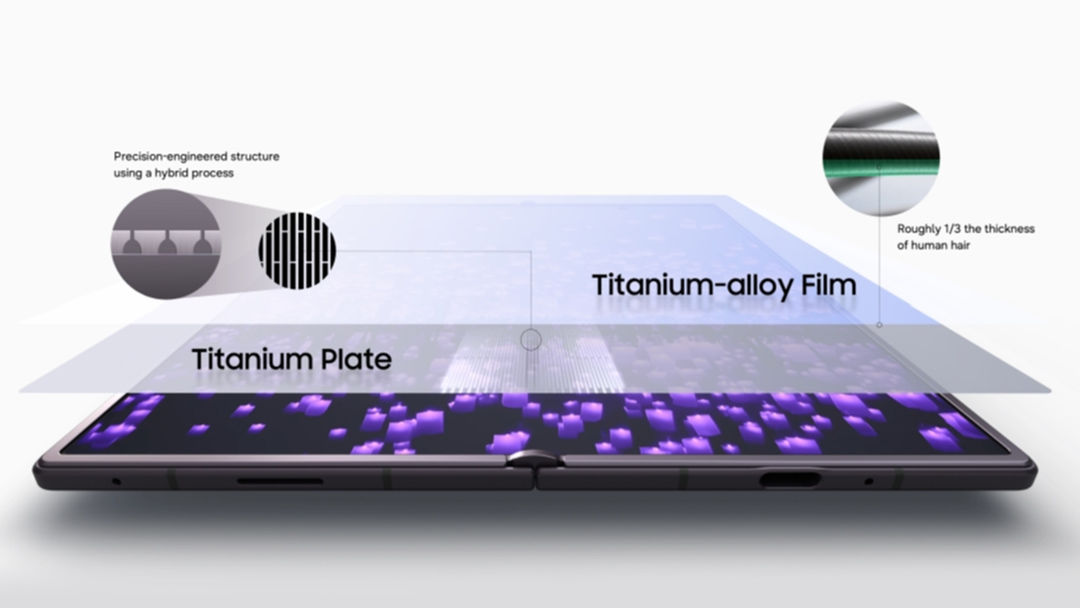
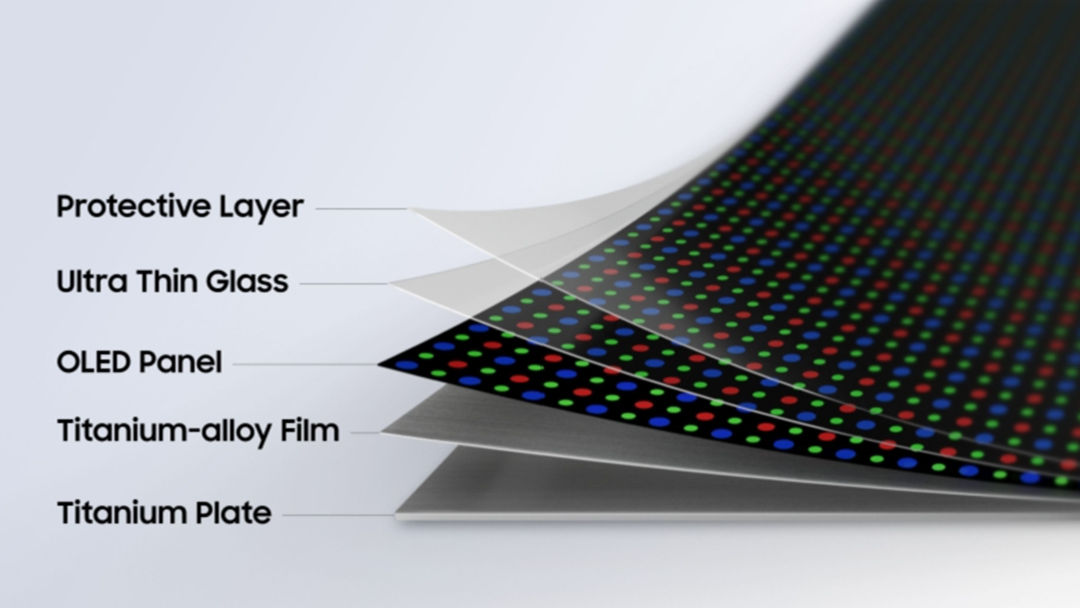
Precision. The metal plate supporting the display is machined to about 0.2 mm, and to 0.15 mm in the thinnest sections. At that thickness the metal can bend or warp during machining, and a small change in shape affects assembly accuracy and display quality, so Samsung split the process into stages and revised its tooling, cooling and machining sequence to hold the required flatness. The hinge is engineered separately for each model rather than scaled down from the previous generation, because load distribution, strength and internal space change with the size of the device.
Materials. Flex Titanium uses a titanium alloy film about one-third the width of a human hair to support the display structure. The frame uses Advanced Armor Aluminum for strength in a thinner body. Heat is harder to manage as the device gets thinner, so Samsung uses improved graphite and adds Clad Metal inside the rear, combining two metals to save weight while carrying heat.
Component-level review. Engineers went through roughly 270 components and more than 180 types of auxiliary parts, down to reductions of 0.001 g. The circuit board was redesigned to remove unnecessary circuits and shrink its footprint, and the MFC antenna was reworked to reduce overlap with nearby parts. About 15 types of auxiliary parts were removed altogether, and the remaining 170 were trimmed, reshaped or combined. What that work allowed is higher capacity rather than just a lower number. Fold8 Ultra weighs the same 215 g as Fold7 and has similar dimensions, but carries a 5,000 mAh battery instead of 4,400 mAh. The larger battery added about 6 g on its own, so the same review process was run again across the device to recover that weight. Fold8 Ultra also has about 7 per cent more graphite heat-dissipation volume than Fold7, a 200 MP main camera and the first 50 MP ultra-wide on a Fold.
Fold8 Today: The Frictions Are Gone, The Benefits Remain
Compare the first Galaxy Fold with the Fold8 and the difference is immediate. The early device was thick and heavy, and needed careful handling. Fold8 feels like a regular phone that also opens into a larger screen when you need it.
The old frictions that defined early foldables have largely been addressed:
- Dimensions and weight: Fold8 is 75 g lighter and 7.4 mm thinner when folded than the original Fold. At 201 g and 9.7 mm, it is close to many mainstream flagships.
- Hinge design: The gap that marked early Folds is gone. The hinge now closes flat, moves smoothly and feels reassuring every time you open or close the device.
- Durability: Early concerns about hinges and screens have been answered with IP48-rated dust and water resistance, stronger materials and a display support structure built to survive repeated folding. Samsung says the latest Galaxy Z devices went through more than 100 reliability validation tests covering drops, repeated folding, pressure, moisture and debris.
- Display crease: The crease has become progressively less pronounced as Samsung’s hinge and display engineering have evolved. Fold5 introduced the water-drop-shaped Flex Hinge, Fold6 improved the main-screen layers, and Fold7 added the multi-rail Armor FlexHinge. Fold8 takes the next step with Flex Titanium, which reduces crease visibility over time. Combined with refinements to the hinge mechanism, display tension and folding magnets, it creates a smoother fold and a more immersive main-screen viewing experience.
- The outer screen: The cover display has grown and changed shape. Fold8’s 5.5-inch screen uses a 10:16 format designed for messaging, social feeds, browsing and short-form video. The tasks that define most phone use.
- Sync between software and the form factor: Early foldables often felt like two separate devices joined together. Fold8 runs One UI 9 on Android 17, with an interface that adjusts as the screen area changes and tasks that continue smoothly between the outer and inner displays.
What remains are the benefits, now enhanced:
- A large, flagship-grade display in a pocketable body. Fold8’s 7.6-inch main screen uses a squarer 4:3 format, giving films, games, articles and e-books more room. Brightness has climbed from 1,750 nits on Fold5 to up to 3,000 nits on Fold8, with Vision Booster and a low-reflection finish that helps outdoors.
- A hinge you do not have to think about. You open the phone, use it and close it without thinking about the hinge.
- A software ecosystem built around the fold. App Continuity, there since the first Fold, Multi Window and Galaxy AI features like Now Brief and Now Nudge turn the extra screen into a workspace where source material, AI output and next actions can be viewed side by side.
Galaxy AI: Software That Matches the Hardware Refinements
A folding phone needs software written for two screens, and Samsung has rewritten it with every generation. The first Galaxy Fold in 2019 shipped with App Continuity, which moved an app from the cover screen to the main screen when the phone opened, and Multi-Active Window, which allowed three apps on the main screen at once. Fold2 added Flex Mode, splitting the screen when the phone was partly folded so a video call or camera view could show on top with the controls below. Fold4 brought a tablet-style taskbar to the main screen so apps could be opened and dragged into a split view, and Fold5 extended it with recent apps and two-handed drag and drop. Galaxy AI arrived with Fold6 in 2024, and the focus shifted from managing windows to using the larger screen for AI tasks, such as live translation with one side of the screen for each speaker and summaries shown next to the source, which Fold7 built on further.
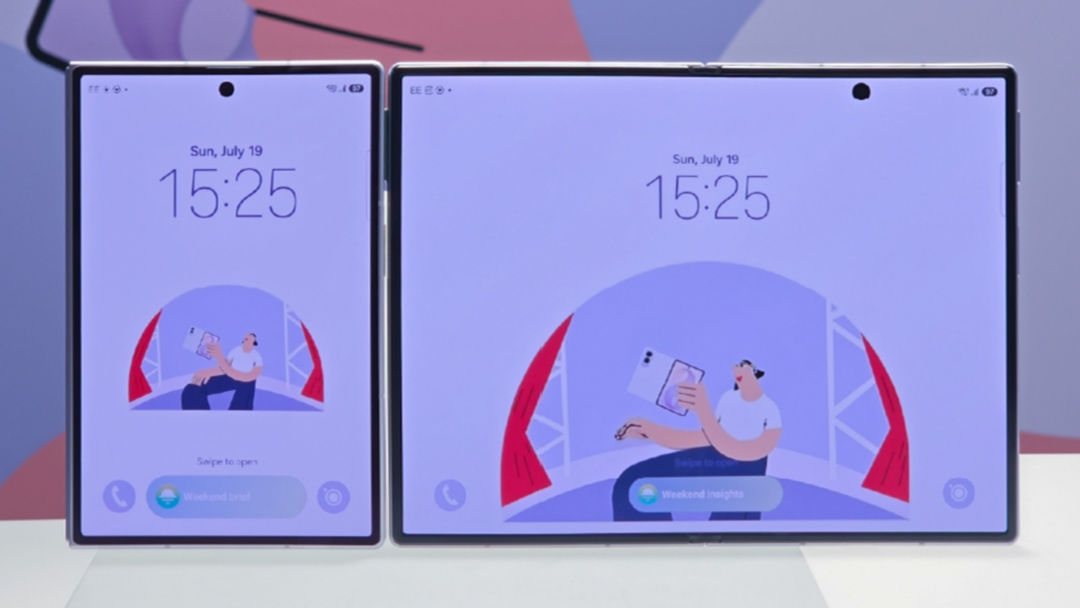
Fold8 runs One UI 9 on Android 17, and the software now matches the hardware in the same way: it does not need to be managed. The interface adjusts as the screen area changes and a task started on the cover screen continues on the main screen without interruption. Multi Window supports two-way and three-way split view, and Samsung DeX works with an external display. On the AI side, Now Brief collects the day’s schedule and updates into one view, Now Nudge suggests a next step from what is on screen, such as opening the calendar when a message mentions a meeting, Photo Assist edits photos from a typed instruction, and Gemini is built in for questions, summaries and drafting.
The result is a phone where the source material, the AI output and the next action can be visible at the same time. That is only possible because the software was developed for the form factor over the same eight generations as the hardware, rather than adapted from a regular phone.
Built on Legacy and Experience
Samsung built the foldable segment. It launched a foldable before any other major brand and has released a new generation every year since. It refined the product across eight generations, reducing weight and thickness, strengthening the hinge and screen, and improving the software. And it defined what a foldable should be: as light and thin as a regular flagship, durable enough for everyday use, and running software that treats two screens as one device.
This gives Samsung an advantage that is difficult to copy. A competitor can match one specification or design a new hinge. It cannot quickly match eight generations of usage data, software developed from that data, or a customer base that already knows how to use a foldable. The record response to the eighth generation, with nearly half of Indian pre-orders from Tier 2 cities and below, shows that the customer base is still growing, helped by financing options that make the phone easier to afford.