The television market keeps evolving faster than ever. Modern TVs aren’t just far more affordable than they used to be; advancements in panel technology also mean that today’s televisions deliver stunning picture quality compared to before. However, as the old saying goes, “the more choices we have, the harder it is to choose” applies here perfectly.
If you go to the market to shop for a TV today, you will see various options. From the more affordable QLEDs to the unique QNEDs and Mini-LEDs, and not to forget the king of the hill, the OLEDs. Between all these options, though, it can be very tough for an average consumer looking for the best value and picture quality to understand all this tech jargon.
So we thought, why not simplify things for you? Without wasting much time, let's dive deep into different display types to understand which display tech is the best for your needs.
What are QNED, QLED, Mini-LED and OLED?
Terms like QNED, QLED and OLED get lumped together often because of the shared “LED” badging, but the first few letters change how each panel actually works. Let's understand how they differ from each other.
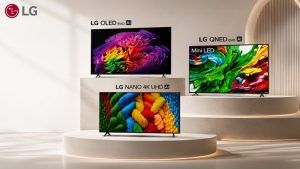
Note: QNED, QLED and OLED are different display panels. Mini-LED, on the other hand, is a type of backlighting. Both QNED and QLED can have Mini-LED as their backlighting.
QLED: Simple As It Gets
Being the most affordable option of the bunch, it is as simple as it gets. You can think of a QLED TV as essentially an LED TV which is enhanced with a layer known as the quantum dot. The quantum dot, also known as the ‘QD' layer, offers a lot of benefits that include better brightness and more vibrant colours. Though it's important to understand that conventional QLED does not inherently mean that it's a Mini-LED. Also, QLED and Mini-LED are not at all competing technologies, as they can actually coexist. You'll find a lot of options in the market today that have the QD layer, but with the Mini-LED backlighting.
Mini-LED: Significant Step-Up
As mentioned before, it's important to understand that Mini-LED is not a panel type at all. Instead, it's a backlighting technology used across LCD panels. It differs from traditional LEDs: instead of relatively large LEDs, Mini-LED utilises thousands of much smaller LEDs. Thanks to this, the panel is able to produce more precise local dimming, which equates to having better contrast in the image overall.
QNED: The Perfect Balance
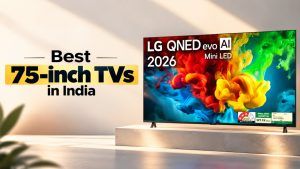
When you first hear the word ‘QNED', it might sound very similar to ‘QLED'. And that's because they are very similar to each other. But there's a big difference, because QNED is made exclusively by LG. QNED provides vivid and lifelike colours thanks to LG's own colour technology by adding various colour solutions. It's essentially an LCD panel with a Mini-LED backlight that helps with local dimming, but it also has a few tricks up its sleeve, helping enhance the colour quality.
OLED: Completely Different
Finally, coming to OLED, it is completely different from all these technologies because, unlike QLED or QNED, OLED does not feature any backlighting at all. Instead, every pixel emits its own light. You must have heard about the term ‘deeper blacks', and that happens because these pixels can switch themselves off completely, allowing for better blacks. Along with that, it allows for excellent contrast and excellent response time. The only problems with OLEDs are the potential long-term burn-in considerations and lower brightness, along with, of course, the biggest complaint, the much-higher price tag.
QNED Mini-LED vs OLED: The real battle
Now that you've gotten an idea about the major differences between all the display panels, it's safe to say that the real comparison actually lies between QNED (Mini-LED specifically) and OLED panels. While both these panels use very different techniques to display pictures, they offer a closer fight when compared head-to-head against each other. Let's deep dive and understand where both these panels excel and how they differ from each other.
Brightness: Easy Win For QNED
Brightness is one of the major factors that affect how a picture looks to you. You don't want your screen to be too dull, as it would then heavily affect the way you view contrast. And while OLEDs have self-emissive technology, in terms of just raw brightness numbers, QNED TVs still achieve higher peak brightness than OLED TVs. This is because they use Mini LED backlights, while OLEDs rely purely on pixels, which limit power to prevent panel damage.
Black Levels & Contrast: No Match For OLED
In terms of ‘deeper blacks' and better contrast, there is no competition for OLED, and that's purely because of the way the panels are designed. Because of its self-lit pixels, OLED can turn them off completely, which helps in creating infinite contrast along with deeper black levels. On the other hand, QNED relies on an active backlight, which is why it always lets some light through regardless.
HDR Performance: QNED Wins In Indian Context
Coming to HDR, most might think that because of the deeper black levels on the OLED, it would inherently be better at HDR. But it's important to understand that HDR is much more complex than that, as black levels aren't the only thing that makes the HDR experience better. Instead, factors like peak brightness come into the picture here, and they are especially important for Indian conditions, where room lighting isn't controlled. Sure, HDR would be better on OLED in a dark room, but talking about most Indian house setups, daylight visibility is much higher. Because of this, when viewing HDR content, you'd need to have the advantage of higher brightness, which QNED offers.
Pricing & Long-Term Ownership: QNED Takes The Crown
Indian buyers value two things: pricing and long-term reliability. Despite all the advantages that an OLED has, QNED wins by a big margin in both of these specific factors. Not only are QNED Mini-LED TVs more affordable compared to OLEDs, but the other important factor is reliability. OLEDs have a much higher chance of running into problems because of the self-emissive technology.
QNED vs QLED: Same Idea, Different Execution
At first glance, QNED and QLED can sound like two names for the same technology. But there is an important difference between the two. QLED primarily refers to the use of a quantum-dot layer to improve colours. On the other hand, LG's QNED technology takes a different approach, relying on LG's own colour technology to deliver vivid and lifelike colours.
The result is a TV that is designed to produce better colours with greater volume, particularly when higher brightness levels are being pushed. QNED's approach is designed to maintain vibrant, controlled colours while delivering the high brightness that LCD TVs are known for.
So, rather than thinking of QNED and QLED as completely different types of TV, it would be better to think of them as two similar, yet competing technologies that make an LED TV deliver a more premium picture experience.
QNED vs Mini-LED: Confusing, Yet Essential
This is where the comparison gets particularly confusing, because QNED and Mini-LED don't describe the same part of the TV. When we talk about ‘QNED', it refers to LG's display technology, which delivers vivid and lifelike colours through LG's own colour technology. Mini-LED, meanwhile, describes the backlight used behind a panel.
What that means is that you can essentially have either a QNED TV without Mini-LED or a QNED TV with Mini-LED backlighting. So essentially, think of it as:
- QNED = LG exclusive display technology
- Mini-LED = Advanced backlight technology
- QNED Mini-LED = QNED display technology combined with Mini-LED backlighting.
This distinction matters when comparing TVs because simply seeing the word ‘Mini-LED' doesn't automatically tell you how the TV will reproduce colour. Similarly, just having the ‘QNED' badging doesn’t necessarily mean you’re getting a panel with Mini-LED backlighting.
Why QNED Mini-LED Makes The Most Sense
QNED Mini-LED makes the most sense for someone who wants a premium TV experience without immediately moving into the higher OLED pricing. This is because they have a major focus on bridging both good brightness and premium colours together. LG's colour technology is designed to deliver vivid and lifelike colours.
Particularly in the Indian context, QNED Mini-LEDs are well suited, because we receive a lot of bright sunlight, which makes our living room brighter than usual. So having the higher raw peak brightness numbers allows for good picture quality even in these conditions. This also becomes particularly useful when watching bright HDR content, where maintaining colour quality at high brightness can make a noticeable difference.
When OLED Still Makes Sense
None of this changes the fact that OLED display panels remain the benchmark for black levels and contrast, as nothing else comes close to it. When an OLED pixel needs to display black colour, it can switch individual pixels off completely. Unlike QLED or QNED, there is no backlight behind it that needs to be dimmed.
For someone who primarily watches movies in a dark room, this can make a significant difference. Dark scenes would look much cleaner, and bright objects would particularly stand out sharply against black backgrounds, as there is no traditional backlight blooming around those objects. OLEDs therefore are still a better fit for viewers who prioritise the ‘cinematic' picture quality above everything else. QNED Mini-LED has different sets of strengths, but overall, OLED panels win the argument on black levels and contrast overall.
Conclusion
In conclusion, it's safe to say that each type of display is made for different types of consumers. OLED remains the tech to consider if your priority is the deepest blacks, pixel-level contrast and a cinematic viewing experience. However, QNED at the same time offers a compelling alternative by improving the traditional LCD formula at its core.
That is because QNED combines LG's colour technology for vivid and lifelike colours with, in higher-end QNED Mini-LED models, better backlighting on top. If you can get a QNED Mini-LED TV that delivers the brightness, colour, size and features you want for considerably less than an equivalent OLED, you don't necessarily need the technically superior panel to get the better overall fit for your needs.
OLED remains special for enthusiasts who need those absolute blacks and better contrast as their priority. Meanwhile, QNED Mini-LED is the more balanced proposition for buyers who want premium picture quality at a more value-focused price point.
FAQs (Frequently Asked Questions)
-
What is the difference between QLED and QNED?
QLED uses a quantum dot layer over an LED backlight for improved colour. Meanwhile, LG's QNED (Qualified Nano Enhanced Display) relies on LG's own colour technology to deliver vivid and lifelike colours. It is typically paired with Mini-LED backlighting, which is better at contrast and brightness control than standard QLED displays.
2. Is QNED better than OLED?
Neither is universally better. OLED ranks higher because it offers deeper blacks and better contrast. However, due to its lower brightness, it only makes sense for darker rooms. Also, it is much more expensive, especially if you're looking to get a bigger screen size. Meanwhile, QNED tackles the problem by offering a higher sustained brightness and more affordable large screen sizes, making it well suited to brighter living rooms.
3. Is Mini-LED the same as QNED?
No. Mini-LED is a broader term; it refers specifically to the backlighting technology, which controls contrast and dimming. Meanwhile, QNED is LG's display technology for vivid and lifelike colours, and it can be paired with Mini-LED backlighting to improve contrast and brightness.
4. Which panel technology is best for a bright room?
Mini-LED-backlit TVs, including QNED models, generally sustain higher brightness in well-lit rooms than OLED panels. This makes QNED models a better fit for living rooms with significant daylight or bright indoor lighting. OLED makes more sense for darker rooms because of the lower peak brightness.
5. Which is better for gaming, QNED or OLED?
QNED is better for gaming for a few reasons. Both QNED and OLED support high refresh rates and variable refresh rate gaming, but QNED’s higher brightness can be an advantage, especially because most games rely heavily on HDR today. Also, there is less risk of burn-in while gaming because, while the actual game shows a lot of motion, the HUD and UI remain static, which could create a burn-in problem when played for long hours.