If you are hunting for the best phone for creators under Rs 30,000, the honest answer depends on what you shoot. We ran the Samsung Galaxy A27 5G through the seven aspects that actually matter to a student building a channel, from the rear No Shake Cam to build quality. It clears five cleanly and passes the other two with caveats worth knowing, and it is the completeness of that run, not any single spec, that makes its case.
Walk through any Indian college campus and count the cameras. You will find roughly zero DSLRs, several hundred phones, and somehow an ocean of content still gets made. The lunchtime canteen vlog squeezed in before a 2 pm lab. The street food reel shot one handed at a night market with a plate in the other hand. The solo trip to Hampi that becomes a three part travel series.
For this generation of creators, the phone is the entire studio, which flips what a good camera phone even means. Nobody starting a channel in a hostel room is asking for 200 megapixels. They are asking whether the fest video survives their dancing, whether their face shows up in a backlit selfie, and whether they can delete a photobombing uncle without opening a laptop.
Samsung’s pitch for the A27 5G is refreshingly simple: shoot, fix and share, with the trust running all the way from capture to upload. We have judged the phone on seven aspects that decide whether it can carry that whole loop, the two cameras, the editing, the tuning, the software, the core hardware and the build. Here is how it holds up.
A quick note on method: this assessment is spec and feature led, drawing on our experience of Samsung’s A series and how its software tuning and implementation tend to hold up. A head to head, test based shoot-out is coming soon on our YouTube channel, so stay tuned for that.
1. Rear Camera: The 50MP No Shake Cam That Holds Moments Refusing to Stand Still
Verdict: Pass
The good stuff moves. The unplanned street food vlog is the classic Indian creator scenario: a night market at 10 pm, plate in one hand, phone in the other, walking through a crowd narrating as you go. One handed, moving, low light, no second take.
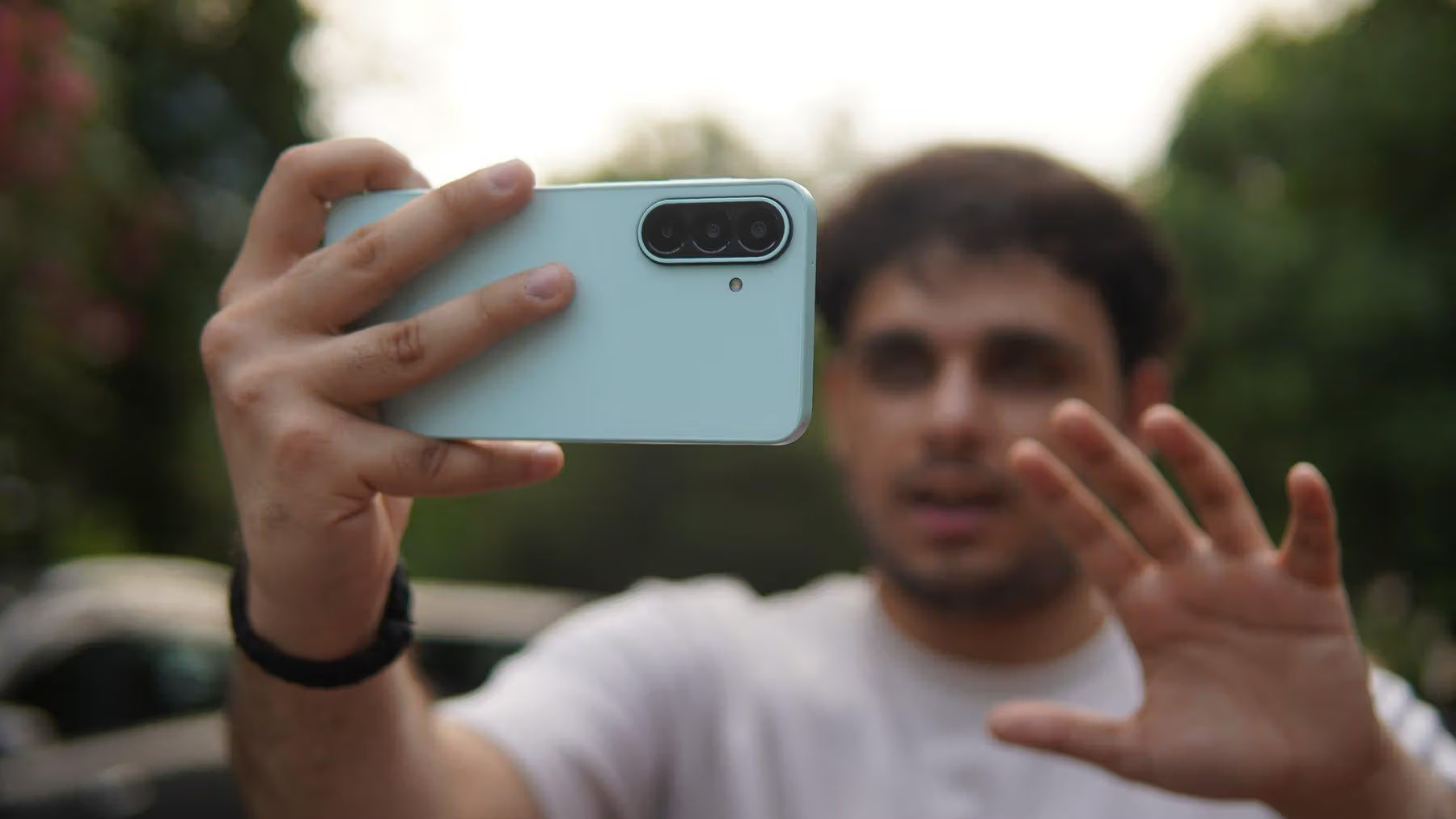
It is a stabilisation test whether you meant it to be one or not, and on most phones this is exactly where the footage falls apart into that jittery wobble you can watch the software losing.
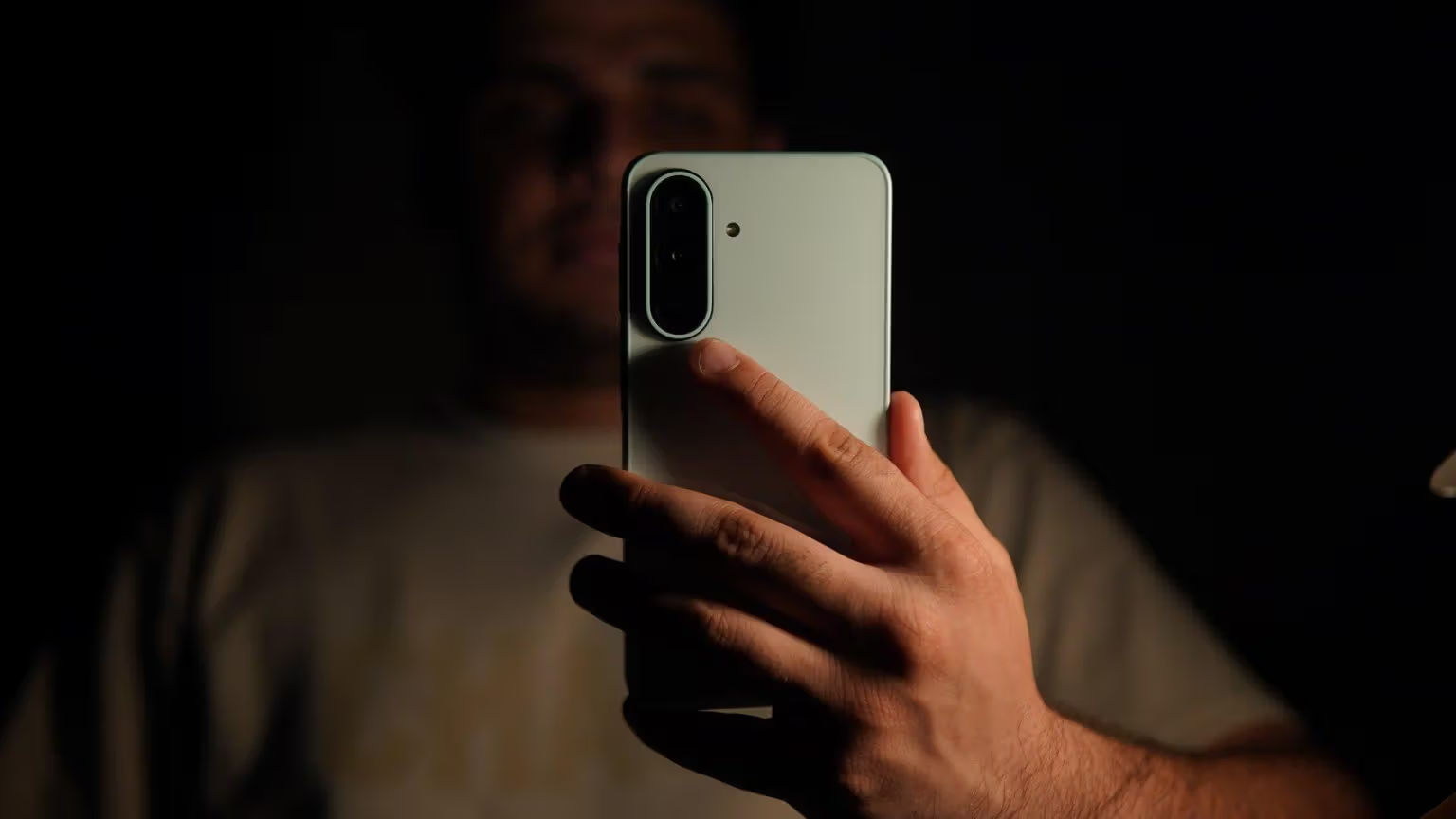
The A27 5G’s answer is hardware, not hope. Samsung pairs the 50MP f/1.8 primary sensor with optical image stabilisation, a floating lens element that physically counters your hand’s shake as you shoot, then layers Gyro EIS on top to iron out the residual bounce of walking.
It pays off twice. Footage shot on the move comes back steady, and in low light, the birthday at the dhaba, the Diwali diyas, the midnight hostel celebration, the stabilised sensor holds a slower shutter without smearing, so the shots come back usable instead of looking like abstract art.
To be fair to the segment, OIS is no longer the unicorn it was at this price. Several phones under Rs 30,000 now list it. But plenty still skip it, and among those that have it, implementation quality varies widely: a spec sheet line does not tell you whether the OIS and EIS are tuned to cooperate or fighting each other with a visible jelly wobble. Samsung’s advantage here is less the checkbox and more the track record, since this is the same stabilisation stack it has refined across Galaxy generations.
One important detail before you set your camera app. The rear camera records at up to 4K30, but electronic stabilisation only operates up to 1080p30, so 4K footage runs on OIS alone. For a walking vlog, that makes 1080p the sensible choice on this phone, and it is the resolution most reels and shorts get delivered at anyway. Worth knowing rather than discovering in the edit.
For a student creator, that is not a spec sheet line. It is the difference between capturing the moment once, confidently, and begging your friends for take number four. And it is the one item on this list you cannot fix later: a mic, a card, a tripod are all purchases, but stabilised optics either shipped in the phone or they did not.
2. Front Camera: A 12MP HDR Selfie Shooter, Because Your Face Is the Channel
Verdict: Pass, with a caveat
Be honest about where creator footage actually comes from: most of it points backwards. Vlogs, GRWM clips, reaction videos, the placement interview on a video call where you would rather not look like a witness protection subject. And no location exposes a front camera like the college canteen at 1 pm: a wall of windows behind you, two hundred conversations and clattering steel plates around you, and one plate of chole worth of time to get the talking segment done. Two things kill that clip on an ordinary budget phone. The windows turn you into a silhouette, and the canteen swallows your voice.
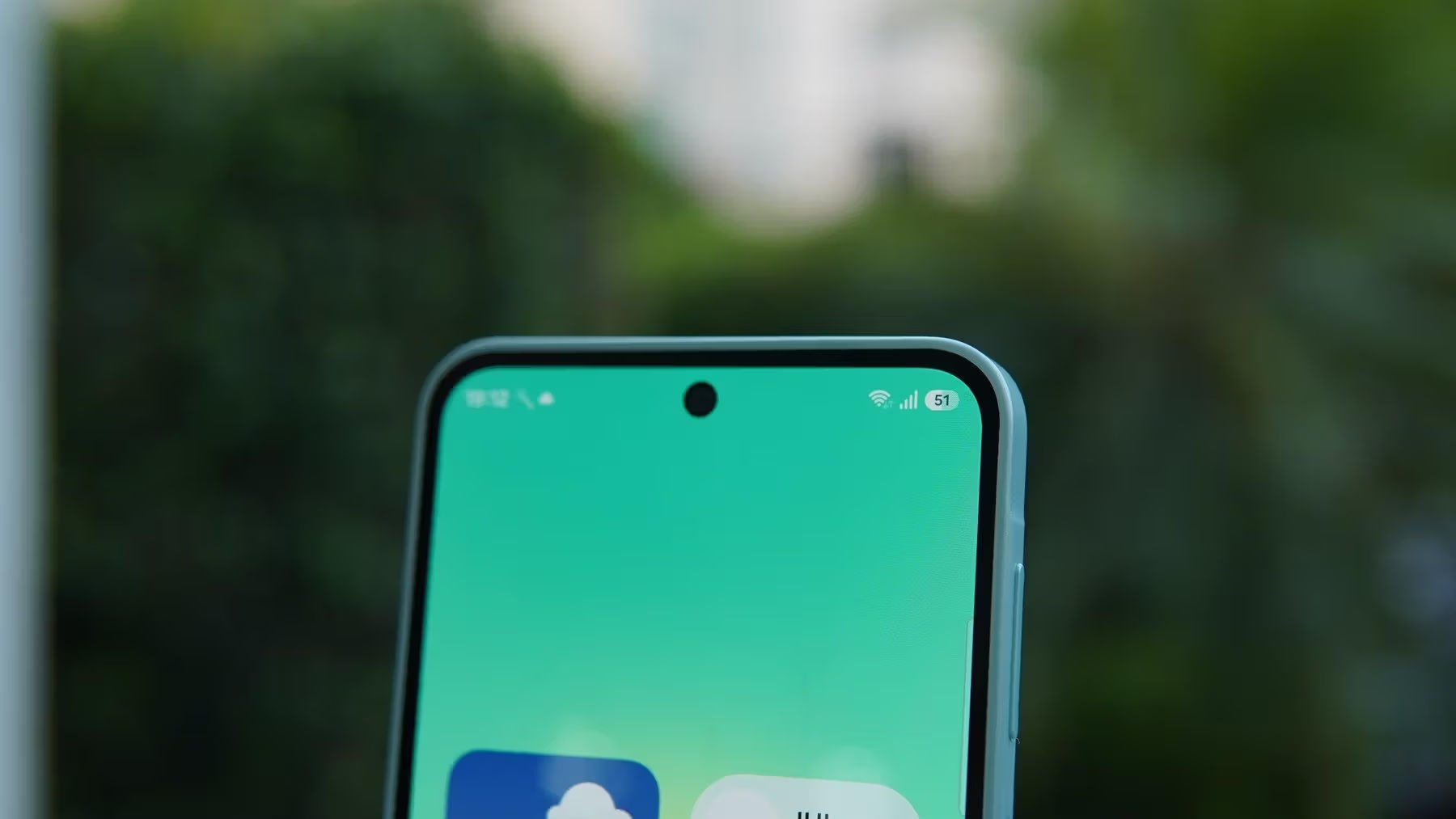
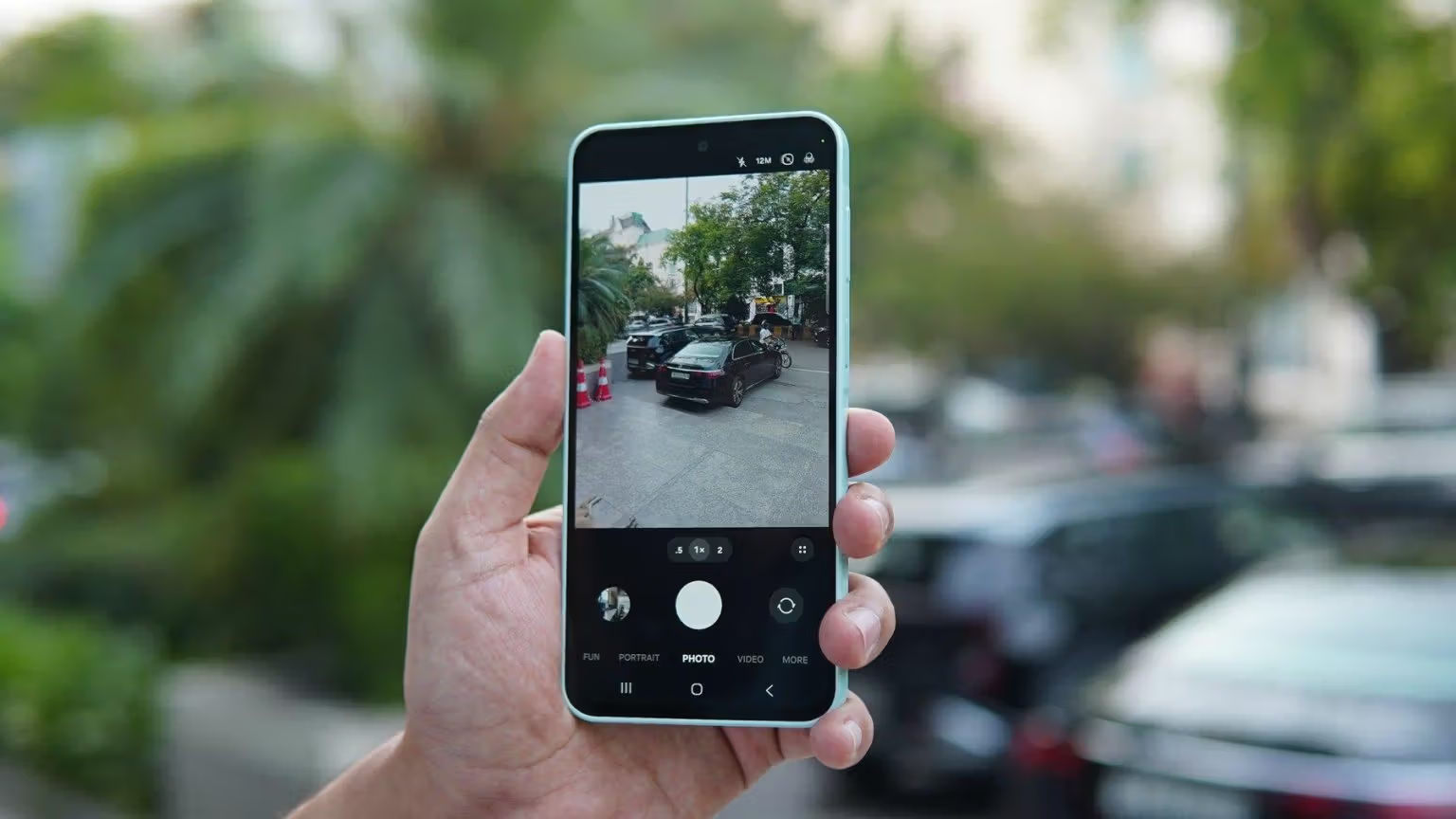
The A27 5G answers both. The 12MP front sensor carries HDR processing for photos and video, which balances the bright glass behind you against your face in front of it, so you stay clearly, properly you, in stills and in video. Super HDR runs live on the preview, so what you frame is what you get, with no press and pray. The same lens earns its keep on the online class, the 11 pm group project and the internship interview, where looking sharp is not vanity but strategy.
The audio half completes the same job, and it is the quiet star of this spec sheet: external microphone support over USB-C. Audio is the fastest amateur tell in video and the cheapest thing to fix, and a Rs 1,500 lavalier plugged straight in lifts your voice clean out of the clatter. A piece to camera is a face and a voice; this phone handles both properly, in a segment where the selfie camera is usually an afterthought and mic support is not even advertised.
Now the caveat, and it is a real one. The front camera tops out at 1080p30 for video, with a fixed focus f/2.2 lens. For reels, shorts and video calls, all of which live at 1080p anyway, that is perfectly serviceable. But there is no 4K option on the selfie camera, which means no cropping room in the edit and no headroom if you later want to deliver at higher resolution. Creators punch into a wide selfie frame constantly to fake a second angle, and that is the flexibility this phone does not give you. If self-shot video is the majority of what you make and you want to future-proof it, this is the spec that should give you pause. It is also why this aspect is a qualified pass rather than a clean one.
3. On-Device Editing: Getting the Shot Ready to Share, in Seconds
Verdict: Pass
The honest secret of social media is that almost nothing gets posted as shot. There is always something: a stranger strolling through your frame, a dustbin ruining an otherwise clean composition, one friend blinking like the flash personally attacked them. On a laptop these are two minute fixes. On a budget phone they have traditionally meant a sketchy third party app that slaps a watermark on your photo, nags about a subscription, and quietly wants access to your whole gallery.
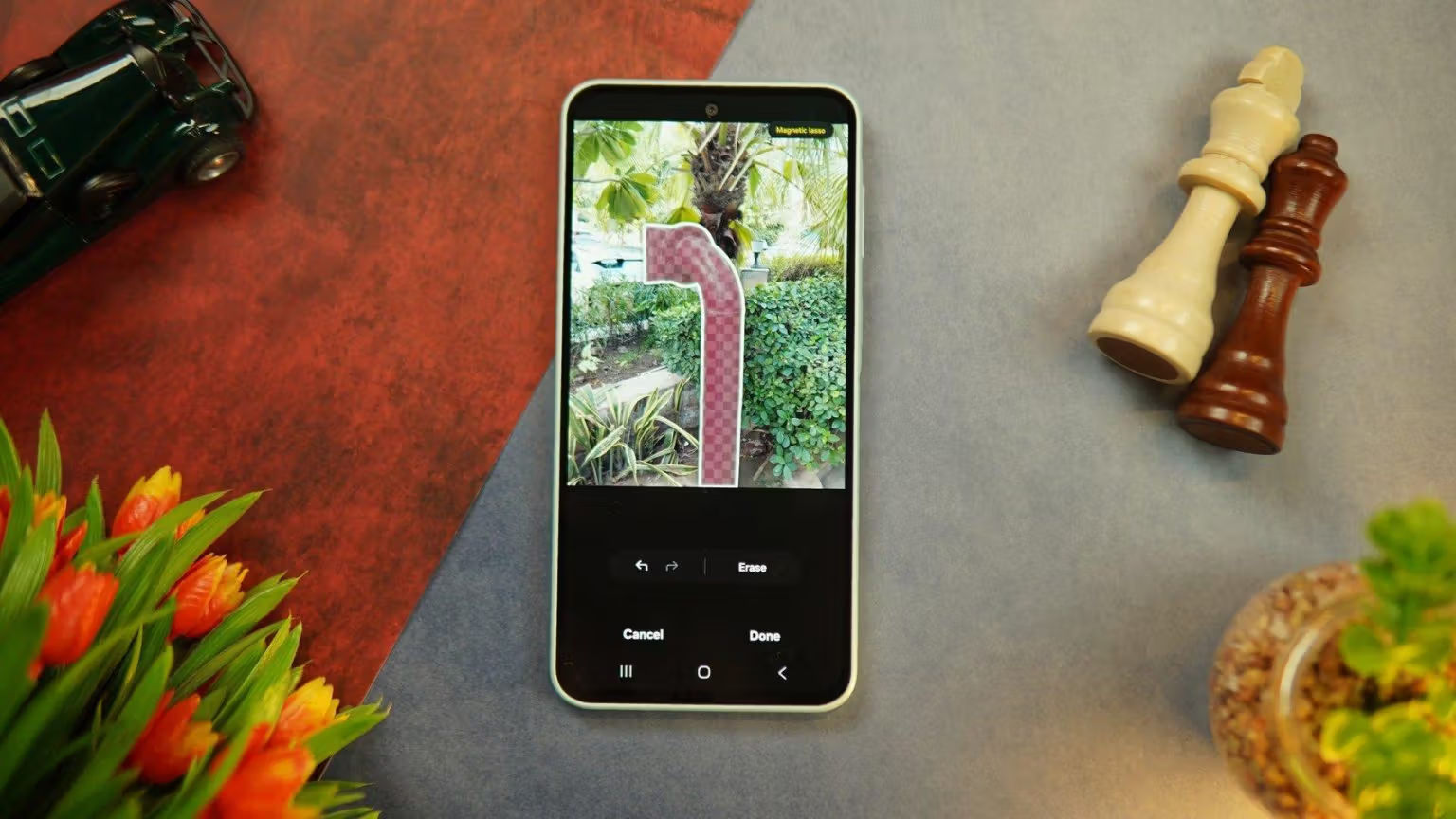
The A27 5G just fixes it, on the phone, in the gallery, free. Object Eraser lets you circle the photobomber and rebuild the background behind them, so nobody will ever know uncle-ji walked through your golden hour. Circle to Search with Google, a flagship Galaxy signature, works right inside the gallery and camera preview: spot a jacket in someone’s reel, circle it, find it online in seconds, which is close to a superpower for fashion and lifestyle creators. Quick Share flicks a finished cut to a laptop when a bigger screen calls.
The one honest caveat is that generative erase tools across the whole industry are excellent on plain backgrounds and weaker on the busy ones most Indian street scenes throw at them, so expect frequent rescues and the occasional smear you crop around. It rescues far more often than it fails, but it is not magic, and knowing where it struggles saves you a reshoot.
4. Camera Tuning: Natural, Not a Saas-Bahu Serial Poster
Verdict: Pass
Now for the part of a camera no spec sheet will ever show you: the tuning. Every photo a phone takes is an interpretation of skin tones, of skies, of how much sharpening a face can take, and the fashion in this segment is to interpret loudly. Crank the saturation till the grass glows radioactive, crush the shadows, sharpen every edge until it crackles. It looks great for three seconds on a showroom screen and unmistakably fake everywhere else, the friend’s face smoothed into wax, the evening sky in a shade of orange that does not occur in nature.
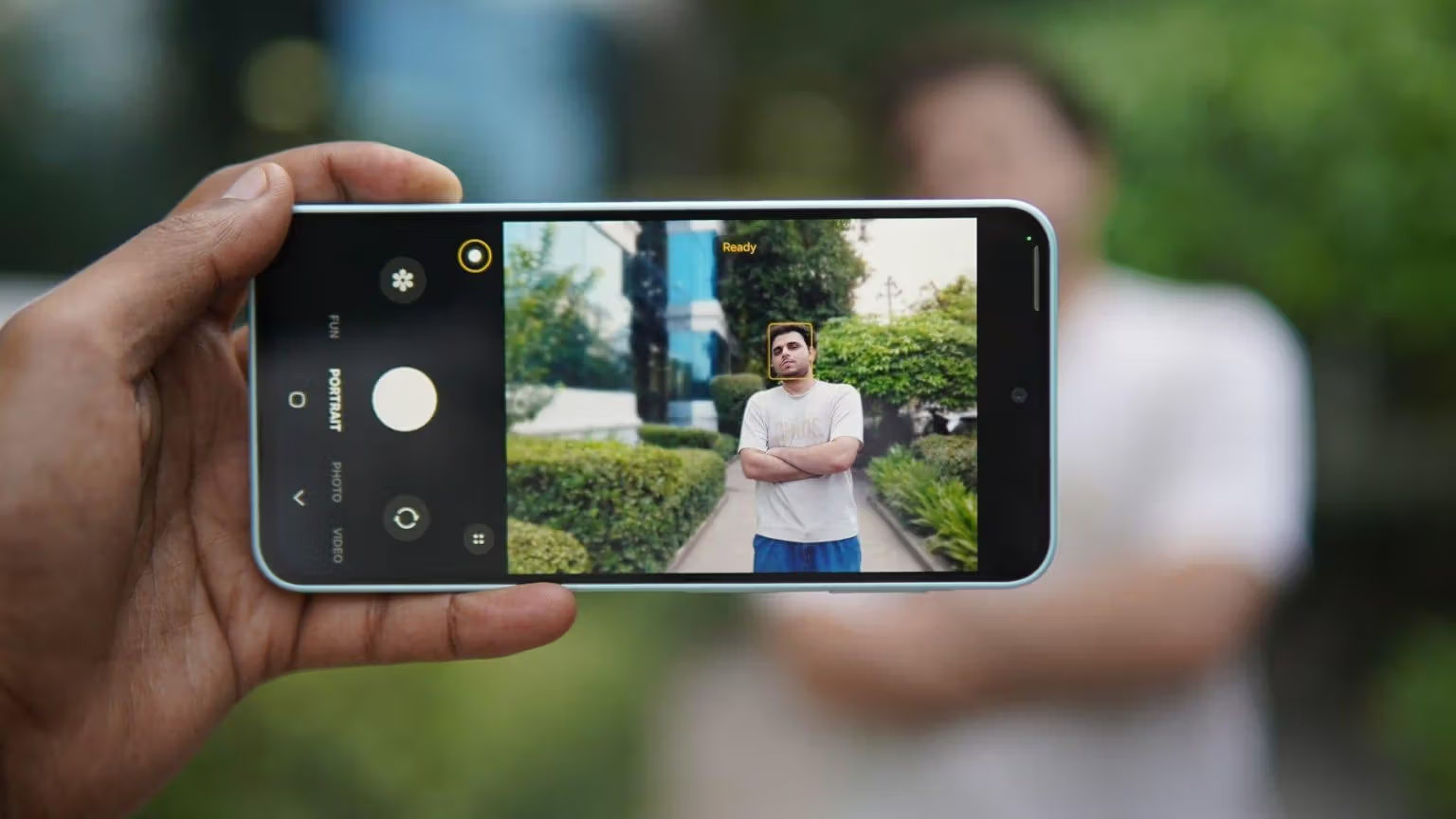
Samsung takes the opposite bet, and we think it is the right one for this buyer. The A27 5G’s processing enhances what the sensor caught and then stops. Softer, more organic edges instead of hard halos, skin that reads as skin, mehendi that looks like mehendi. Think of that Hampi footage: the whole point of a rustic location is its actual palette, ochre granite, faded village pastels, mist that is grey and soft rather than blown to white. Loud tuning bulldozes exactly those colours into postcard kitsch; restrained tuning lets the place look like the place, which is the reason you took the sleeper bus there.
The tuning also rides on the optics. Because the stabilised sensor can shoot wide open at f/1.8 and hold slower shutter speeds, it drinks in genuinely more light in every tricky frame, which gives the algorithms real information to work with instead of inventing detail through brute force sharpening. Good optics do the heavy lifting; restrained processing does the finishing.
For a creator, the payoff is consistency, the underrated half of all this. A feed is a body of work shot across months, in canteens and terraces and train windows, and a camera that renders the world the same trustworthy way every time gives that work a signature, worth more than one lucky banger. Said plainly, this is a preference, not a verdict: some buyers genuinely prefer the punchier look on unedited footage, while natural tuning rewards anyone willing to spend thirty seconds grading, which describes most people still creating past month three.
5. Software and Support: The S-Series Inheritance at a Student Price
Verdict: Pass
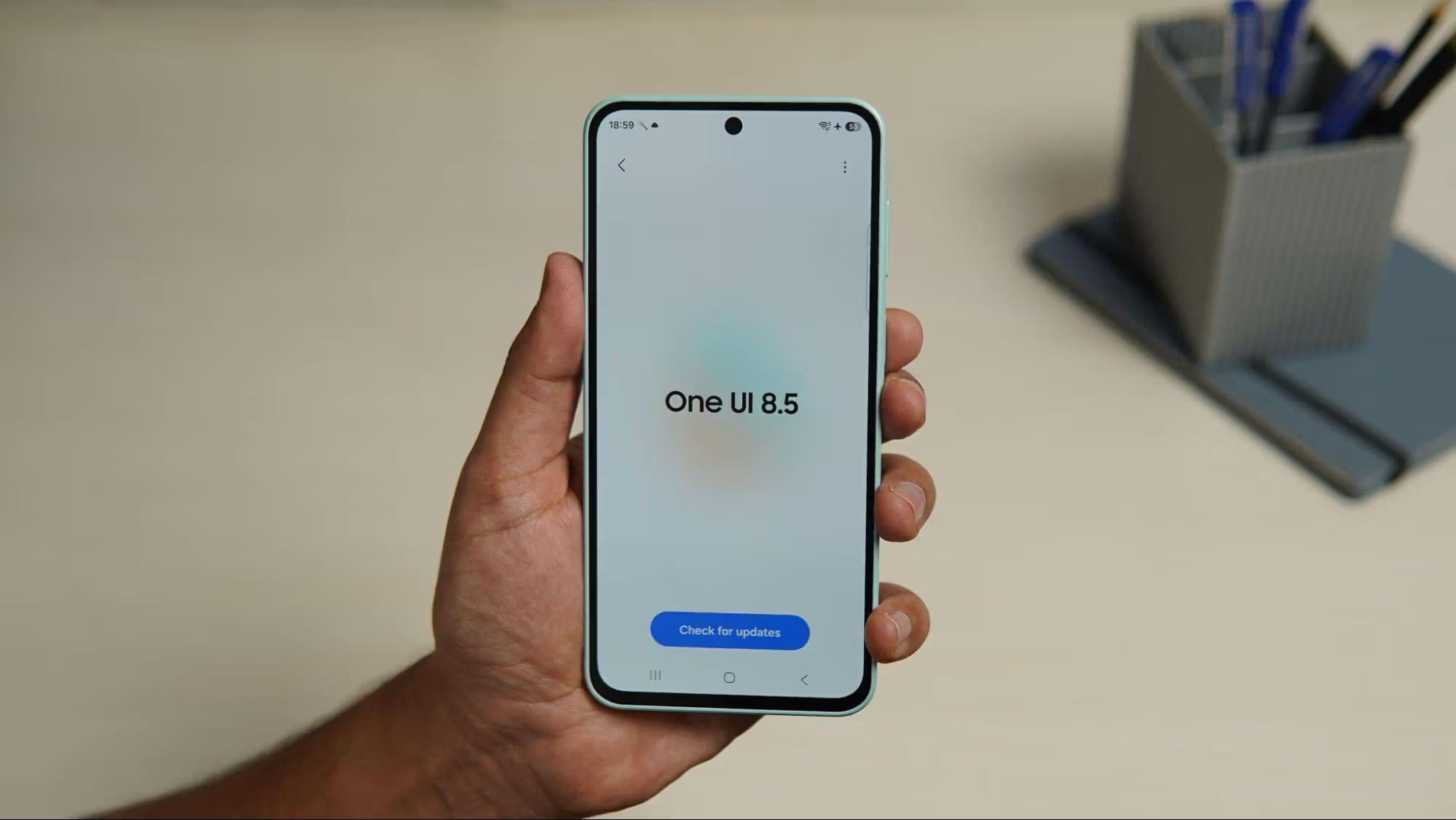
There is a name for why so much of this works on a Rs 28,999 phone: the S-to-A pipeline. Samsung builds the A27 5G on the same One UI 8.5 platform as its premium Galaxy S-series, which means mid-range hardware running genuinely top-tier computational code. Press the shutter and the camera grabs multiple frames and blends them using the same image-stacking logic the S-series uses to tame a Delhi afternoon sun against deep shadow. The signature colour science is coded straight in, and Super HDR on the live preview, front and rear, means what you see is what the photo will be.
The hand-me-downs keep coming. Portrait mode borrows its edge-detection maths from the premium models, separating individual hair strands from the background rather than producing the smudged cut-out where half an ear melts into the wall. That two-layer stabilisation from the rear camera, OIS hardware plus Gyro-EIS, is itself a flagship-style system. The R&D was paid for by phones twice the price, and the A-series just inherits the goodness.
This is also what turns the six-year update promise from an insurance policy into a genuine creator perk. Six years of OS upgrades and six years of security updates, on a phone shipping with Android 16 and One UI 8.5, means support through 2032. Do that arithmetic as a nineteen year old: 2032 is graduation, plus a first job, plus a few years past it. The phone that shoots your first reel plausibly shoots your ten thousandth, and because it shares the S-series foundation, it sits in the path of Samsung’s feature drops as new camera and editing tools land.
Our honest framing: six year commitments exist elsewhere, but almost exclusively on flagships, while two to four years remains the norm in this band. Samsung’s record on honouring these promises is among the stronger in Android, which is what makes the number credible rather than decorative. Which features trickle down, and how complete they arrive on mid range silicon, is decided update by update: the commitment is to OS and security, the feature flow is likely rather than guaranteed.
6. Core Specs: The Display, Chip and Storage That Run the Loop
Verdict: Pass
Around the camera sits a phone that seems to have been assembled by someone who has actually watched a creator work. The 6.7-inch Super AMOLED at 120Hz is your viewfinder and edit suite in one, and at a rated 1,400 nit peak it stays readable in full afternoon sun, so you can frame a shot at 2 pm in May and judge your colours honestly before posting. The Snapdragon 6 Gen 3 with LPDDR5X RAM and UFS 3.1 storage keeps the shoot, edit, export loop moving, though it is an efficiency first chip rather than a powerhouse, so a long 4K export is where you would feel its limits. We would also have loved UFS 4.0 rather than 3.1, since faster storage is exactly what big transfers feel, but at this price 3.1 with LPDDR5X is honest kit.
Footage is heavy, and a semester of it eats storage like a hosteller at a wedding buffet. Here the A27 5G keeps a feature its rivals have largely abandoned: expandable storage up to 2TB via a hybrid microSD slot. Base variant plus an affordable card beats paying monthly cloud rent to keep your own reels, and on a solo trip where connectivity is a rumour, a spare card in the backpack is three more days of shooting. The catch is in the word hybrid: the slot takes a second SIM or a card, not both.
The 5,000mAh battery is rated for up to 23 hours of video playback, which in real shooting and editing translates to a comfortable full day. Charging is the one number we would have liked bigger: 25W wired, around 45 percent in half an hour, is adequate rather than quick in a market where rivals push 45W and higher, and a creator’s day is full of twenty minute gaps that faster top-ups would turn into usable battery.
7. Build and Durability: Flagship Glass Front and Back
Verdict: Pass, with a caveat
A creator phone is a working tool, and it leads a working tool’s life: canteen tables, backpacks shared with keys, the fest day that runs from a 10 am soundcheck to a midnight upload, the one friend with butterfingers.
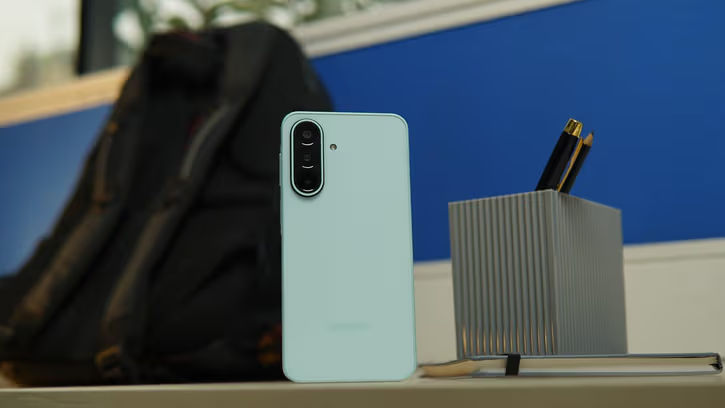
Samsung has armoured it accordingly. Gorilla Glass Victus+ covers both the front and the back, and the back matters more than it sounds, because that is the surface a phone lands on when it slides off a table. In this band, rear protection is usually the first thing cut, swapped for plastic or an older glass generation, so flagship grade cover glass on both faces is the kind of spec that never trends and quietly decides whether the phone survives to year three of its own support window.
The caveat, and it is why this is a qualified pass. Protection tops out at IP64, meaning dust tight and safe against splashes, but not the IP67 or IP68 immersion rating a growing number of rivals now offer at this price. For most campus and street shooting that is plenty; a sudden shower or a spilled drink will not kill it. But if your content puts the phone near pools, rain shoots or anything that could dunk it, this is the one durability box the A27 5G leaves unticked. Quick Share rounds out the working kit, flicking a finished reel to a laptop when a bigger screen calls.
The Verdict: Completeness Is the Spec
Strip everything back and the A27 5G’s pitch is a chain of confidence: the No Shake Cam holds the capture, the HDR front camera keeps your face in the frame, the tuning looks like what you saw, and six years of software keep it sharp when your channel finally blows up.
The honest tally is strong: five clean passes across the rear camera, on-device editing, tuning, software and support, and core specs, plus two qualified ones. The front camera caps self-shot video at 1080p, and build quality stops at IP64 rather than a full immersion rating. The first is the one thing we would most want Samsung to change; UFS 4.0 and faster than 25W charging are smaller wishes, not reasons to hesitate.
So, without hedging: if you are a student or first-jobber and this phone is your camera, editing suite and daily driver all at once, buy the Galaxy A27 5G. It grows with your channel rather than aging out just as you get good.
Look elsewhere only if you game as hard as you shoot, need dual SIM and a card at once, shoot mostly zoomed with no telephoto, or charge in short bursts where 25W will nag you. For everyone else building a channel on one device, this is the phone we would tell a friend to buy.
FAQs
Is the Samsung Galaxy A27 5G a good phone for content creators?
For a creator who needs one device to shoot, edit and publish, it makes one of the strongest completeness cases at this price. The 50MP No Shake Cam with OIS, a 12MP HDR front camera with USB-C mic support, on-device editing, a 120Hz Super AMOLED display and six years of software support cover the full creator loop. The main limit is that self-shot video caps at 1080p, so a creator whose output is mostly front-camera 4K should look elsewhere.
Does the Galaxy A27 5G have optical image stabilisation?
Yes. The 50MP f/1.8 primary camera includes OIS hardware, supplemented by Gyro EIS in software. Several phones under Rs 30,000 now list OIS, but plenty still skip it, and implementation quality varies more than a spec sheet suggests. Note that electronic stabilisation only runs up to 1080p, so 4K footage relies on OIS alone.
Can it record with an external microphone?
Yes, over USB-C. An affordable lavalier microphone connects directly, which is the single most cost effective upgrade available for vlogs, interviews and pieces to camera.
How much storage does it support?
Up to 2TB via microSD, alongside onboard UFS 3.1 storage. The slot is hybrid, so it holds either a second SIM or a memory card. The combination of expandable storage and OIS on one phone is rare in this segment, as most rivals offer one or neither.
How long will Samsung support it?
Six years of Android OS upgrades and six years of security updates. Shipping on Android 16 with One UI 8.5, that runs through 2032, on the same software platform as the Galaxy S series.
What are its weak points?
The front camera caps at 1080p30 with fixed focus, which is the one that could matter if self-shot video is most of what you make. Beyond that: 4K on the rear camera runs without electronic stabilisation, protection stops at IP64 rather than the IP67 or IP68 immersion rating some rivals offer, charging is 25W rather than the 45W and up seen elsewhere, storage is UFS 3.1 rather than 4.0, the Snapdragon 6 Gen 3 prioritises efficiency over peak performance, and the hybrid slot forces a choice between dual SIM and expandable storage.