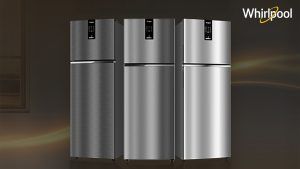
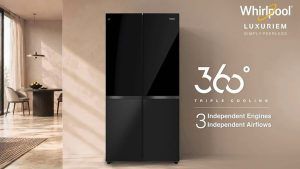
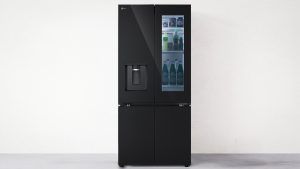
Whirlpool Corporation’s reported plan to sell its 31% stake in Whirlpool of India for about a billion dollars is more than a boardroom transaction. It’s a signal that the country’s large-appliance industry is entering a new phase: one that blends private-equity discipline with a renewed push for product innovation and smarter, faster-refreshing appliances. For Indian consumers, it could quietly change what their next refrigerator or washing machine looks and feels like.
The transaction, if completed, would mark a major shift in ownership. Whirlpool, which has battled losses in mature markets, appears to be recasting its India playbook by moving from full-scale operations to a licensing and technology-driven model. Private-equity investor Advent International, currently the frontrunner, is known for backing consumer brands through local agility and sharper product execution. The move could give Whirlpool of India more autonomy to respond to changing consumer trends, shorten its launch cycles, and invest in design and feature sets tailored for Indian homes.
Over the past two years, Whirlpool India’s growth has slowed in a market otherwise expanding in double digits. Revenues have slipped to their lowest in seven quarters, reflecting margin pressure and competition from Korean and Chinese rivals. While Whirlpool continues to hold brand equity in refrigerators and top-load washers, it has struggled to match the pace of innovation that LG, Samsung and Haier have brought to the table. Those brands have built an early lead in AI-powered washing algorithms and smart-home integration, often positioning themselves as aspirational lifestyle choices rather than mere appliances. A new investor could push Whirlpool to re-enter that conversation, possibly by fast-tracking smart and connected models across mid-premium price bands.
The Big Changes
The timing of this ownership shake-up coincides with a broader growth cycle in the Indian appliance market. A report by Fortune Insights pegs the domestic home-appliances sector at around $76.51 billion in 2024, projected to surpass $132.29 billion by 2032. Rising incomes, increasing urbanisation and a steady housing pipeline continue to drive sales of refrigerators, washing machines and dishwashers. What’s changed is the nature of demand. Consumers are now upgrading to larger, energy-efficient, and connected models, treating appliances as tech products rather than household utilities. From app-based controls to predictive diagnostics and energy dashboards, the appliance is slowly becoming a node in the connected home ecosystem. Advent’s potential entry gives Whirlpool a financial and strategic reset to catch up to this reality.
For buyers, this means visible changes could come sooner than expected. With new capital and decision-making agility, Whirlpool India could accelerate product refresh cycles, introducing smart or inverter-enabled models at shorter intervals. That’s good news for consumers who have been sitting on ageing models. If your refrigerator or washing machine is five to ten years old, waiting a few months could mean better options with Wi-Fi connectivity, voice-assistant integration and improved energy efficiency. The brand’s long-term licensing agreements with the parent ensure continuity of technology and branding, which means you’ll still get global quality while local teams tweak design and functionality to Indian needs.
Competition will, of course, get sharper. LG and Samsung already dominate the premium and upper-mid segments, while Haier has made rapid inroads with aggressively priced, feature-rich models. Godrej and Voltas Beko are fortifying their value propositions with India-specific engineering, while newer entrants are experimenting with online-first distribution. Whirlpool’s challenge and opportunity will be to differentiate through design and connected-tech usability rather than pure specs. A private-equity-driven turnaround typically emphasises faster execution and leaner cost structures, so expect more locally sourced components and tighter price-feature balancing in the coming cycles.
The shift could also benefit smaller-city buyers. As brands deepen their presence in tier-2 and tier-3 markets, availability and service quality are improving. Localised manufacturing, coupled with India’s ongoing Make-in-India push, can reduce costs and import dependencies, allowing Whirlpool and its competitors to offer premium features at lower price thresholds. For consumers outside metros, this might be the first real wave of smart appliances that are both accessible and serviceable.
Still, there are risks. Ownership changes can take time to translate into real product impact. Manufacturing transitions, dealer realignments and marketing refreshes could slow initial momentum. Buyers should therefore treat 2025 as a transition year and observe the launch cycle, track how aggressively Whirlpool introduces new models, and compare them against rival offerings before committing. Smart features are often used as marketing hooks, but the real differentiators remain reliability, service and energy savings. Shoppers should weigh the practical benefits of inverter technology and connected diagnostics rather than buy into feature lists that inflate price without improving everyday use.
At a macro level, this deal underscores how India’s large-appliance space is maturing into a capital-intensive, innovation-driven ecosystem. Private equity entering the fray shows confidence that appliance brands can scale with sharper product roadmaps and stronger brand recall. For the industry, it sets a new bar for efficiency, localisation and tech-integration. For Whirlpool India, it’s a chance to reclaim its relevance in a market that has outpaced it. And for buyers, it might mean that the next washing machine or refrigerator they bring home isn’t just a box that cools or cleans—it’s an intelligent companion designed for an Indian household that expects more for every rupee spent.
Your Next Upgrade?
If you’re planning a large-appliance upgrade, this is a good moment to wait and watch. Whirlpool’s ownership reshuffle could catalyse a new wave of feature-rich, locally tuned models by mid-2026. The competition will respond in kind, meaning better choices and stronger deals. In short, what looks like a corporate transaction today could quietly redefine how smart your next home appliance feels tomorrow.