India’s TV market was due for a shake-up. While features like QLED and 4K have become more accessible, Dor TV takes a fun approach, focusing on a subscription-based model that integrates content services directly into the TV.
Dor TV
Rs 19,588 (annual cost with subscriptions)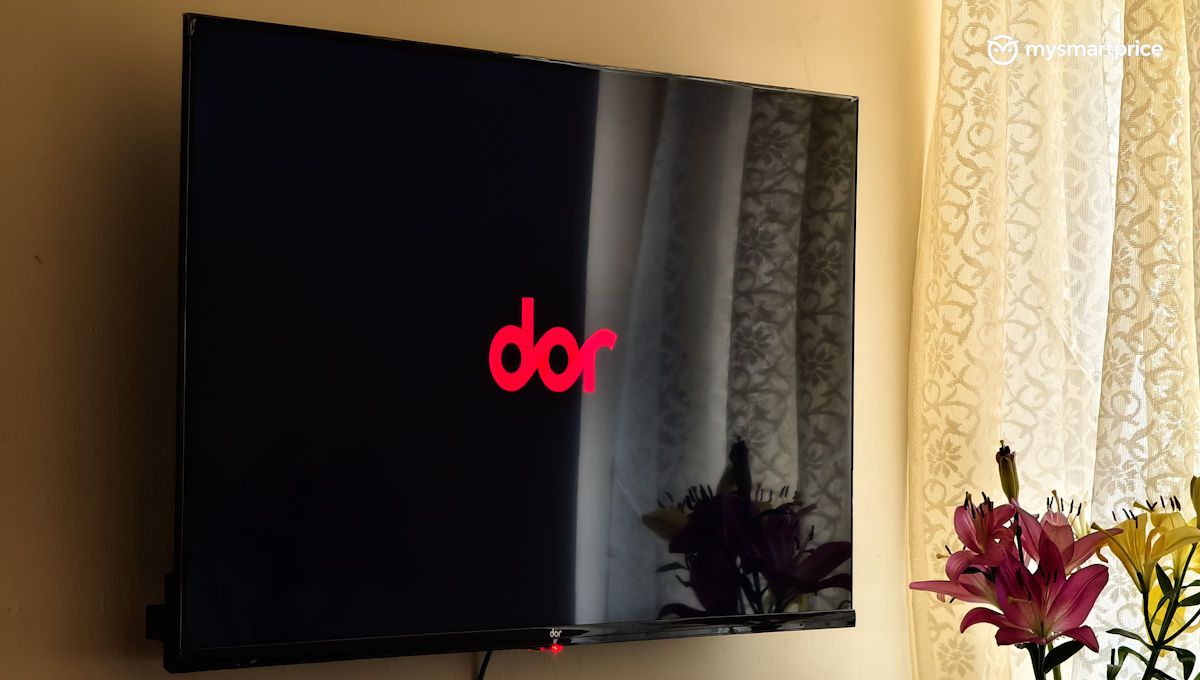
What Is Good?
- Fuss-free solar-charging remote
- Decent display and sound
- Affordable
- OTT platforms come pre-activated with purchase
- Smooth and intuitive UI
- Great LiveTV feature
What Is Bad?
- No Netflix support
- No support for other third-party apps
- Rigid plan selection options
- Only available in 43” variant
Though not groundbreaking, Dor TV’s model is undeniably intriguing. It presents a fresh perspective on how we consume content, offering a more streamlined and potentially cost-effective solution. In fact, the company claims to have sold out the inventory within 12 hours of its first sale, on 1st December.
As you read along, you may observe this isn’t a usual MySmartPrice review with strict parameters. Instead, it’s more of a guide. That’s because I too am trying to wrap my head around this entire concept. But, I do have answers to most FAQs I came across, as I used this TV service for the last month or so.
Pricing and cost of ownership (or the lack thereof)
Dor TV as a concept isn’t entirely new, and it openly derives inspiration from Roku TV. It’s a unique two-part model:
Upfront Cost: You pay Rs 10,799 to buy the TV.
Monthly Subscription: For the next 12 months, you pay Rs 799 monthly to access various OTT platforms. After this period, you’re given the choice of selecting the OTT platforms you want. If you ask me, it includes all the major OTT apps barring Netflix.
Coming back to the subscription model, you will have to shell out Rs 9,600 (Rs 799 multiplied by 12 months) for subscriptions to all the bundled OTT platforms.
If you had to buy these OTT plans individually, it would roughly cost you Rs 17,578. That’s nearly half the price. However, the big question that most of you will be wondering is if you will really use all the bundled OTT platforms. That’s up to you. For now, it’s a flat subscription without à la carte options. I have included the exhaustive list (and their individual costs as of November 2024) of all 22 OTT subscriptions in a Google Sheet here. It may come in handy sometimes; you never know.
The TV is available for purchase on Flipkart. Because it’s a new product, the inventory tends to be limited and sells out within a few hours.
What happens if you don’t pay?
Default in the First Year: The TV will be locked, and you will be prompted to pay up after the splash screen.
Default after 12 Months: You can choose which OTT subscriptions you want or opt out entirely and use a regular OTT stick.
How do you activate subscriptions?
It’s quite simple, actually. All platforms, except Prime Video, Disney+ Hotstar, and JioCinema, come pre-activated with the number you used to register for Dor TV. The rest require you to manually log in to the TV with your number, and then they get activated.
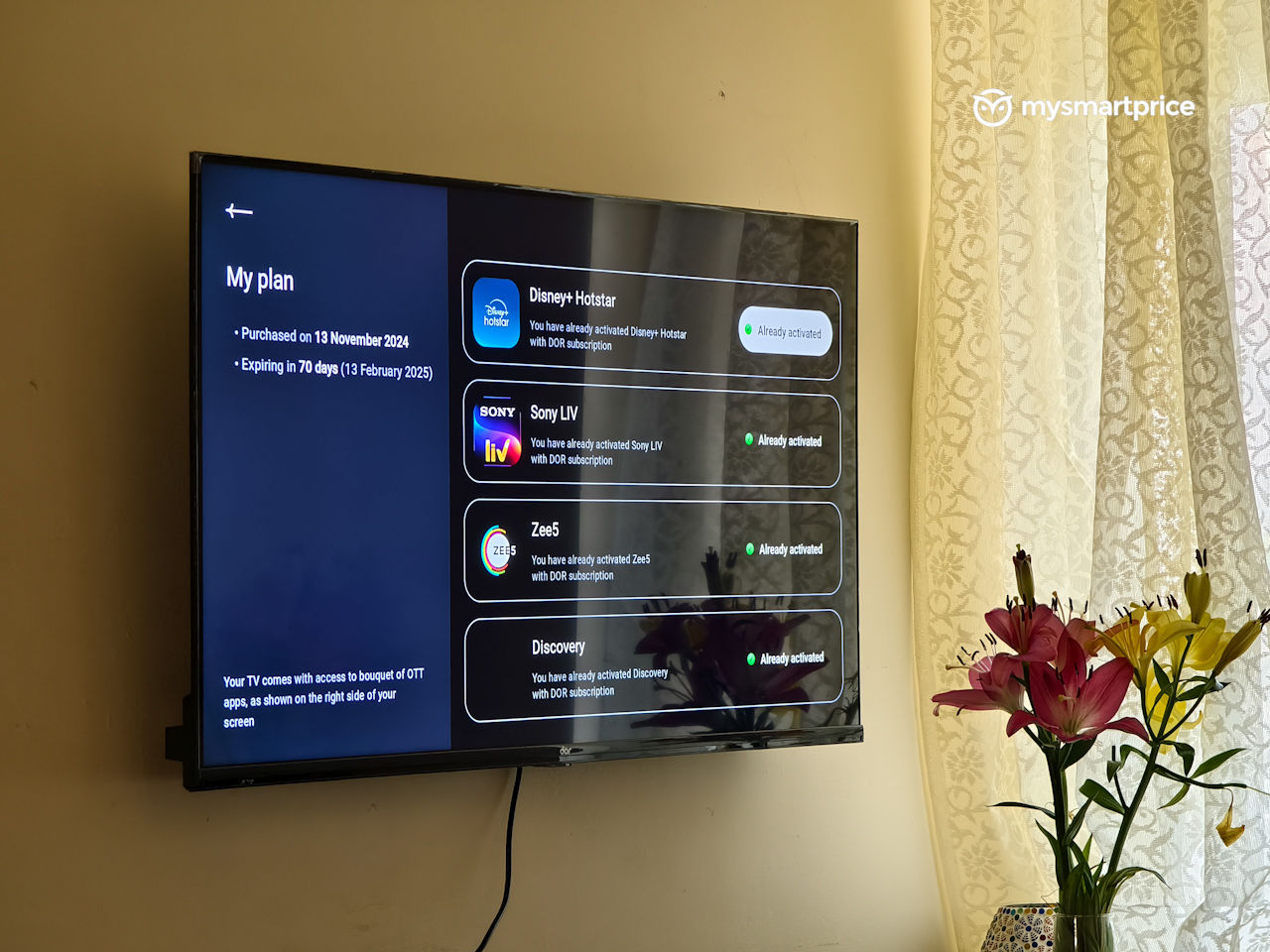
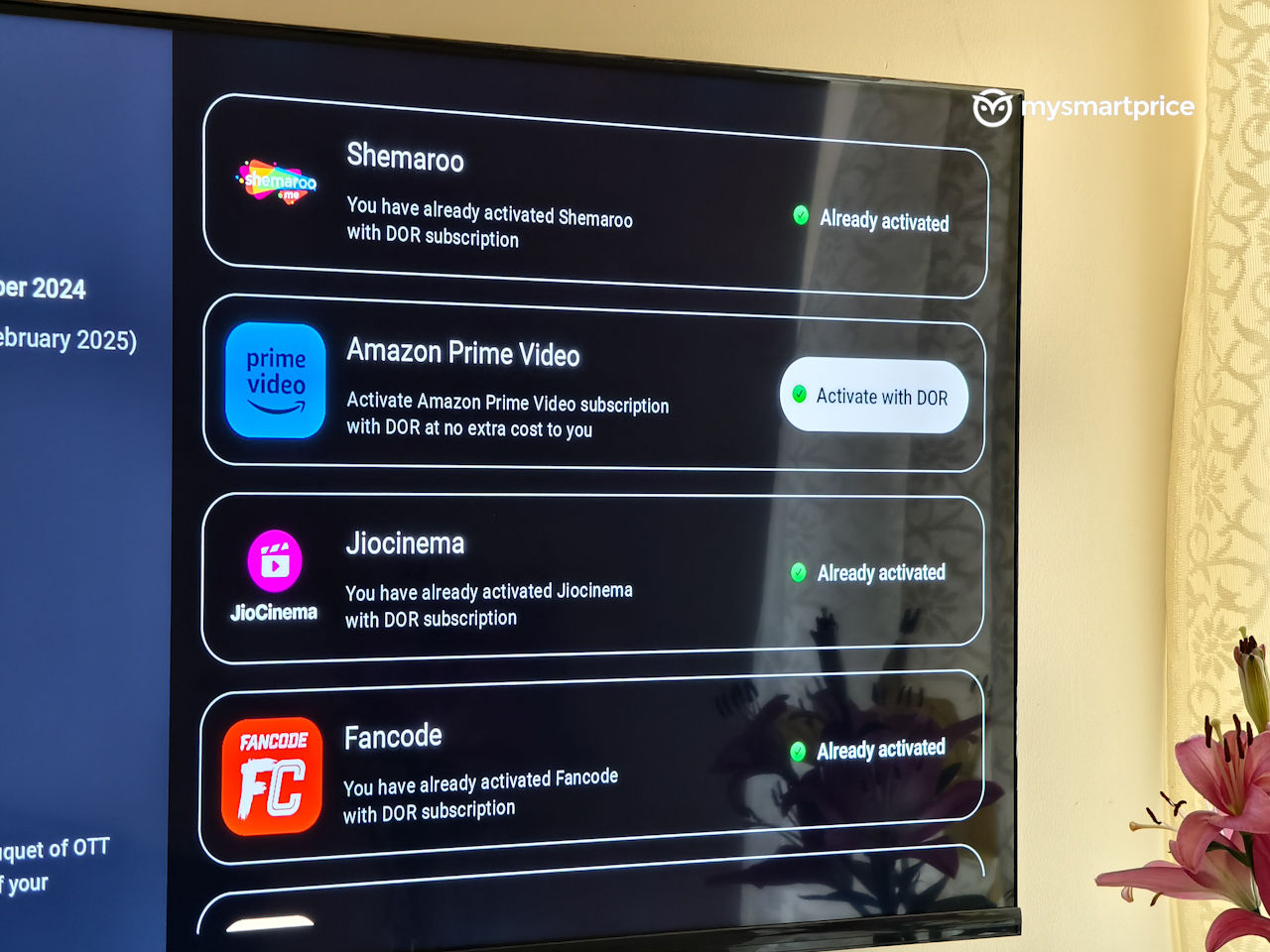
Yes, it’s overwhelming to get used to this, and it’s totally normal to freak out initially about “how come some subscriptions are active, and the rest aren’t,” but they have rather responsive after-sales support via WhatsApp.
Are there any benefits to Dor TV?
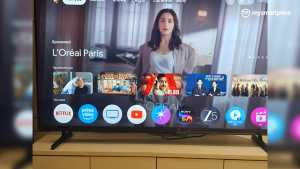
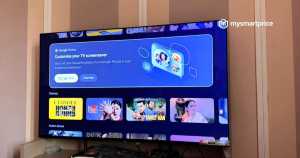
Yes. It’s got a great custom UI that can act as a case study for several other Android-based proprietary UIs. It’s smooth, it loads up quickly, and you can flick between apps almost as smooth as a WebOS TV.
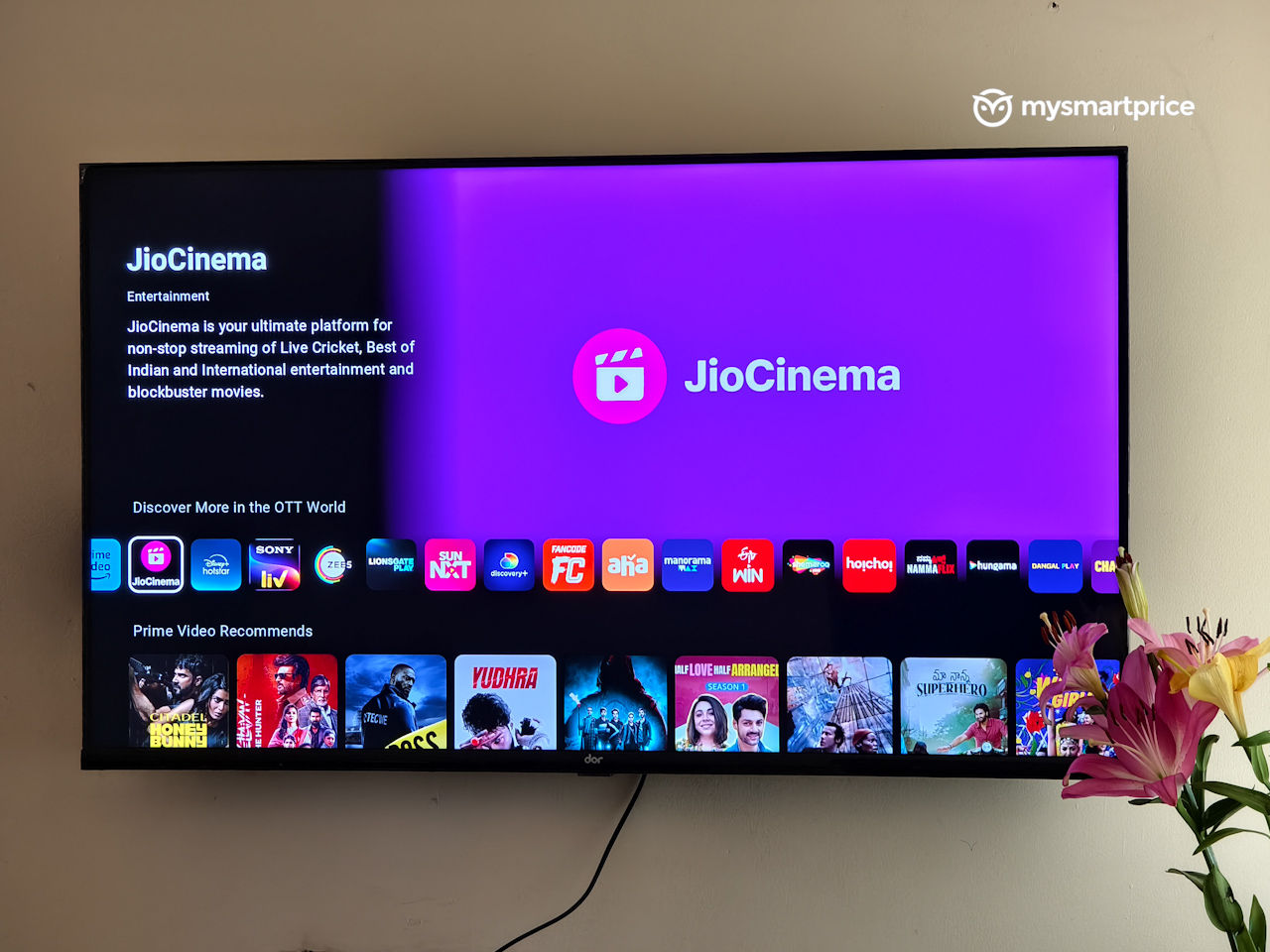
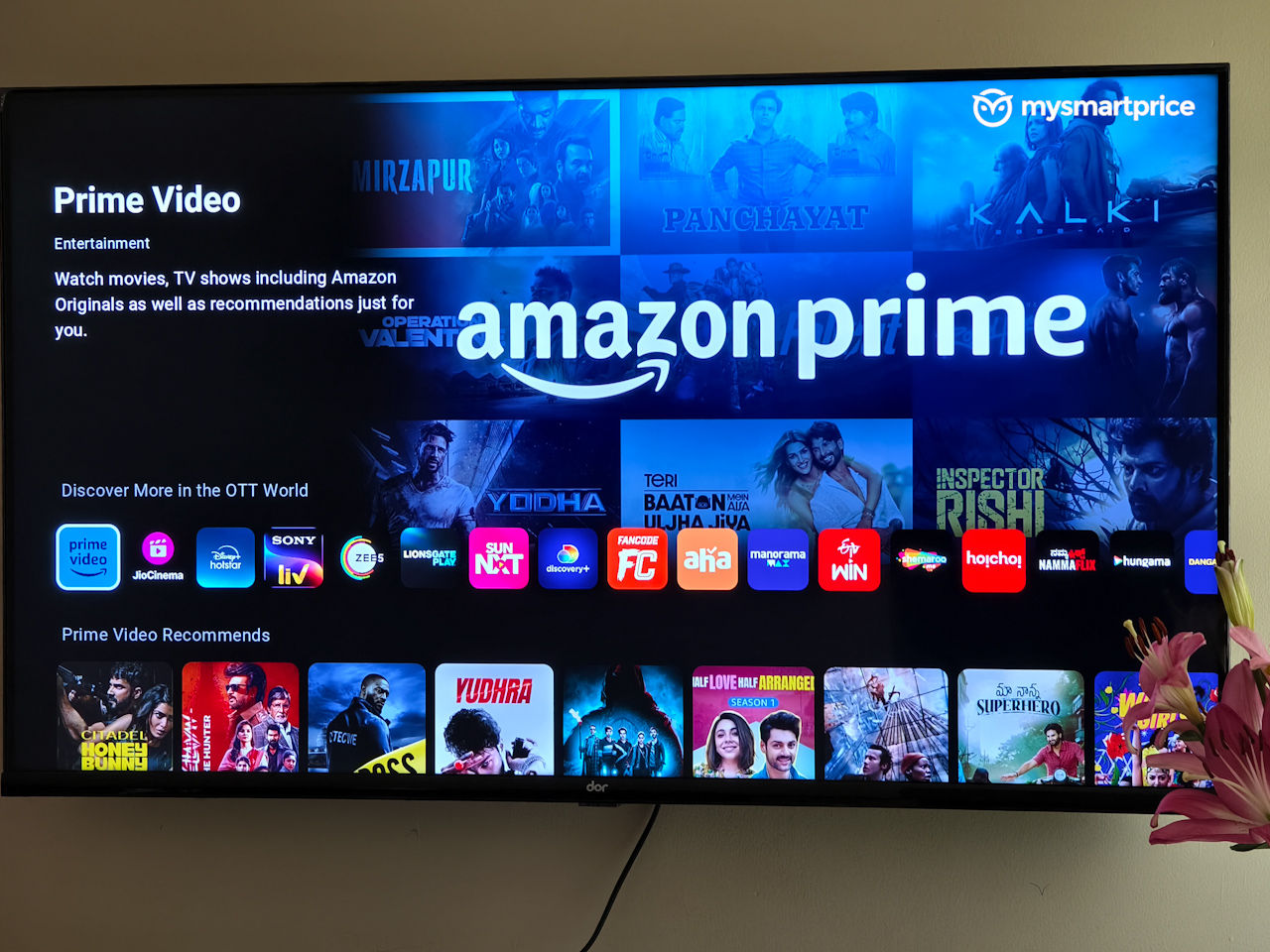
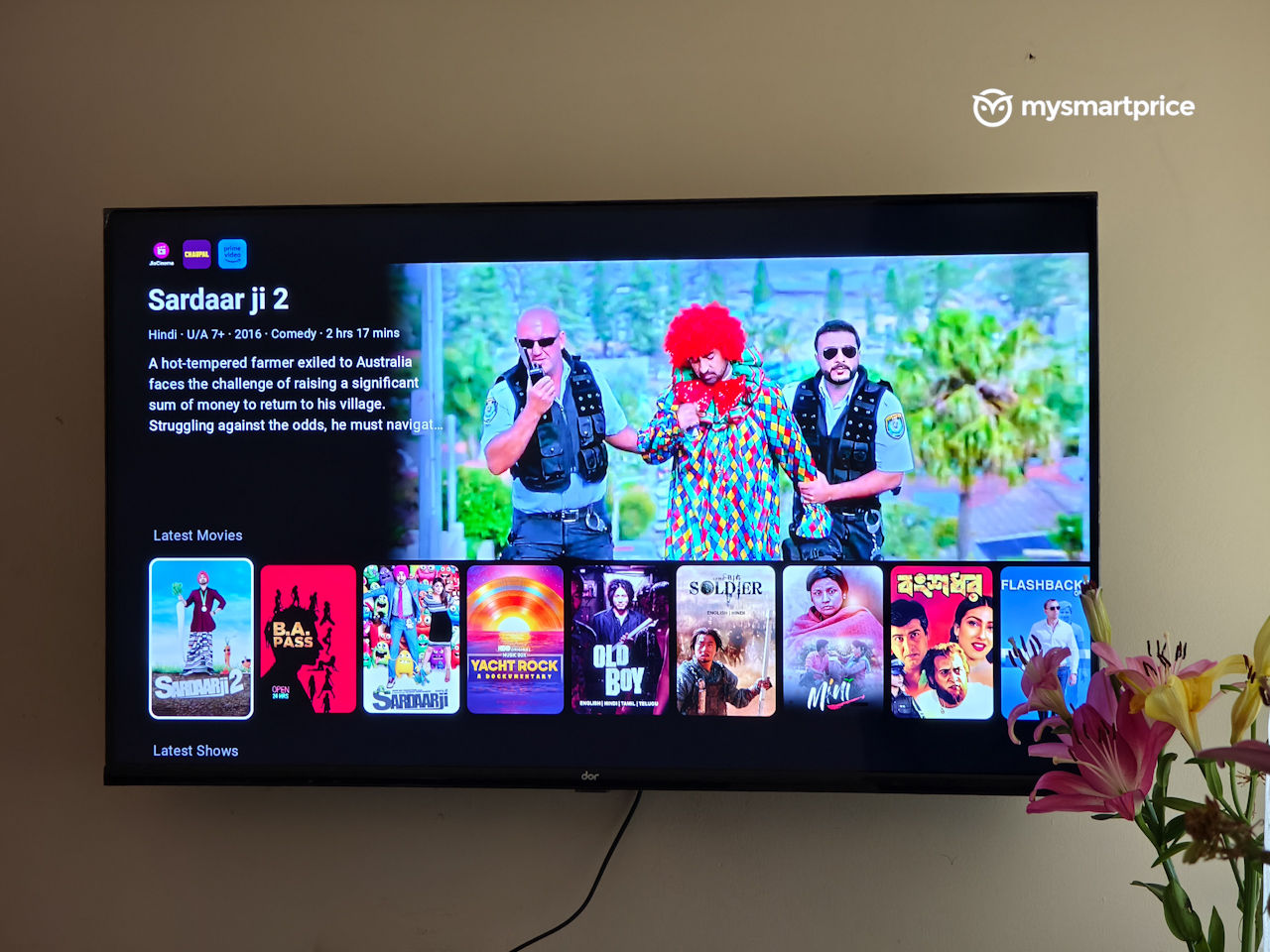
Dor has also spent nearly three years developing its knowledge graph based on over a lakh content pieces. The recommendation system here is far superior to Google TV’s simply because it accesses all the services on your unit, which means all services are already subscribed and running.
These two factors alone eliminate the lack of decisiveness that arises when you’re on a dinner date with your friends or partner and can’t decide what to watch.
There’s also a companion app that you can download on your smartphone (both, Android and iOS), which acts as a hub for all your subscriptions. What I’m trying to say is you’ll still need to install the apps individually to use them on your phone. I use it for the recommendations and LiveTV.
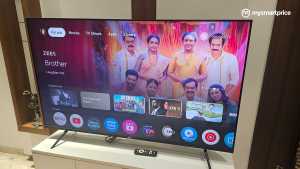
This brings me to my favourite part of this entire proposition—the LiveTV implementation. Dor claims to provide access to more than 300 TV channels in a mix of genres and languages. I even spotted a few Arabic, Portuguese, and African channels in the mix.
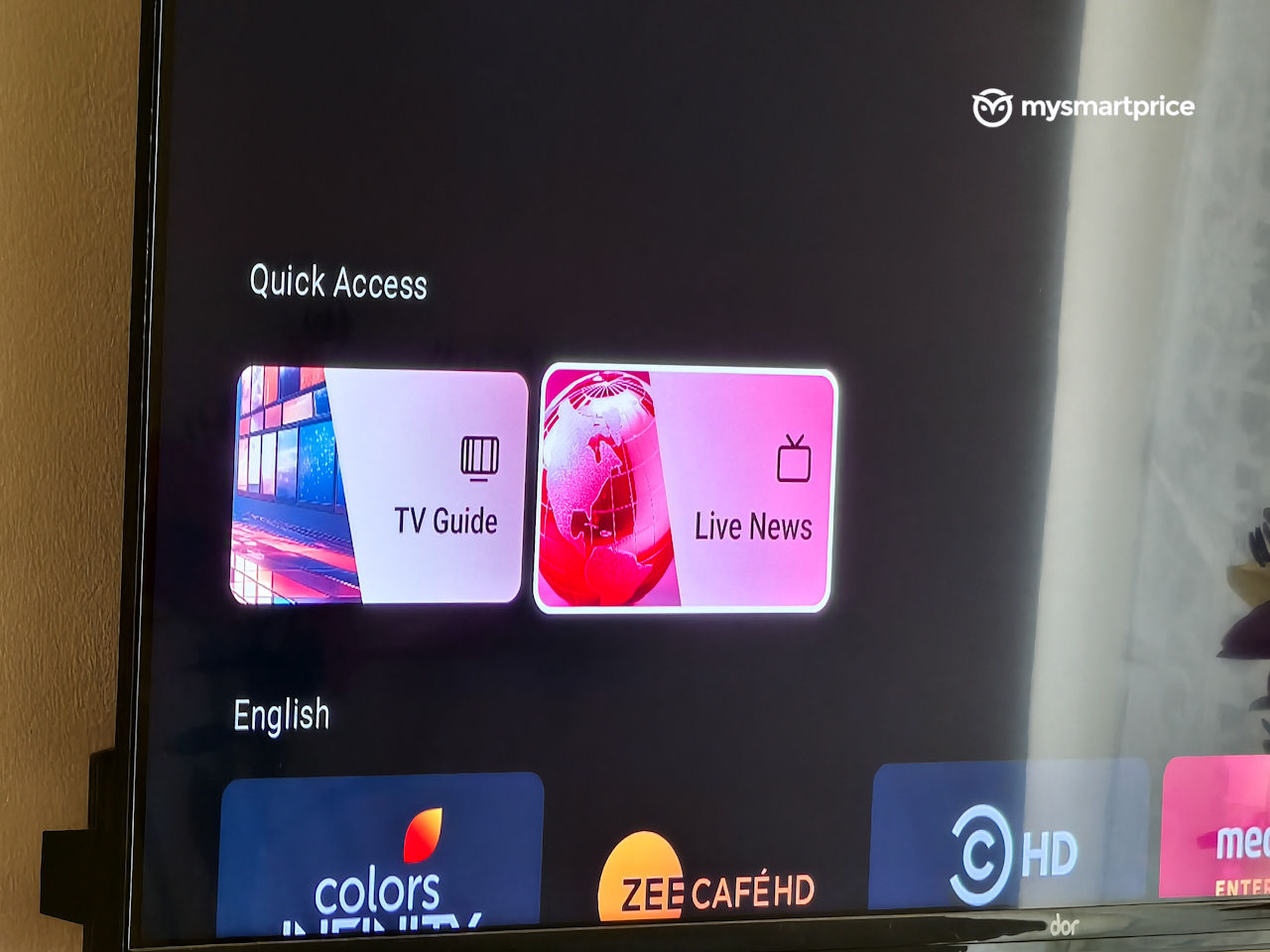
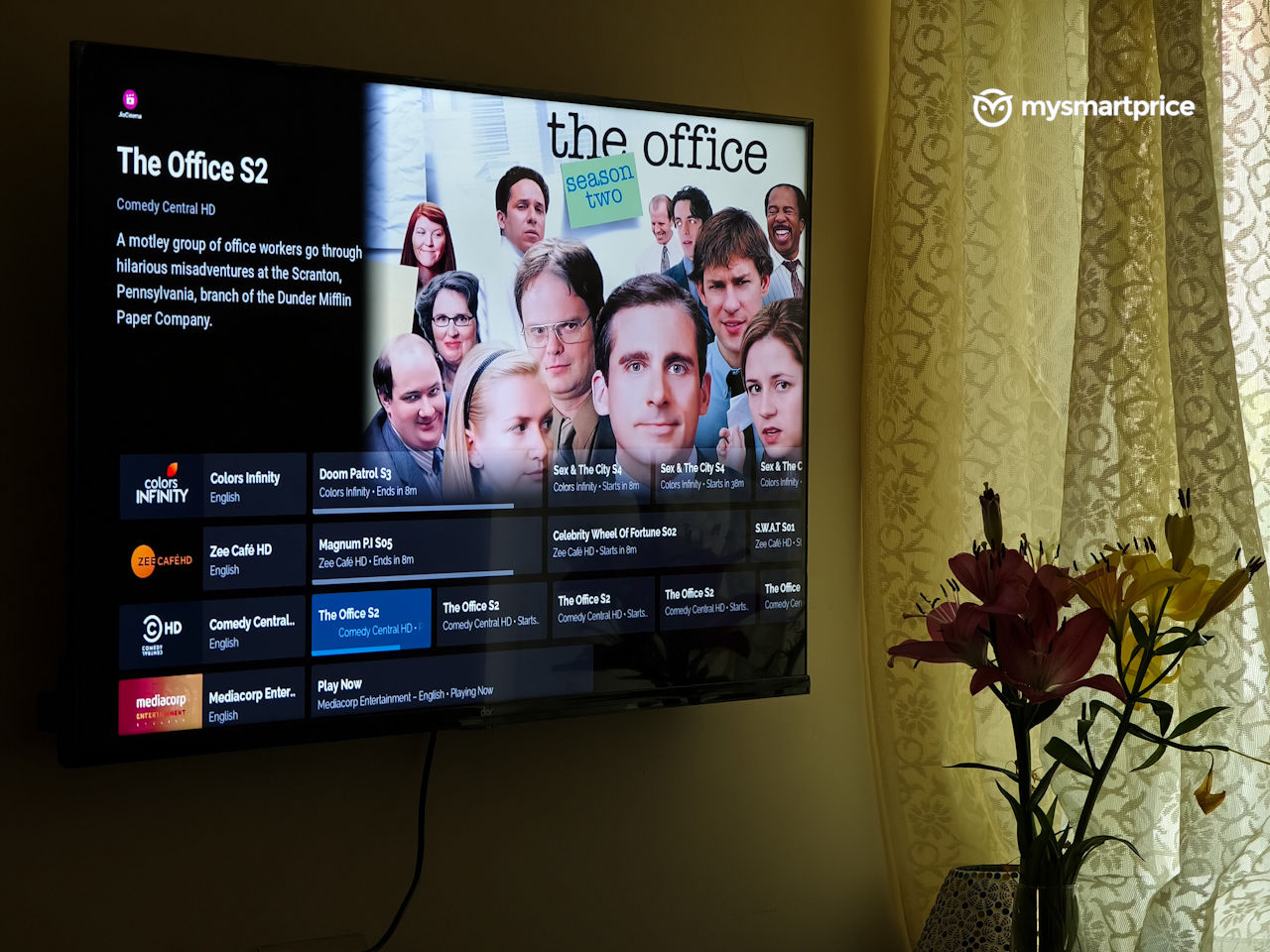
The visual quality of these is better than that of some OTT services because this is true 1080p, not HD. And everything loads up quickly, unlike most DTH services. In fact, it made me fall in love with old-school TV again.
Now, you may ask, “Hey, this DTH/OTT thing is already being offered to me by my ISP. What’s new?”
I’d add ease of installation. I have lived in two highly accessible localities of Noida, with access to the best networks in India. Installing DTH has always been a challenge despite opting in for a bundled Wi-Fi/DTH plan.
“Shaft ki dikkat hai, bhaiya” (there’s no fibre laid down in the shaft of the building) usually is the culprit.
Here, there’s no fibre to deal with, ergo there’s no problem.
Does it get the basics right?
Surprisingly, yes. The QLED panel is bright, crisp and vivid. The 40W speakers are loud (although you might want to tweak the sound profiles a bit in the settings). The usual connectivity options are also present (dual HDMI ports, dual-band Wi-Fi, Bluetooth 5.1, ethernet, aux jack, etc). 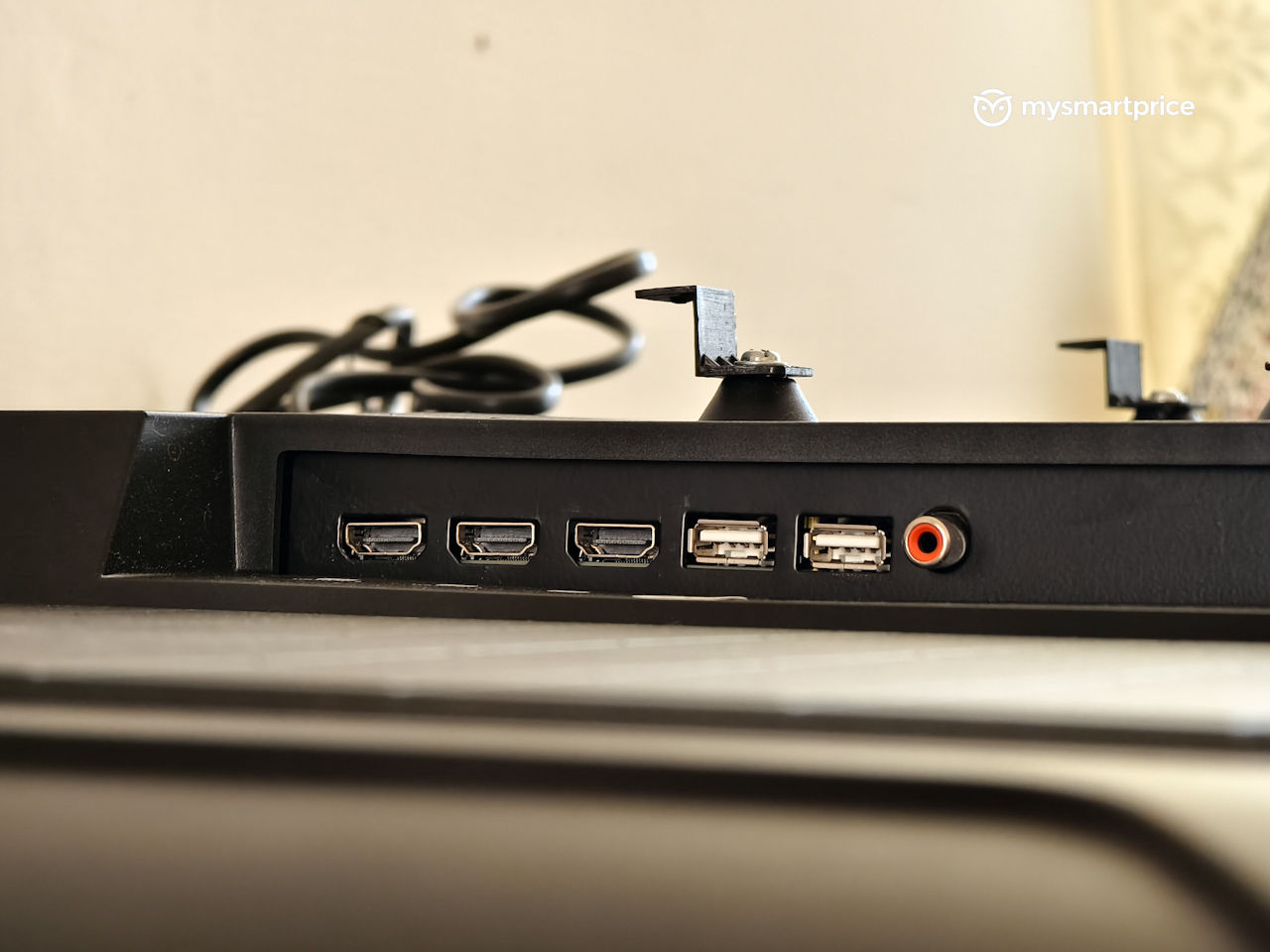
The remote control uses a lithium-ion battery that can be charged by ambient light or USB Type-C (I bet you haven’t seen that before). 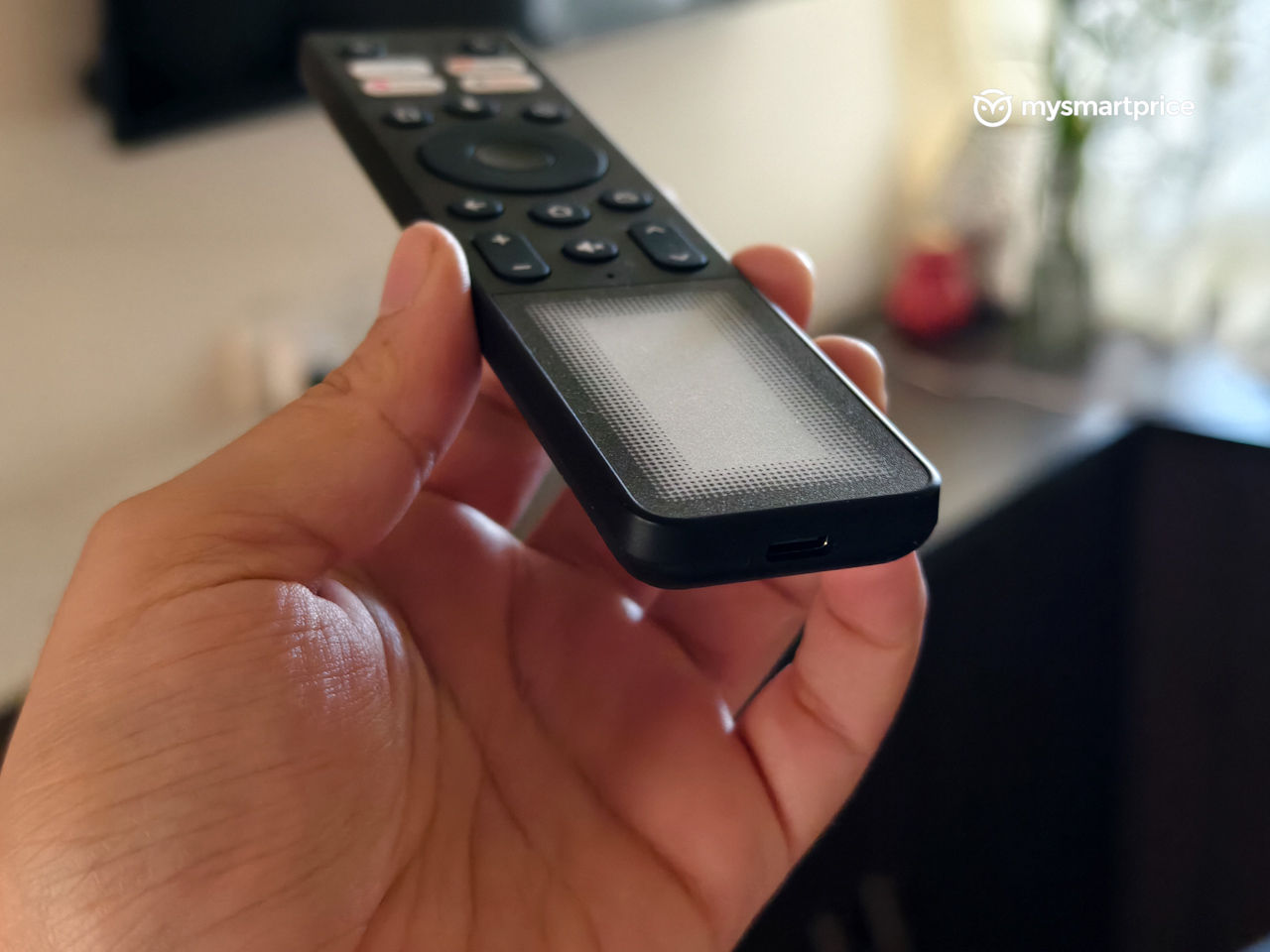
The design is extremely utilitarian. There are no flashy accents or trims; it’s a simple black glossy plastic with a tiny Dor logo on the front. The chin is ever so slightly wider than the other sides, but for the price, it doesn’t matter.
What about the aftersales service?
I hear you there. There’s no way to predict how the concept will work out in the future. My experience as a pre-sales media reviewer might be different from yours. However, my communication mainly revolved around their WhatsApp helpline, and they were quite responsive to all of my panic and issues.
I also noticed professionalism after receiving the TV. Although my address was incorrect, they handled it like a champ.
I also had a couple of software snags that were recently fixed by an OTA update.
Further, Dor vows to offer a four-year warranty, which is respectable. For repairs, Dor claims to have partnered with 1,500 or so service providers across India.
Again, I live in a tier 1 city, so your mileage may completely vary. Make sure you clear these things before splurging.
What are the caveats to the Dor TV model?
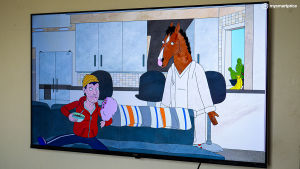
All subscriptions offered by Dor are in HD, not 4K, which is a bummer because the TV has 4K capabilities.
The Dor TV interface is based on Google TV but is a closed ecosystem. This means you cannot install all the apps present in the Play Store for a typical Android-powered TV. That’s a huge miss because as of now, there’s no way to install Netflix without plugging in an external HDMI stick.
There’s no size tier here. For now, you’re stuck with a 43-inch panel.
So, is it worth it?
I’m only a month old in the Dor system, and several new additions are planned for the next quarter. So, I sadly do not have a definitive answer to this question as of now.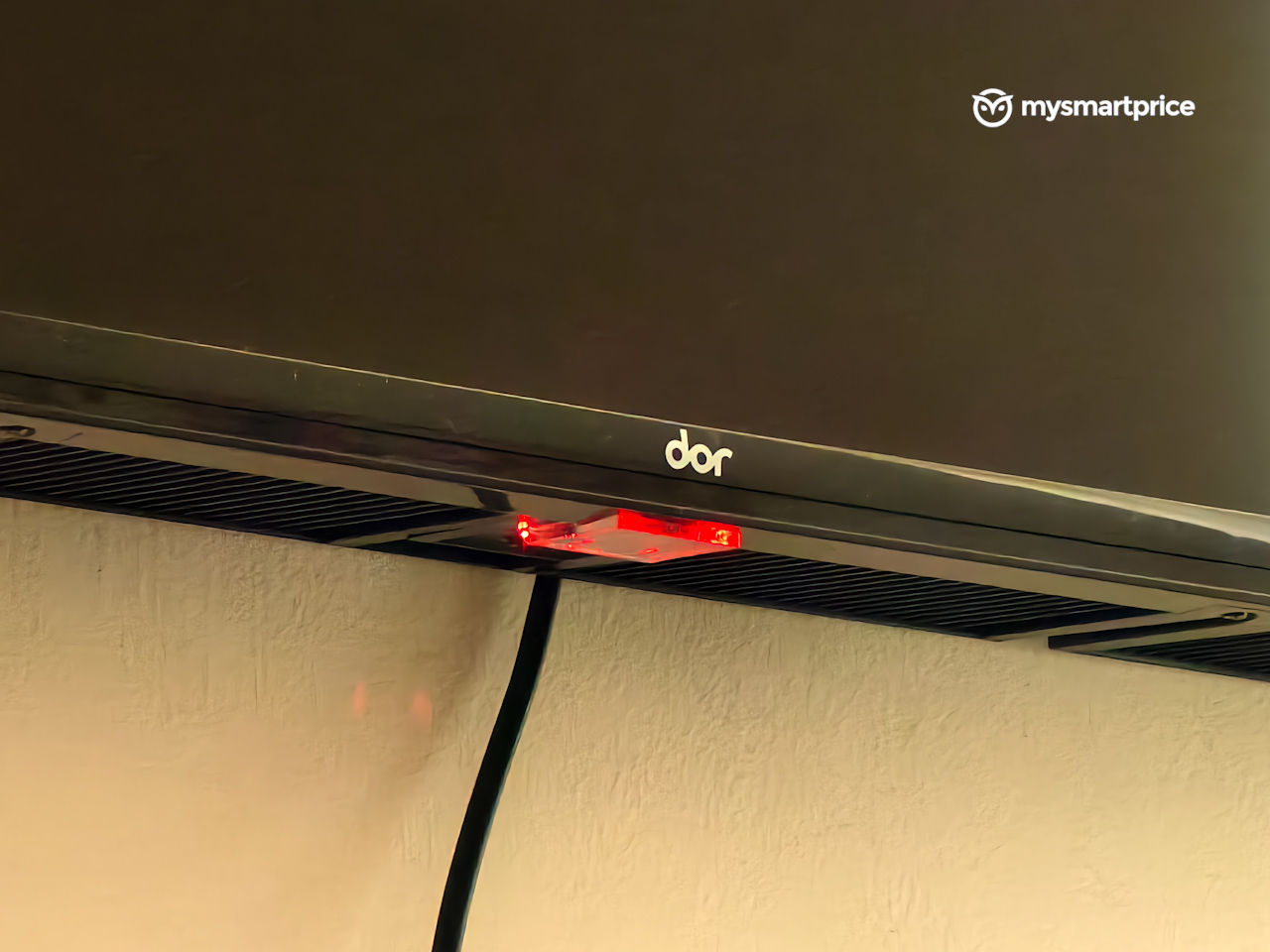
With an effective annual cost of Rs 19,588, Dor TV is a budget-friendly option compared to traditional 43-inch QLED TVs from SPPL brands (Kodak, Thomson, etc.), which often start around Rs 21,000. The all-integrated approach works really well, especially the LiveTV bit. I really hope the à la carte pricing comes in soon; otherwise, this TV will be exorbitantly expensive after a year and a half of purchase due to the monthly charges.
They seem quite confident about rolling out Netflix support in the next quarter, along with a few other key additions, such as 4K OTT plans. I will try my best to keep this review updated with my new experiences.
For now, I believe it ticks all the boxes to be an ideal “second or third TV in the house.” There are just too many variables for this to be your first TV purchase. I can also picture this as a fantastic addition to cafés or hotel rooms simply because it is so cheap and offers so much within a single integrated plan.