LG’s television business in India has entered 2025 on a confident note. Over the past year, the company has steadily expanded its presence across all price tiers, which anchors its leadership in the large-screen segment. The market for 55-inch and above TVs has grown rapidly, driven by falling panel prices, better connectivity, and rising consumer appetite for cinematic experiences at home. LG has been quick to adapt, maintaining strong offline visibility while scaling its online presence through large-format retail and e-commerce partnerships.
The LG OLED 65C56LA, or LG C5, is central to that strategy. It is the 2025 iteration of LG’s popular C-series, replacing the C4 and positioned between the more affordable B5 OLED and the flagship G5 OLED. It continues to use LG’s reliable WOLED panel paired with the α9 AI Processor Gen8 and offers advanced features such as 4K at 144 Hz gaming, Dolby Vision support, and HDMI 2.1 connectivity on all four ports.
In India, the 65-inch variant of the LG C5 is priced at around ₹1,92,990 on Amazon, while the older 2022 model still retails at a higher ₹2,09,990. The new lineup covers 42, 48, 55, 65, 77, and 83 inches, ensuring that LG’s OLED technology reaches every living room size. It competes directly with the Sony Bravia 8, Samsung S90D OLED, and Hisense E7K Pro Mini LED, each catering to buyers in the ₹1.8 to ₹2.2 lakh segment.
It is a TV that does not chase numbers but instead refines the experience that matters most: contrast, motion, and everyday usability. Here is what we feel after spending a good two months with this TV.
Display and Picture Performance
To understand why OLEDs like this remain so revered, it helps to revisit the tech behind them. Unlike LED or QLED TVs that use a backlight to illuminate pixels, OLED panels are self-emissive in which each pixel can turn on or off independently. This results in true blacks and virtually infinite contrast. When a pixel is off, it emits no light at all, which is why dark scenes on OLEDs look so immersive and cinematic.
That principle remains the foundation of why the C5 feels so superior in real-world viewing. Colours appear richer, details sharper, and transitions smoother, without the haloing or light bleed that even high-end Mini LEDs sometimes exhibit. LG’s OLED Evo panel builds upon that strength by adding improved brightness and more efficient pixel control. In HDR10 and Dolby Vision content, highlights gleam with better punch, while shadow details retain subtle textures.
In a dim or moderately lit room, the C5 looks breathtaking. In brightly lit spaces or under direct reflections, it can feel slightly challenged. This again is not just limited to this TV but it is a common OLED trait. Having said that, the HDR and SDR playback remain excellent overall. Viewing angles are wide, maintaining consistency even when watched from the sides.
While the more expensive G5 is noticeably brighter than the G4, the C5 offers incremental improvements over its predecessor. Unless you are testing both side-by-side, the difference in picture quality and viewing angles is barely perceptible.
Smart Features and WebOS Experience
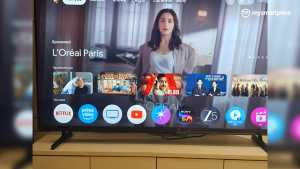
This was my first time spending significant hours with webOS instead of the Google TV interface that most premium models now ship with. I was initially sceptical, expecting a longer setup and multiple app logins, but I was pleasantly surprised. The entire setup process, which included connecting Wi-Fi, updating firmware, and signing into key streaming apps, all got done under five minutes. LG’s onboarding flow is streamlined and well thought out, with QR logins and automatic sync options.
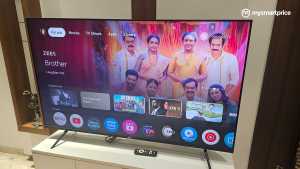
What impressed me most was how advanced the personalisation has become. The TV allows separate user profiles, meaning my home screen looked entirely different from my brother’s. My feed was filled with K-dramas and rom-coms, while his featured classic SRK films like Phir Bhi Dil Hai Hindustani and Dil Se — part of his ongoing Shah Rukh Khan marathon.
That said, webOS did take me some time to get used to. The navigation is slightly unconventional if you’re coming from Android TV or Google TV, and the Magic Remote adds another layer of adjustment. Its cursor-based movement is responsive but needs practice; my first few clicks overshot targets until I got the hang of its sensitivity. Once you settle in, though, it becomes second nature.
Audio Performance
The built-in 40W speakers deliver decent clarity for daily use, with crisp dialogues and reasonable mid-tones. However, the soundstage lacks depth, and bass is understandably limited. For a TV of this calibre, pairing it with a soundbar is almost essential. I used LG’s SC9S soundbar, which not only complements the TV’s design but also unlocks richer Dolby Atmos output and better spatial detail. It adds real dimension to movies and music, elevating the overall experience. For casual viewing, the TV’s audio suffices, but if you’re investing close to ₹2 lakh, adding a soundbar completes the experience.
(You can read our detailed LG SC9S Soundbar Review to see how it pairs within LG’s ecosystem.)
Performance
For gamers, the C5 continues LG’s dominance. It supports 4K at 120 Hz, VRR up to 144 Hz, ALLM, NVIDIA G-Sync, and AMD FreeSync Premium. Input lag is exceptionally low, and the Game Optimizer dashboard remains one of the most intuitive interfaces in the industry. The α9 Gen8 processor ensures snappy response across the UI, and switching between modes or launching apps feels instantaneous.
Why it Matters?
The LG OLED C5 sits in a sweet spot in LG’s 2025 lineup. It offers nearly the same picture performance as the higher-end G4 but at a more approachable price. The difference in brightness and viewing angles is minimal unless you compare them side-by-side. For most users, the C5 delivers 95 percent of the G4’s experience at a lower cost.
If you primarily watch movies or OTT content in a controlled lighting environment, or enjoy console gaming, the C5 is a near-perfect choice. It is also one of the most versatile TVs for mixed usage, cinematic enough for film enthusiasts, responsive enough for gamers, and stylish enough for modern living rooms.
The build quality and design feel premium without unnecessary flourish. The panel’s razor-thin frame, marble-textured rear, and solid stand make it as elegant as any luxury television on the market. Connectivity options are generous and future-proof, ensuring that it can handle any device setup you plan to connect.
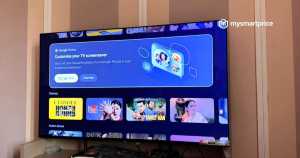
The only area where it lags slightly is in smart interface preference. While webOS is efficient and quick to set up, Google TV’s layout still feels more intuitive to me. LG has come a long way in refining its interface, but for users deeply embedded in Google’s ecosystem, the transition may take a few days of adjustment.
What truly completes the experience is LG’s continued investment in webOS. It has matured from being just another smart interface into an ecosystem that understands user preferences, supports multiple profiles, and learns from viewing habits. While it might take a day or two to adjust if you are coming from Google TV, the learning curve pays off quickly. However, the AI advancements are yet to fully take shape in this TV and shine.
Sound performance is decent on its own, but the difference after pairing with an LG SC9S soundbar is night and day. The combination transforms the living room into a personal theatre, especially if you appreciate surround sound and dialogue clarity.
Overall, the LG OLED 65C56LA achieves the rare balance of refinement and value. It delivers near-flagship performance without demanding flagship pricing, making it one of the most versatile and rewarding 65-inch televisions of 2025. For those seeking cinematic immersion, responsive gaming, and an elegant design that fits any home, this TV is as close to a complete package as it gets.