As hybrid work, online learning, and digital-first businesses reshape how people use technology, the role of desktops and All-in-One PCs is evolving. While laptops dominate mobility, AiOs and desktops are increasingly becoming shared productivity hubs in homes and small businesses. In this interview, Arnold Su, Vice President, Consumer & Gaming Business, ASUS India, shares insights on how user behaviour around these devices is changing in India and how AI and evolving computing needs could shape the future of the category.
How has the perception and usage of desktops and All-in-One PCs evolved in India with hybrid work and learning becoming mainstream, and how do Indian consumer behaviours differ from global markets?
While laptops remain the primary device for mobility, AiOs are gaining strong relevance as fixed, shared systems that offer larger displays, reliable performance, and clutter-free experience. This reflects a broader behavioural shift where Indian households are not only buying technology for a single individual or purpose, but for multiple users and use cases. A single AiO today may support office work during the day, online learning for students in the afternoon, and content consumption or creative pursuits in the evening. This evolution has been accelerated by structural changes such as hybrid work, digital education, and the continued formalisation of home workspaces. The government's ongoing focus on digital infrastructure and skilling is further strengthening the foundation for deeper technology adoption across Indian homes.
What is particularly distinctive in India is the way computing devices are integrated into shared living environments. Unlike some global markets, where AiOs are often positioned as individual lifestyle devices, in India they are increasingly valued as family or shared productivity hubs. Consumers prioritise ease of use, space efficiency, and the ability to support diverse needs from professional work and entrepreneurship to education and entertainment.
In the Desktop (CDT) segment, there has been renewed interest from entrepreneurs, SOHOs, and small businesses that require dependable performance for accounting, operations, design, or customer-facing functions. As more businesses formalise digitally, stable and scalable computing infrastructure becomes essential. This reflects a broader behavioural shift where computing is no longer just personal, it is becoming foundational to the household and small business ecosystem.
What advantages keep DTs and AiOs relevant despite increasingly powerful laptops, and how is ASUS enhancing them through design, performance, and user experience?
AiOs continue to serve a distinctly different role by offering a more immersive, stable, and shared computing experience. At ASUS, we position our AiO portfolio around the philosophy of for work, for home, for all, devices that are versatile enough to function as a family's central system while also supporting professional and business needs.
One of the core advantages of an AiO lies in its ability to combine a large display, dependable performance and clean, clutter-free design in a single integrated form factor. For homes, this means a central device stationed for learning. Our devices are versatile enough to function as a family's central system while also supporting professional and business needs.
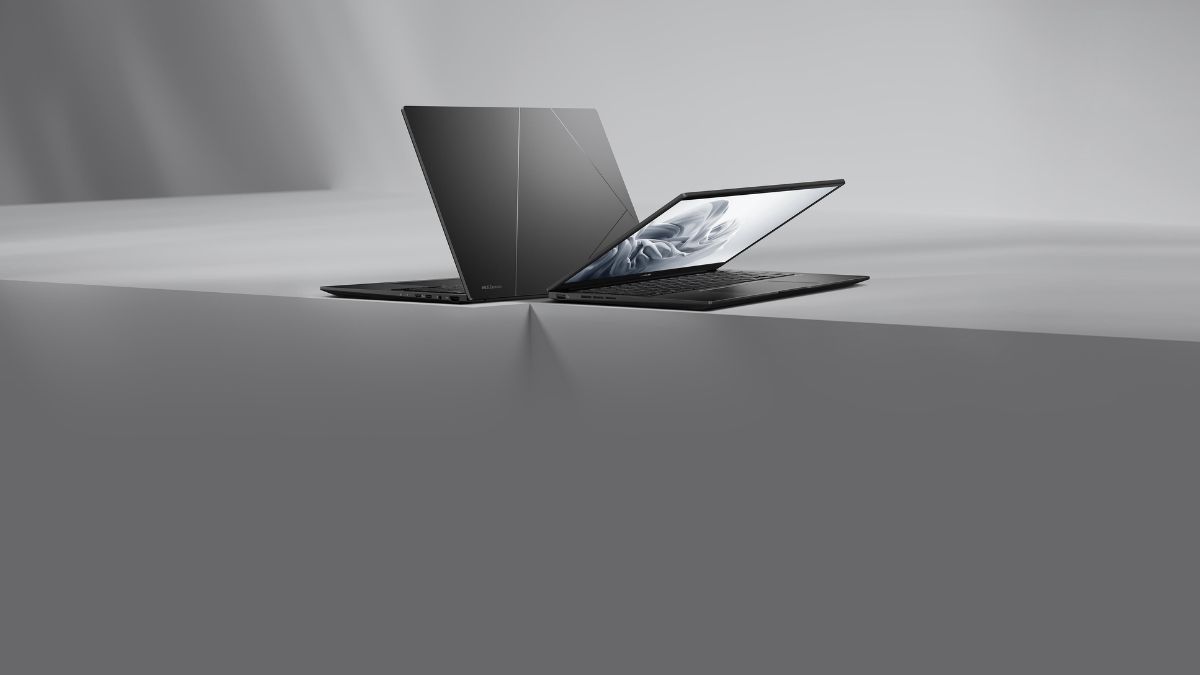
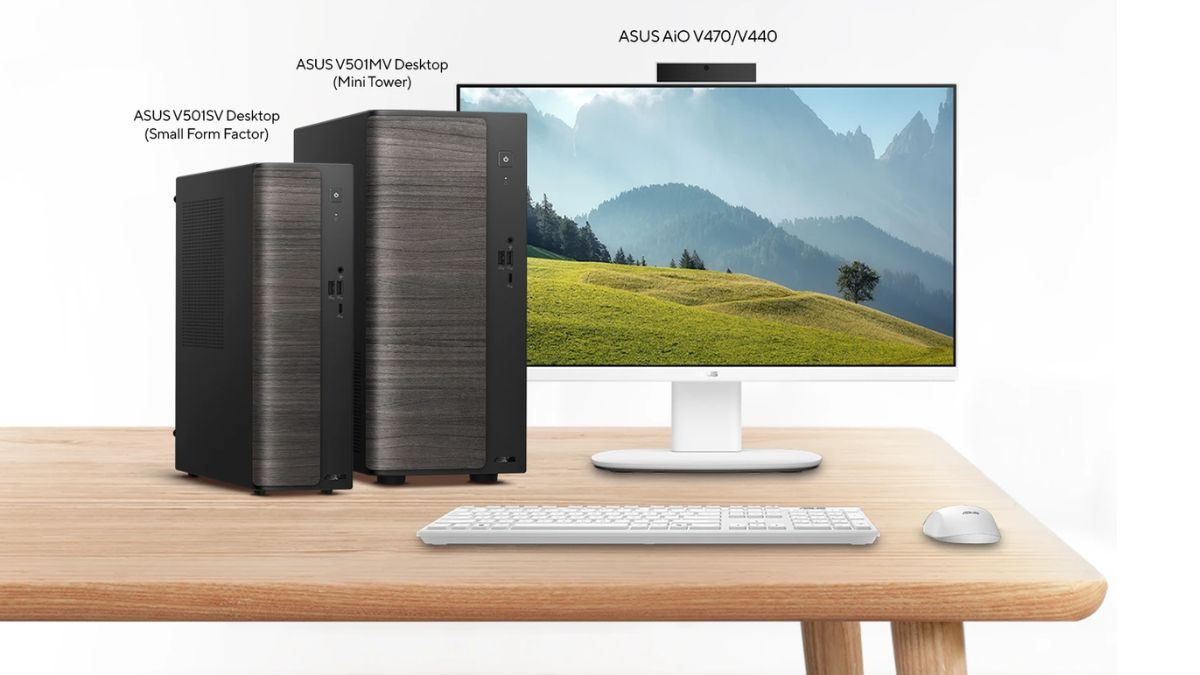
For office and commercial environments, AiOs are ideal for reception areas, retail counters, and creative studios providing a polished, space efficient workstation that simplifies setup and reduces cable management challenges. Our upcoming AiO V470 combines these strengths by bringing together Intel Core 3 processor and AI-enabled tools like AI powered Noise cancelling technology, AI enabled camera with a refined design that matches home inspired textures. The 27 inch display enhances multitasking and reduces digital fatigue, making it especially valuable in screen-intensive environments. At the same time, its integrated design ensures it blends naturally into both professional and home setups.
Consumer desktops are particularly relevant for business owners and SOHOs who prioritize reliability, scalability, and long-term performance. Whether managing accounting systems, inventory, design workloads, or customer operations, desktops offer consistent computing power and flexibility that growing enterprises depend on. The upcoming CDT V501 packs Intel Core 7 240H processor and storage expandable up to 2TB + 2TB HDD and SSD making them ideal for managing accounting systems, inventory, design workloads and customer operations, desktops offer consistent computing power and flexibility that growing enterprises depend on.
How does ASUS identify emerging user needs early, and how have those insights influenced your AiO product development and feature strategy?
Identifying emerging user needs starts with closely tracking how computing requirements are evolving across home offices and small businesses. One early shift we observed was the growing demand for systems that combine strong, reliable performance with ease of deployment and minimal IT complexity especially relevant in India, where the MSME sector contributes nearly 30% to GDP and employs over 110 million people. These insights directly influenced our Desktop (DT) portfolio, where we prioritised configurations that can comfortably handle business-critical workloads such as accounting software, GST platforms, CRM tools, design applications, and large spreadsheets, while ensuring stability, scalability, and long-term reliability for daily operations.
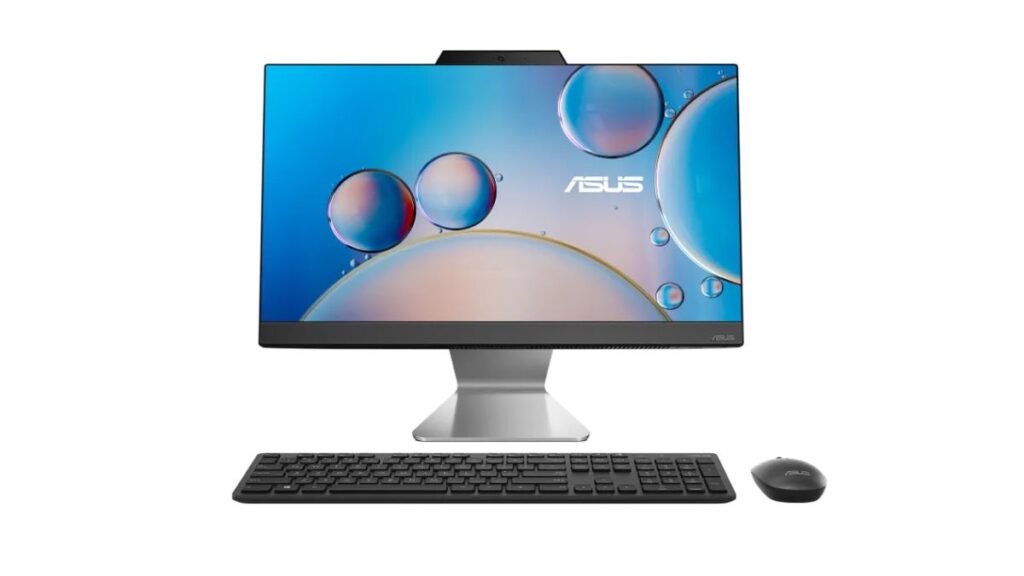
At the same time, we are seeing AI become central to how users work, collaborate, and create. This has shaped our latest AiO strategy, with devices offering dedicated AI processing capabilities of up to 50 TOPS, alongside AI-powered features such as noise cancellation, intelligent video enhancement, and performance optimisation designed to support modern, AI-driven workflows seamlessly. We also recognised the need for cleaner, space-efficient setups that do not compromise on performance. As a result, our AiO designs focus on simplified installation, high-quality displays, robust connectivity, and features optimised for video communication and multitasking.
Ultimately, our approach to innovation is grounded in real user behaviour. By translating these insights into practical design and feature decisions, we aim to deliver DTs and AiOs that make everyday computing more intuitive, efficient, and dependable.
How will DTs and AiOs evolve as AI becomes central to personal computing?
According to Gartner, AI PCs are expected to account for over 60% of global PC shipments by 2027, reflecting how rapidly intelligent, AI-accelerated computing is becoming mainstream. AiOs are uniquely positioned to benefit from the AI transition because they increasingly serve as the primary computing hub for both homes and professional requirements. This trend also indicates that AI enabled DTs will account for a majority of shipments, underscoring how quickly intelligent processing is becoming mainstream.
AiOs and desktops will increasingly hold a structural advantage for on-device AI processing. Their larger thermal envelope, stable power delivery, and ability to support more powerful processors and higher memory capacities will enable them to handle more sustained AI workloads over time. As AI applications become more demanding in terms of real-time video enhancement, local model inferencing, design rendering and more, these form factors will be better positioned to deliver consistent performance.
From a productivity standpoint, AI will increasingly shift from being a feature to becoming an active collaborator. Users will be able to automate repetitive tasks such as document formatting, data organisation, meeting summarisation, and visual editing directly on their devices. For small businesses, creators, and professionals, this means faster turnaround times, more efficient workflows, and the ability to focus on higher-value, creative, or strategic work. Features like AI-assisted content creation, intelligent system optimisation, and real-time collaboration enhancements will make everyday computing significantly more efficient.
Looking ahead to 2026 and beyond, what technological or form-factor changes do you believe will redefine the DT and AiO category, and what strategic role will they play in the broader future of personal computing?
We see the DT and AiO categories evolving in line with the broader shift happening across personal computing. It is particularly becoming more intuitive thanks to the AI revolution that has helped develop smarter machines. As users grow accustomed to smarter automation, contextual assistance, and AI-led optimisations on laptops and mobile devices, we expect the same wave to extend meaningfully into desktop and AiO systems as well.
The change may not necessarily be radical in terms of form factor, but it will be significant in capability. AI-accelerated processors will enable desktops and AiOs to handle heavier multitasking, content creation, real-time collaboration, and on-device AI workloads more efficiently. Features such as intelligent performance tuning, background noise cancellation, adaptive display optimisation, and workflow automation will increasingly become standard rather than premium additions.
From a design standpoint, the focus will likely remain on refinement rather than reinvention. Slimmer profiles, cleaner cable management, better thermals, higher-resolution displays, and improved energy efficiency will continue to define the evolution of AiOs. The emphasis will be on creating systems that seamlessly integrate into both professional and home environments without occupying excessive space.
In essence, rather than being redefined by dramatic form changes, the DT and AiO category will be reshaped by intelligence, efficiency, and deeper integration into evolving digital workflows.