Artificial intelligence is changing the way software is developed. Tools like GitHub Copilot, ChatGPT, and other AI coding assistants are helping developers generate code, explain functions, and speed up repetitive tasks. As development workflows evolve, hardware manufacturers are also rethinking how their products fit into this new environment.
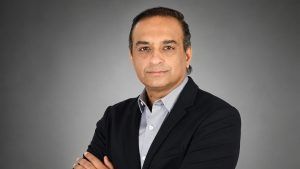
Speaking exclusively to MySmartPrice, Rajeev Singh, Managing Director of BenQ India & South Asia, shared how the company approaches developer monitors in an era where AI is becoming a regular part of software development.
The Display Remains an Extension of the Computer
Despite rapid advancements in AI-assisted coding, Rajeev believes the monitor's role remains fundamentally the same.
"The monitor is never an independent device. It is always a peripheral," he said. "It is an extension of your primary device." He explained that all computation still happens on the connected laptop or desktop, regardless of whether code is written manually or generated with AI. The monitor's job is to present information clearly and comfortably, allowing developers to work efficiently. While AI may reduce the amount of code typed by developers, it doesn't eliminate the need to review generated code, debug applications, compare outputs, or collaborate with teammates. Those tasks continue to rely heavily on a good display experience.
Products Should Evolve With Developers
Rather than adding AI-specific features simply because the industry is moving in that direction, BenQ studies how developers' day-to-day work is changing before deciding what to build next.
"We always look at the workflow," Rajeev said. "What was the workflow two or three years back, and what is the workflow now?" According to him, every generation of developers works differently. As new tools become part of everyday development, BenQ evaluates the challenges they create and looks for ways its products can address those needs. That philosophy is reflected in one statement that summarizes the company's approach:
"The monitor has to follow the workflow. It cannot lead the workflow." Instead of trying to influence how developers work, BenQ prefers to observe real usage patterns and design products around them.
When asked whether BenQ is developing AI-focused capabilities for future developer monitors, Rajeev confirmed that work is happening internally but chose not to reveal any details. While he acknowledged that the company is exploring future possibilities, he described those initiatives as confidential for now.
Why the RD270Q Includes Gaming Features
The conversation also touched on changing user behaviour, particularly among engineering students and young professionals. Rajeev noted that many users today rely on a single laptop for both work and entertainment. A monitor connected to that system is therefore expected to perform well across different use cases. That influenced the design of the BenQ RD270Q. Although it is built primarily for programming, it also features a 144Hz refresh rate and AMD FreeSync support, making it suitable for casual gaming after work or classes.
A Practical Approach to AI
While many companies are positioning every new product around AI, BenQ appears to be taking a more measured approach. For the company, AI is less about adding another feature to market and more about understanding how developers' habits are changing. As workflows evolve, the products will evolve alongside them. Rather than building for trends, BenQ's focus remains on solving the practical problems developers encounter every day. Whether AI becomes a larger part of software development or not, Rajeev believes the monitor should continue serving the user instead of trying to define the way they work.