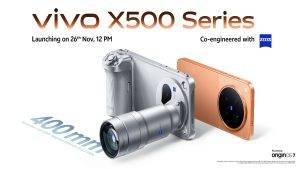
A smartphone that costs nearly ₹1.4 lakh has a lot to prove, and the Oppo Find X10 makes an interesting first impression. Its dual 200-megapixel cameras can capture images with an almost unbelievable level of detail, while the optional telephoto extender takes the photography experience a step further. But after spending time with it, I found myself asking a bigger question: how much of what I see in these photos comes from the camera, and how much comes from AI? There is plenty to like beyond the cameras, too.
OPPO Find X10
Rs 1,39,999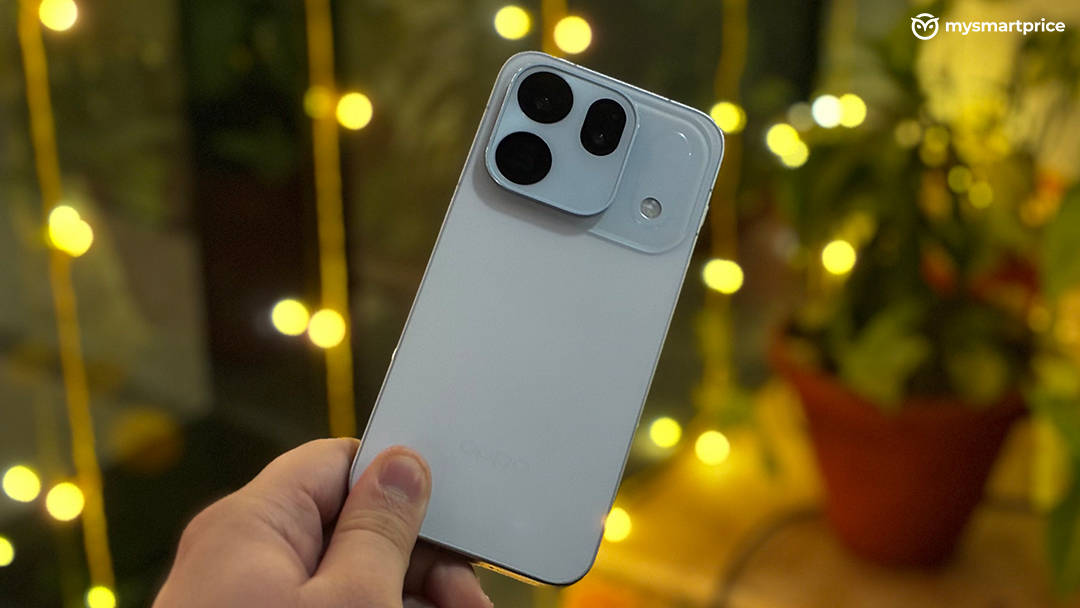
What Is Good?
- Excellent camera detail and versatility
- Outstanding battery life
- Gorgeous Glacier Blue design
- Polished and smooth ColorOS 17 experience
- Excellent display with strong brightness and colours
What Is Bad?
- Heavy and bulky camera hardware
- Aggressive AI image processing
- Sustained performance could be better
- Noticeable heating during demanding workloads
- Hasselblad Teleconverter is expensive and inconvenient to use
The Glacier Blue finish looks gorgeous, ColorOS 17 feels polished, and the massive battery comfortably gets me through a day and often more. Yet, the phone isn’t without its compromises. Performance under sustained loads raises a few concerns, the camera hardware makes it noticeably bulky, and the telephoto kit, while exciting, isn’t exactly the kind of accessory everyone will want to carry around. At this price, the Find X10 isn’t just competing on specifications; it’s competing for a place in your pocket against some of the best phones. So, is Oppo’s camera-first flagship worth the investment, or does the experience become less convincing once you look beyond those impressive photographs?
Design and Build: The Blue Colour Is Gorgeous
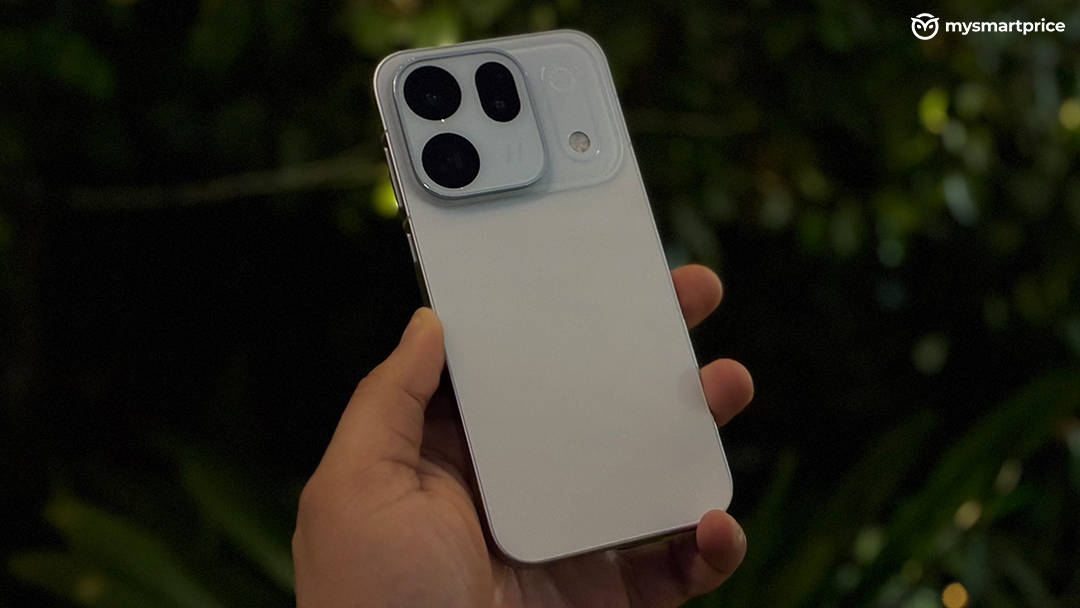
The Oppo Find X10 is a heavy phone, and the bulky camera hardware makes its presence felt. The phone weighs around 216 grams and the weight really feels. That is hardly surprising for a device built around a large camera system, but it is something you will notice during extended use.
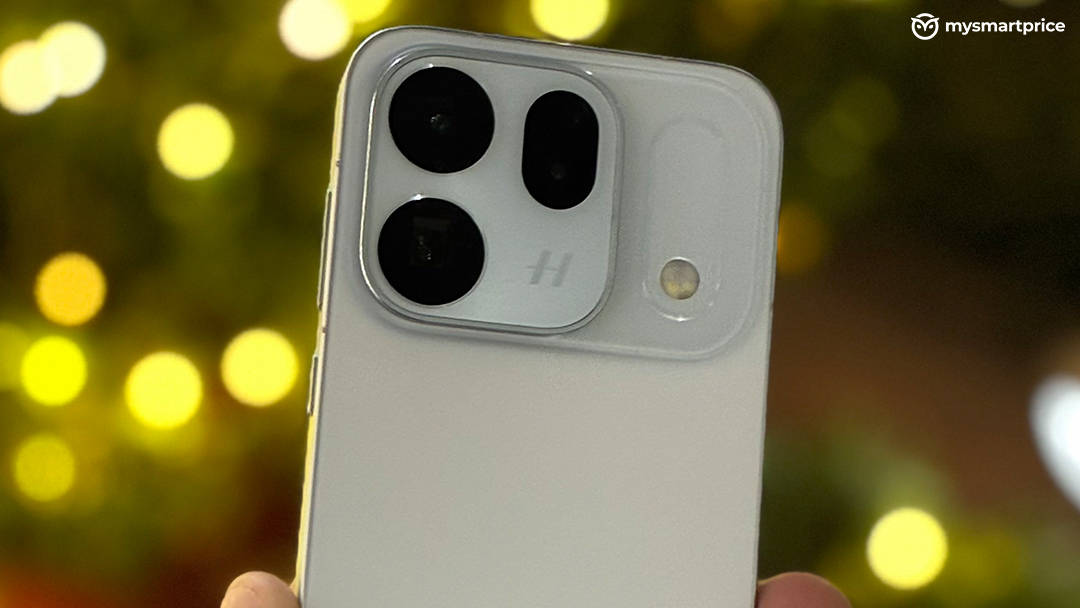
What makes up for it, at least for me, is the design. The Glacier Blue colour looks gorgeous, and the tinted camera plateau adds character to the rear panel. The phone looks premium even without a case, which is not something I can say about every flagship smartphone. The camera system is clearly the visual focus, but Oppo has managed to make it feel like part of the design rather than an awkward addition. The finish and colour work particularly well together, giving the phone a distinctive look. There are other colour options such as Glow Coral and Mist Grey but the blue colour matches my vibe and adds to my personality.
The Display Looks As Good As A Flagship Should

A good display is something you appreciate every time you pick up your phone, and the Oppo Find X10 gets the basics right. Colours look sharp and vibrant, and the panel makes everything from everyday scrolling to watching videos feel enjoyable. It has the kind of visual appeal you would expect from a phone in this price bracket, without making the experience feel unnecessarily complicated.
What I particularly liked was how the display handled darker scenes. Blacks looked properly black, but the finer details in dark areas were still visible. This matters more than it might sound. Some displays can make dark scenes look impressive at first glance, only for shadows and smaller details to get lost in the process. On the Find X10, I could still make out details without the blacks looking washed out, which made the viewing experience feel more balanced. The high refresh rate also adds to the experience. The display supports up to 120Hz for a smoother everyday experience, with refresh rates of up to 144Hz available in certain supported apps or gaming scenarios. The distinction is worth keeping in mind, since 144Hz support is not available universally across everything you do on the phone. The panel is bright and visible in outdoor sunshine as well and I recorded a peak brightness of 2095 nits in my brightness test.
Overall, I have almost no complaints about the display. It looks good, colours have plenty of punch, and dark scenes retain the detail that makes them enjoyable to watch. It may not be the headline feature of the Find X10, but it is a strong part of the overall flagship experience.
ColorOS 17 Looks and Feels Fantastic
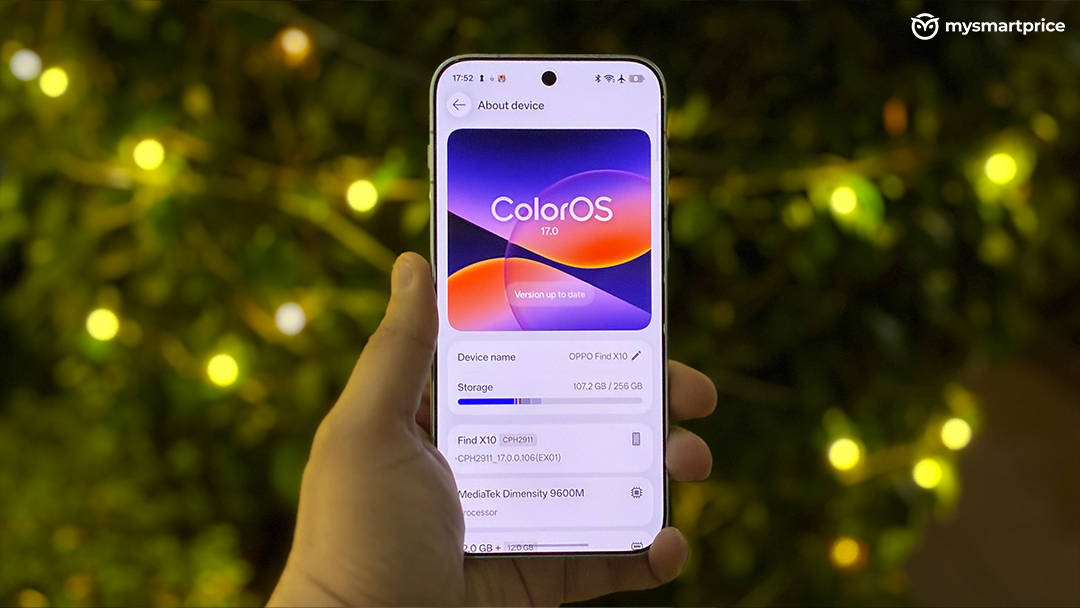
ColorOS 17 is another highlight of the Oppo Find X10. Its Living Flow design gives the interface a polished appearance, and the animations and transitions feel smooth. Moving between apps and navigating the interface feels premium, which is exactly what I expect from a phone in this price bracket. The Snap Key is a welcome addition. It gives you a convenient physical shortcut, adding a little more flexibility to the everyday experience. Oppo’s AI features, including Mind Space and its related tools, also fit naturally into the software experience and can be useful for organising information and handling daily tasks. The options to personalise themes as per the preference to make the phone more individualised give the phone a character. Animations are smooth and the X10 does not feel laggy.
AI features are becoming increasingly common across smartphones, but their value depends on how well they integrate into everyday use. On the Find X10, the overall software experience feels thoughtfully put together, rather than like a collection of features added just to tick a box. It looks good, feels smooth and makes the phone enjoyable to use even when I am not taking photographs.
Oppo Find X10 Camera Performance
Computational photography has changed the way we take pictures on smartphones. What started as a way to combine multiple frames and improve image quality has evolved into something much more sophisticated, with AI now playing an integral role in how our photos look.
I have been using the Oppo Find X10, and there is plenty to like about its approach to smartphone photography. The images look sharp, edge detection is impressive, and even minute details are captured convincingly. However, the experience also raises an important question about how much of the final image comes from the camera itself and how much is shaped by computational processing.
The Main Camera Captures Impressive Detail
The Oppo Find X10 features a 200MP primary camera, backed by the company’s LUMO True Image Engine and its Hasselblad imaging collaboration. The emphasis is on capturing detailed photographs while retaining the colours and atmosphere of the scene. In my experience, the images look sharp, and the edge detection is quite good. Even minute details appear convincing, giving photographs a level of clarity that makes them look close to what I see in real life. This is particularly impressive when you consider how much processing goes into producing a final smartphone image.







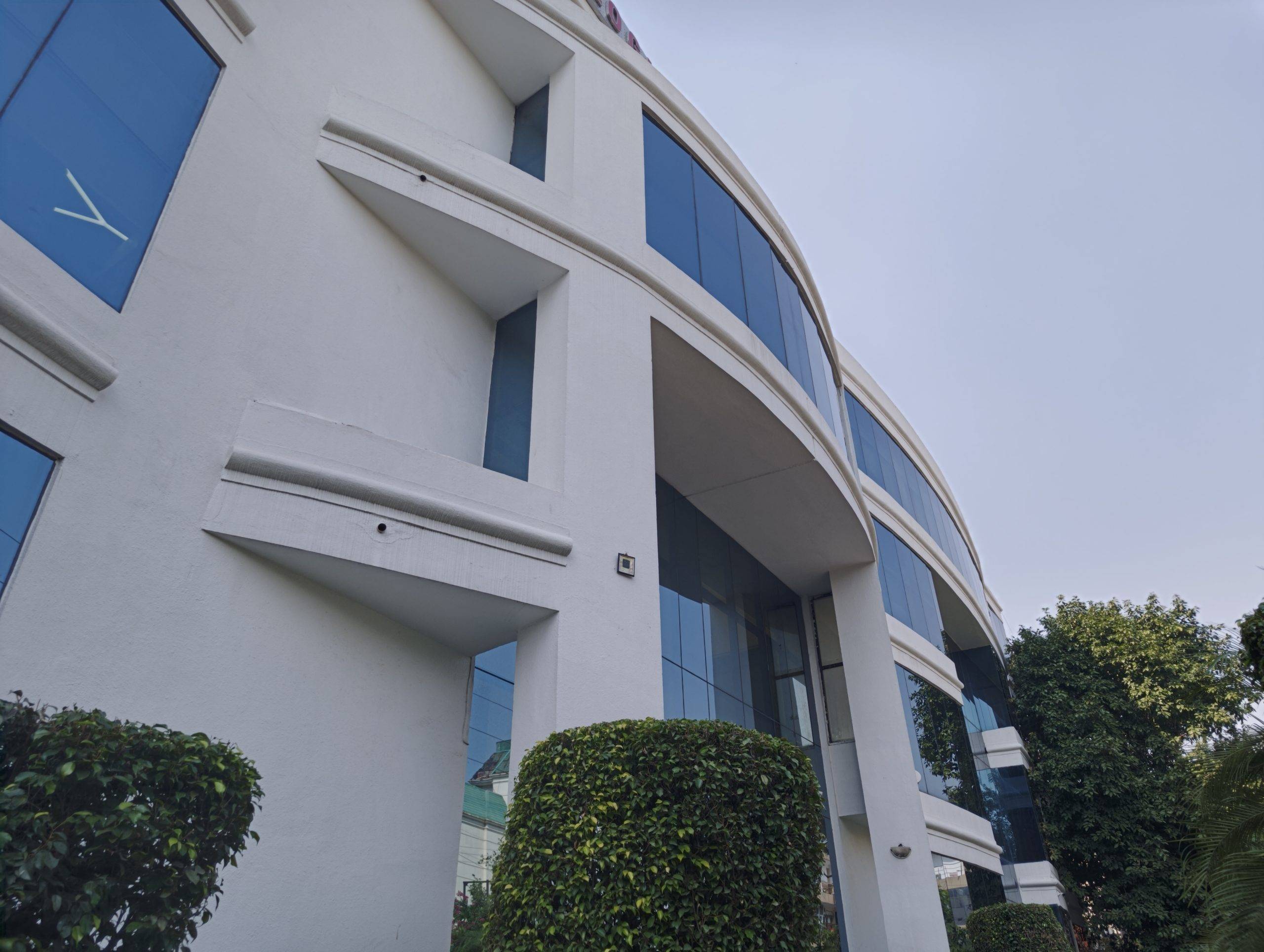



However, the heavy AI processing is something I kept thinking about while using the camera. Computational photography is not inherently a bad thing. In fact, it is one of the reasons smartphone cameras have become so capable. But when the processing becomes too aggressive, it raises questions about how faithfully a photograph represents the original scene. I just wish the processing felt a little more restrained in situations where preserving the original scene matters more than making the image look impressive.
The Hasselblad Teleconverter Kit Is Impressive, but Not for Everyone








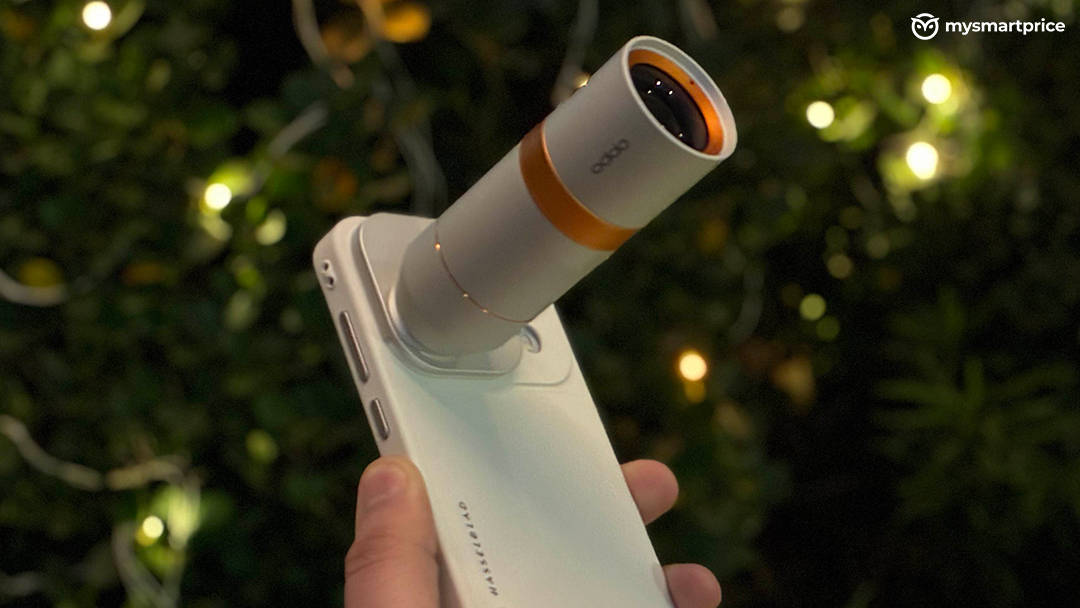
The optional Hasselblad Teleconverter Kit is one of the biggest talking points of the Oppo Find X10. Priced at ₹24,999 separately, it is designed for people who want to push the phone’s zoom photography further. At this price, however, it is an accessory that needs to justify both its cost and the extra effort involved in using it. The results are impressive. Photos look sharp, edge detection is good, and fine details are captured well. If you enjoy photographing distant subjects or experimenting with different compositions, the kit can open up possibilities that would be difficult to achieve with a conventional smartphone camera setup.
However, the physical experience is not as convenient as I would like. The lens is bulky and takes up considerable space, changing the way the phone feels in your hand. More importantly, you cannot simply switch to the other cameras while the telephoto attachment is fitted. If you want to capture a wider angle or use another camera, you have to remove the attachment first. That quickly becomes a hassle for someone like me, who likes switching between different perspectives while taking photographs. Instead of moving naturally from a close-up to a wide shot, I have to stop, remove the lens and then continue shooting. The kit also costs nearly ₹25,000 on top of a phone that already starts at ₹1.4 lakh.
I would recommend it mainly to photography enthusiasts who know they will use the extra reach regularly. For general users, the price, bulk and inconvenience of switching cameras make it difficult to justify.
The Moon Shot Made Me Question the AI Processing





The most interesting moment during my camera testing came when I photographed the moon using the telephoto setup. The scene was pitch dark, yet the resulting photograph looked surprisingly detailed. That immediately made me wonder how much of the final image was captured by the lens and sensor and how much had been reconstructed or enhanced by the phone’s processing.
This is where computational photography becomes a little complicated. Smartphone cameras combine sensor data, exposure adjustments, sharpening, noise reduction and other processing techniques to create the final image. AI can make these results look much better than the raw data might suggest, especially when photographing distant subjects in challenging conditions.
There is a difference between enhancing a photograph and creating details that may not have been clearly captured in the original scene. The moon shot left me questioning where that line sits on the Find X10. I cannot say that the phone fabricated specific details based on this one photograph alone, but the result made me cautious about treating such images as a completely faithful representation of what the camera captured.
I would love to see Oppo offer clearer controls over computational processing so users can choose between an enhanced image and one that stays closer to the original capture.
Performance: Strong Gaming Performance, With Room for Better Consistency
For a phone that costs ₹1,39,999, I expected more consistent performance under sustained loads. The Oppo Find X10 uses MediaTek’s Dimensity 9600M chipset, but my benchmark results suggest that the phone struggles to maintain its performance as well as I would expect from a flagship.
The phone scored around 3.2 million on AnTuTu, which is a strong number in isolation. However, benchmark scores need context, particularly when newer flagship chipsets are pushing performance further. One more concern was the 3DMark stability result of just 27%. That suggests a substantial drop in performance between repeated runs, although stability scores can vary with temperature, test settings and software versions.
I also noticed heating during demanding use. This matters because sustained performance is more important than a brief burst of speed, especially when you are gaming, recording high-resolution video or using the camera for extended periods. A flagship phone should be able to handle demanding tasks without becoming uncomfortably warm or dramatically reducing performance.
If you game a lot, you’d like the Find X10. Speaking about BGMI specifically, the supported frame-rate options and the phone’s ability to maintain them matter more than the benchmark score alone.The chip is capable for 120FPS, and the phone does support the same too. In our testing through GameBench, the phone shows around 117 FPS on average, and there were no stutters or lag issues faced by me.
But at this price, I expect more than a high peak benchmark score. I want the phone to maintain that performance when it matters, as the GPU stability could’ve been better.
Battery Life Is One of Its Biggest Strengths
Battery life is an area where the Oppo Find X10 has genuinely impressed me. It packs an 8,000mAh battery, which is considerably larger than what we see in many conventional flagship phones. In the PCMark battery test, the phone lasted 24 hours, and in everyday use, I comfortably got through a day and sometimes a day and a half on a single charge. That endurance makes a real difference when using the phone for photography, navigation, social media and other daily tasks. A camera-focused phone is often used for long stretches away from a charger, and the larger battery provides some reassurance that you will not have to constantly monitor the remaining percentage.
The Find X10 also supports 80W SUPERVOOC wired charging and 50W AIRVOOC wireless charging. This gives you flexibility when you do need to top it up, although actual charging times will depend on temperature, settings and the charger used. In my experience, the X10 took around 20 mins to go from 0 to 20 percent charge using the in box charger which is satisfactory with respect to the massive battery the phone packs.
Verdict: A Brilliant Camera Phone With Some Expensive Trade-Offs
The Oppo Find X10 enters a fiercely competitive segment. It goes up against the giants which are Samsung Galaxy S26 Ultra and Apple iPhone 17 Pro Max. At this price, buyers are not just comparing specifications. They are choosing between different approaches to cameras, software, performance and the overall flagship experience.
The iPhone 17 Pro Max offers a larger display, while Samsung brings features such as its built-in Privacy Display, S Pen and One UI, which remains one of the more feature-rich Android interfaces. These are meaningful advantages beyond photography. The iPhone also delivers a more refined video experience in my comparison, with consistent results that make it a strong choice for people who shoot a lot of video.
The Oppo Find X10 has its own strengths. Its camera system offers plenty of flexibility, and it supports 8K video recording at 30fps. Its large battery is another advantage, while the optional teleconverter kit provides an unusual way to extend the phone’s photographic capabilities.
Photography is a little more complicated. Oppo’s aggressive processing can produce sharp and impressive images, but that does not automatically mean it is the better camera in every situation. Samsung and Apple have their own processing approaches and image trade-offs, so the better option depends on whether you prioritise detail, colour, natural rendering, zoom flexibility or video consistency.
The Find X10 has a compelling camera system, but it is not an automatic winner just because it offers 200MP sensors and an optional teleconverter. Samsung and Apple deliver strong alternatives, particularly if you value video, sustained performance or their wider software ecosystems. Personally, I would choose the X10 camera for photography and the iPhone’s video capabilities.
The Oppo Find X10 is a phone that makes a strong first impression. Its Glacier Blue design looks gorgeous, ColorOS 17 feels polished, battery life is excellent, and the cameras can produce sharp photographs with impressive detail. The optional Hasselblad Teleconverter Kit takes that experience further, although its cost and practical limitations mean it is not for everyone. My biggest concern is the balance between image quality and computational processing. Performance is another area where I was expecting more from this phone. The Find X10 is smooth for everyday tasks, but I would want more consistency under demanding workloads.
At ₹1,39,999, the Oppo Find X10 is best suited to someone who values camera versatility, premium design, ColorOS and long battery life. I would skip the teleconverter kit unless I knew I would use it regularly, and I would compare the phone carefully against Samsung and Apple’s flagship offerings before spending this much. The Find X10 has the hardware to be a fantastic camera phone, but it needs to balance its impressive images with more restrained processing and better sustained performance. For now, it is a compelling camera-first flagship, but not a complete all-rounder.