Vu Televisions has launched its new Masterpiece AEye TV range in India, bringing AI-powered eye comfort to its flagship television lineup. The new TVs use an ambient light sensor and Vu's Intelligent Brightness Control engine to automatically adjust the picture according to the lighting conditions in the room and the content being played.
Vu Masterpiece AEye TV Features
The biggest highlight of the new Masterpiece AEye range is its approach to eye comfort. Instead of requiring users to manually change brightness depending on the time of day, the TV continuously monitors the surrounding light and adjusts the picture automatically.
Its photoelectric sensor measures both the brightness and colour of ambient light, while the AI picture engine analyses the content being displayed. The system can then adjust parameters including brightness, contrast, gamma, colour temperature, HDR intensity and local dimming.
Vu says the TV can also smooth transitions between dark and bright scenes and shift towards warmer tones as the evening progresses. The company claims this can help minimise eye fatigue during extended viewing sessions, particularly in darker rooms. The technology is designed to work continuously without requiring users to open the TV's settings menu.
The Vu Masterpiece AEye TV uses RGB MiniLED backlighting and AI picture processing, with the company claiming 100% BT.2020 colour coverage. The 55-inch to 98-inch models offer up to 2,500 nits of XDR brightness, while the flagship 115-inch model goes up to 3,000 nits. Intelligent Brightness Control adjusts the output according to the surrounding lighting.
For contrast, the TVs feature AI-mapped Full Array Local Dimming with up to 2,000 zones on the smaller models and 2,696 zones on the 115-inch version.
The lineup also gets 288Hz Fluid Motion with Vu's Hyper-Motion AI Engine, which is designed to reduce blur, judder and other motion artefacts during fast-moving content and gaming.
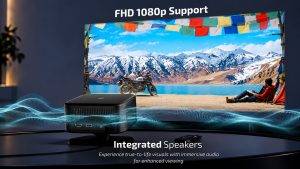
Vu has paired the large displays with a multi-driver audio system. The 55-inch to 98-inch models feature a 110W VuFx six-driver setup with four speakers and two rear woofers. The 115-inch model gets a more powerful 240W VuFx 10-driver system with eight speakers and two rear subwoofers. The setup includes top-, side- and down-firing drivers and supports Dolby Atmos. The TVs also feature AI Crystal-Clear Voice with Dolby AC-4 Dialogue Enhancer, which is designed to improve dialogue clarity without requiring users to increase the overall volume.
The Masterpiece AEye TVs feature an ultra-slim profile and a hand-brushed premium aluminium-alloy body. Vu has retained its Armani Gold design treatment, which is designed to appear gold under warmer lighting and silver in brighter environments.
When the display is not being used, Personalised Frame Mode can turn the TV into a digital art frame for photographs, artwork and memories. Vu says the 115-inch model is among the world's largest personalised digital art frames.
On the software side, the Vu Masterpiece AEye TV runs Google TV with Gemini AI. It supports personalised content discovery, intelligent search and navigation. The TVs also feature an advanced AI processor paired with 3GB of RAM and 32GB of storage. Vu is bundling two Bluetooth voice remotes with the range, including voice search and dedicated OTT hotkeys.
Vu Masterpiece AEye TV India Price and Availability
The Vu Masterpiece AEye TV range goes on sale in India from November 12 through leading retail stores. The pricing is as follows:
| Screen Size | Price |
|---|---|
| 55-inch | Rs 75,000 |
| 65-inch | Rs 95,000 |
| 75-inch | Rs 1,30,000 |
| 85-inch | Rs 1,75,000 |
| 98-inch | Rs 2,95,000 |
| 115-inch | Rs 13,00,000 |
The 115-inch model is therefore positioned as the flagship of the lineup, with its substantially larger display, 3,000-nit XDR brightness, 2,696 local dimming zones and 240W audio system.
With the Masterpiece AEye TV, Vu is putting AI to work on something beyond picture enhancement and content recommendations. The automatic adjustment of brightness, colour temperature and other picture parameters based on both the room and the content gives the range a more distinctive proposition, particularly for people who spend long hours watching TV at night. The challenge will be whether this eye-comfort approach translates into a noticeable real-world benefit while maintaining the picture quality expected from a premium MiniLED television.