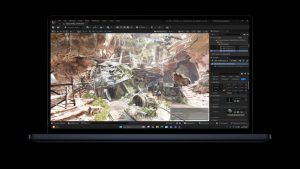
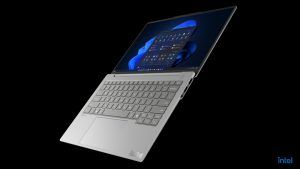
NVIDIA and Microsoft are outlining the next phase of Windows PCs, with NVIDIA CEO Jensen Huang and Microsoft CEO Satya Nadella highlighting how RTX Spark could bring more powerful local AI capabilities and AI agents directly to personal computers. The companies are positioning the technology as a step towards a new generation of Windows PCs capable of running increasingly advanced AI workloads locally.
The announcement brings NVIDIA's AI computing capabilities closer to the Windows ecosystem, with the companies focusing on local AI as a key part of the future PC experience. Instead of relying entirely on cloud-based processing, RTX Spark systems are designed to give users access to powerful AI compute directly on their machines.
RTX Spark Laptops Open for Preorders
The first RTX Spark laptops are now available for preorder ahead of their October 16 launch. According to NVIDIA, these systems can be configured with up to 128GB of unified memory and deliver up to a petaflop of AI compute.
The additional memory and local compute capacity are aimed at running increasingly capable AI models directly on the PC. NVIDIA and Microsoft see this as an important step towards AI-powered PCs that can handle more demanding workloads while keeping processing closer to the user. The companies are also highlighting AI agents as a major use case. These agents could help users work, create and bring ideas to life while taking advantage of the local computing capabilities offered by RTX Spark.
Alongside RTX Spark laptops, NVIDIA and Microsoft previewed the NVIDIA DGX Station for Windows. The system brings GB300-powered computing to the enterprise desktop, targeting organisations that need to run frontier-scale AI models and agents locally.
NVIDIA says compact desktop systems based on the same broader push will follow in November. This expands the company's local AI strategy beyond consumer laptops and into enterprise environments where higher levels of AI compute are required.
NVIDIA and Microsoft Push Hybrid AI on Windows
The partnership highlights a broader shift in how AI could be integrated into Windows PCs. NVIDIA and Microsoft are looking to combine powerful local hardware with the Windows ecosystem to support AI workloads that can increasingly run on-device.
The companies also previewed secure AI agents on Windows through MXC, pointing towards a future where AI assistants can perform more complex tasks while taking advantage of local computing resources.
With RTX Spark and DGX Station, NVIDIA is effectively extending its AI hardware strategy from data centres into PCs and workstations. For Microsoft, the partnership could help Windows evolve into a platform where local and cloud AI work together rather than treating AI as a primarily cloud-based experience. NVIDIA and Microsoft's RTX Spark push signals that the next wave of AI PCs could be defined less by basic AI features and more by how much AI processing can actually happen locally. Up to 128GB of unified memory and up to a petaflop of AI compute give these systems considerably more headroom for demanding AI models and agents.
The bigger story, however, is the direction of the Windows ecosystem. By combining NVIDIA's local AI hardware with Microsoft's software platform, the companies are laying the groundwork for PCs that can handle increasingly sophisticated AI workloads without always sending them to the cloud. RTX Spark laptops launching on October 16 will be the first major step in that transition.