As a result, both of OnePlus’s headline smartphones now take a clear gaming-first approach, focusing on sustained performance, smoother visuals, and longer play sessions over camera-centric upgrades. With both the OnePlus 15R and OnePlus 15 making deliberate trade-offs to appeal to power users, the real question is no longer about raw specifications, but about execution. Which phone delivers smoother gameplay, better battery endurance, and stronger value for gamers? Let’s put the OnePlus 15R and OnePlus 15 head-to-head to find out which one truly rules in gaming.
The Gear and the Rules
Before we head straight into the gaming showdown between these two smartphones, let’s take a look at the protocols I followed for this test:
- Room temperature: 32°C, with the air conditioning turned off
- Brightness and volume: cranked to maximum
- Refresh rate: set to 165Hz
- Battery: charged to 100%
- High performance mode: turned on
- Software: updated to the latest version
- Network connectivity: Wi-fi turned on with the aeroplane mode activated
Throughout this comparison, I ran a screen recorder in the background on both smartphones to capture footage for the video, while simultaneously pushing them to their performance limits.
With the protocols in place, it’s time to outline the games I picked for the comparison between the OnePlus 15R and 15:
- BGMI: Continues to dominate the battle royale genre on mobile, drawing millions of daily players and serving as a reliable benchmark for sustained performance and thermal stability.
- Grid Legends: The mobile port of the popular PC racing title is graphically demanding and uses a real physics-based engine, making it a strong stress test that few mobile racing games currently match.
- Wuthering Waves: The Players’ Voice winner at The Game Awards 2025, this open-world RPG features fast-paced combat and visually intensive assets that push smartphones close to their performance limits.
- Genshin Impact: A long-standing open-world RPG with gameplay mechanics similar to Wuthering Waves, but with a much larger player base and years of optimisation that still make it a demanding real-world test.
It’s important to note that I played all four games for 30 minutes each on the OnePlus 15R and 15.
Now that the game lineup is clear, let’s look at the parameters I evaluated the performance of both phones on:
- Average and 5% low frame rates
- Display and rear temperatures
- Battery drop
Frame Rates, Battery Life, and Heat: Who’s Built for Battle?
With the test environment, games, and evaluation metrics ready, it’s time to explore how the OnePlus 15R and 15 battled it out in this gaming head-to-head:
The gaming showdown begins with BGMI. Here, it’s worth noting that the game is set to run at Smooth graphics and Ultra Extreme frame rate on both phones, indicating 120fps gameplay at the lowest graphics setting. This setting is chosen over the highest graphical option because most phones, ranging from mid-range to ultra-premium models, have been observed to deliver fluctuating performance in our previous tests.
| Parameters |
OnePlus 15R |
OnePlus 15 |
| Average Frame Rate |
119.1fps |
119.7fps |
| 5% Low Frame Rate |
105.7fps |
113.6fps |
| Display Temperature |
38.7°C |
39.4°C |
| Rear Temperature |
38.8°C |
39.6°C |
| Battery Drop |
93% |
90% |
As you can see, both OnePlus’ top-tier phones maintained a frame rate of around 120fps throughout the 30-minute gameplay session. Having said that, in terms of stability, the OnePlus 15 delivers a relatively better result. That’s because its average frame rate stays much closer to its 5% low than on the OnePlus 15R. As a general rule, the closer these two metrics are, the more responsive and stable a game feels. If we focus on temperature, the OnePlus 15 runs a little warmer than the OnePlus 15R when running BGMI for 30 minutes. This indicates that the OnePlus 15 prioritises raw performance, even if it means running slightly warmer than the OnePlus 15R. This trend is also evident in battery consumption: the OnePlus 15 consumes 700mAh, whereas the OnePlus 15R drains only 518mAh.
With BGMI out of the equation, Grid Legends marks the point where things start to turn around for the OnePlus 15R. As its optimisation preset (graphical settings) is locked at “Graphics”, here is how the OnePlus 15R and 15 have handled the game:
| Parameters |
OnePlus 15R |
OnePlus 15 |
| Average Frame Rate |
30.4fps |
30.1fps |
| 5% Low Frame Rate |
29.2fps |
28.7fps |
| Display Temperature |
41.2°C |
40.3°C |
| Rear Temperature |
41.2°C |
40.6°C |
| Battery Drop |
84% |
83% |
Before diving into how each phone performs, it should be noted that this racing title is capped at 30fps across all smartphones, including high-end models. However, the option to play it at 60fps can be enabled by tinkering with the internal files.
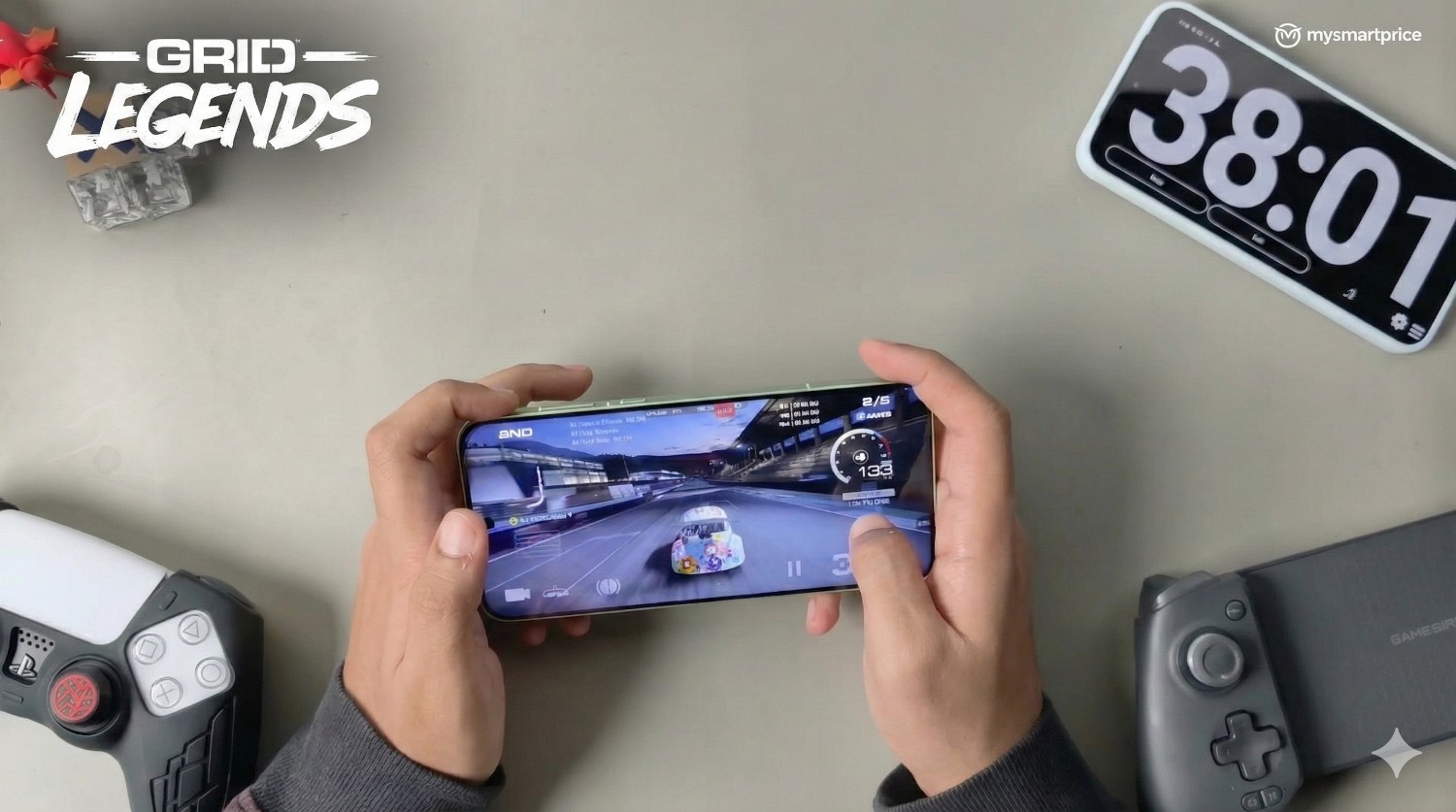
That aside, sustained performance is where the differences begin to emerge. Starting with the frame rate, the OnePlus 15R maintained smooth performance for a longer period than the OnePlus 15, as indicated by the average frame rate. Moreover, it delivers a steadier gameplay experience, considering the marginal difference between its average frame rate and 5% low. Even so, frame drops were not perceptible during real-world play on either phone.
However, this performance comes at the cost of higher temperature and heavier battery drain. The OnePlus 15R runs hotter than the OnePlus 15 in this phase and consumes more power overall, dropping by 666mAh compared to the latter’s 490mAh.
Building on the previous two games, Wuthering Waves was where things heat up for the OnePlus 15R and 15. Given its open-world setting with various assets, it is a demanding title to begin with. However, from resolution to frame rate to special effects, every setting option is configured to its highest level, allowing us to observe how both phones handle sustained GPU load. So, let’s look at how each contender performs in this phase:
| Parameters |
OnePlus 15R |
OnePlus 15 |
| Average Frame Rate |
36.2fps |
31.4fps |
| 5% Low Frame Rate |
27.4fps |
26.4fps |
| Display Temperature |
39.2°C |
41.1°C |
| Rear Temperature |
39°C |
41°C |
| Battery Drop |
74% |
73% |
On paper, both phones should be capable of sustaining 60fps in this title. In real-world play, neither phone came close to maintaining a steady 60fps. Although I have not noticed any lag when playing on the OnePlus 15R and 15, my FPS counter consistently shows frame drops. That being said, when comparing frame rate results of both handsets, the OnePlus 15R maintains better frame consistency than the OnePlus 15.
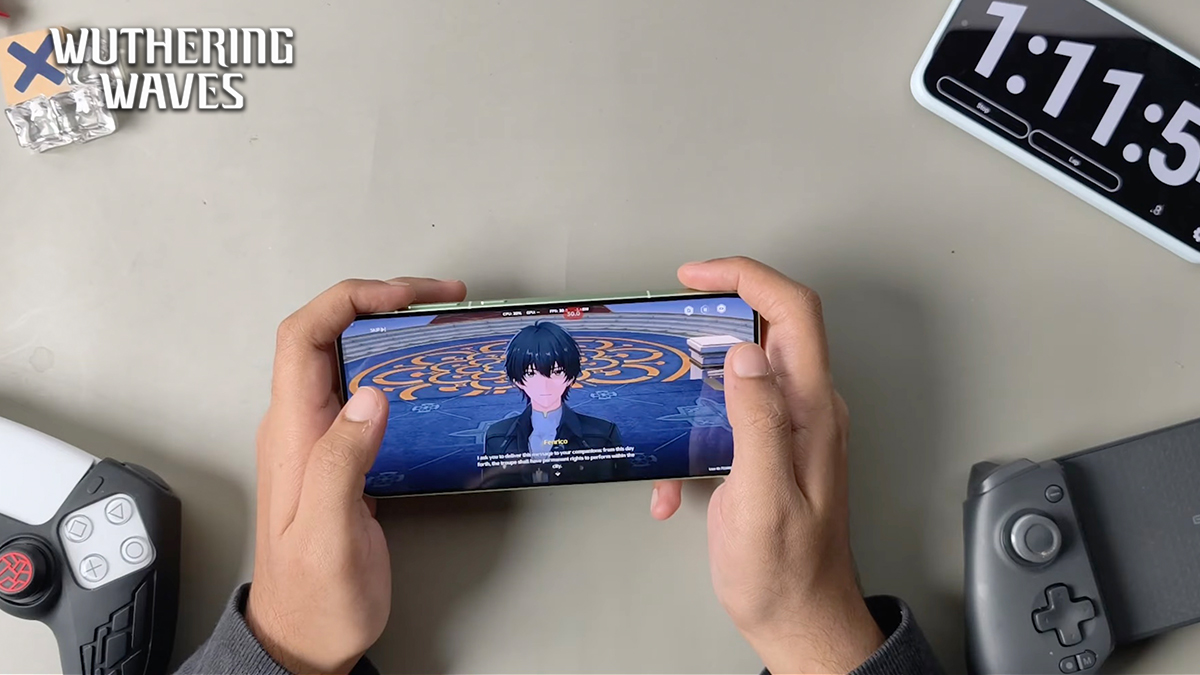
What is more surprising is that the OnePlus 15R runs cooler than the latter in this phase, despite both featuring a similar-sized vapour chamber, approximately 5,704 mm². Interestingly, the OnePlus 15R handles this workload more efficiently despite similar cooling hardware. This efficiency comes at the cost of higher power draw, with the OnePlus 15R consuming 740mAh compared to the OnePlus 15’s 700mAh.
Genshin Impact carries the momentum from Wuthering Waves with its similar open-world style and heavy visual elements. Like every other game, all its settings are cranked to their maximum level, including render resolution, environment detail, and FPS. This served as the final and most demanding test.
| Parameters |
OnePlus 15R |
OnePlus 15 |
| Average Frame Rate |
52.7fps |
47.4fps |
| 5% Low Frame Rate |
34.8fps |
37.1fps |
| Display Temperature |
39.8°C |
39°C |
| Rear Temperature |
39.8°C |
38.7°C |
| Battery Drop |
65% |
66% |
With the game set to 60fps on both phones, the OnePlus 15R comes closest to maintaining consistent frame rates around the target, as indicated by the average frame rate. Having said that, the OnePlus 15 exhibits superior frame stability, considering the least variance between its average frame rate and 5% low. 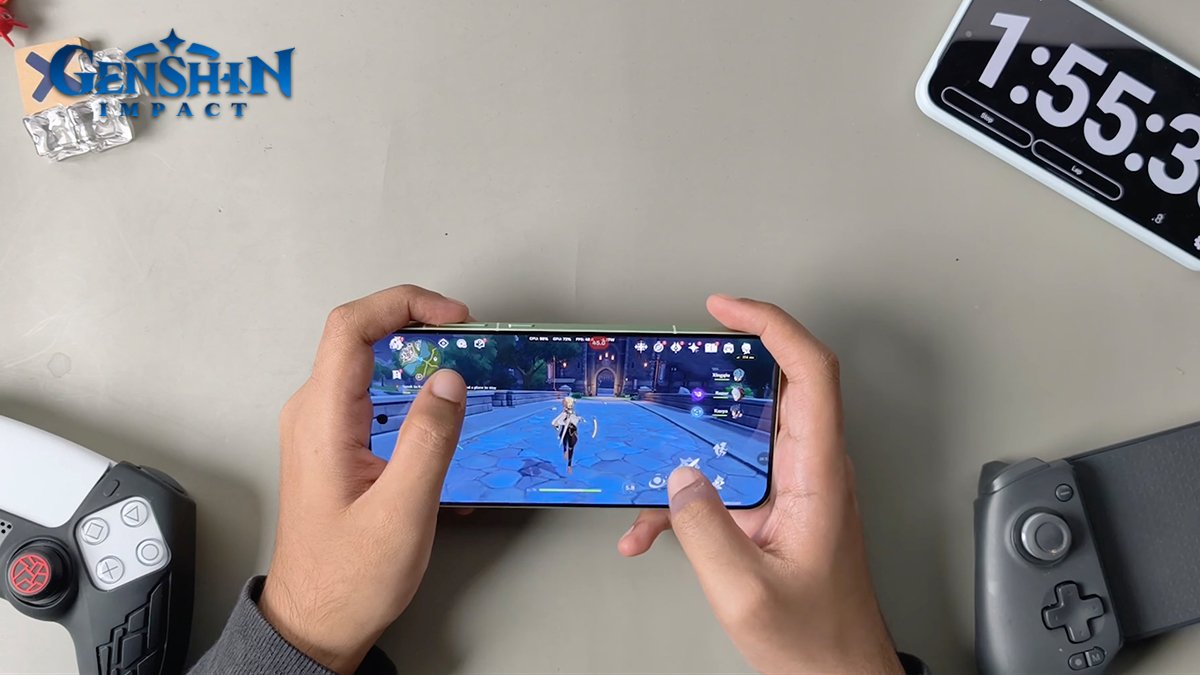 Temperature-wise, the OnePlus 15 manages its thermal better when playing this visually demanding game. In fact, it only uses up 490mAh, which is less compared to the OnePlus 15R’s 666mAh.
Verdict
After rigorously testing each smartphone for over two hours and analysing the performance data, a clear picture emerges. The OnePlus 15R delivers incredible value, surprisingly outpacing its premium sibling in raw gaming capability. It consistently achieves superior frame rates in demanding titles and manages heat better during extreme workloads, essentially maximising performance per price. However, the standard OnePlus 15 remains a polished flagship, distinguishing itself with significantly better battery efficiency and frame stability. While the OnePlus 15R matches it in power, its intense energy consumption remains a notable trade-off that requires attention. Addressing this optimisation gap through software updates would further strengthen the OnePlus 15R’s gaming credentials.