Foldable phones have always involved a hardware balancing act. Buyers want a device that is thinner and lighter, but not at the expense of battery life, thermal performance, display durability or the crease running through the middle.
Samsung recently launched its latest fold series phones comprising the Galaxy Z Fold8 Ultra, Galaxy Z Fold8 and Galaxy Z Flip8, and we got around to asking Sunghoon Moon, Executive Vice President and Senior Executive of Mobile R&D Office – Hardware at Samsung Electronics, on why making a foldable slimmer requires much more than reducing the size of its hinge.
According to Moon, Samsung approached the phone as a connected hardware system. A thinner display affects the hinge, battery, cameras, cooling hardware and the internal space available for every other component.
Thinness Starts Under the Display
A major part of Samsung's answer is Flex Titanium, a redesigned support structure beneath the foldable OLED panel.
The system combines a titanium plate with a titanium-alloy film. The plate uses a lattice structure that allows it to flex while continuing to support the display and absorb pressure. The alloy film beneath the panel is only a few tens of micrometres thick, which Samsung compares to roughly one-third the thickness of a human hair.
Together, these changes have reduced the thickness of the display module by 10%. More importantly, the space saved under the display can be used elsewhere inside the phone.
Samsung has allocated some of that space to the battery, thermal system and cameras. The company also claims the revised structure makes the unfolded display flatter and the crease less visible, although the practical difference will become clearer once the phones are tested outside controlled demonstrations.
A Slimmer Foldable Still Needs More Battery
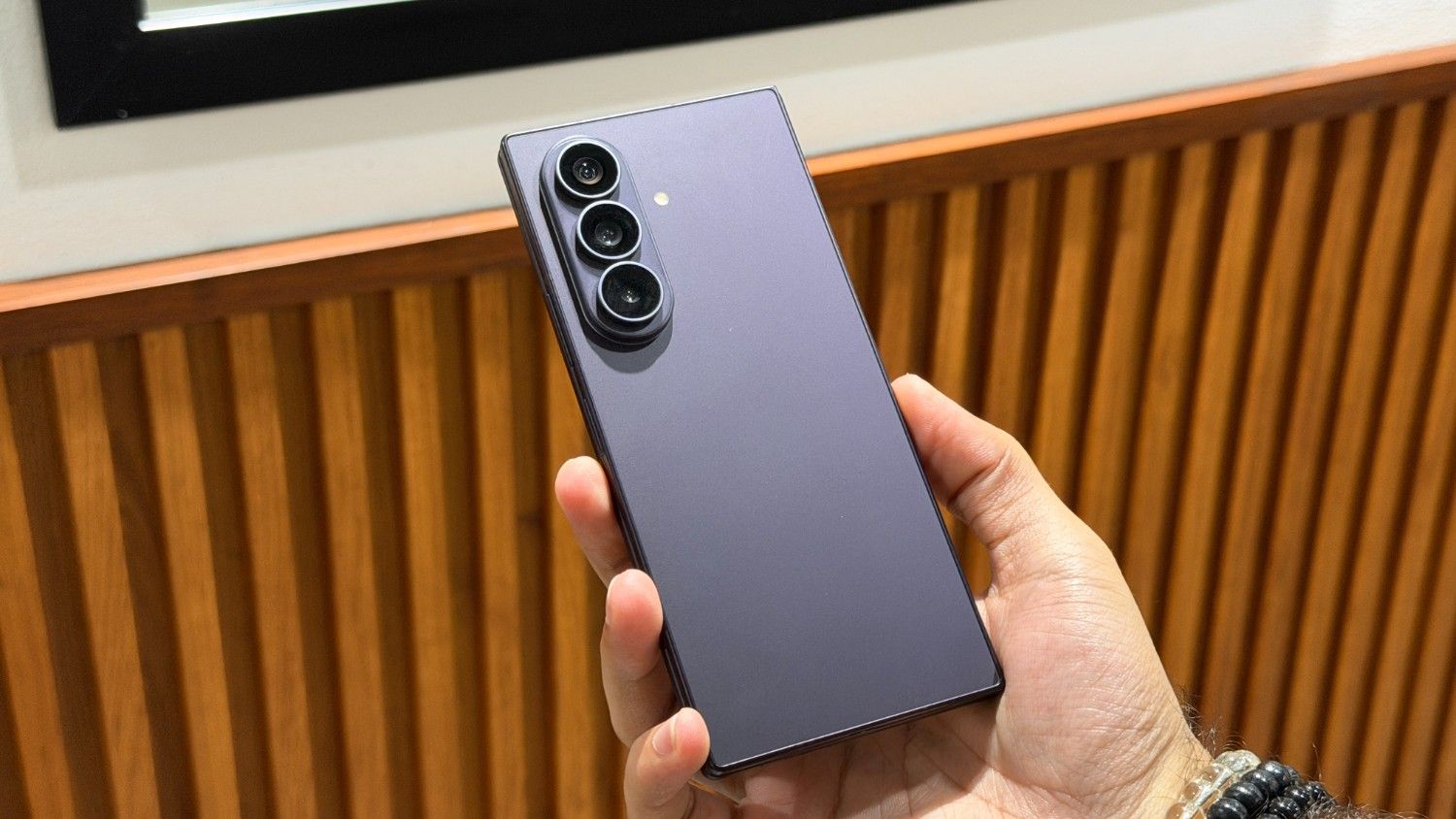
Samsung could not simply fit a conventional battery into the space available and call the redesign complete. The Galaxy Z Fold8 Ultra instead uses a silicon-carbon anode, allowing the company to increase energy density and fit a 5,000mAh battery inside the slimmer body.
Silicon-carbon batteries come with their own engineering challenges. Moon said the material's higher reactivity meant Samsung had to optimise the wider battery system to maintain stability under high-voltage conditions.
Charging was also adapted to each form factor. The Galaxy Z Fold8 Ultra and Fold8 use a dual-path charging architecture designed to distribute power more efficiently and manage heat. The Ultra supports 45W charging and is claimed to reach 67% in 30 minutes. The smaller Galaxy Z Flip8 uses a different charging layout suited to its tighter internal space.
The interesting part of Samsung's approach is not any one material or specification. It is the knock-on effect of each hardware change. A thinner display module creates additional room, which supports a larger battery and revised thermal system without making the device thicker again.
Samsung says the complete devices underwent more than 100 reliability tests involving repeated folding, drops, pressure, moisture and debris. Those are internal validation claims, so long-term use will be the more meaningful test. Still, Moon's explanation shows why progress in foldables is increasingly about reclaiming tiny amounts of internal space and making several components work better together, rather than relying on one headline hardware upgrade.