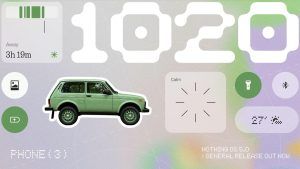
OPPO, OnePlus and realme have announced their plans for ColorOS 17, the next-generation smartphone software built on Android 17. The update focuses on smoother performance, system-level AI features, interface improvements and enhanced privacy controls. The announcements mark a major software shift across the three brands, with ColorOS 17 bringing features such as AI Mind Pilot, AI Photo Agent, AI Mind Space, AI Mind Suggest and OSee. OnePlus has also announced a change in its software strategy, with its devices moving from OxygenOS to ColorOS as the companies aim to streamline development and deliver a more consistent software experience.
ColorOS 17 Features
ColorOS 17 introduces Living Flow Design, built around three elements: Luminous Effect, Fluid Motion and Flexible Feedback. These changes bring translucent visual elements, smoother transitions and more responsive animations across the interface.
The update also introduces a Unified Rendering Architecture powered by an upgraded Luminous Rendering Engine. According to company lab tests cited in the announcements, rendering loads can be reduced by up to 30% and RAM usage for rendering by up to 25% compared with the previous generation. The upgraded Laminar Flow Engine is designed to improve system responsiveness and resource management. OPPO and OnePlus claim that app launch stability improves by 55%, Gallery thumbnails load up to 50% faster on first launch, and the system can keep over 25% more apps running in the background compared with ColorOS 16.
OnePlus also highlights long-term smoothness, claiming that ColorOS 17 retained over 90% of its initial smoothness in tests simulating six years of use, even with storage at 90% capacity. These are manufacturer-provided test results, and actual performance may vary by device and usage.
AI is one of the biggest areas of focus in ColorOS 17. AI Mind Pilot introduces an Agent Mode that can work across photos and files stored on the device, search multiple sources and coordinate steps to complete tasks. It can organise files, rename them based on their content and date, and use saved information to create outputs such as travel itineraries or webpages. AI Photo Agent adds natural-language photo editing and a Style Match feature. Users can provide a reference image, allowing the tool to analyse its colour palette, tone and mood before applying a similar look to another photo. It can also recommend adjustments based on the image's scene and subject.
AI Mind Space acts as a personal information hub, allowing users to save documents and video links. The system can organise saved information into searchable memories, with Memory Collections automatically grouping related content into collections and summaries. It can also use saved information and destination maps to create personalised travel plans. AI Mind Suggest is designed to surface useful information at relevant moments, including morning briefs, travel reminders, flight information and train cards. In India, OPPO has highlighted MakeMyTrip train cards and Spotify music recommendations as supported integrations.
OSee brings visual AI tools into the camera experience. Users can point the camera at an object or scene to access features such as object recognition, knowledge lookup, nutrition analysis, high-definition scanning and translation.
ColorOS 17 adds AI Call Guard, which uses on-device AI detection to monitor calls for potential fraud indicators, including synthetic voices and AI face swaps. It can alert users when suspicious activity is detected. OPPO confirms availability in India, Indonesia and Thailand. For cloud-based AI processing, Private Computing Cloud uses end-to-end encryption and a secure processing environment. ColorOS 17 also adds post-quantum security capabilities and dual encryption to strengthen data transmission protection.
A new Transparency Report provides information about which AI services have been used, when they were accessed and what operations were performed. Users can view the report on their device and export it when required.
OnePlus has confirmed that its devices will transition from OxygenOS to ColorOS as part of an adjustment to its software strategy. The company says the change is intended to streamline development, accelerate update cycles, improve software quality and make better use of shared engineering and research capabilities. The OnePlus 15 will be the first device to debut with ColorOS 17, followed by a progressive rollout to more OnePlus devices. The company has highlighted the same core design, AI, performance and privacy features announced by OPPO.
For existing OnePlus users, the transition represents a significant change to the software identity of the brand. The actual experience will depend on how ColorOS 17 is implemented across OnePlus devices and markets.
ColorOS 17 Rollout Timeline for OPPO, OnePlus and realme
The three brands have announced different launch schedules for their devices. OPPO says ColorOS 17 will expand to more devices progressively. The rollout schedule shared also lists October 29 for the Find N6 series and Find X9 Ultra, followed by additional devices in later months.
OnePlus' rollout graphic lists the OnePlus 15 and OnePlus Pad 4 for October 29, followed by the OnePlus 15R, OnePlus 13 and OnePlus 13s on October 30. Further devices are scheduled across November and December 2026, with additional models listed for Q1 2027.
realme's rollout also begins with selected GT and number-series models. Its schedule lists the realme GT 8 Pro and GT 8 Pro Dream Edition for October 29, followed by the realme GT 7 Pro and realme 16 Pro series models on October 30. More eligible devices are scheduled for November and December 2026 and Q1 2027. The exact availability may vary by device, market and region. Users should refer to the respective brands' official rollout information for the latest eligibility details.
ColorOS 17 puts AI task automation and long-term performance at the centre of the next software generation from OPPO, OnePlus and realme. Features such as AI Mind Pilot, AI Photo Agent and AI Mind Space aim to make smartphones more useful beyond basic question-and-answer interactions, while the new rendering and resource-management systems are designed to keep everyday use responsive. The bigger development is OnePlus' transition from OxygenOS to ColorOS, which could reshape the software experience for its users. Meanwhile, OPPO's India-first debut with the Find X10 series and realme's October rollout give the update a broad reach across different price segments. The key test will be how consistently these features work across devices and how quickly the promised rollout reaches existing users.