The premium mid-range smartphone segment has become increasingly difficult to crack. Performance-focused phones now deliver flagship-level gaming power, camera-centric devices push advanced computational photography, and battery-focused options continue stretching endurance limits. The challenge is no longer about offering one standout feature. It is about delivering the right balance without major compromises.
Motorola Edge 70 Pro
Rs 38,999
What Is Good?
- Excellent battery life
- Lightweight and comfortable design
- Strong low-light camera performance
- 4K 60fps recording on all cameras
- Reliable everyday and gaming performance
What Is Bad?
- No telephoto camera
- Optical fingerprint scanner feels dated
- Wireless charging missing
When I first tested the device a few weeks ago, my initial impression was clear: Motorola was trying to build a genuinely well-rounded smartphone while chasing spec-sheet headlines. After extended testing, that impression largely holds up. The Edge 70 Pro combines a lightweight design, excellent battery life, strong low-light cameras, reliable flagship-grade performance, and clean software into one of the most sensible packages currently available around the Rs 40,000 mark.
It is not perfect. Some compromises are easier to notice once you start comparing them directly against rivals like the Nothing Phone (4a) Pro, Vivo V70FE, and Pixel 9a. However, I feel that overall, Motorola has managed to get far more right than wrong.
Design and Display
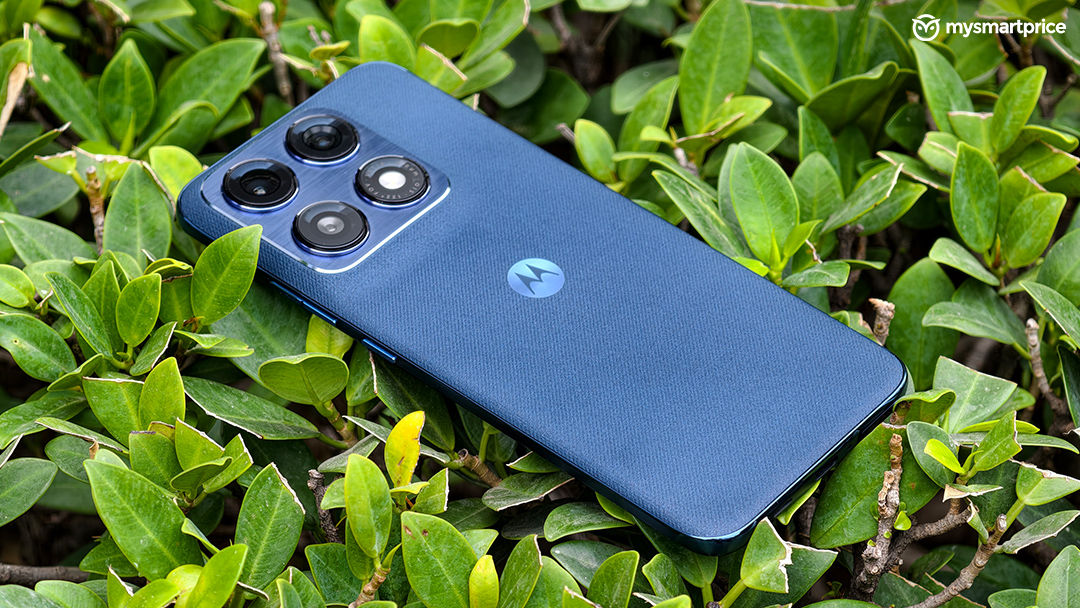
Motorola has clearly settled into a more refined design philosophy with the Edge series, and the Edge 70 Pro continues that direction confidently. The Pantone-validated finishes add personality without looking flashy, while the fabric-inspired texture on the rear panel genuinely improves grip during daily use. It also does a surprisingly good job resisting fingerprints.

The overall design feels understated in a good way. Unlike devices such as the Nothing Phone (4a) Pro that aggressively lean into visual identity, the Edge 70 Pro looks cleaner and more mature and personally, I was more drawn to this. The camera module sits neatly on the rear panel without trying to dominate the design. At 183 grams, the phone also feels remarkably light considering the hardware inside. Combined with the curved front and rear panels, the in-hand feel is genuinely excellent. This is one of those rare large-screen phones that remains comfortable even during long usage sessions.
That said, Motorola has made one strange compromise here. The Edge 70 Pro switches to a plastic frame, despite the regular Edge 70 using aluminium. The overall build quality still feels solid thanks to Gorilla Glass 7i protection alongside IP68, IP69, and MIL-STD-810H certifications, but the material downgrade is noticeable once you realise it exists.
On the front, the 6.8-inch 1.5K Extreme AMOLED display remains one of the strongest parts of the experience. Colours look vibrant without appearing overly saturated, contrast levels are excellent, and the 144Hz refresh rate keeps navigation fluid throughout the UI. The sharpness advantage over standard FHD+ panels is immediately noticeable while browsing, reading text, or watching high-resolution content. Motorola claims a peak brightness of 5200 nits, though real-world testing tells a different story. In our in-house brightness tests, the review unit peaked at around 731 nits, which may be a unit-specific issue, and we are talking to the company about the same. That being said, outdoor visibility is still decent enough for everyday use, but it falls short of what Motorola’s marketing suggests and trails some competitors in harsh sunlight.
The fingerprint scanner is another weak point. Motorola continues to use an optical sensor placed fairly low on the display. It works reliably enough, but ultrasonic scanners found on rivals feel noticeably faster and more premium.
Performance That Rarely Feels Out of Place

The Motorola Edge 70 Pro is powered by the MediaTek Dimensity 8500 Extreme paired with up to 12GB LPDDR5X RAM. On paper, it comfortably sits in flagship territory, and in real-world use, the performance mostly backs that up.
Benchmark Scores:
- AnTuTu: 2,136,881
- AnTuTu CPU: 639,887
- AnTuTu GPU: 644,769
- Geekbench: 1,720 single-core / 6,688 multi-core
Day-to-day performance is excellent. App launches are quick, multitasking feels effortless, and the UI remains consistently smooth even under heavier workloads. More importantly, the phone maintains that responsiveness over time instead of only feeling fast during initial setup.
Gaming performance is also quite respectable. BGMI runs smoothly at stable frame rates of around 112 FPS, while Genshin Impact, with constant 60 FPS, runs surprisingly well on high settings for a device this slim. COD Mobile can also push higher refresh rate modes under supported settings. Thermals are managed sensibly. Motorola appears to prioritise sustained comfort over benchmark chasing, which means performance begins dropping slightly after around 30 minutes of intensive gaming. Frame rate dips become noticeable during extended sessions, but the phone itself never becomes uncomfortably hot.
That approach makes sense for the kind of device the Edge 70 Pro is trying to be. Unlike the iQOO Neo 10, this is not a performance-first gaming phone. Instead, Motorola is aiming for balance, and for most users, it succeeds.
Battery Life Is the Real Highlight
If there is one area where the Edge 70 Pro genuinely stands out from most rivals, it is battery life. The 6500mAh battery inside this phone is massive for the segment, especially considering how slim and lightweight the device feels. More importantly, the endurance advantage is immediately noticeable in daily use. With mixed usage involving gaming, photography, streaming, social media, and navigation, the phone comfortably lasts well beyond a full day. Lighter users can realistically push close to two days on a single charge.
During testing, average screen-on time consistently hovered around the 8-hour mark. In the PCMark battery benchmark, the phone lasted slightly over 16 hours, placing it among the best-performing devices in this price segment. Charging speeds are equally solid. The bundled 90W charger takes the device from near empty to full in under an hour, and Motorola deserves credit for still including the charger in the box while many competitors continue removing it.
The only frustrating omission is wireless charging. The cheaper Edge 70 includes 15W wireless charging support, which makes us wonder why Motorola decided to omit it in the Pro model.
The Sony LYTIA 710 Sensor Delivers





The camera system is clearly one of Motorola’s biggest focus areas this year, and the 50MP Sony LYTIA 710 sensor proves why.
Camera Setup:
- 50MP Sony LYT710 main camera with OIS
- 50MP Samsung JN5 ultra-wide camera with autofocus
- 50MP Samsung JN5 selfie camera with autofocus
In daylight, the main camera captures detailed and balanced images with strong dynamic range. Motorola’s colour tuning feels more natural than many competitors in this segment, avoiding the oversaturated look that still dominates several Android phones.
HDR processing is generally handled well, though there are occasional moments where the processing becomes slightly aggressive and flattens contrast more than necessary. Low-light photography is where the main sensor truly impresses. Noise control is excellent, textures remain intact, and highlights are managed surprisingly well, even in challenging scenes. The larger sensor, combined with optical image stabilisation, gives the Edge 70 Pro a clear advantage over many similarly priced devices once the lighting drops.
The ultra-wide camera also performs better than expected. Colour consistency between lenses is respectable, autofocus adds versatility for macro shots, and the overall quality remains usable even outside ideal lighting. Motorola’s selfie camera deserves special praise as well. The autofocus system helps significantly with detail retention, and skin tones are handled naturally without excessive smoothing.
Video recording is another strong point. The phone supports 4K 60fps recording across all cameras, including the front camera. Stabilisation remains reliable, and Motorola’s Horizon Lock feature adds some extra flexibility for action-heavy recording. The biggest compromise here is the lack of a telephoto lens. That omission hurts versatility more than outright image quality. Portraits still look good, but devices like the Vivo V70FE offer a more flexible photography experience for users who regularly rely on optical zoom.
Software Remains Refreshingly Clean

The Edge 70 Pro runs Android 16-based Motorola’s Hello UI, lightly layered on top. The overall experience remains close to stock Android, and that simplicity continues to be one of Motorola’s biggest strengths.
The UI feels fast, clean, and free from unnecessary clutter. Animations remain smooth, app behaviour feels predictable, and there is very little bloatware pre-installed out of the box.
Moto AI features are integrated throughout the system, including:
- Smart suggestions
- Notification summaries
- Real-time transcription
- Productivity tools
Unlike many AI implementations currently flooding smartphones, Motorola’s features feel more practical than experimental.
Smart Connect also deserves mention. It allows seamless screen sharing and cross-device connectivity with supported displays and PCs, adding genuine productivity value beyond simple marketing claims. There are still some frustrations with Motorola’s software direction. The dedicated AI key remains unnecessarily limited in terms of customisation, and stock Android itself still lacks the deeper personalisation features offered by OxygenOS or One UI.
Motorola is promising:
- 3 years of Android updates
- 5 years of security patches
That support policy is competitive, though still behind Google and Samsung.
Alternatives Worth Considering
The Vivo V70FE is a better fit for photography enthusiasts who value camera versatility over outright battery life or clean software, and it makes a noticeable difference when shooting portraits or zoomed-in subjects. Vivo’s image processing also leans more aggressively towards vibrant colours and social media-ready output, making it appealing for users who want a more flexible and polished camera system straight out of the box.
The Google Pixel 9a continues to offer the best computational photography experience in this category. Google’s camera processing consistently delivers excellent HDR, low-light performance, and portrait edge detection even without relying on larger camera hardware. Beyond photography, the Pixel also benefits from the cleanest Android experience and an unmatched seven years of software support, making it the strongest long-term option for Android purists who prioritise software quality and camera intelligence over battery endurance or gaming performance.
The Nothing Phone (4a) Pro takes a very different approach compared to the Edge 70 Pro. Instead of focusing purely on balance, Nothing leans heavily into design identity and software aesthetics. The transparent rear design, Glyph lighting system, and Nothing OS create a much more distinctive user experience than most phones in this segment. Performance remains strong thanks to its Snapdragon chipset, but the real appeal here is personality. For buyers who want a phone that stands out visually and feels different from the typical Android crowd, the Nothing Phone (4a) Pro offers a more unique experience than Motorola’s cleaner and more understated direction.
Final Verdict
The Motorola Edge 70 Pro succeeds because it understands what most users actually want from a premium mid-range smartphone. While chasing benchmarks, overdesigned aesthetics, or gimmicky features, Motorola has also focused on the fundamentals that shape everyday usage. The result is a phone that feels comfortable to use, lasts significantly longer than most competitors, performs reliably across demanding workloads, and captures genuinely impressive photos in difficult lighting conditions. There are compromises. The missing telephoto lens limits camera versatility, the optical fingerprint scanner feels outdated, and the lack of wireless charging is difficult to justify at this price. Some rivals also outperform it in specific areas. The remains the stronger gaming device, while the Vivo V70FE offers a more flexible camera system. But as an overall package, the Edge 70 Pro feels unusually complete.
At Rs 38,999, Motorola has delivered one of the most balanced smartphones currently available under Rs 40,000. It may not dominate any single category outright, but very few devices in this segment manage to combine battery life, ergonomics, camera quality, software cleanliness, and performance this effectively. For most users, that balance matters far more than headline specifications.