For some years now, Oppo has been chasing the idea of a “camera-first” flagship smartphone that still behaves like a daily driver with its Find X series. This year’s Find X9 Pro is exactly that thesis put into hardware. It’s a heavy-duty camera phone with extremely long battery life and a display built for creators. The smartphone is priced at Rs 1,09,000 and pitches itself to buyers looking for a premium device made for photography and video without completely sacrificing everyday practicality.
OPPO Find X9 Pro
Rs 1,09,999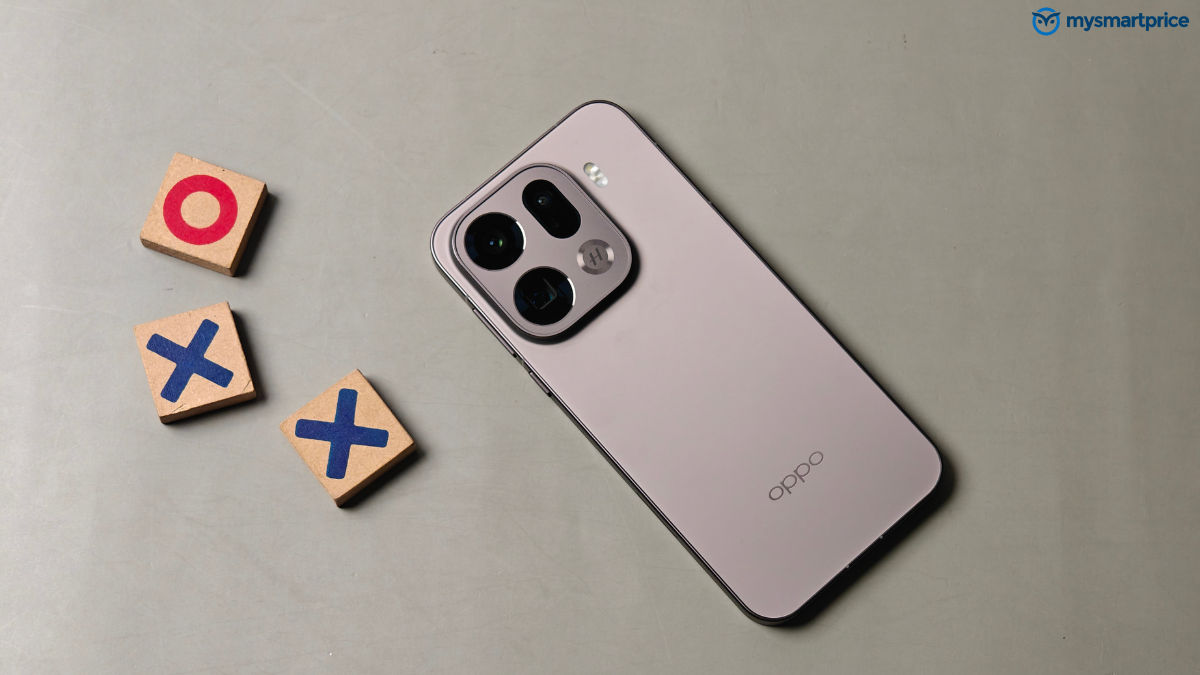
What Is Good?
- Good build quality
- Outstanding camera system
- 2-day+ battery life
- Creator-focused display
- Snappy real-world usage
What Is Bad?
- Big and brody
- Not the most powerful phone in class
- Charging could be faster
With ‘premium,’ Oppo means a triple camera setup with a 200-megapixel periscope telephoto sensor, the latest MediaTek Dimensity 9500 processor, a big 7500mAh battery, and an LTPO AMOLED panel. All of this sounds tempting, but does all of this deliver? More importantly, is it made for common people? If you are doing a daily 9-5 office job, going out just one day a week, and going on a trip twice or three times a year, then should you buy it? Well, after several days of heavy usage, lots of shooting, some editing, gaming sessions, and normal daily wear, here’s what actually matters.
Big, But Suited and Booted
When you first pick up the Oppo Find X9 Pro, it feels big, though premium. It is on the chunkier side of flagship territory with a weight of over 200 grams, and you will notice that the moment you pick the smartphone up. Now, some might not like the extra heft, but with the Find X9 Pro, it gives the phone a good, substantial feel and adds to the sense of it being a camera tool rather than just a fashion piece. But, still, if you prioritise a compact form factor, you’ll like the standard Find X9 more.
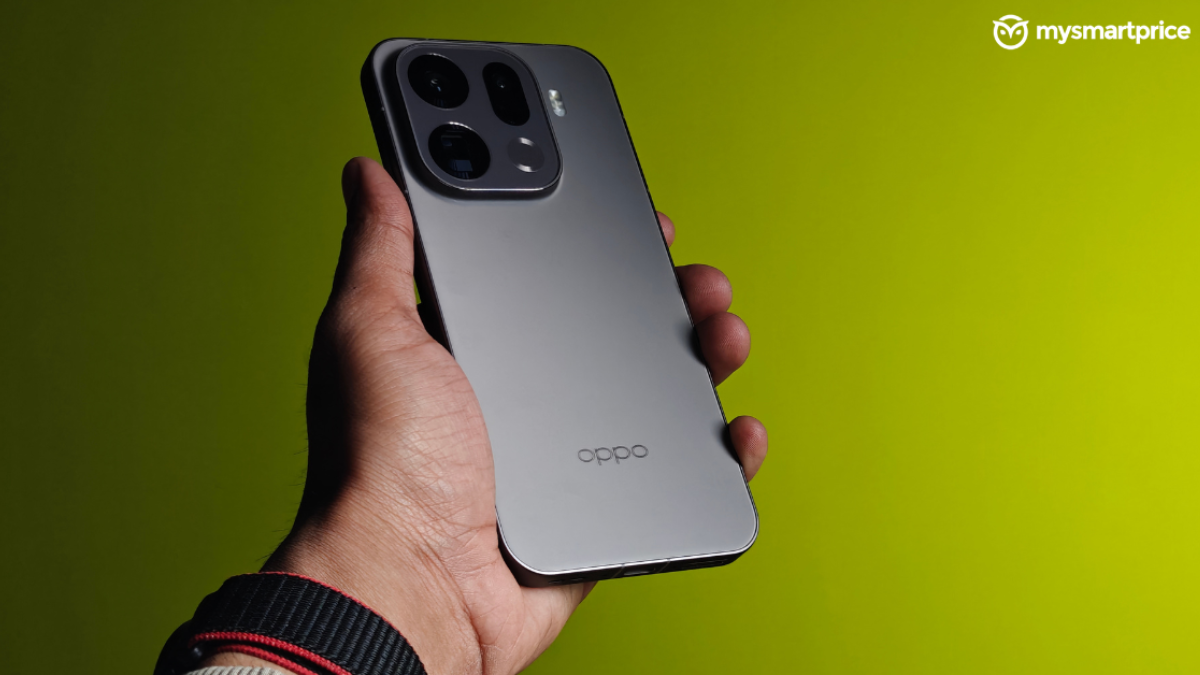
The smartphone also uses the Gorilla Glass Victus 2 protection on the front and has a matte, clean rear with a flat frame. The finish is understated and keeps fingerprints in check. You also get an IP68/69 rating, which means solid water and dust resistance.
The small details on this phone, the button feedback, and the camera island integration all point to a device that you will actually have fun using, not just admire.
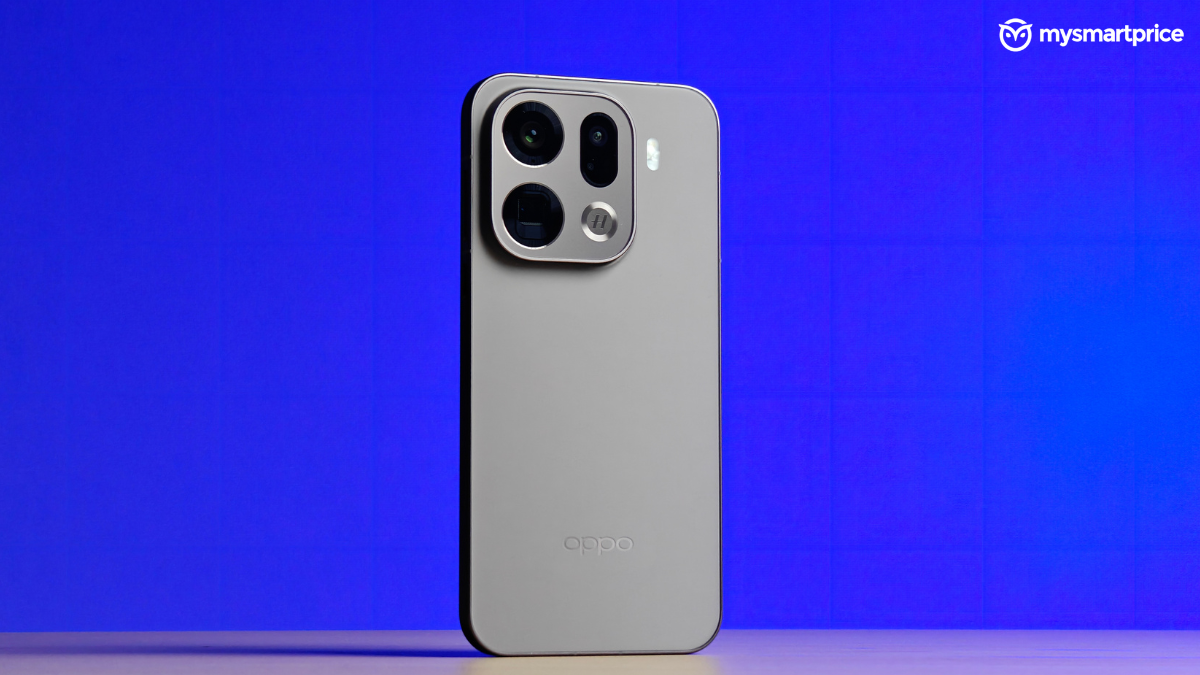
Apart from that, the Find X9 Pro comes in two colours: Titanium Charcoal and Silk White. I’m using the Titanium Charcoal variant, and while it does look like an expensive phone, the Silk White feels more premium.
A Flagship-Grade Display
The Oppo Find X9 Pro features a 6.78-inch 1.5K LTPO AMOLED panel with a 120 Hz refresh rate and wide HDR support (HDR10+, Dolby Vision, and Oppo’s Ultra HDR). This is a top-tier display in every measurable way: deep blacks, punchy yet accurate colours, and the kind of peak brightness that makes HDR content on Netflix and YouTube look cinematic on a phone.
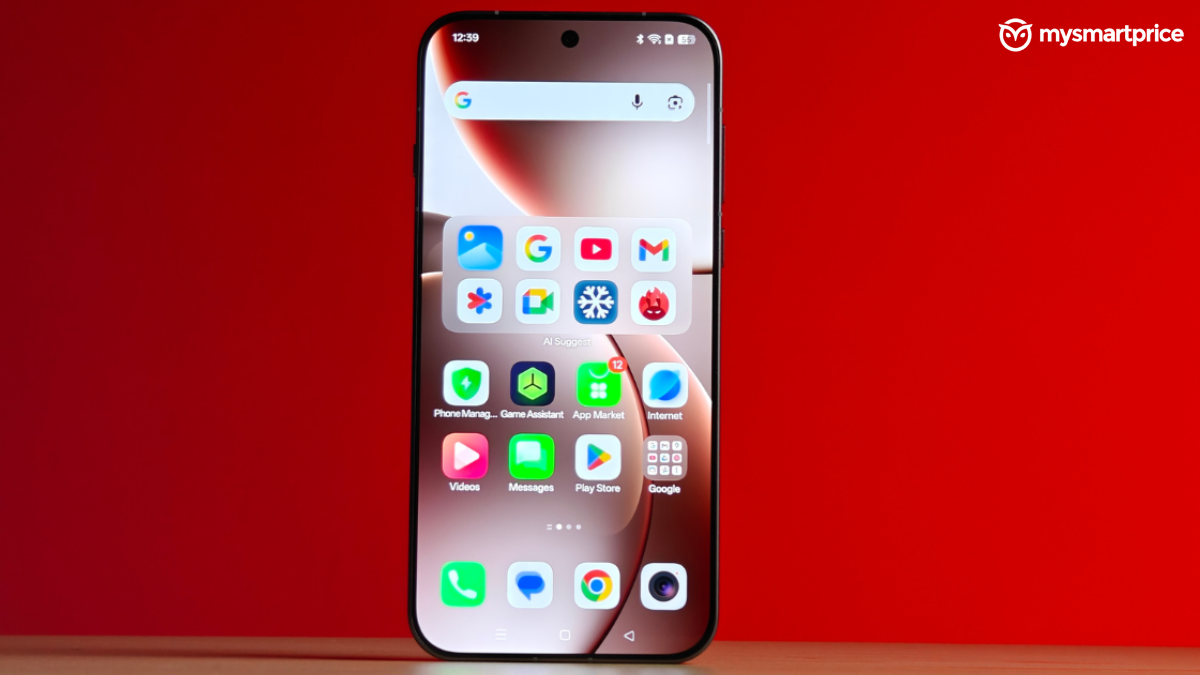
The LTPO display also helps with power efficiency, with the panel being able to ramp the refresh rate up or down intelligently. For creators who both shoot and edit on-device, the screen offers a natural preview of colour, contrast and dynamic range. It is not overly saturated.
Even the haptics and vibration feedback match the premium feel elsewhere in the package.
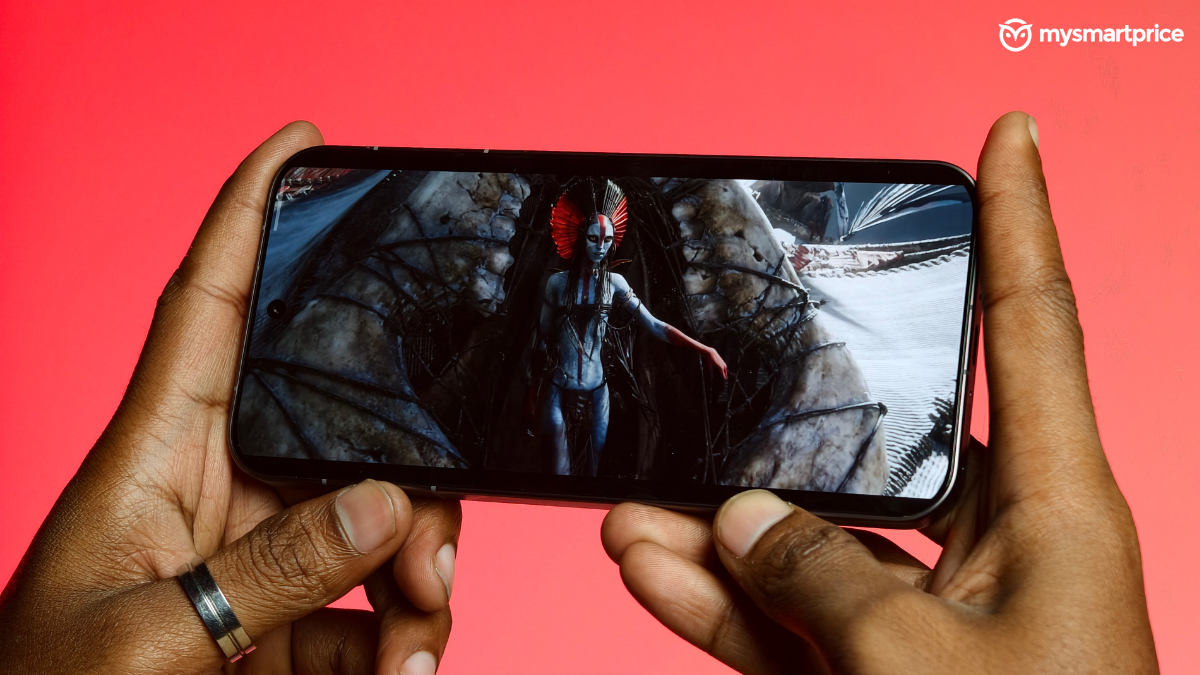
If you watch movies, shows on your phone, the speakers on this one are solid for watching footage and casual media; you even get stereo separation and are adequate for editing reference. Although for a richer experience, I would recommend using headphones, duh!
Performance and Thermals
Under the hood, the Find X9 Pro and its standard sibling are both powered by a high-end MediaTek Dimensity 9500 chipset, and day-to-day responsiveness is excellent: apps open fast, multitasking is fluid, and editing 200MP photos on the phone is painless.
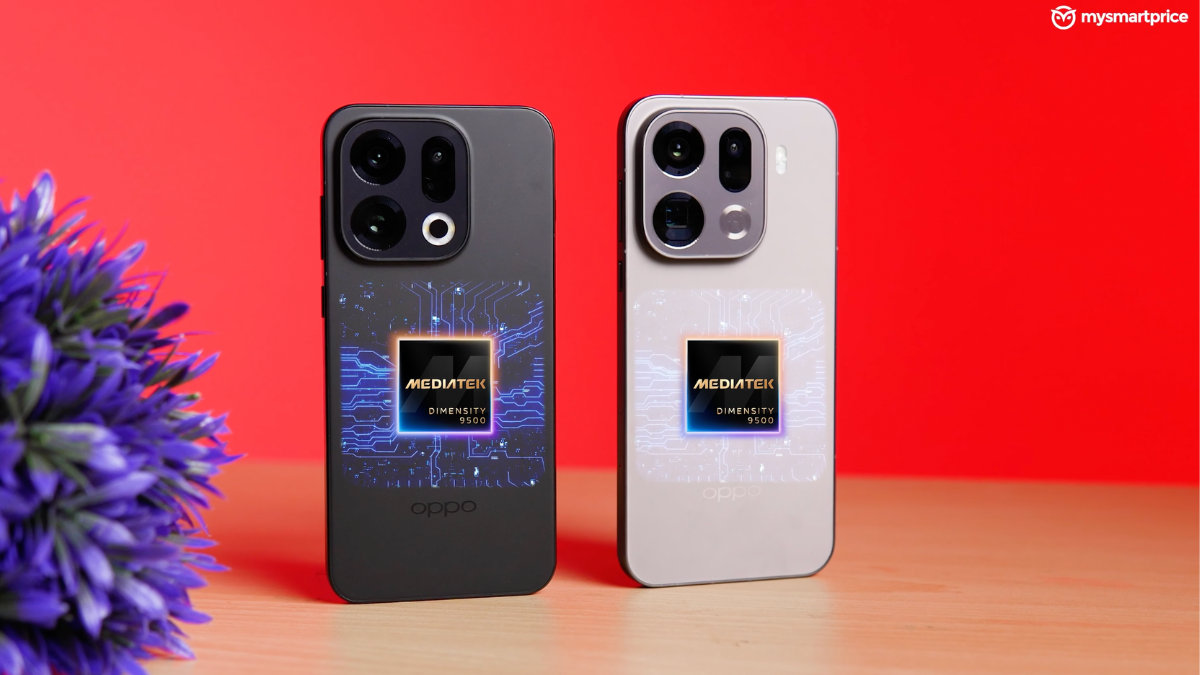
The MediaTek Dimensity 9500 chipset is a highly capable processor, but the Find X9 Pro is not the most powerful device in its segment (according to numbers).
It has scored just under 3.4 million on AnTuTu, which is a respectable improvement over last year’s flagships but still falls short of the Snapdragon 8 Elite Gen 5 phones. Devices like the iQOO 15 and OnePlus 15 consistently cross the 3.7 million mark, giving them a noticeable lead in raw computational performance.
That said, daily usage tells a slightly different story. Editing videos, 4K rendering, using cameras all day, image processing, gaming at 120 FPS, uploading, downloading, and much more usage feel really fluid on this smartphone. That said, many tests and reports have also claimed that the Dimensity 9500 processor renders 4K videos faster than the new Snapdragon 8 Elite Gen 5. So, if you are a content creator, this one comes in handy.
Now, the more critical question is how well this performance is sustained over time, especially under load.
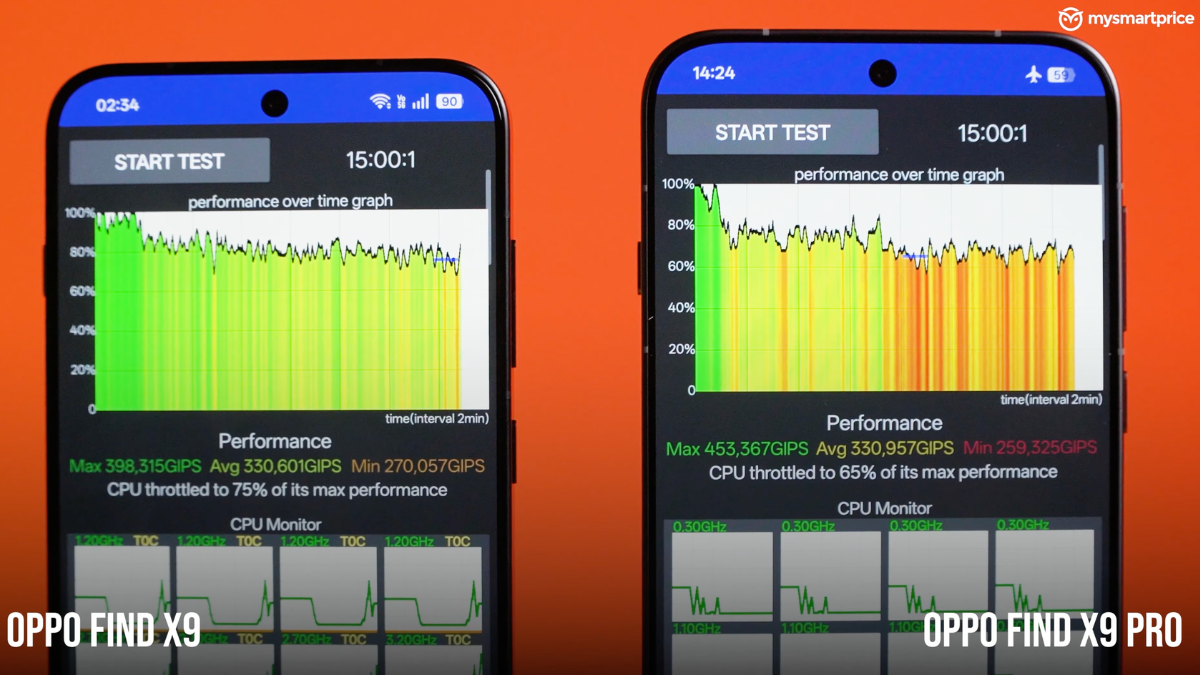
In our 15-minute CPU stress test, the standard Find X9 surprisingly maintained stability better than the Pro variant, which showed slightly higher levels of throttling. We noticed this while gaming at 120 FPS as well. However, when we pushed both phones further, extending the duration and increasing the load, the Find X9 Pro pulled ahead. It managed to sustain higher performance for a longer period, suggesting that its thermal solution performs better under prolonged, heavier workloads.
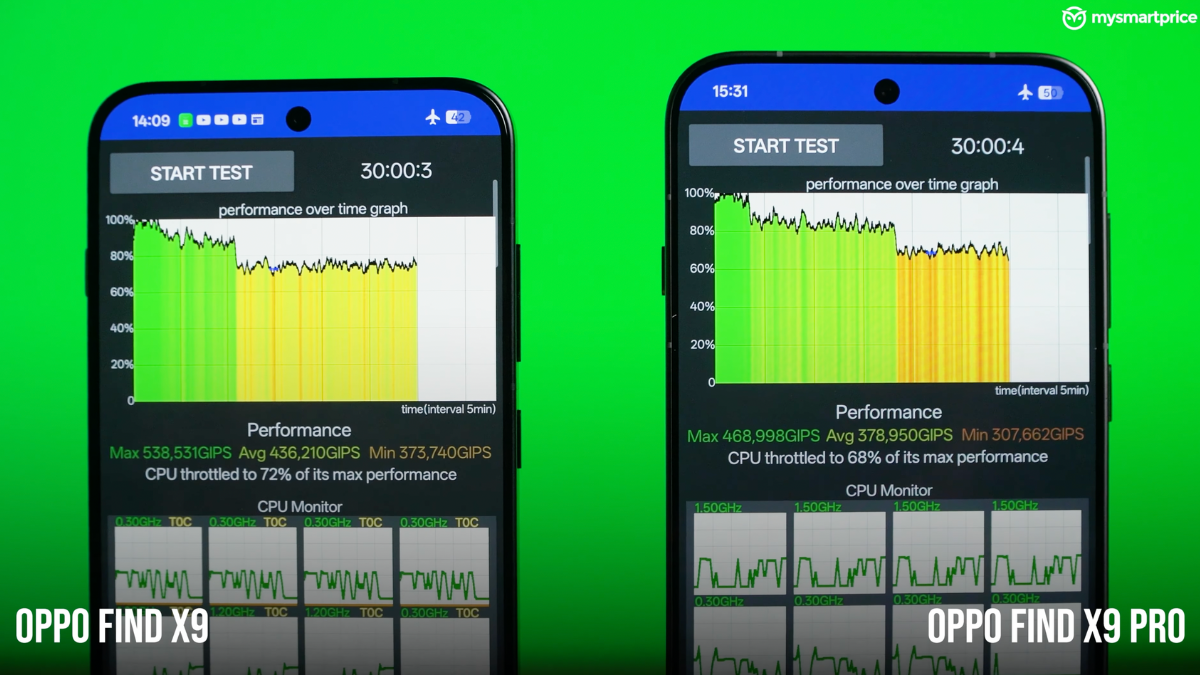
This behaviour is not uncommon. Some devices only reveal their true thermal efficiency when subjected to extended stress, and the Find X9 Pro seems to fall into that category. For short bursts, the Find X9 stays cooler and more consistent, but over longer sessions, the Pro variant stabilises and delivers stronger sustained performance.

Coming back to gaming, in our testing (BGMI at 120 FPS), the phone warmed noticeably and hit thermal throttling, which led to frame dips. We recorded an average FPS of 106 in our testing sessions. This doesn’t affect casual gaming or typical use, but if you want an all-out gaming handset that stays cool during long gaming sessions, this is not the phone for that primary use case yet. Maybe a few months later, it can get better with OTA updates.
Software and Updates
The Oppo Find X9 Pro runs on ColorOS 16, and the company promises five years of software support and seven years of security patches, which is welcome at this price point. The UI looks polished with helpful camera integrations and creator-friendly tools. Oppo has also cleaned its Android skin a lot. For creators, it’s stable and packed with useful features for photography and video making.
Camera: The Reason Why You’re Here
The camera module is the heart and soul of the Find X9 Pro, and I am not exaggerating. Oppo’s camera philosophy here is simple: provide users with more useful focal lengths and higher-resolution optics, so every frame has the option of being a keeper. A lot of pictures that I clicked just had the right clarity, colours, sharpness, and depth, so they could go straight to Instagram without taking a detour to any editing apps.
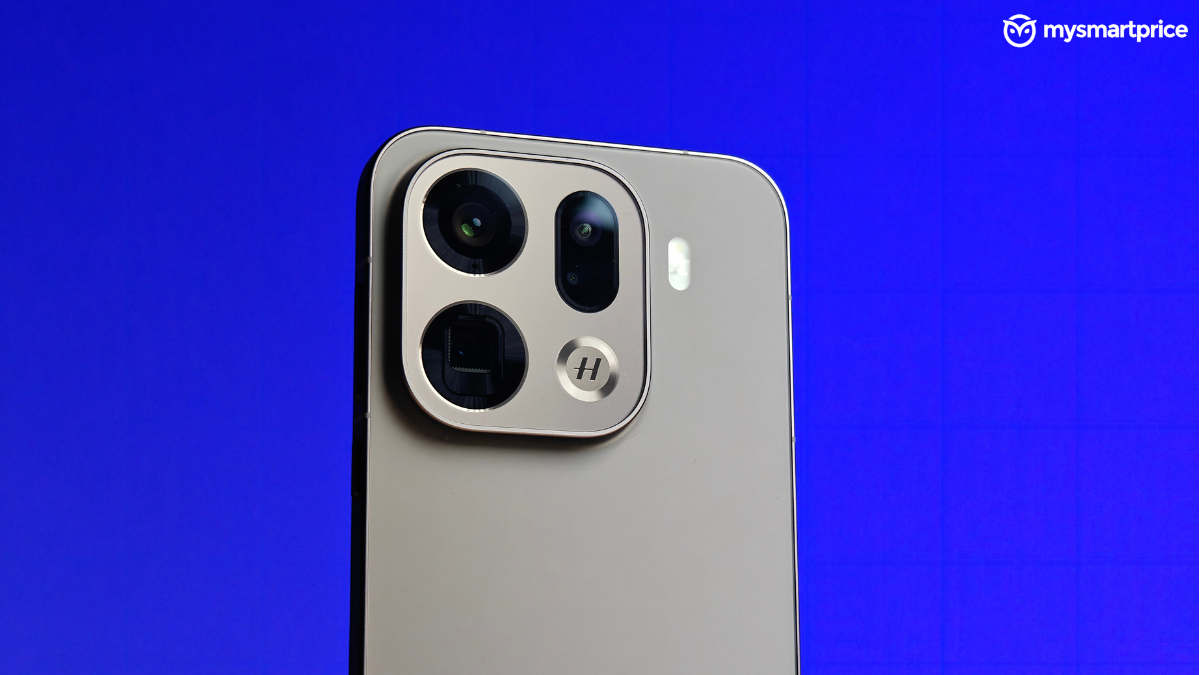
First, let me tell you what all sits inside that huge camera module:
- 50MP main sensor (primary workhorse)
- 50MP ultrawide
- 200MP periscope telephoto (this is the Pro’s defining piece)
- 50MP front camera with 2x zoom capability
- Hasselblad colour tuning and a dedicated Hasselblad High-Res mode for the 200MP periscope
Now, if we talk about the camera samples, the daylight performance of the Oppo Find X9 Pro is consistently good. The main sensor nails exposure and retains fine detail across highlights and shadows. Colours lean towards the natural side, and Hasselblad tuning keeps skin tones realistic rather than oversaturated, which is great for editorial and people photography.



The 200MP periscope is not a marketing number alone: in High-Res mode it produces images with noticeably finer micro-detail, cleaner edges and better colour fidelity at longer focal lengths. Digital zoom up to 6x is actually usable and pretty clean; beyond that, I did notice a slight drop in quality, but honestly, that’s not even fully Oppo’s fault. Delhi’s AQI right now is so bad that everything looks hazy anyway.



Low-light shooting is also pretty strong. The X9 Pro lifts shadows decently and maintains texture without blowing highlights; the periscope remains useful even in low light, which is rare. And thanks to the great telephoto sensor, even the portraits turn out really well. The subject-object separation is great, and the 2–3x portrait framing has more depth and a more cinematic bokeh compared to your typical wide-angle crops.




The 50MP front camera is unusually capable: high resolution, good dynamic range, and the 2x lossless-ish zoom is genuinely handy for tighter headshots without distortion. Selfie detail and skin tone rendering are excellent, too.
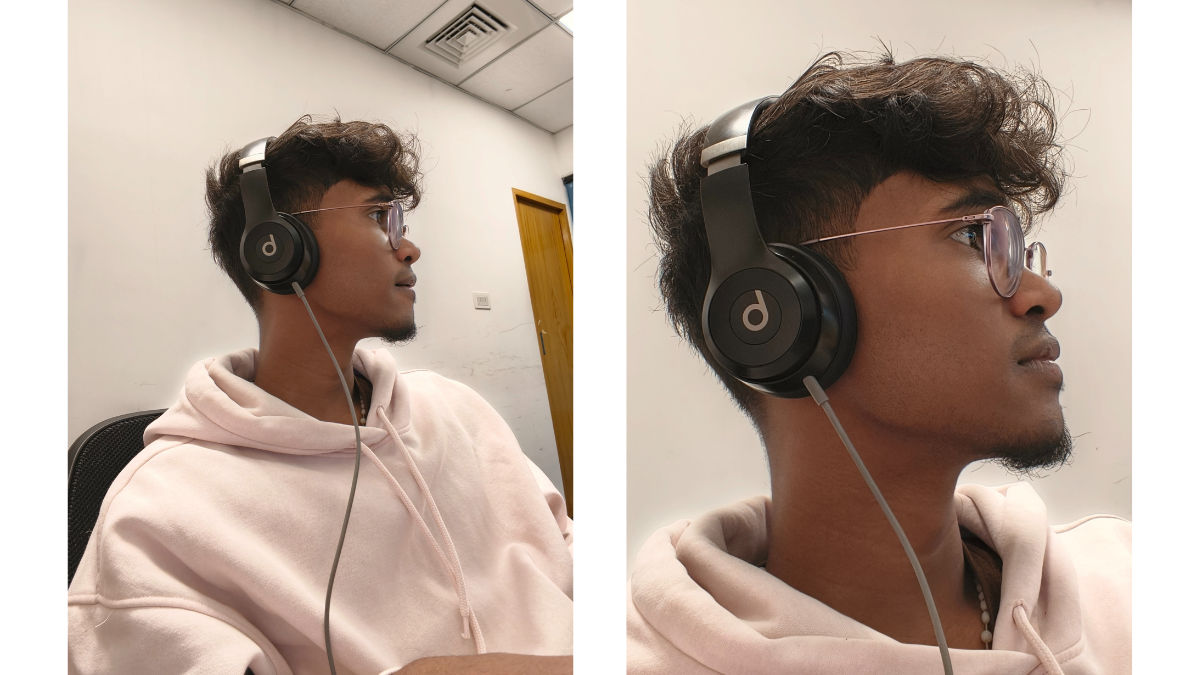

I was one of those who would rely solely on iPhones when it came to videos, but I think Oppo’s ready to change that for me and for the many others like me, and I think the telephoto sensor is helping with that. The bokeh it creates, even on video mode, is crazy.
Find X9 Pro supports 4k recording up to 120fps. While recording 4k videos, the Find X9 Pro can only switch mid-recording between 1x and 2x. There’s also an “ultra-steady” zoom behaviour that technically allows very high zoom factors (up to 18x), but footage above ~3x becomes noisy and unstable; stick to 1–3x for reliable results. As a creator, you will enjoy using this phone for videos.
Oh, this year, Oppo has also launched an accessory for the Find X9 Pro, the Hasselblad Teleconverter Kit (yes, the same as Vivo) – a set of accessories that can snap on to the Find X9 Pro. Basically, it helps enhance the zoom capabilities and allows for more professional-looking shots. We didn’t receive the kit with our review unit, so we have yet to test that out.
2 Days of Battery Backup, EASY!
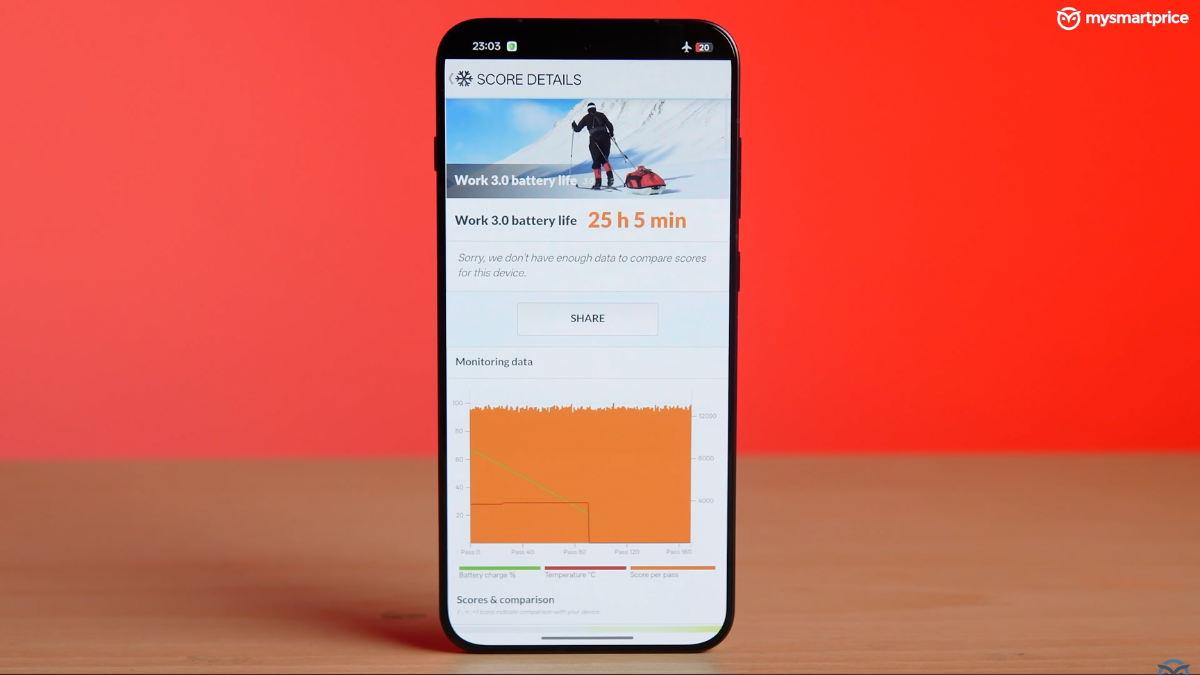
Battery life is one of the most impressive features of the Find X9 Pro. With a 7500mAh battery, the phone consistently stretches across two days of mixed usage. In our PC Mark Battery Life test, the phone got a screen-on time of over 25 hours, with 20% juice still remaining. So, if you travel or shoot a lot, that backup removes a ton of anxiety.
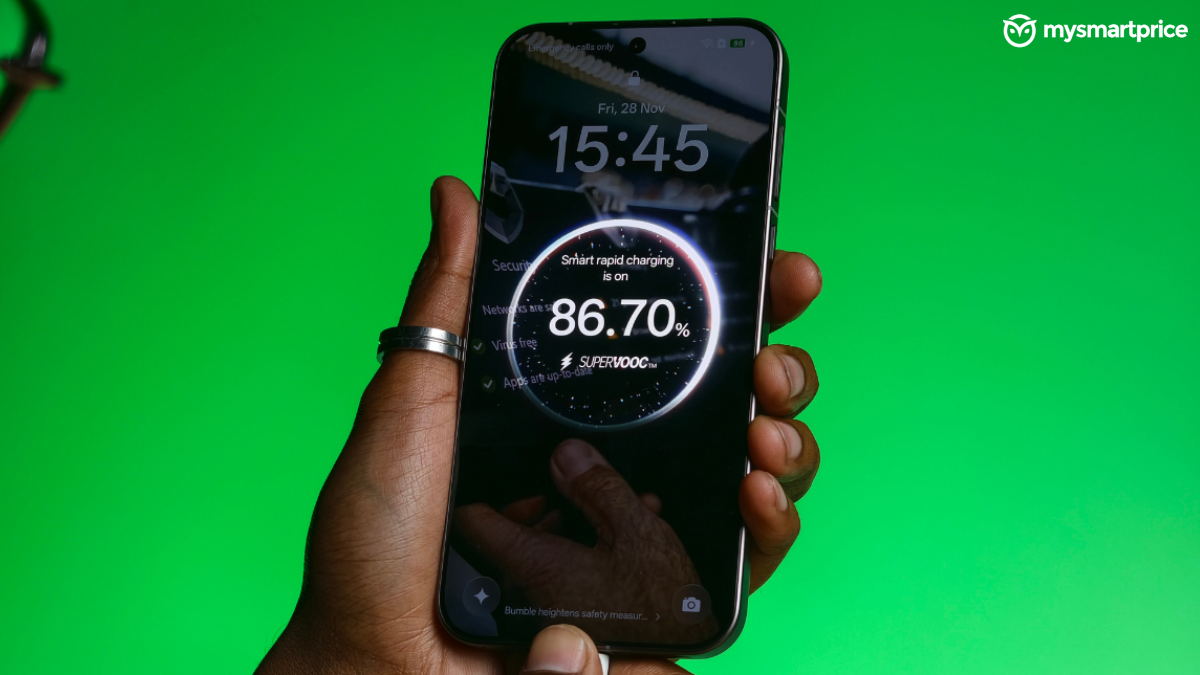
Charging speed is decent but not extraordinary, given the large battery size. The Pro reaches a full charge in roughly 85 minutes with the included 80-watt charger. The good thing is that the phone now also supports 50-watt wireless charging.
In real-world usage, both the Find X9 and Find X9 Pro deliver excellent endurance, easily among the best in their class. During my testing, I charged the phones on a Friday and used them consistently throughout the weekend, which included extensive photography, casual gaming, social media, GPS, and a fair amount of general testing. Despite this mixed workload, both devices ran out of battery sometime on Monday.
In simpler terms, you are looking at 2 to 3 days of battery life on a single charge, depending on how heavily you use the cameras and display. This aligns well with their large battery capacities and efficient 3nm chipset, and makes both phones particularly reliable for users who travel often or prefer not to charge their phones every night (like me).
Oppo Find X9 Pro Review: Verdict
With a price tag of Rs 1,09,000, the Oppo Find X9 Pro is clearly built for enthusiasts, creators, and photographers, basically people who want more than just a “good phone camera.” If telephoto capability, high-resolution shooting, and serious battery endurance, this is one of the strongest camera phones in the Android market right now. It’s well-built, durable, and genuinely feels like a camera alternative that you can slip into your pocket. But, but, but… if you’re looking for raw gaming performance or ultra-fast charging, there are better-suited phones out there.
If you want the kind of photos and videos that need to look premium, the Find X9 Pro understands its purpose. At Rs 1,09,000, you get incredible imaging, great battery life, and a device that’s ready for real-world use, even if that comes with a bit of extra weight and some thermal limits under extreme load.
So that was my full take on the Oppo Find X9 Pro, but the question remains – is this the best camera phone of the year? Honestly, I am not sure yet. But I can say it is, by far, one of the best camera phones I have tested this year.
Now, to answer that question, we are currently testing its closest competitor, the Vivo X300 Pro, and this time it looks like a very close fight. So stay tuned for our comparison and our final verdict on the Best Camera Phone of the Year.