The Redmi Pad 2 Pro marks Xiaomi’s latest attempt to strengthen its position in the mid-range tablet segment. With newer options like the Realme Pad 3 and the OnePlus Pad Go 2 entering the same price bracket, competition has become tougher than ever. Drawing on its experience in this space, Xiaomi aims to defend its position with a tablet that prioritises balance over bold experimentation.
Redmi Pad 2 Pro
Rs 27,999 (For 5G version)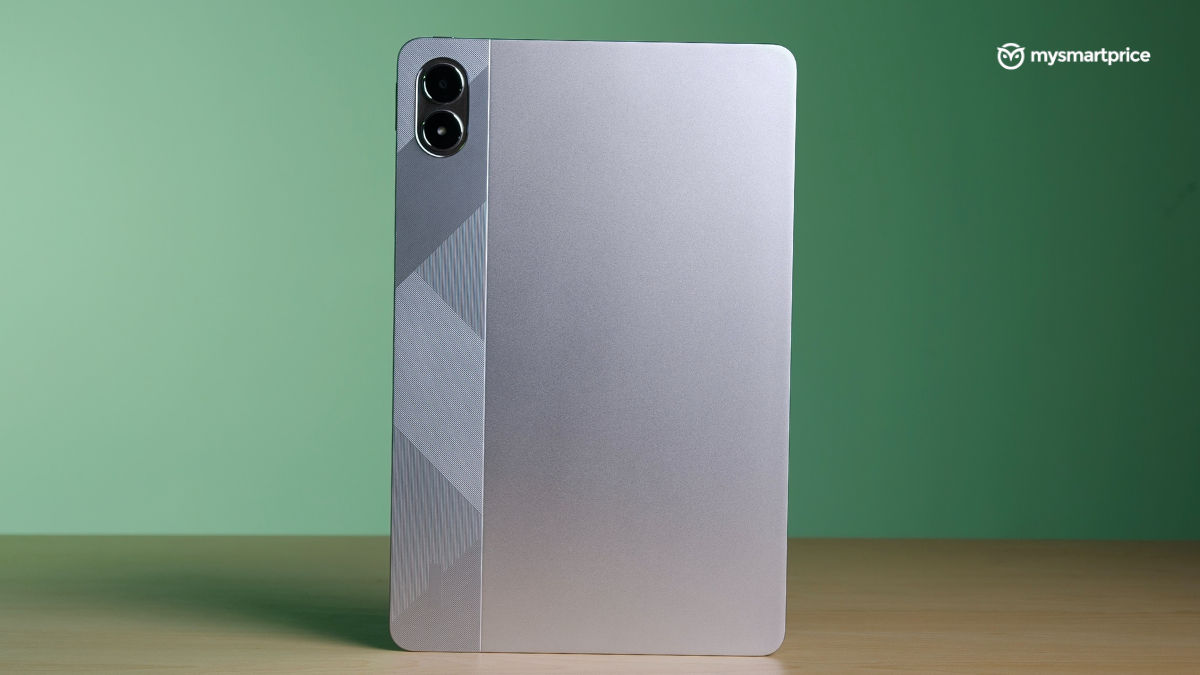
What Is Good?
- Sturdy, well-built design that feels durable in hand
- Stylus offers smooth and reliable performance
- Handles everyday tasks and light gaming smoothly
- Remains cool even under extended use
What Is Bad?
- The display and speakers lack vibrancy and clarity
- Software misses some handy productivity features
- The keyboard feels stiff and lacks a touchpad
- Battery life is average, and charging is slow
On paper, the Redmi Pad 2 Pro brings a large 12.1-inch 2.5K display, a new mid-range Snapdragon processor, quad-speakers, and support for productivity-focused accessories. The combination suggests a device built to handle everyday work, entertainment, and light gaming.
But specifications alone do not tell the full story. To see how the Redmi Pad 2 Pro holds up in real-world use and whether it can still hold its ground against rising competition, I spent several days using it as my primary tablet. Here’s how it fared.
Design and Build Quality
Xiaomi takes a conservative approach in designing the Redmi Pad 2 Pro. New tablets on the market now offer distinct identities, with the Realme Pad 3 leaning into elegance and the OnePlus Pad Go 2 opting for minimalist, playful colours. Compared to these options, the Redmi Pad 2 Pro’s dual-texture chassis comes across as more restrained and less distinctive. Xiaomi also sticks closely to its earlier design language, with few visible refinements to set this generation apart.
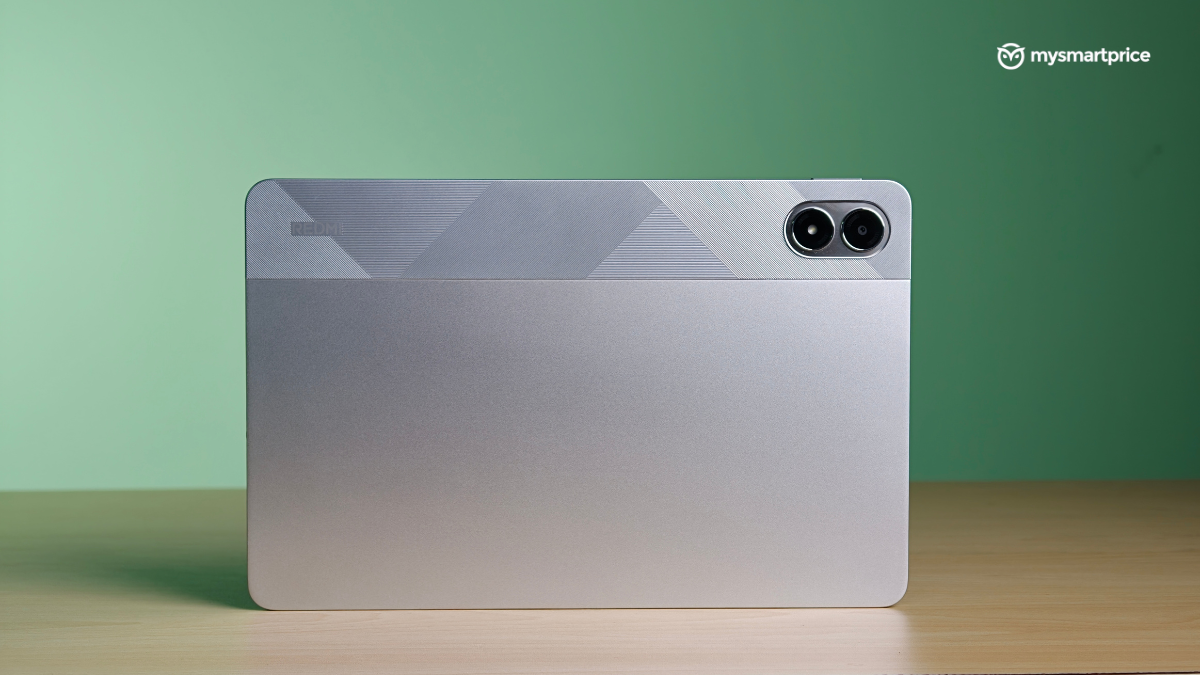
That said, Xiaomi gets the proportions right with the Redmi Pad 2 Pro. It feels more like a laptop when used with its bundled keyboard, which I will discuss later. This design choice works well, as it allows value-conscious users to enjoy laptop-like functionality without stretching their budget. Given the Redmi Pad 2 Pro’s size and weight, using it propped up on its case makes more sense than holding it for extended periods.
- Colour Options: Quick Silver (our review unit) and Graphite Grey
- Weight: 620g
- Thickness: 7.5mm
- IP Rating: IP53
- Port and Button Placements
- Bottom: USB Type-C Port, headphone jack, and two speaker grilles
- Top: Two speaker grilles and a power button
- Right side: Volume button, dual mics, and SIM card tray
Beyond the design, the Redmi Pad 2 Pro has been built well. It feels durable in the hand and shows no flex even when pressure is applied from both ends. With its IP53 rating in play, carrying the tablet during the rainy season won’t strike much fear, but caution is still strongly recommended.
Accessories
Xiaomi has launched two accessories with the Redmi Pad 2 Pro, including a keyboard and the Redmi Smart Pen. Right from the start, the Redmi Smart Pen stands out for its quality and execution compared to competing styluses.
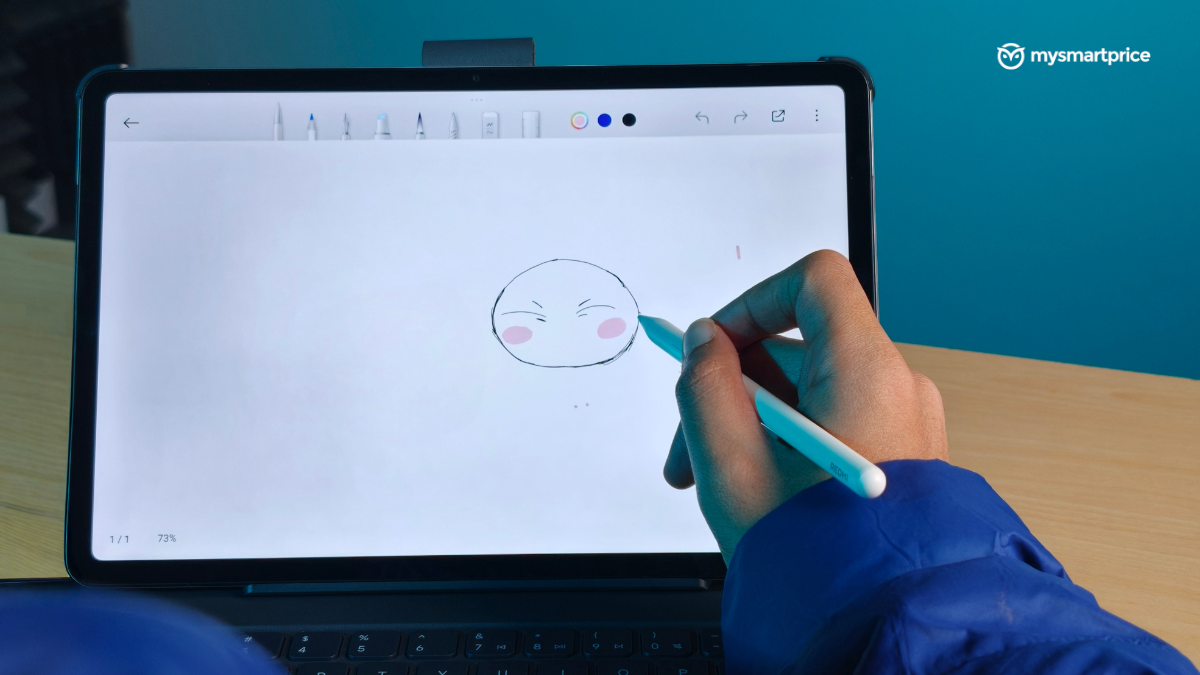
It looks premium for its price and has a sturdy build. This strong execution also carries over to its software implementation. The tablet instantly recognises handwritten input and converts it into text. Even rough shapes drawn using the stylus are automatically refined. Beyond this, it supports palm rejection and pressure sensitivity, once exclusive to expensive counterparts.
The keyboard also offers a premium finish and a similar rigid structure. However, it needs some polishing to match the Redmi Smart Pen in execution.
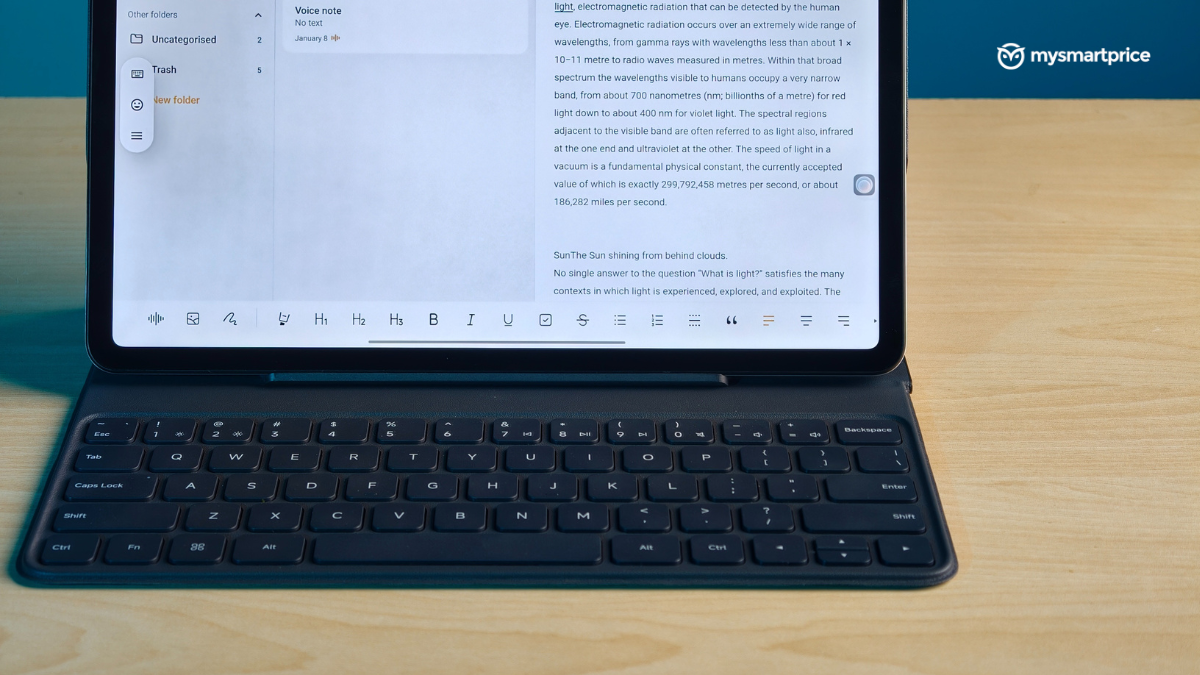
With its keys being harder to press, typing for long durations becomes exhausting. In addition, the lack of a touchpad makes navigation feel less intuitive, as you still have to rely on touch input. Finally, I wish Xiaomi had added a mechanism to keep the flap secured, as it can otherwise feel intrusive.
Performance and Software
The Redmi Pad 2 Pro brings the Snapdragon 7s Gen 4 SoC to India for the first time, which has held up well in my daily use. The tablet effectively handles nearly every task without slowing down, whether maintaining spreadsheets, watching videos, or playing BGMI. That said, the Realme Pad 3 and the OnePlus Pad Go 2 offer faster app loading, thanks to their higher-speed storage. Their improved storage also brings them closer to the Redmi Pad 2 Pro in our benchmark test, despite the latter featuring the latest processor.
However, the Redmi Pad 2 Pro has the upper hand in GPU-intensive tasks, especially when playing games. BGMI can deliver 60fps with HDR graphics, which the Realme Pad 3 and the OnePlus Pad Go 2 can’t. During my testing, the game recorded an average frame rate of 59.2fps and registered 53.7fps as the 5% low frame rate. The minimal gap between these two metrics meant that the game achieved incredible frame consistency throughout its run.
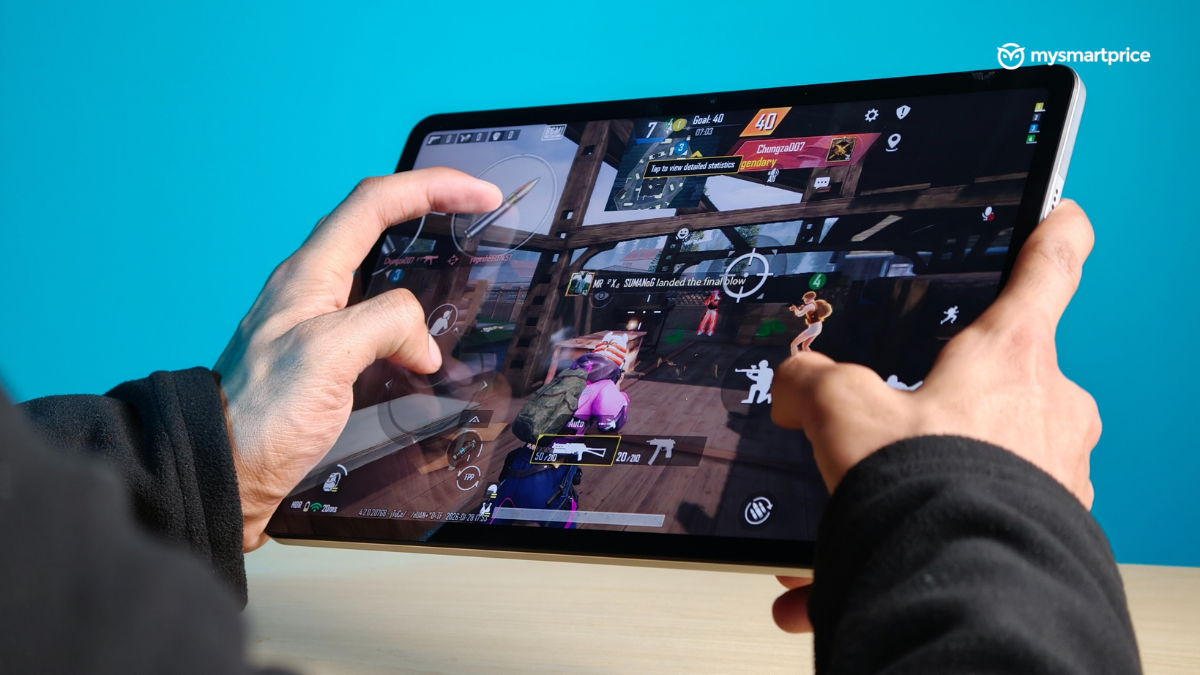
This result prompted me to test Wuthering Waves on the Redmi Pad 2 Pro. At High settings, the game only sustained around 33fps, below the expected 60fps. Throughout the test, the tablet maintained a temperature of around 35°C, running two to three degrees cooler than most devices we have ever evaluated. This suggests that Xiaomi prioritises thermal control, even if it means throttling performance. All in all, the Redmi Pad 2 Pro can handle light to moderate gaming but struggles with graphically demanding games.
| Hardware | Specifications |
| RAM | Up to 8GB LPDDR4X |
| Storage | Up to 256GB UFS 2.2 |
| Storage Test | 72723 |
| CPU Throttling Test | 95 per cent |
| Software Version | HyperOS 2, based on Android 15 |
| Connectivity Details | Bluetooth 5.4 and Wi-Fi 6 |
| Number of Software Updates | Two years of major OS upgrades and three years of security patches |
While the Redmi Pad 2 Pro excels in performance, its software feels slightly lacklustre. HyperOS 2, based on Android 15, features fluid animations that make good use of the tablet’s raw power.
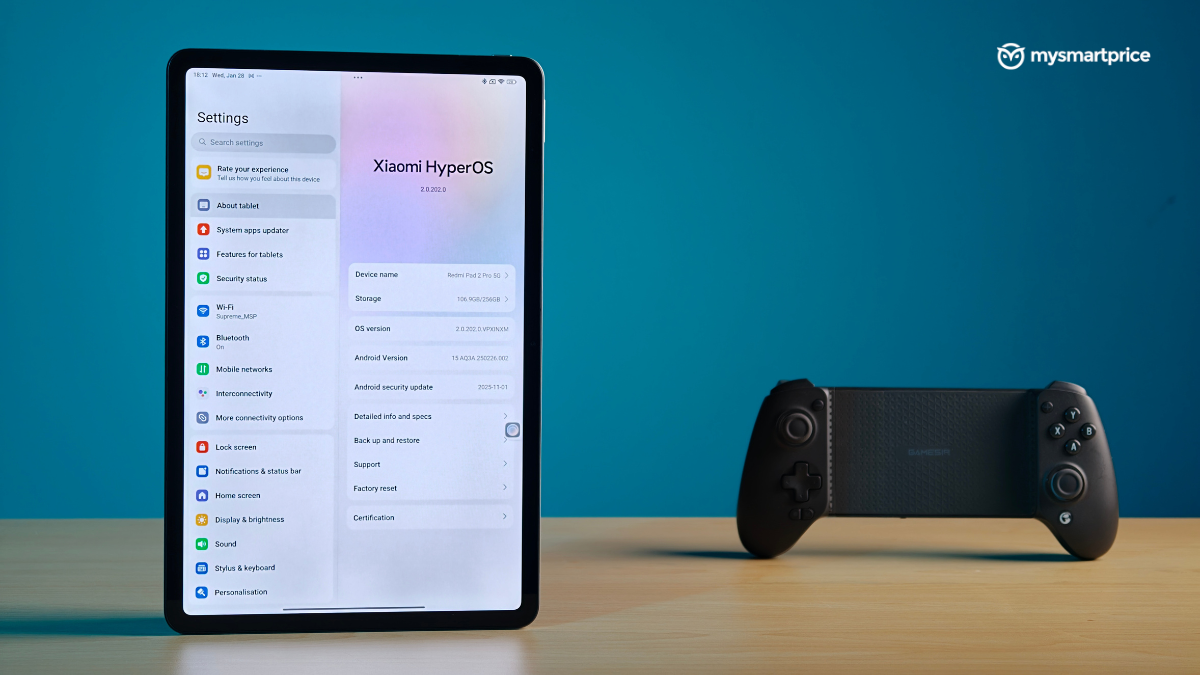
However, it falls short in terms of features, particularly essential AI-based quality-of-life features for students. The notes app lacks tools to enhance the quality of work that Realme UI and OxygenOS offer. Moreover, the native recorder app lacks speech transcription altogether. Additionally, the Redmi Pad 2 Pro’s UI is a generation behind its competitors, as the Realme Pad 3 and the OnePlus Pad Go 2 ship with Android 16 out of the box.
Display and Audio Quality
The display and audio are among the weakest aspects of the Redmi Pad 2 Pro. The 12.1-inch LCD offers an immersive experience for series-watching thanks to its expansive size.
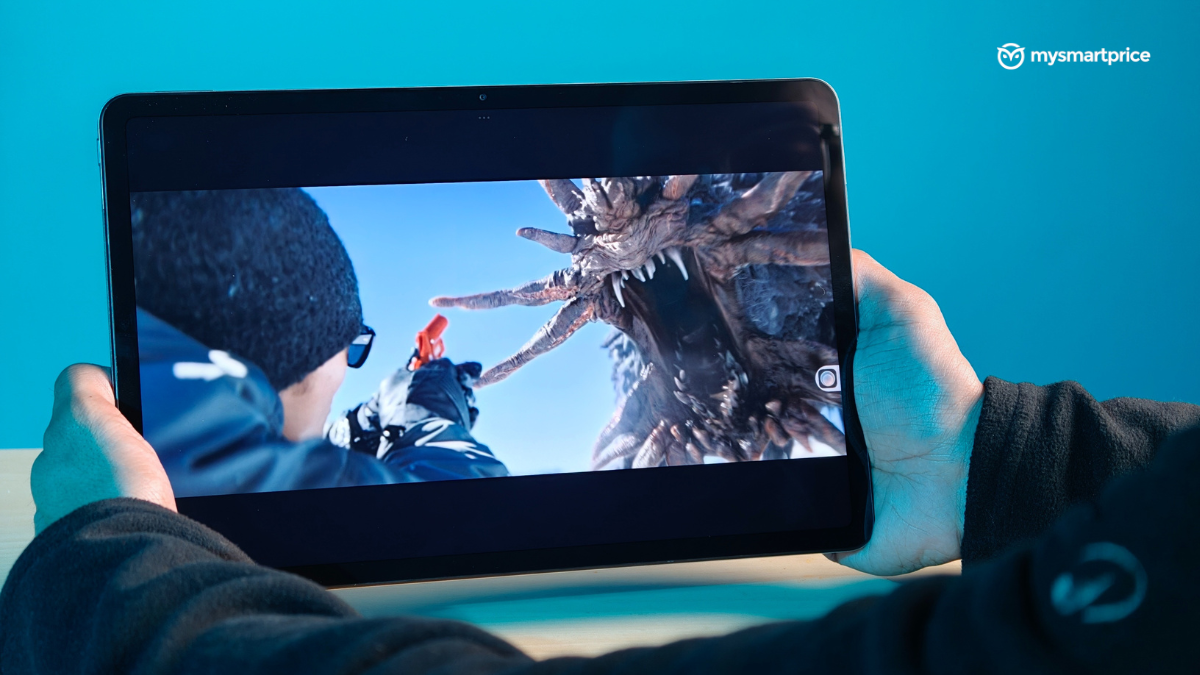
However, its quality doesn’t meet expectations. Live-action content on the Redmi Pad 2 Pro appears less defined than on the OnePlus Pad Go 2. That’s largely because the Redmi Pad 2 Pro doesn’t handle contrast between darker and brighter areas well, resulting in some detail loss. Even animated content misses out on the vibrancy that makes it appealing in the first place. For instance, various scenes from the Wistoria series were rendered in dull colours, which I had never encountered while watching on other devices, including ones featuring a similar display type.
Using the Redmi Pad 2 Pro outdoors, especially in direct sunlight, is challenging because its brightness falls below the recommended level of 700 nits.
- Size: 12.2-inch
- Type: LCD
- Resolution: 1600×2560 pixels
- Refresh Rate: 120Hz
- Peak Brightness
- Claimed: 600 nits
- Tested: 467 nits
The Redmi Pad 2 Pro’s quad-speakers are at best serviceable. They lack clarity in the mid-frequency range and distort music at full volume. At full volume, they get loud enough to fill a room, but clarity suffers.
Battery
The Redmi Pad 2 Pro packs a 12,000mAh battery, larger than most tablets’ batteries. However, underwhelming optimisation prevents Xiaomi’s tablet from delivering the battery life one would expect. In our battery test, the Realme Pad 3, which features a similarly sized battery, outperforms the Redmi Pad 2 Pro.
Even the Redmi Pad 2 Pro slightly lags behind the OnePlus Pad Go 2, even though the latter runs on a smaller battery.
In real-world scenarios, I consistently squeezed out seven to eight hours of screen-on time with moderate usage. This included watching series, managing spreadsheets, and short gaming sessions. Charging it with the bundled 33W charger is time-consuming, as it takes 2 hours and 15 minutes to fully charge.
Camera
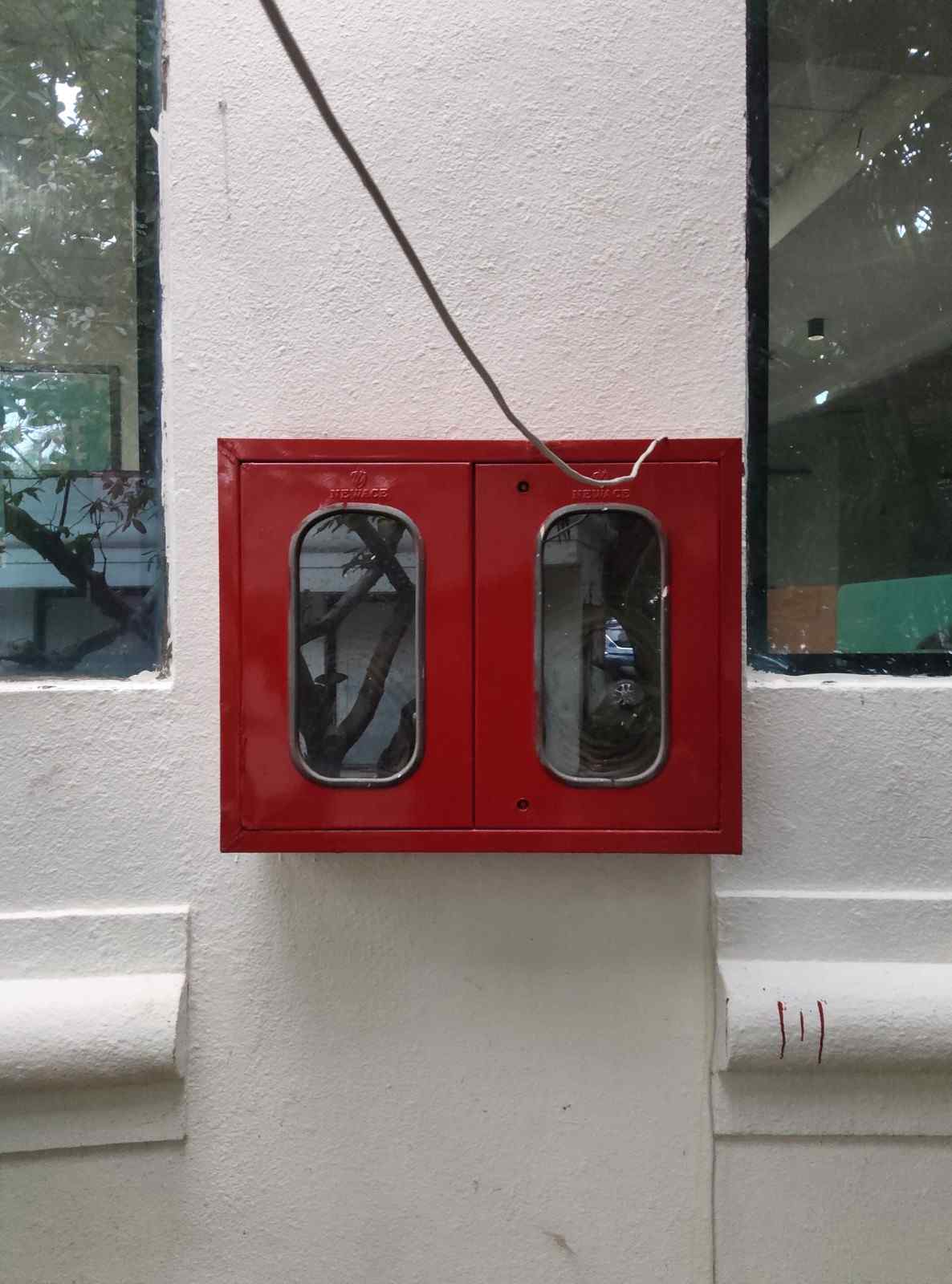
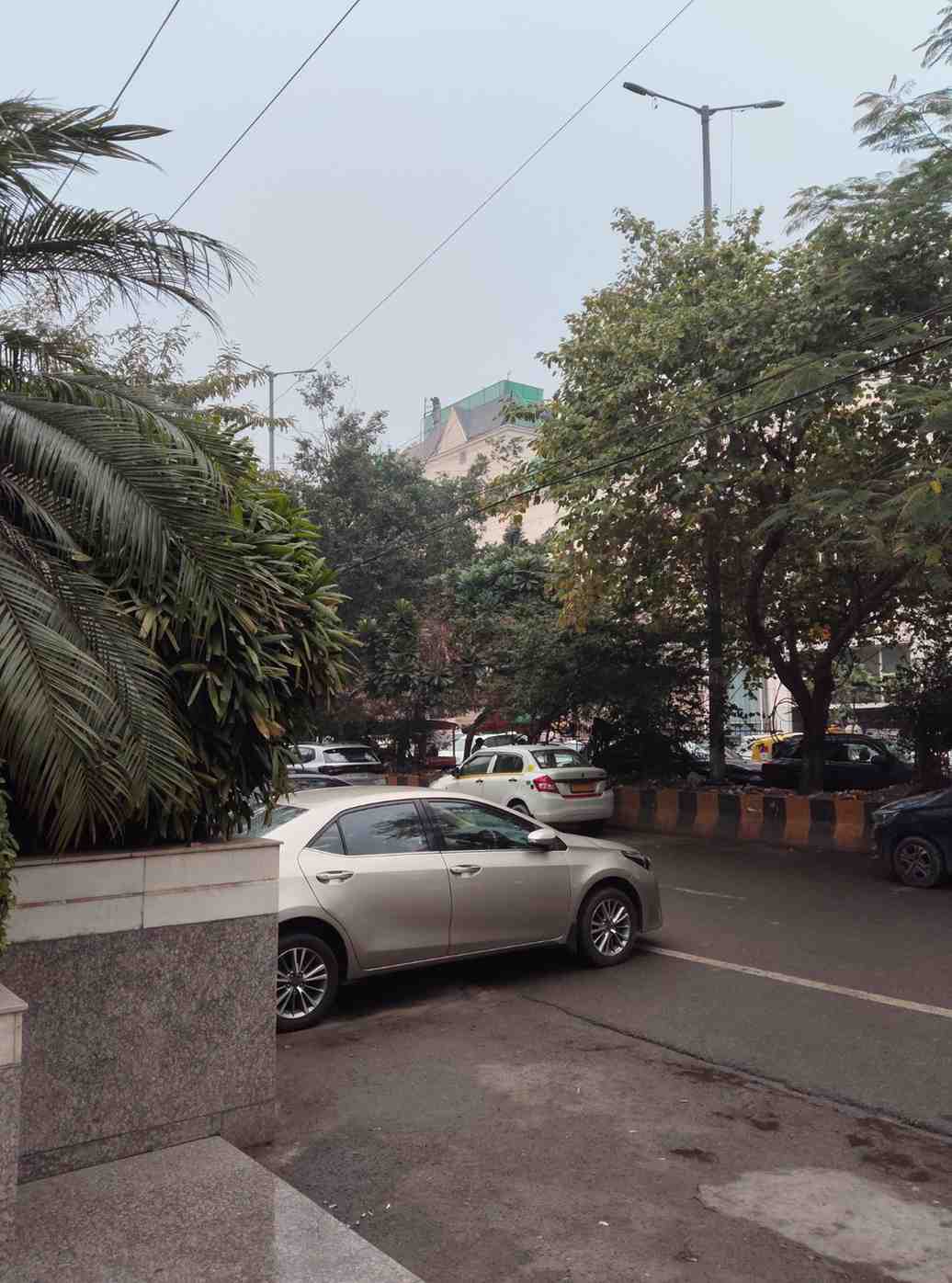
The single rear camera on the Redmi Pad 2 Pro serves a better purpose in scanning documents than documenting memories. In daylight, images retain colours that are fairly close to natural, but finer details, such as skin texture and wrinkles, are often lost. In low-light conditions, the smaller aperture forces the camera to drop its shutter speed to improve exposure, which can result in motion blur during sudden movements.




| Cameras | Specifications |
| Primary camera | 8-megapixel, f/2.0 |
| Selfie camera | 8-megapixel, f/2.28 |
| Video capabilities | Up to 1080p at 30fps for the primary and front cameras |
The front-facing camera is well-suited for video calls and virtual meetings. In good lighting, it produces usable selfies, though detail levels remain modest.
Verdict
The Redmi Pad 2 Pro is a competent tablet that places performance and durability above polish. Its sturdy build, excellent stylus implementation, and reliable GPU performance work in its favour, especially for productivity and light gaming. However, Xiaomi’s conservative design, underwhelming display and audio, and a feature-light software experience hold it back from feeling truly competitive. Battery life and charging speeds are adequate rather than impressive. That said, the tablet remains smooth, thermally efficient, and dependable in everyday use. For users who value stability, strong pen support, and consistent performance over multimedia finesse, the Redmi Pad 2 Pro still makes a reasonable choice.