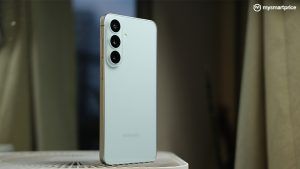
Samsung sticks to its tried-and-tested formula with the Galaxy A37, building on the strengths that have made the Galaxy A series so popular. A balanced mix of dependable performance, clean software, long-term updates, and a familiar design has consistently worked in its favour. This year, the focus remains on refinement rather than reinvention, with incremental upgrades to performance, durability, and overall usability.
Samsung Galaxy A37
Rs 41,999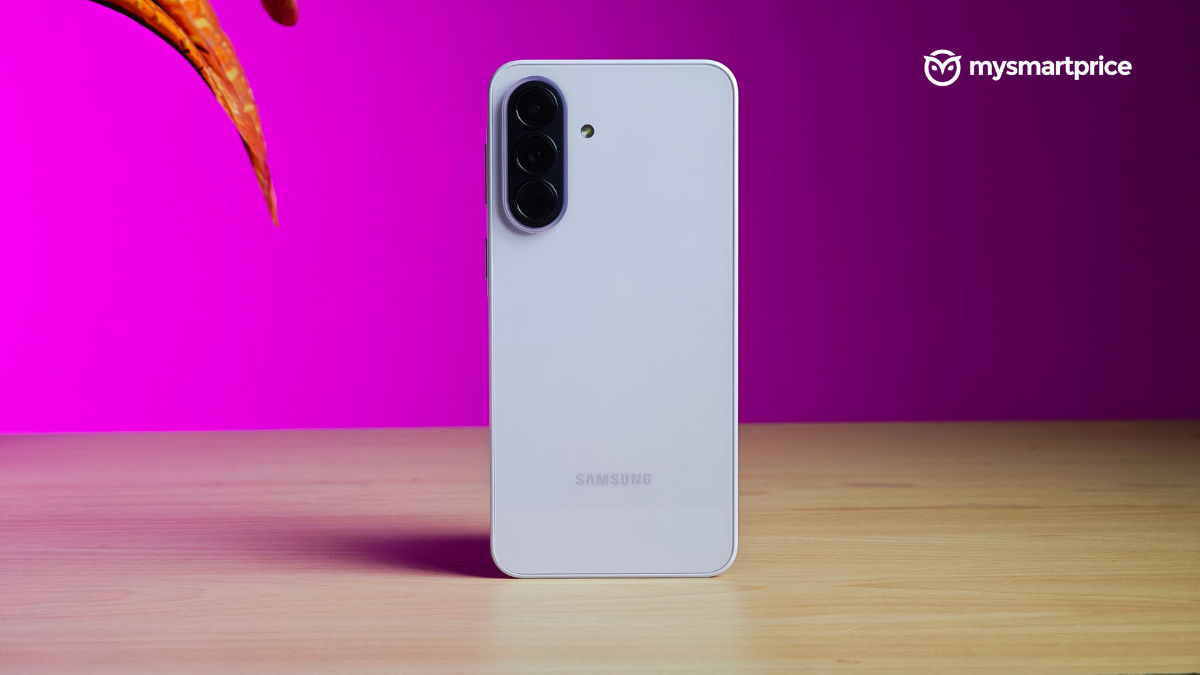
What Is Good?
- Smooth and consistent display experience
- Clean software with long-term update support
- Useful on-device AI editing features
What Is Bad?
- Battery life feels average for the segment
- Performance lags behind key rivals
- Cameras lack vibrancy and depth
However, this comes at a time when the competition in the under Rs 50,000 segment has intensified. Performance-focused options like the iQOO 15R and OnePlus 15R deliver impressive speeds without compromising much elsewhere. At the same time, more balanced devices such as the Vivo V70 and Realme 16 Pro Plus offer similar well-rounded capabilities, along with the added advantage of a usable telephoto camera.
This raises an important question. Do Samsung’s measured upgrades still hold value in a rapidly evolving segment? I spent time using the Galaxy A37 across daily scenarios to find out.
Design and Build Quality
The Galaxy A37 continues Samsung’s effort to bring a flagship-style design to the mid-range. The focus here is on small, gradual improvements rather than a full redesign.
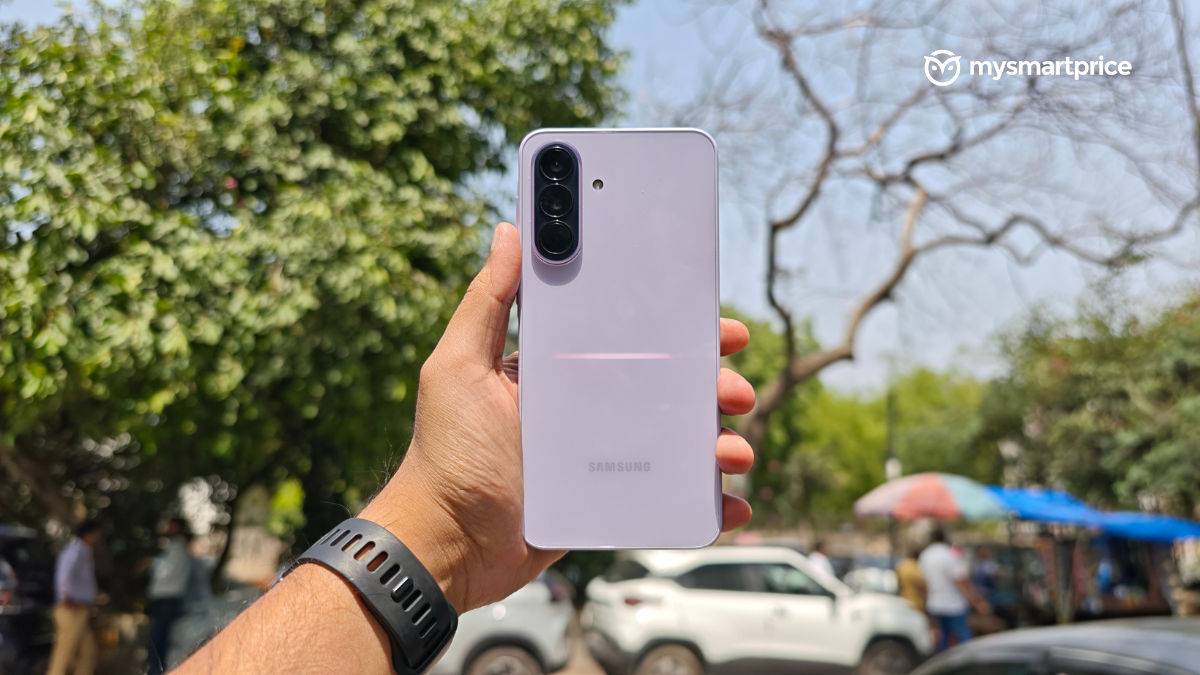
As a result, the phone looks almost identical to its predecessor, the Galaxy A36. The only tangible change is a marginal weight reduction from 196g to 195g, which is hardly noticeable in daily use. That said, the new Awesome Lavender colour helps the phone stand out and gives it a striking look at first glance.
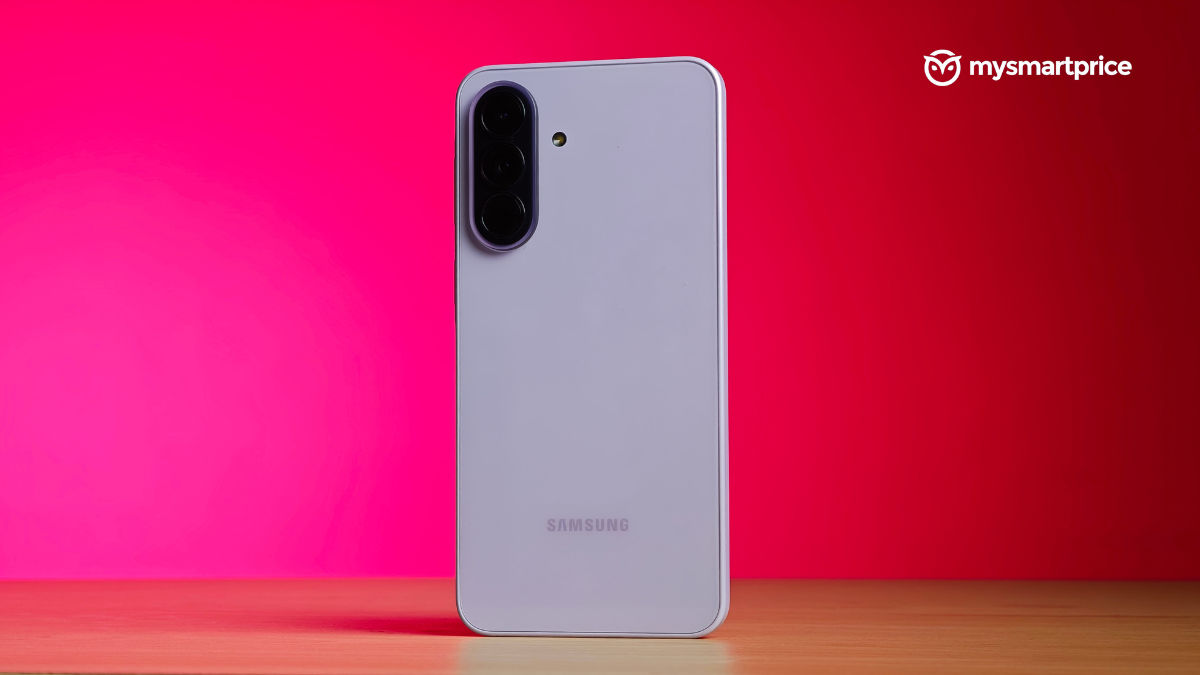
However, this finish has an odd side effect. The lavender hue spills over from the back onto the front edges, making it look as if the phone is already wrapped in a coloured case. It is a small detail, but it slightly detracts from the otherwise clean and premium aesthetic.
Samsung has also made a small tweak to the camera module, where the surrounding bezel now carries a softer, colour-matched gradient that blends more naturally with the rear panel. The familiar triple-camera strip itself remains unchanged, retaining its minimal look and sitting neatly within the glass back for a more seamless finish.
| Design | Specifications |
| Colour Options | Awesome Lavender (our review unit), Awesome Graygreen, and Awesome Charcoal |
| Weight | 194g |
| Thickness | 7.4 mm |
| IP Rating | IP68 |
| Port and Button Placements | Bottom: Primary microphone, USB port, speaker grille, and SIM card tray
Top: Secondary microphone Right Side: Power button and volume button |
When it comes to durability, the Galaxy A37 doesn’t change much on the outside, sticking with the same plastic frame as the Galaxy A36. But Samsung has made a useful upgrade where it matters. The phone now has an IP68 rating, up from IP67 last year, which means it can withstand deeper water exposure and should feel a bit more reassuring in day-to-day use.
That said, it is hard to ignore what the competition is offering. Phones like the OnePlus 15R, Vivo V70, and iQOO 15R go a step further, featuring metal frames and even both IP68 and IP69 ratings. This makes them feel tougher overall and adds a slightly more premium feel when you hold them.
Display and Audio Quality
The Galaxy A37’s display prioritises consistency over outright flashiness, and that approach works well in daily use. The 120Hz refresh rate keeps interactions smooth, whether scrolling through social media or switching between apps. Animations remain fluid and controlled, with no noticeable stutter.

Outdoors, the screen holds up well. It gets bright enough to remain readable in sunlight and adjusts smoothly to changing lighting conditions, avoiding sudden brightness jumps.
For media consumption, the experience is largely pleasant. Colours appear natural rather than overly punchy, which suits longer viewing sessions. The only minor drawback is that some finer details can be lost in darker scenes. It is not a constant issue, but it does become noticeable in dimly lit content.
| Display | Specifications |
| Size | 6.7-inch |
| Type | Super AMOLED |
| Resolution | Full-HD+ |
| Refresh Rate | 120Hz |
| Peak Brightness | Claimed: 1900 nits, Tested: 1597 nits |
| Display Protection | Gorilla Glass Victus+ |
The Galaxy A37’s stereo speakers deliver a fairly clean, balanced sound for everyday use. Vocals come through clearly, and there is enough separation between instruments to avoid a cluttered sound.
That said, the tuning leans towards the lighter side. The bass is not particularly strong, so the overall output can feel a bit lacking in depth and richness. At higher volumes, especially above 80 per cent, the sound can become slightly sharp. Keeping it at moderate levels results in a more comfortable listening experience, where clarity takes priority over punch.
Battery and Charging
Battery life on the Galaxy A37 feels adequate, but it doesn’t quite stand out in its segment. The phone packs a 5,000mAh battery, delivering a PCMark runtime of 13 hours and 29 minutes. That’s a respectable figure on its own, though the broader trend in this price range has shifted towards larger batteries, often around 6,000mAh.
As a result, rivals like the iQOO 15R, OnePlus 15R, and Vivo V70 tend to offer longer endurance, leaving the Galaxy A37 behind the curve.
In day-to-day use, with a mix of streaming, messaging, browsing, and light gaming, the phone manages around six hours of screen-on time. This is sufficient for a typical day, but more demanding use may prompt you to reach for the charger earlier.
Regarding charging, the phone does not come with a charger. The device supports 45W charging and, when paired with a compatible 120W PD adapter, takes about 1 hour and 11 minutes to go from 0% to 100%.
Cameras
The Galaxy A37 features a familiar triple-camera setup with a primary, ultra-wide, and macro lens. On paper, this offers more flexibility than rivals like the iQOO 15R and OnePlus 15R, which lack a third camera.
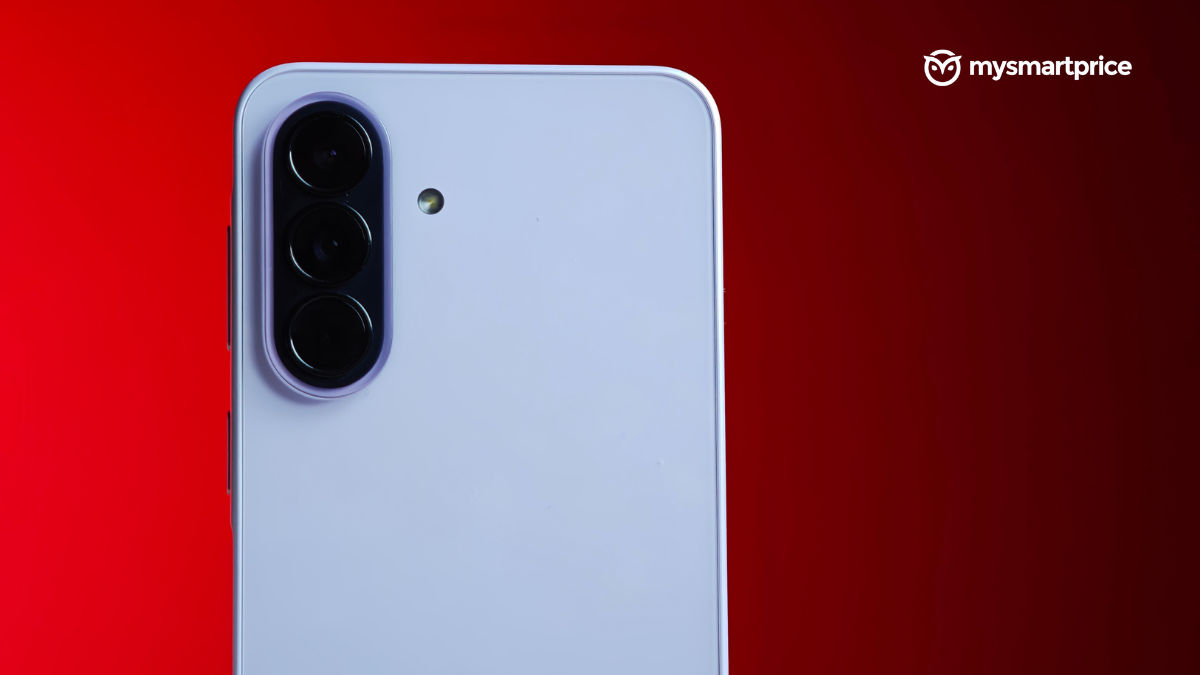
That said, the macro camera feels more of an occasional feature than an essential one. Phones like the Vivo V70 and Realme 16 Pro Plus instead offer a telephoto lens, which, in my opinion, is more useful. Even so, the Galaxy A37’s setup remains versatile enough for everyday photography.
| Cameras | Specifications |
| Primary camera | 50-megapixel, OIS, f/1.8 |
| Secondary camera | 8-megapixel, 120° FOV, f/2.2 |
| Tertiary Camera | 5-megapixel, macro, f/2.4 |
| Selfie camera | 12-megapixel, f/2.2 |
| Video capabilities | Up to 4K at 30fps for the primary and front cameras |
In daylight, the Galaxy A37’s primary camera delivers fairly decent results. Photos are good enough for casual use, though finer details can sometimes look a bit soft, and colours lean towards a slightly muted tone rather than appearing vibrant.











Portrait shots are handled better. Edge detection is quite reliable, keeping subjects well separated from the background, and detail retention is generally solid. That said, colour reproduction could be livelier, as portraits occasionally come across as a bit flat and lacking warmth.
The ultra-wide camera is useful for landscapes and group shots, though HDR can be a little inconsistent in tricky lighting.
In low light, the primary sensor performs reasonably well. Images retain a fair amount of detail, with noise kept under control, though warmer tones don’t always come through as accurately as expected.
On the front, the 12MP selfie camera captures pleasing shots in good lighting, but in dim conditions, it tends to smooth out finer facial details, such as stubble, a bit too much.
Performance and Software
The Galaxy A37 is powered by the Exynos 1580, an upgrade over the Snapdragon 6 Gen 3 on the Galaxy A36. This translates into a smoother, more stable experience in daily use, with tasks like app launches, multitasking, and general navigation feeling more responsive.
However, the sub-Rs 50,000 segment is highly competitive. While performance is reliable, it falls short in raw power.
Performance-focused phones like the iQOO 15R and OnePlus 15R deliver near-flagship benchmark scores. Meanwhile, more balanced options such as the Vivo V70 and Realme 16 Pro Plus also manage to pull ahead in peak performance. As a result, the Galaxy A37 is consistent for everyday use but less suited for heavier workloads.

This gap in processing power becomes more noticeable when gaming. While running BGMI at the lowest graphics settings, the Galaxy A37 delivers an average of 58.1 fps, which, by itself, sounds quite stable. However, the 5% low drops to 28.2 fps, hinting at inconsistency in frame delivery, especially during more intense moments.
For context, the Vivo V70 achieves a similar average of 58.5 fps but maintains a stronger low of 38.2 fps, resulting in a smoother, more consistent experience overall. It’s worth noting that non-gaming-focused phones in the sub-Rs 50,000 segment usually fall short of the high frame rates seen on performance-centric options like the iQOO 15R and OnePlus 15R. Despite this, the Galaxy A37’s struggle to maintain steady frame pacing at baseline settings puts it at a slight disadvantage for longer or more competitive gaming sessions.
Overall, the Galaxy A37 feels better suited to lighter, pick-up-and-play games like Candy Crush, while still capable of handling short bursts of more demanding titles without becoming uncomfortable.
| Hardware | Specifications |
| RAM | Up to 12GB LPDDR5X |
| Storage | Up to 256GB UFS 3.1 |
| Storage Test | 86596 |
| CPU Throttling Test | 76% |
| Software Version | OneUI 8.5, based on Android 16 |
| Connectivity Details | Bluetooth 6 and Wi-Fi 6E |
| Number of Software Updates | Six years of major OS upgrades and security patches |
On the software front, the Galaxy A37 runs One UI 8.5 based on Android 16. The overall experience feels polished, with smooth animations and an easy-to-use layout. At the same time, there’s plenty of room for personalisation, so it doesn’t feel restrictive.
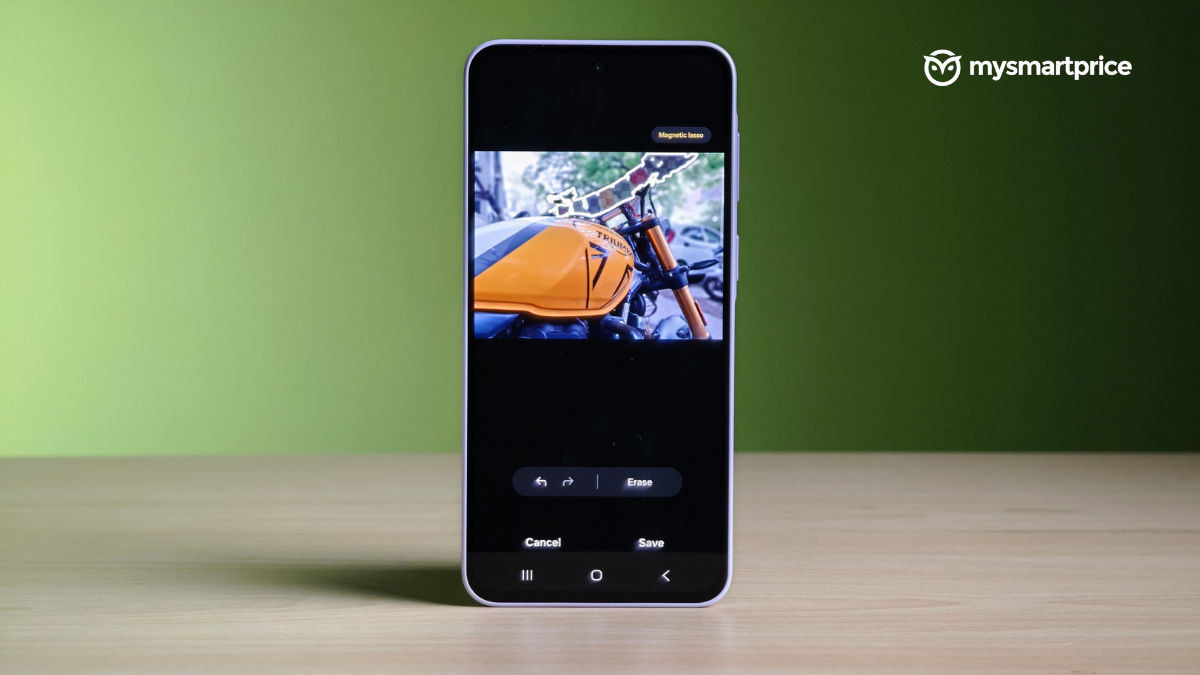
Samsung has also pushed its AI-driven editing tools a step further. The object eraser now works entirely on-device, making the Galaxy A37 one of the first phones in its segment to offer this capability. This means faster edits without an internet connection, which adds real convenience in everyday use. By comparison, even more powerful phones like the OnePlus 15R and iQOO 15R still rely on cloud processing for similar features.
Another big highlight is Samsung’s long-term commitment to updates. The Galaxy A37 is promised six years of software and security support, which adds a strong sense of reliability over time and makes it a sensible option for anyone planning to hold onto their phone for a while.
Verdict
The Galaxy A37 builds on a familiar formula, offering a smooth display, dependable cameras, and a clean, reliable software experience backed by long-term updates. Day-to-day performance feels stable, and features such as on-device AI editing add real convenience. However, battery life is only adequate for the segment, and performance falls short of rivals’ in some areas, especially in gaming. Camera output is consistent but not particularly distinctive. Nonetheless, the Galaxy A37 remains a well-rounded choice for those who prioritise stability, ease of use, and long-term software support over outright power.